dailynewsnblog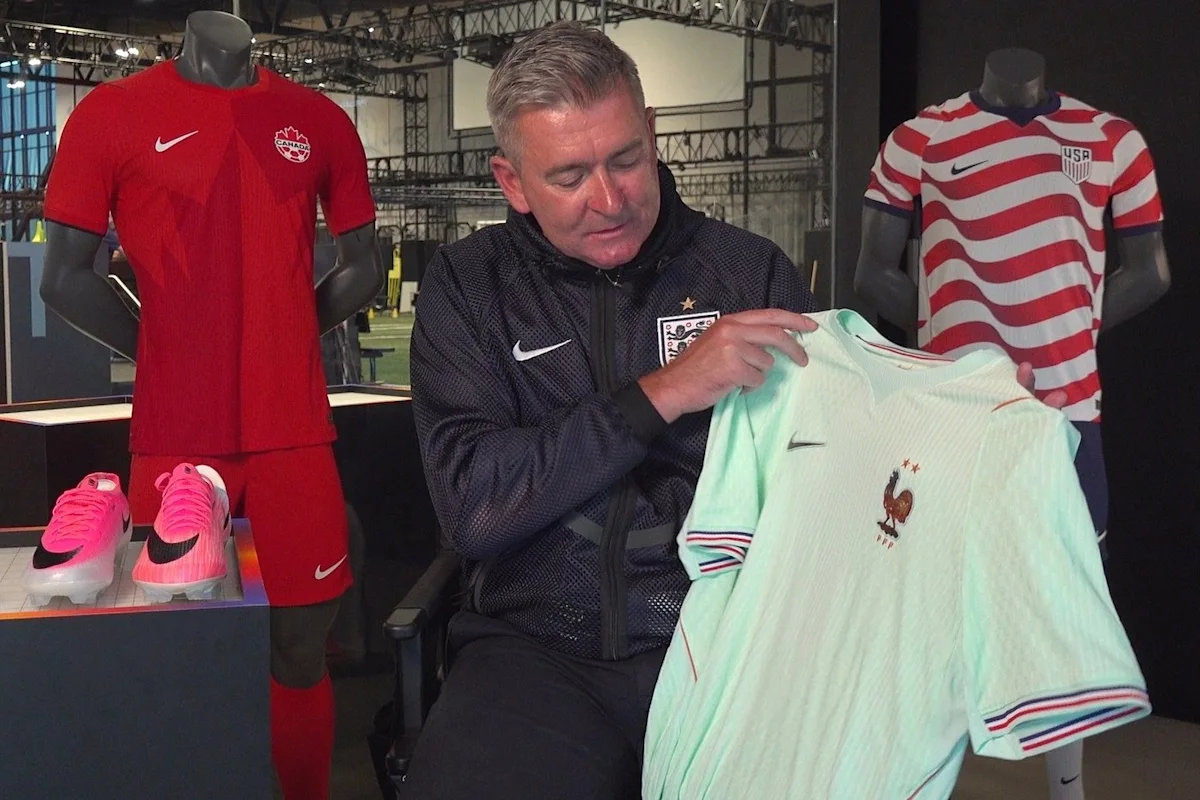
BEAVERTON, Ore. (AP) — Heat. Moisture. National pride.
These were top of mind as Nike designed its uniform kits for this year’s World Cup, including for football powerhouses France and Brazil as well as the U.S. and Canada in their role as host nations.
In a tournament that has seen storm delays and temperatures hovering around 90 degrees Fahrenheit (32 Celsius) in some locations, the first step was to ensure players’ performance and comfort.
Phil McCartney, chief innovation, design and product officer for Nike, said the company worked with athletes, coaches and football federations to understand how uniforms affect the game.
“We also talk to fans — so what does it mean to wear a Uruguay jersey, what does it mean to represent France, what does it mean to play for Canada?” McCartney told The Associated Press. “We take that and we merge that with all the science and the innovation to make sure that we have beautiful designs.”
Adidas, which designed jerseys for defending champion Argentina, host nation Mexico and Colombia, also unveiled cooling gear for the tournament. Puma designed the kits for Portugal as well as Morocco and Senegal, the two finalists at the most recent African Cup of Nations.
While the three companies are behind most of this year’s kits, some teams are sporting uniforms designed by other apparel makers.
Testing facility features thermal chambers and robot mannequins
On a recent morning, McCartney spoke from the sports research lab at Nike’s headquarters just outside Portland, Oregon, where experimentation helped the kits come to life.
The indoor facility includes a 200-meter (219-yard) track, a small football pitch and a basketball court, with hundreds of motion-capture cameras placed throughout. Thermal chambers replicate the effects of heat and humidity on apparel donned by people or robot mannequins.
“We take motion-capture to see how they’re moving in the kit, how the kits are responding,” McCartney said. “We also use the thermal chambers that we have to test the kit’s breathability, to test wicking and moisture management.”
For the World Cup kits, Nike engineered a new fabric that it says is more breathable and made from fully recycled materials. The way the jerseys are knit, with mesh stitching in certain areas allowing more air flow, helps “get that thermal regulation that all the players have been asking for,” McCartney said.
Despite all the testing, the rollout of the kit was still a bit bumpy.
During matches earlier this year, bulges could be seen in the shoulder seams on jerseys for teams including France and Uruguay, the Guardian reported.