dailynewsnblog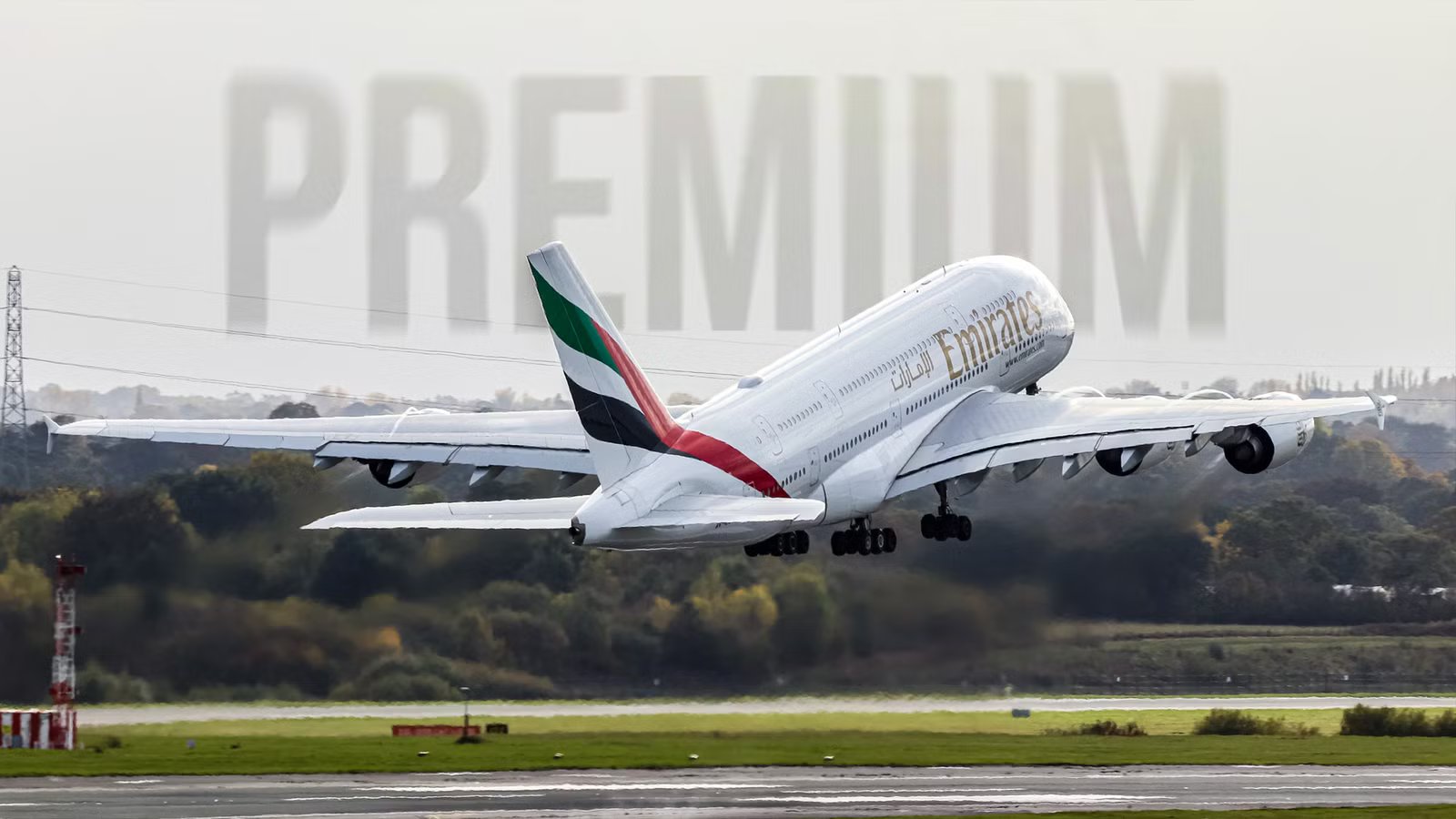
It’s rare to find an aircraft so closely associated with a single airline as the Airbus A380 with  Emirates. The carrier has 116 examples in its fleet, roughly 60% of the worldwide in-service A380 fleet, and it’s the only large operator of the A380. For most airlines, the A380 serves as a network optimization tool at best, allowing carriers to maximize revenue with limited slots and enable expansion with the displaced planes, while being an expensive plane too big for most routes at worst.
But for Emirates, the A380 is its biggest strategic asset. It’s the only airline to deploy the type at scale, and this has improved the economics of operating the A380 and helped fill its planes across the network. What’s more, the A380 has been instrumental in building Emirates’ brand as a desirable, upscale airline that customers actively choose to fly. With Emirates’ plan to refurbish 67 of its A380s and to keep the double-decker until 2041, it will retain a competitive advantage that rivals cannot hope to replicate.
Why The A380 Works For Emirates

If there’s one quality that the Airbus A380 lacks, it’s that the plane is not flexible. An Airbus A350 can be flown economically from Munich to Charlotte, or it can be deployed on the world’s longest flights. The A380, on the other hand, is fairly limited in how it can be used profitably. A route like New York to Paris has high local demand, but the A380’s high capacity often means it needs connecting passengers as well. If the rest of an airline’s network lacks either the capacity or the demand for these passengers, then the plane sometimes goes empty.
Emirates was the only carrier that truly committed to the type. The airline expanded its entire network and offers substantial capacity on practically all of its routes. The airline has the capacity to ensure that its A380s are filled on most routes, and the carrier has demand to fill these planes as well. It flies to six continents using over 260 passenger widebodies, and its hub in Dubai is ideally located for connections, while Dubai itself has also grown massively into a lucrative business hub.
In addition to pure capacity, the A380 works amazingly for maximizing revenue per flight, depending on configuration. Emirates’ standard A380 layout features economy on the lower deck with around 400 seats, along with 76 business class seats and 14 first class suites. Even for an A380, these are large cabins that allow Emirates to earn substantial revenue. More recently, the carrier has been retrofitting A380s with 56 premium economy seats each, cutting capacity but increasing revenue overall.
The A380 In Emirates’ Network

One reason for the A380’s demise is that its per-seat costs weren’t dramatically lower than even a Boeing 777-300ER, let alone a 787 or A350. Given the added risk of flying a 475-seat plane compared to a 320 or 275-seat aircraft, this often made the smaller options more compelling overall. But on a route like Dubai to London-Heathrow, demand is virtually limitless while desirable slots are scarce. Emirates flies multiple daily A380s on this route, and using the 777-300ER would simply be leaving money on the table.
Catch what other flight trackers miss
Emergency squawks, holds, NOTAMs — live signals, no signup.
Open tracker
Catch what other flight trackers miss
Emergency squawks, holds, NOTAMs — live signals, no signup.
Open tracker
In addition to slot-constrained destinations, the A380 is also particularly useful for Emirates because Dubai International Airport is slot-controlled. Had Emirates chosen to stick with more 777s, the airline would have found itself with far less capacity when needed, and it’s not easy for the carrier to add more frequencies. In addition, adding another frequency means placing an aircraft on this route when it could otherwise be used to serve new destinations. For Emirates, it can simply deploy the A380 instead of the Boeing 777.
Aircraft | Capacity (Emirates) |
|---|---|
Airbus A380-800 | 468 to 615 seats |
Boeing 777-300ER | 324 to 421 seats |
Airbus A350-900 | 298 to 312 seats |
Boeing 777-200LR | 276 seats |
Emirates is planning to shift all of its operations to the much larger Dubai Al Maktoum International Airport in the 2030s, while Dubai International Airport will close. Without the airfield constraints, Emirates would have less need for the A380, which aligns perfectly with the carrier’s desire to prioritize the Boeing 777X over the A380 in the future. While the A380 will still be a unique aircraft, the 777X’s fuel burn advantage makes it an extremely compelling choice to replace the superjumbo, and Emirates has ordered 270 examples in total.
Why The Airbus A350-1000 Is Perfect For Emirates’ Ultra‑Long Flights
Why the Airbus A350-1000’s range, efficiency, and comfort can make it the ideal aircraft for Emirates’ ultra-long-haul global network.
The Brand Effect Of The Emirates A380

Emirates was able to fill A380s around the world because of Dubai’s local growth, the deployment of A380s around the network, and Emirates’ general commercial strategy. The carrier offers competitive schedules and fares, filling the planes. Customers then experience an elevated experience compared to rivals, which further builds upon the premium brand perception Emirates has with the public. As such, the Airbus A380 is instrumental to Emirates’ premium brand image.
The A380 has more spacious economy seats than Emirates’ ten-abreast Boeing 777s, while the A380s had Emirates’ best business class seat products until recently. The first class seats are the same as on most of the airline’s 777s, but Emirates offers massive shower suites for first class passengers, while first and business class passengers receive access to a fully staffed bar on the upper deck. These two amenities have made the Emirates A380 famous, and they’ve elevated the brand as a whole.
In addition to the amenities, the huge size of the Emirates A380 fleet means the product is widely available, and Emirates also has fairly lucrative award pricing. It’s the most effective use of the ‘halo effect‘ in the airline industry in recent history, where what is effectively one product (the Emirates A380) has been used to drive interest in the entire brand. Even though many of Emirates’ passengers fly on other aircraft types, the brand itself is a major reason why passengers choose Emirates, and the A380 is the biggest contributor to the airline’s image.
Emirates’ Continued Competitive Advantage

Emirates’ A380 strategy was hugely successful, but it also required significant investment and was quite risky. In the near future, however, Emirates’ key advantage will be that it has this massive fleet of A380s that rivals cannot hope to match, as the A380 is out of production. While A380s do come up on the used market, they’re not very common, expensive to buy, and expensive to refurbish, making the option a non-starter for any airline. Used A380s are therefore usually scrapped.
Emirates plans to install premium economy seats on 110 of its A380s, while 67 of these planes will also be retrofitted with updated seats and new finishes. The carrier has ruled out acquiring used A380s, but even a fleet of 67 will still be hugely beneficial in the long run. As time goes on, the 49 A380s that aren’t being refurbished will be the first to go, replaced by the Boeing 777-9. While it won’t have the same iconic appearance or onboard amenities, the 777-9 will be Emirates’ next-largest plane after the A380, and is the closest substitute available.
The A380 is already well-known and popular with the general public for its massive size, spacious interior, and quiet, smooth ride. While Emirates isn’t necessarily attracting headlines with the A380 anymore, it doesn’t need to. Customers already know that the carrier has a massive fleet of comfortable A380s with opulent premium cabins, and while it’s debatable just how differentiated the full experience is compared to some of the world’s top airlines, this doesn’t matter. People perceive Emirates and its A380s in this manner, which is enough.

What Are The Benefits Of Flying In Emirates’ Business Class On The World’s Largest Commercial Aircraft?
From private pods to onboard lounges, Emirates’ A380 business class is the epitome of luxury.
Emirates’ Shift Away From The A380

Emirates will eventually operate 270 Boeing 777Xs as per its current orders. This will likely serve as the replacement for the current Boeing 777 and Airbus A380 fleets, while also serving as the airline’s future flagship airliner. Its lower capacity shouldn’t be a challenge once Emirates shifts to Dubai-Al Maktoum, but what will be interesting to watch is how Emirates’ brand changes with the 777X in service. As it is, Emirates has already been quietly shifting away from the A380 as its halo product.
Emirates installed a new first class cabin on nine Boeing 777-300ERs in the late 2010s and will install an updated version of this product on the 777X. The carrier has also begun installing the new Safran S-Lounge business class seats on new A350 deliveries and retrofitting the seats on some Boeing 777s. The 777-9, meanwhile, will feature a completely new business class seat with high walls and sliding doors, reportedly based on the Safran Unity, by far its most competitive business class cabin to date.
Aircraft | Business Class Seat Model |
|---|---|
Airbus A350-900 | Safran S-Lounge |
Airbus A380-800 | Safran SkyLounge |
Boeing 777-200LR | Collins Aerospace Minipods |
Boeing 777-300ER | Collins Aerospace Minipods Safran S-Lounge |
Boeing 777-9 | Safran Unity (speculated) |
Much of the excitement from the A380 comes from the shower suites and staffed bar. The 777-9, however, won’t have a shower, while the onboard social area will be smaller and might not even be staffed. Therefore, Emirates has heavily invested in the plane’s business class seats to ensure it remains competitive in both brand image and product with its peers, as this has become a weak point for the airline.