dailynewsnblog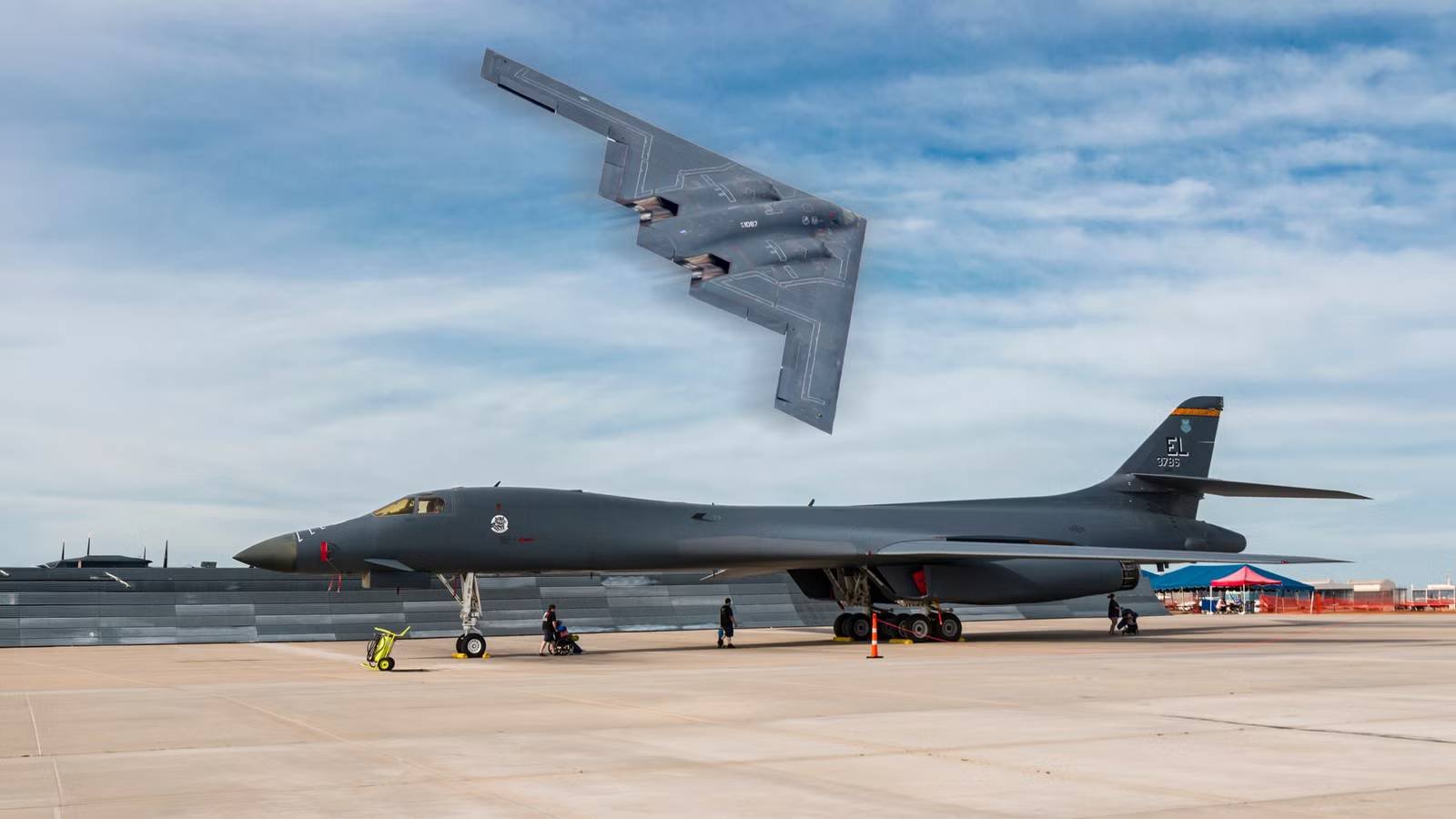
The Northrop Grumman B-21 Raider is an evolutionary and generational upgrade over the older, larger Northrop B-2 Spirit. Whether as advertising puffery or as a nod to the multirole nature of next-generation bombers, Northrop describes the B-21 as the world’s first sixth-generation combat aircraft.
That is a description typically reserved for fighter jets, not bombers, but it is also a clue to what the B-21 can do that the B-2 couldn’t. Unlike many earlier generational shifts that emphasized visible performance characteristics such as speed or maneuverability, the B-21’s advantages are much more in software, sensors, maintainability, and sortie generation.
To the untrained eye, the aircraft may look like a smaller and whiter version of the B-2. Some observers may be unable to distinguish which is the newer design in the same way that most people can intuitively distinguish fighter jet generations (such as the F-22 vs the F-15 Eagle). With next-generation combat jets, it’s primarily what is on the inside that counts, along with improvements largely invisible to the naked eye (such as the makeup of the stealth coatings).
Deployed Without A Hangar
40 years of technological improvement since the B-2

The Northrop B-2 is known as the hangar queen. The aircraft’s radar absorbent materials (RAM), aka “stealth paint,” are first-generation. It is very sensitive to temperature and humidity, with adverse climatic conditions causing its RAM to deteriorate. To counter this, the aircraft needs to spend its time in expensive air-conditioned hangars: the Air Force even has portable air-conditioned hangars for when the Spirit is forward deployed.
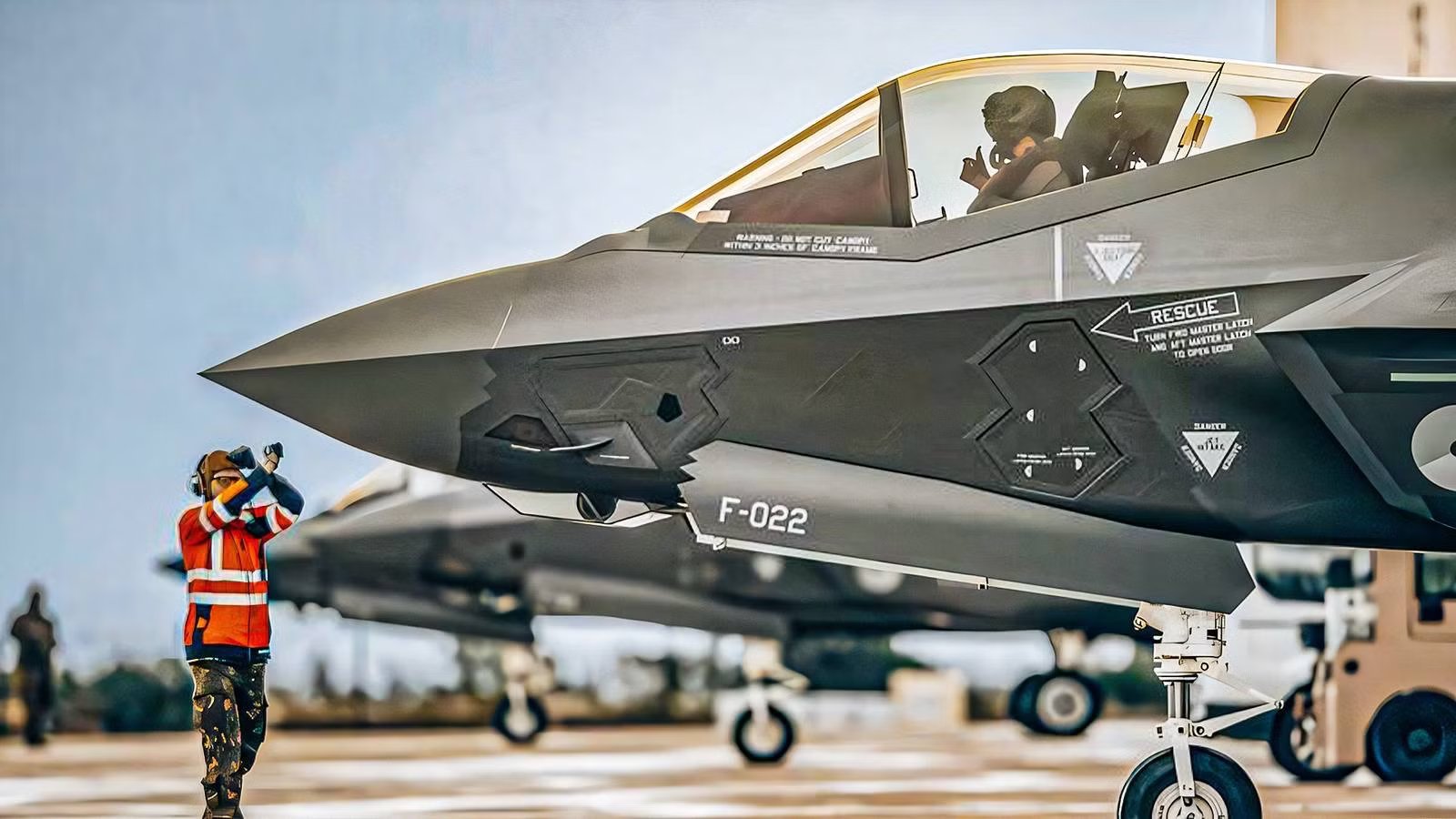
The F-22 Raptor’s development took place around ten years after the B-2 and was able to take advantage of lessons learned and advances in technology. This allows it to sit out on the tarmac without air-conditioned hangars, although it is still somewhat sensitive to adverse weather. The F-35 was built on the proverbial shoulders of the F-22.
The F-35’s RAM is robust enough to endure the rigors of salt air with carrier-based operations, and the B-21 Raider is able to build on all of these aircraft and take advantage of the latest stealth coating technology. It is believed that the B-21’s RAM will be comparatively much less maintenance-intensive, and it will be able to withstand adverse climatic conditions. This will make forward basing much easier compared with the Spirit.
Sustaining A High Sortie Rate
The B-2 costs ~$163,000 per flight hour

The B-2 Spirit was designed around carrying nuclear weapons and being a high-end first-day conventional strike aircraft. For nuclear missions, it did not require an extremely high sortie rate. For conventional missions, it was to be the aircraft that carried out difficult missions on the first days against high-value and time-sensitive targets.
It was designed to help clear the way for other bombers to come and deliver the much larger volume of ordnance. This was seen in 2026’s Operation Epic Fury, where the B-2s struck targets on the first day and were only later joined by the B-1 Lancer and B-52 after the situation had become survivable enough. However, this is not a playbook the Air Force is confident that it can repeat in the future against a peer adversary like China.
USAF stealth bombers (per USAF) | B-2 Spirit | B-21 Raider |
|---|---|---|
Number of units | 19 (down from 21) | 100+ planned (perhaps 150) |
First flight | 1989 | 2023 |
In-service date | 1997 | 2027 (planned) |
Payload | 40,000 lbs (unclassified) | 30,000 lbs (unclassified) |
Speed | Subsonic | Subsonic |
It may be that the Air Force will not be able to clear the way for older bombers like the B-1 and B-52 to deliver stand-in munitions. Instead, the Air Force is looking for the B-21 to have a high sortie rate to repeatedly penetrate contested airspace and strike high-value targets. The B-52 is envisioned as a platform carrying stand-off munitions away from contested airspace.
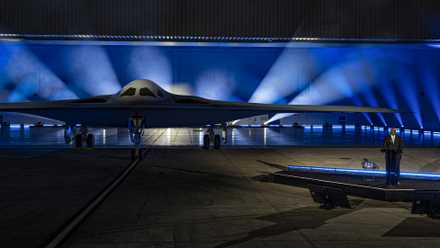
Why The B-21 Raider Doesn’t Need The B-2 Spirit’s Climate-Controlled Hangars
The B-21 is designed to be a next-generation, affordable, and rugged successor to the B-2 Spirit ‘hangar queen.’
Somewhat Affordable
The B-21 ‘only’ costs $1 Billion in FY 2026 Dollars

Affordability is where things get a bit tricky. The B-2 Spirit was possibly the most expensive aircraft ever made until that point in time. However, much of that expense was due to the expected purchase amount being slashed from 145 (132 production) to just 21. This meant there was a very high development cost per aircraft, and economies of scale were never realized. To some degree, this was okay as it was meant to be more the tip of the spear than the actual spear.
As stated above, the B-1 and B-52 will increasingly struggle to be survivable in contested airspace in the future. This means the B-21 Raider has to be more than the tip of the spear. The B-21 is expected to constitute the backbone of the penetrating bomber force, with B-52s providing additional firepower through stand-off munitions. This is increasing the imperative for the B-21 to be affordable.
At around $750 million per unit flyaway cost in Fiscal 2010 dollars (around $1 billion today), the B-21 will still be an extremely expensive aircraft, but it will be much more affordable than the B-2, and it is designed for lower maintenance costs. As of mid-2026, it appears the B-21 program remains mostly on schedule and largely on budget, meaning there is cause for optimism that the aircraft will be the affordable stealth bomber the Air Force envisions.
Catch what other flight trackers miss
Emergency squawks, holds, NOTAMs — live signals, no signup.
Open tracker
Catch what other flight trackers miss
Emergency squawks, holds, NOTAMs — live signals, no signup.
Open tracker
Networking & System Of Systems
The US Department of Defense currently supports more than 10,000 separate networks

One of the core tenets of 6th-generation fighter jets is that they are to be a system of systems, and this is where Northrop’s claim that the B-21 is a sixth-generation combat aircraft is interesting. The B-2 can be understood as the last traditional bomber, with each B-2 aircraft operating somewhat independently. Put another way, the B-2 represented the culmination of the traditional stealth bomber concept, whereas the B-21 was designed from the outset as part of a broader networked force.
The B-21 was designed from the outset to function as a highly connected platform. It is to share data with satellites, drones, fighters, and other assets in real time. The B-21 is expected to operate alongside autonomous and collaborative systems as those capabilities mature and may be able to take on other roles, including more roles traditionally reserved for fighters.
Sandboxx News speculated in 2024 that it, or its combat drones, could carry out air superiority missions or at least be able to aggressively defend against enemy fighter jets and other threats. The B-21 is designed with network-centric warfare in mind. Among other things, this could mean that its suite of missions could expand as the platform matures in a way that the B-2 couldn’t. The B-21’s role, therefore, moves somewhat from bomber to bomber/command center or Airborne Data Hub and ‘Quarterback.’

This Is How Powerful The B-2 Spirit Bomber Is
The B-2 is famous for its stealth, but how much punch does it pack? Let’s find out.
Open Architecture Design Approach
Open-system efforts seek roughly 80% commonality with some standards

One of the biggest regrets the US Air Force has with the development of the F-35 is that its contract did not explicitly require it to have an open architecture design. This has allowed Lockheed Martin to have a ‘vendor lock-in’ on the aircraft, with it owning the intellectual property. To upgrade systems and repair and replace components, the Air Force is forced to go through Lockheed and acquire expensive original parts.
This has resulted in lawsuits (with some being settled behind closed doors) and adverse effects on readiness. The Air Force recently reported it is increasingly turning to reverse-engineering and 3D printing of components where possible. Inside Defense reports the Air Force is purchasing some intellectual property rights related to the F-35. Like many legacy platforms, the B-2 relies heavily on proprietary systems and specialized suppliers (vendor lock-in).
The B-21 explicitly has an open architecture approach to its design to allow greater competition among contractors and provide the Air Force with more flexibility in modernization and sustainment. The idea is that this will also make it much simpler to upgrade the B-21 with new software and sensors and streamline maintenance while also ensuring the supply chain is more robust.
More Survivable In Modern Air Defense
Estimated radar cross section: ~0.01 m² (estimated, heavily classified)

When the B-2 entered service in the 1990s, it possessed an unprecedented ability to penetrate heavily defended airspace with a very high degree of survivability. However, around three decades have passed, and modern integrated air defenses are much more capable than they were at that time. The B-2 is still considered the world’s most stealthy strategic bomber in service (until the B-21 enters service), although its advantages have eroded.
Advances in radar systems, networking, sensors, and interceptors are expected to continue reducing the advantages enjoyed by legacy stealth aircraft. The B-21 incorporates four decades of advances in low-observable technology, electronic warfare, and sensors. It is intended to restore the relative advantage that the B-2 had in the 1990s. It is not only believed to come with a lower radar cross section.
Indeed, the B-21 also features low-frequency radar evasion, improved Infrared signatures, more advanced radar-absorbent materials, unique cockpit windows eliminating joints and seams, and many other known and classified improvements to reduce detectability.
Importantly, the B-21 will come with advanced methods for fight detection and firing solutions. with electronic warfare, jamming, electronic decoys, and more. Every aircraft can be seen, detected, tracked, targeted, and intercepted, although the B-21 is expected to be substantially better at frustrating those tasks.