dailynewsnblog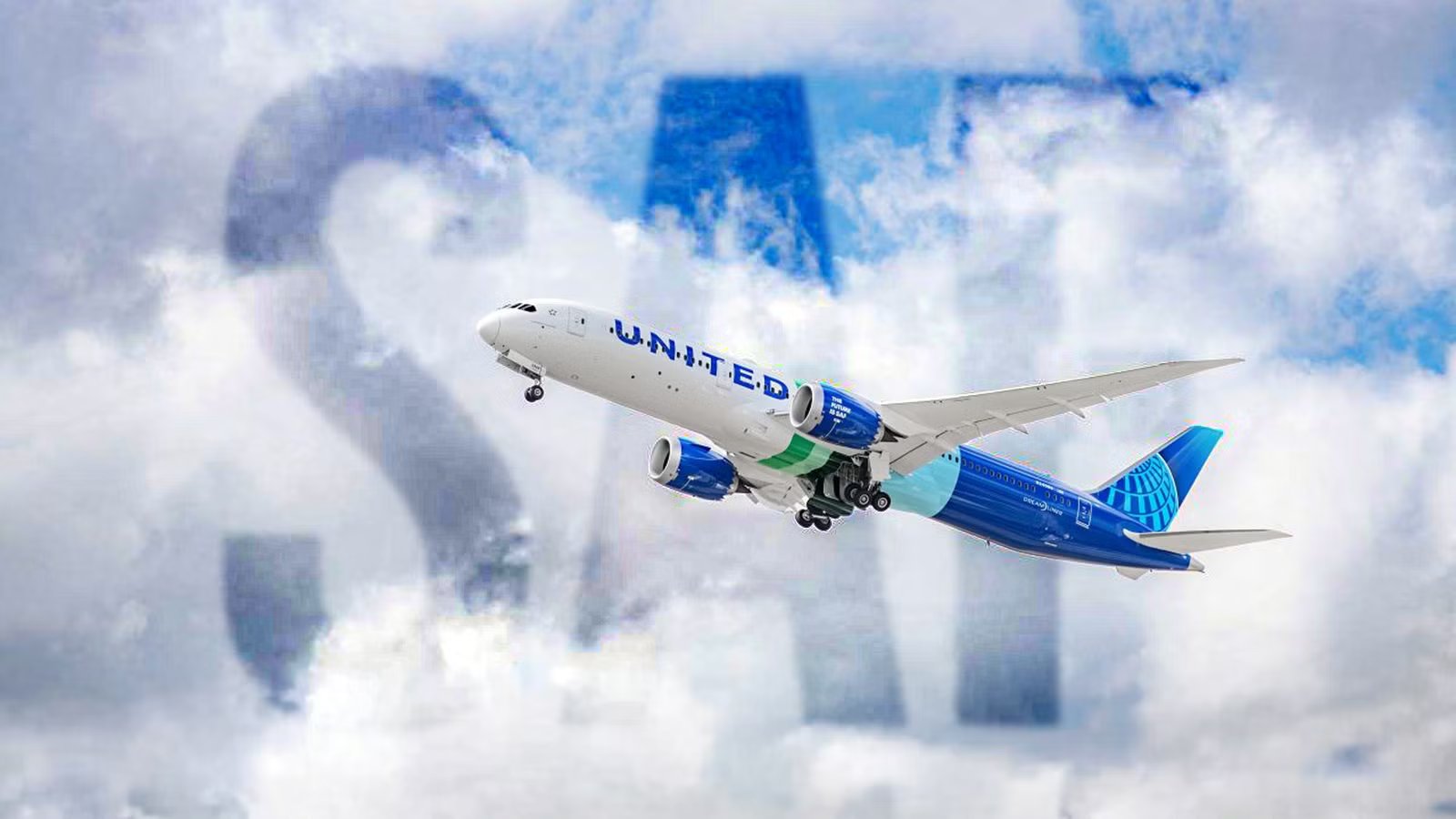
Global warming is happening, and although the aviation industry only accounts for about 2.5% of carbon emissions, the industry’s overall impact is closer to 4%. Part of what makes aviation so hard to decarbonize, however, is that airliners rely on jet fuel because it’s energy-dense, making batteries impractical. The added weight of batteries doesn’t pose a real issue for cars, but electric power simply doesn’t work for most flights due to the added weight and lack of power. Instead, the industry needs to seek other alternatives.
There are multiple solutions on how to reduce the environmental impact of flying, with Sustainable Aviation Fuel (SAF) being the most prominent option. SAF is made of renewable materials and is engineered to mimic jet fuel. Currently, it’s being blended with conventional fuel at ratios of up to 50%, while future engine programs are being designed to run solely on SAF. However, there are issues with integrating SAF and other industry challenges that make achieving decarbonization goals even more difficult.
The Latest Issues With SAF

The aviation industry is committed to reaching net-zero carbon emissions by 2050, an initiative led by IATA and ICAO. SAF is critical to this, as the industry aims for 65% usage of SAF worldwide by 2050. SAF is beneficial as it uses renewable materials and can cut lifecycle emissions by 80% compared to traditional jet fuel. In addition, using SAF also cuts direct emissions from aircraft engines.
However, IATA Director General Willie Walsh has expressed displeasure with current SAF production rates and has also criticized other players who are instrumental in helping the industry achieve its goals. When speaking with reporters at the IATA 2026 Annual General Meeting in Rio de Janeiro, Walsh stated,
“We’re disappointed that fuel companies who committed to making the fuel available to us are not delivering on the promises that they’ve made, so what we’ve been saying is it is still possible, we believe, to achieve net zero in 2050 but it requires all of these players who were very vocal in terms of their commitment to net zero 2050 to start taking action rather than just standing there saying that they’re committed to it.”
Walsh states that the airlines themselves are doing their part to curb emissions. Instead, he accused oil companies of lacking interest in SAF production, while also calling out European e-SAF mandates as being unrealistic. As a whole, airlines are committed to reducing emissions, but Walsh maintains that the industry relies on several players to make it possible. Without a significant ramp-up in SAF production, the 2050 goal is looking increasingly unrealistic.
Current Constraints In SAF Production

IATA reported that in 2026, global SAF production will reach just 2.4 million tons, equal to only about 0.8% of total airline fuel use. Current production rates are quite low, and there are challenges associated with increasing SAF production rates. SAF is much more costly to produce than jet fuel, leading to higher acquisition costs. Current government mandates in Europe have increased compliance costs for airlines, but IATA argues these policies have not driven an increase in supply, and the organization is concerned about similar upcoming mandates for e-SAF.
Increasing SAF production is difficult due to material constraints. The most common method of creating SAF is the HEFA pathway, which uses oils, fats, and greases as feedstock. However, feedstock is limited, and the industry has to compete against other industries to secure it. Other methods are more expensive and have not been widely used, while developing new SAF formulas requires extensive testing and a costly certification process.
Production of SAF is currently limited, and there are significant challenges associated with scaling up production. Willie Walsh is criticizing oil companies for not investing enough to increase SAF supply, while stating that government mandates are increasing costs without boosting supply, resulting in higher airfares. Increasingly, the goal of net-zero carbon emissions by 2050 is looking unrealistic, a sentiment being expressed by climate experts and airline executives.
How Many Miles Per Gallon Does A Boeing 747 Get?
The 747 uses vast quantities of fuel, burning through 3,800 gallons every hour. This high fuel burn is equivalent to 0.19 mpg
Where The Industry Stands With SAF

In 2021,  United Airlines ran the world’s first passenger flight using 100% SAF in one of the aircraft’s engines, and in 2023, Virgin Atlantic operated the world’s first transatlantic flight powered fully by SAF. In everyday operations, however, planes can only run on a blend consisting of at most 50% SAF. This is because SAF contains almost no aromatics, which help lubricate internal engine components. Airbus and Boeing are working to make their airliners capable of running solely on SAF, but this is still a work in progress.
The bigger challenge with SAF is the limited supply and high costs associated with acquiring it. Production costs have yet to come down, and manufacturers have been relatively unwilling to invest significant sums to reduce the cost of producing SAF. Some airlines have offered passengers the opportunity to make SAF donations to help offset costs, and carriers have also been lobbying governments for subsidies or tax incentives while supporting SAF mandates.
SAF Milestone | Date | Airline | Aircraft | Route |
|---|---|---|---|---|
First commercial flight using SAF | February 24, 2008 | Virgin Atlantic | Boeing 747-400 | London-Heathrow-> Amsterdam |
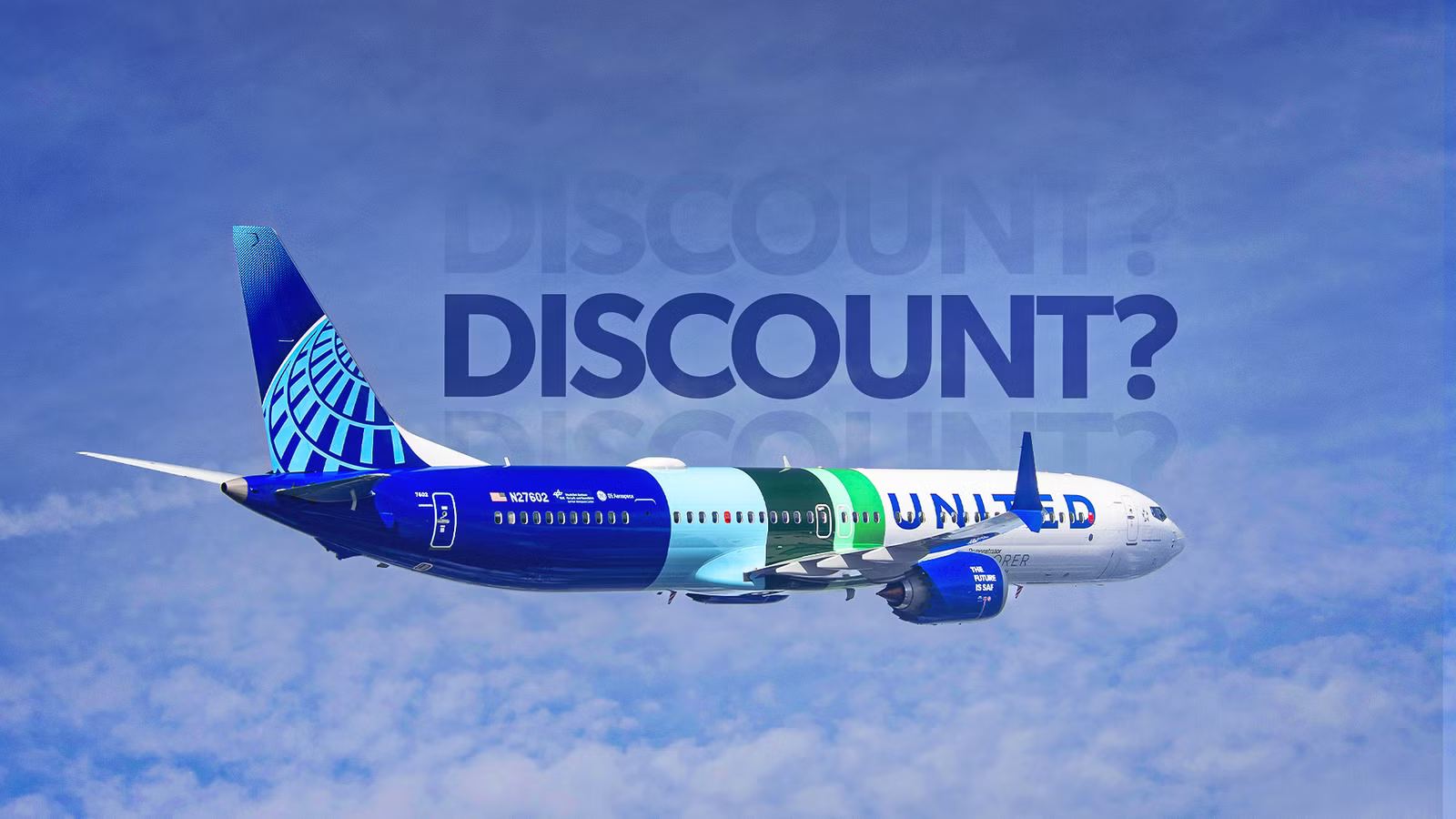
First commercial flight using 100% SAF in one engine | December 1, 2021 | United Airlines | Boeing 737 MAX 8 | Chicago-O’Hare-> Washington-National |
First transatlantic flight using 100% SAF | November 28, 2023 | Virgin Atlantic | Boeing 787-9 | London-Heathrow-> New York-JFK |
To solve challenges associated with SAF production, some believe that the future lies with Power-to-Liquid (PtL) SAF or e-SAF. However, these solutions are not yet available for widespread use. Ultimately, the airline industry is relying on SAF being easily available and cost-effective, yet there’s no indication it will be anytime soon. But in addition to SAF, there are other challenges associated with the industry’s push towards net-zero carbon emissions by 2050.
Catch what other flight trackers miss
Emergency squawks, holds, NOTAMs — live signals, no signup.
Open tracker
Catch what other flight trackers miss
Emergency squawks, holds, NOTAMs — live signals, no signup.
Open tracker
Current Issues With CORSIA

CORSIA (Carbon Offsetting and Reduction Scheme for International Aviation) is an ICAO initiative to curb emissions on international flights. Airlines operating routes between two participating countries are required to track their carbon emissions and then offset them by purchasing verified carbon credits, using a 2019 baseline. Participation is currently optional, although 126 nations have committed to CORSIA, and it will be made mandatory in the second phase coming in 2027.
CORSIA was a ground-breaking plan as it’s a global agreement covering the entire industry, but the challenge is that countries are now counting their own carbon emission reductions as part of the Paris Climate Agreement. Willie Walsh argues that countries need to allocate their offsets to CORSIA, and that this isn’t occurring. What’s more, many countries simply haven’t made ‘Eligible Emission Units’ available to airlines, when the demand exists for airlines to buy hundreds of millions.
In his speech at the 2026 IATA AGM, Willie Walsh also criticized the European Union for pursuing its own system and undermining CORSIA. Under the EU’s Emissions Trading System (ETS), airlines are required to purchase carbon allowances from a regulated carbon market, and Walsh argues that the EU is favoring its own system despite CORSIA being in place as a universal solution. Increasingly, CORSIA is viewed as an expensive and ineffective system that may ultimately fail.

Airlines Issue Statement On Growing Concern Facing Passengers
Ultimately, the continued investment of SAF for airlines will eventually cause airfares to rise.
A Well-Known Problem With Lesser-Known Consequences

The aviation industry is facing worldwide supply chain challenges that are affecting the delivery of new aircraft due to delays in airframe components, engines, and seats. Airlines aren’t receiving new planes quickly enough, which is delaying network expansions and fleet renewals. However, another consequence is that airlines are having to fly older aircraft longer than anticipated. Planes like the Airbus A350 burn less fuel than last-generation airliners like the Boeing 777, and they emit less carbon as a result.
Aircraft manufacturers and suppliers hold an important role in helping the aviation industry achieve net-zero by 2050, yet they simply cannot build A220s, A320neos, A330neos, A350s, 737 MAXs, and 787s quickly enough. Airbus has been facing significant challenges in even maintaining its planned production rates for the A350, while the manufacturer is also facing constraints with the Pratt & Whitney engines powering the A220 and A320neo.  Boeing has only begun ramping up 737 MAX production in recent years, while production of the 787 is still low.
In-Production Airliners | Current Production Rate |
|---|---|
Airbus A220 (A220-100/A220-300) | Seven to eight aircraft per month |
Airbus A320neo (A319neo/A320neo/A321neo) | 65 aircraft per month |
Airbus A330neo (A330-800/A330-900) | Four aircraft per month |
Airbus A350 XWB (A350-900/A350-1000/A350F) | Six aircraft per month |
Boeing 737 MAX (737 MAX 7/737 MAX 8/737 MAX 9/737 MAX 10) | 47 aircraft per month |
Boeing 767 (767-2C/767-300F) | 1.5 to two aircraft per month |
Boeing 777 (777F/777-8F/777-9) | Three aircraft per month |
Boeing 787 Dreamliner (787-8/787-9/787-10) | Eight aircraft per month |
Willie Walsh states that the worldwide average fleet age is a record 15.2 years, and that the industry is short of over 5,000 expected next-generation airliners. This is leading to higher carbon emissions, increased fuel costs, and rising maintenance costs. What’s more, manufacturers are generally quite profitable, with some engine manufacturers reporting double-digit profits. Ultimately, the airlines are at the mercy of the aircraft builders and suppliers.