dailynewsnblog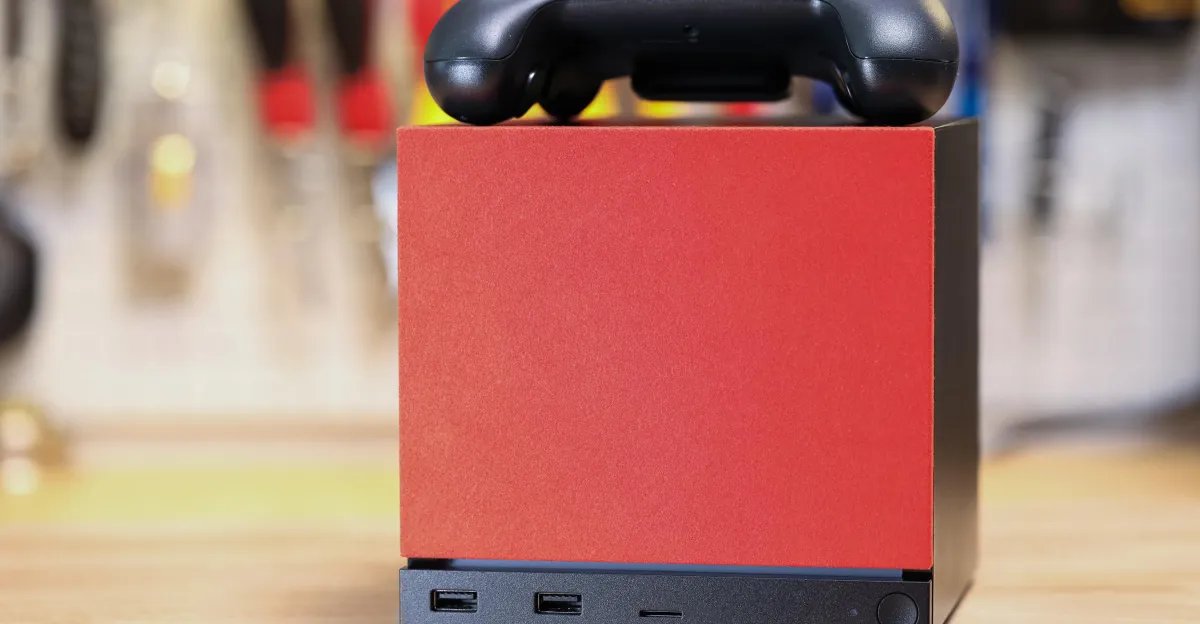
The Steam Machine is here, with a base price of $1,049. Yes, that’s nearly twice the price of a PS5, but what you’re buying here isn’t a console but a full-on PC — and a tiny one at that. Valve says it’s selling the Steam Machine basically at cost. So we asked ourselves: What would it cost to build something like the Steam Machine yourself?
You can’t literally build the same thing. The quiet 6-inch cube Valve has created isn’t reproducible off the shelf. The base model Steam Machine includes 512GB of storage and goes up to $1,349 for 2TB of storage and two additional faceplates. Across both models, the Steam Machine sports 16GB of DDR5 RAM, a custom six-core AMD mobile processor with Zen 4 architecture, and another custom AMD chip for its GPU that runs RDNA 3 and comes with 8GB of VRAM. The whole thing sits on a custom motherboard with a custom cooler that takes up nearly the whole inside of the case.

It’s easy to build a gaming PC that’s faster than the Steam Machine. But you can’t build one as capable at the same size. PCs this compact are either custom prebuilts that use laptop-class components — like the Steam Machine — or they have much less powerful graphics, or both. To match the Steam Machine’s power, we need to jump up to Mini-ITX, which is the smallest off-the-shelf motherboard form factor that can accommodate desktop CPUs and GPUs. But how close can you get to the Steam Machine’s price, performance, and size using off-the-shelf parts?
We put together a parts list using Fractal Design’s Terra mini-iTX case, which measures 13 inches long, 6 inches wide, and 8.6 inches tall. At just over 10 liters in volume, it’s one of the most compact mini-ITX cases that can fit a full-sized desktop GPU without being a nightmare to build in, and it looks good enough to put in your living room. Despite trying to match the Steam Machine’s specs as closely as possible, we ended up with a PC that’s still hundreds of dollars more expensive — granted, we’re stuck with retail prices, and Valve isn’t — and over two and a half times the size.
Component | Model | Price |
|---|---|---|
| CPU | AMD Ryzen 5 8400F (4.2GHz) | $149.99 |
| GPU | ASRock Challenger Radeon RX 7600 8GB GDDR6 | $279.97 |
| Motherboard | ASUS ROG Strix B650E-I Gaming WiFi AMD B650 | $179.99 |
| RAM | G.SKILL Flare X5 16GB 288-Pin PC RAM DDR5 6000 | $204.99 |
| Cooler | Thermalright AXP90 X47 Low Profile CPU Cooler | $21.90 |
| Storage | Team Group T-FORCE G50 M.2 2280 512GB NVMe SSD | $101.99 |
| -or- | Patriot Viper VP4300 Lite 2TB M.2-2280 PCIe 4.0 X4 NVMe SSD | $279.99 |
| Power Supply | Corsair SF750 (2024) 750W 80+ Platinum Certified Fully Modular SFX PSU | $159.99 |
| Case | Fractal Design Terra Mini-ITX tower | $169.99 |
All that adds up to $1,268.81 (or $1,446.81 if you go with 2TB of storage instead of 512GB), not including the rebates or special offers. These parts obviously aren’t a one-to-one match with the Steam Machine, given that the device uses custom processors, but the CPU, GPU, RAM, and storage are as close as we could get using off-the-shelf parts, and it should have similar performance.
But just because you can build a mini PC specced like the Steam Machine doesn’t mean you should. You could save money by swapping the Fractal case for a cheaper and uglier one and put that money toward a GPU like this one with more than 8GB of VRAM. This build is just designed to get as close to the Steam Machine’s loadout and price as possible (at least on paper).
With RAMaggedon pushing the price of RAM and SSDs through the roof, the Steam Machine is a fair deal if you don’t want to go through the process of building a PC yourself — and especially if you want something compact. To even get close to the Steam Machine’s size, your most realistic option would be to look at other prebuilts with custom components, like the devices offered by Minisforum or Framework — and the ones that even come close to the Steam Machine’s performance are more expensive, with other drawbacks.
The Minisforum AtomMan G1 Pro, for example, costs $1,400 and comes with a desktop-class Nvidia RTX 5060 GPU, AMD Ryzen 9 8945HX, 32GB of RAM, and a 1TB SSD. It’s about the same volume as the Steam Machine, and more powerful, but it’s much taller, and reviews indicate it’s noisy. The modular Framework Desktop has a much more powerful CPU than the Steam Machine, though less powerful graphics. It starts at $1,269 with an AMD Ryzen AI Max 385 CPU, integrated Radeon 8050S graphics, and 32GB of shared memory. The Framework Desktop is still slightly bigger than the Steam Machine, measuring 3.81 x 8.09 x 8.9 inches, but far smaller than anything you can build with a discrete GPU.
All in all, it’s surprisingly hard to beat the Steam Machine’s combination of price, performance, and size. It’s not a PC powerhouse, but putting what my colleague Sean Hollister described as PS5-like performance inside a six-by-six cube is not something you can replicate on your own. Since Valve has already indicated that component shortages “impacted our launch quantity,” many people will likely be building their own Steam Machines anyway. Valve opened access to its Linux-based SteamOS with the 3.8 update, which means you can run the Steam Machine’s OS on any PC with an AMD GPU. Of course, you don’t need to run SteamOS; if you build your own PC you can use whatever operating system (and GPU) you want; Steam’s Big Picture Mode runs fine on just about any of them.