dailynewsnblog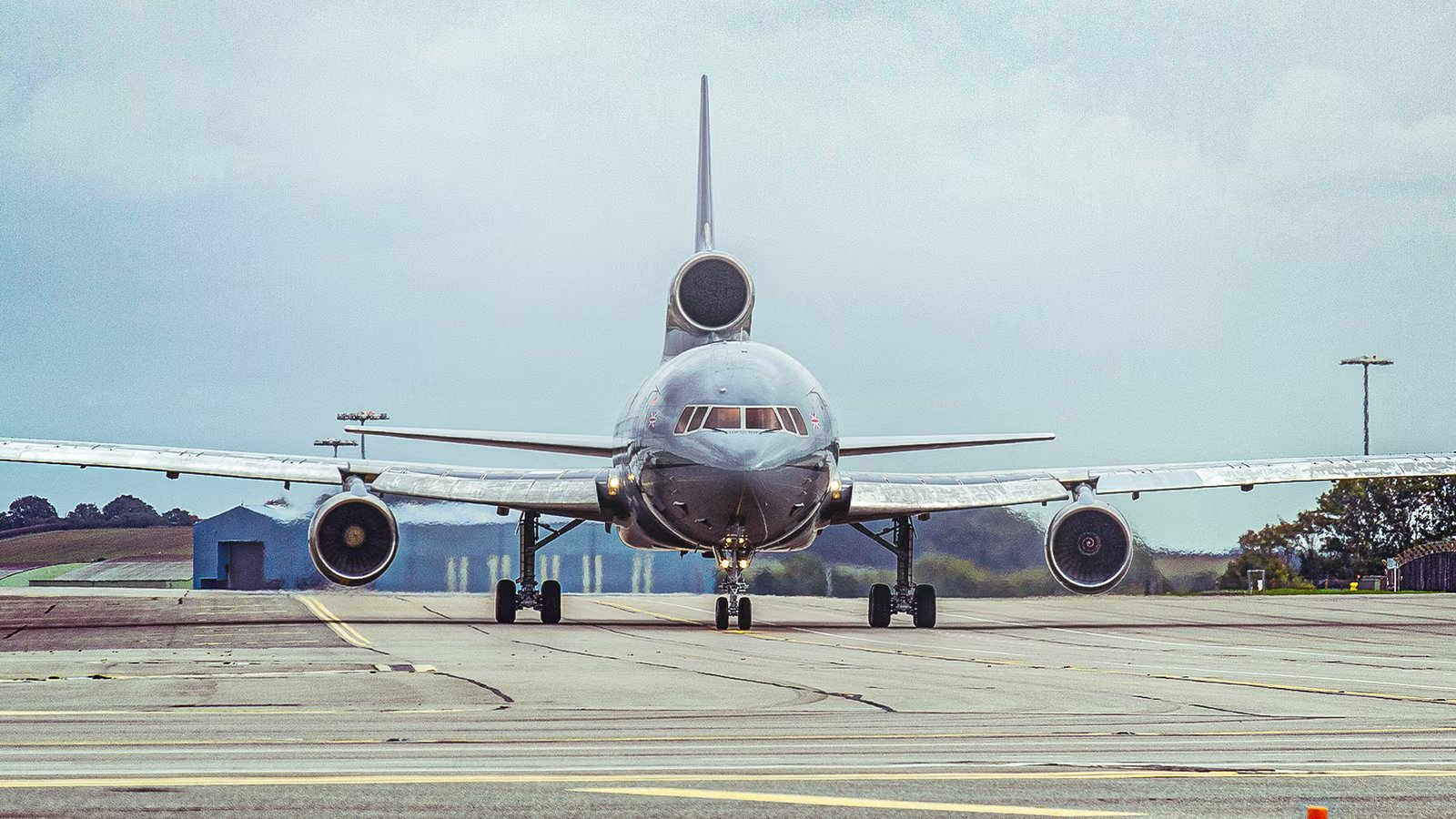
The Lockheed L-1011 TriStar is often remembered as one of aviation’s most advanced commercial aircraft, but one little-known variant played a unique role during a pivotal period in long-haul travel. Designed for routes that were too long for contemporary twinjets and too small for the Boeing 747, this overlooked aircraft quietly reshaped how airlines approached intercontinental operations. Its story offers a fascinating look at the intersection of technology, regulation, and airline strategy during the late 1970s and early 1980s.
This article explores why Lockheed developed the long-range L-1011-500, the engineering decisions that made it radically different from earlier TriStars, and how airlines such as British Airways, Delta, and Pan Am used it to open new markets. It also examines the Rolls-Royce RB.211 engines that powered the aircraft, the regulatory environment that made trijets essential before ETOPS, and the surprising ways the -500’s design philosophy continues to influence modern ultra-long-haul airliners.
Why Lockheed Had To Build A Long-Range TriStar

The baseline L-1011-1, which launched the TriStar program in April 1972, was a brilliant aircraft for medium-range widebody operations, but it was never a transatlantic aircraft. Its range of approximately 4,000 nautical miles (7,410 km) was adequate for domestic US routes and medium-haul international sectors, but it fell well short of what airlines needed for nonstop North Atlantic crossings or services to the Middle East and Asia.
Lockheed addressed this incrementally with the L-1011-100 and L-1011-200, adding center-section fuel tankage and more powerful engines, but neither variant closed the gap with the McDonnell Douglas DC-10-30, which had been designed for genuine intercontinental range from the outset and had entered service in 1972 — a full year before most of Lockheed’s sales efforts had gained traction.
As previously examined by Simple Flying, the structural contest between the TriStar and the DC-10 was decided partly by timing and partly by architecture: McDonnell Douglashad adapted existing Douglas DC-8 technology to move faster and cheaper, while Lockheed built an entirely new airframe whose advanced avionics and fully integrated tail engine added cost and development time that ultimately pushed the company into near-bankruptcy alongside its engine supplier.
By 1976, Lockheed had delivered far fewer aircraft than projected, the DC-10-30 was already flying transatlantic routes for a growing roster of airlines, and Lockheed’s only credible strategic response was to produce a variant that could match the DC-10-30 on range, ideally while differentiating itself on efficiency and capability in a way that gave operators a genuine reason to choose Lockheed over Douglas. The formal launch of L-1011-500 in August 1976 was that response.
According to Ready For Take-Off Book’s technical analysis of the -500 variant, the program required a thorough structural rework of the TriStar airframe rather than incremental modification. Lockheed could have simply added more fuel capacity to the existing -200 fuselages, as Douglas had done with the DC-10-30. Instead, it chose a more sophisticated approach, one that sacrificed passenger capacity to buy range in a way that changed the fundamental economics of operating the aircraft on thin long-haul routes. That decision is the core of what makes the -500 interesting from an engineering and strategic perspective.
Cut Shorter To Fly Further: At The Heart Of The -500’s Design

The defining design decision of the L-1011-500 is its shortened fuselage, and it is genuinely counterintuitive the first time you encounter it. Lockheed reduced the overall length of the aircraft from approximately 177 feet, 8 inches (54.2 meters) on the L-1011-1 to 164 feet, 2 inches (50.05 meters) on the -500, removing three full rows of seating and dropping from a typical capacity of around 300 passengers in the -1 to 246 in the -500’s standard two-class layout.
Every passenger removed from the aircraft reduces structural weight, which reduces fuel burn per nautical mile, the same calculus that led  Singapore Airlines to configure its Airbus A350-900ULRs with just 161 seats for a 9,500-nautical-mile (17,594-km) route. Lockheed arrived at this insight in 1976 for a very different aircraft but with an almost identical problem.
The fuselage reduction was paired with an equally important wing modification. Lockheed extended the wingtips by 9 feet (2.74 meters), increasing the total span to 164 feet 4 inches (50.09 meters), increasing the wing area from 320 to 329 square meters, and adding fuel tank volume within the enlarged structure. The larger wing generated more lift, reduced cruise-induced drag at the higher altitude the lighter aircraft could reach, and, most importantly, contained the additional fuel the longer range required.
To prevent the heavier, longer wing from demanding a heavier structure that would negate the weight savings from the shorter fuselage, Lockheed introduced the Active Control System (ACS): a dual-redundant digital fly-by-wire system that sensed aerodynamic gust loads on the extended wing in real time and commanded automatic aileron deflections to reduce wing bending moments without pilot input. This was a genuinely pioneering application of active load alleviation in a commercial airliner, predating the active gust load alleviation used in the Airbus A320 family by nearly a decade. According to Ready For Take-Off Book’s detailed technical breakdown, the ACS allowed Lockheed to use a lighter wing structure than the extended span would otherwise have required, simultaneously reducing structural fatigue and improving ride quality in turbulence.
The result of combining a shorter, lighter fuselage with an extended, more efficient wing was an aircraft that could carry approximately 31,665 US gallons (119,885 liters) of fuel to a maximum takeoff weight of 510,000 lbs (231,540 kg), achieving a range of approximately 5,345 nautical miles (9,900 km) with a standard mixed-class payload. That range made nonstop transatlantic operations routine from most European capitals to the eastern United States, and opened up the Middle Eastern and South American sectors that the baseline TriStar variants could not serve without a technical stop.

The Striking Differences Between The McDonnell Douglas DC-10 & MD-11
Discover how the DC-10 and MD-11 reshaped wide-body design, defined the trijet era, and why their legacy still lingers in today’s skies.
The Three-Spool Rolls-Royce RB.211-524B4 Engine

The L-1011-500 was powered exclusively by three Rolls-Royce RB.211-524B4 turbofan engines, each rated at approximately 50,000 lbf (222 kN) of thrust. The RB.211 family’s three-spool architecture, with separate low-pressure, intermediate-pressure, and high-pressure spools that rotate independently, was revolutionary for its time, enabling more efficient matching of compressor and turbine speeds across a wider range of operating conditions than the two-spool designs used by Pratt & Whitney and General Electric.
The RB.211’s development costs nearly destroyed both its manufacturer and the aircraft program for which it was designed. As Simple Flying has detailed in its analysis of the L-1011 as the most advanced widebody of its era, Rolls-Royce entered receivership on February 4, 1971, after original carbon-fiber fan blades failed bird-strike testing in 1970 and required a costly redesign to titanium.
The British government nationalized the engine division to keep the program alive, but the crisis delayed FAA certification of the L-1011-1 until April 1972 and handed McDonnell Douglas a year’s head start in commercial service that the TriStar program never fully recovered from. The -524B4 variant used in the -500 was a refined, higher-thrust development of the original -22B, featuring a bypass ratio of approximately 5:1, an overall pressure ratio of 28.3:1, and a fan diameter of 7 feet, 2 inches (2.19 meters).
For the L-1011-500 specifically, the -524B4’s cruise fuel efficiency was a competitive differentiator relative to the General Electric CF6-50 powering the DC-10-30. The three-spool design produced better specific fuel consumption at the high altitudes the lighter -500 could sustain, and the S-duct center-engine installation, buried in the tail fuselage with a curved inlet at the base of the fin, was significantly quieter than the DC-10’s pylon-mounted third engine. According to Airline History, this noise advantage was genuinely valued by European carriers facing increasing airport noise restrictions in the late 1970s, adding a practical operational dimension to what was already a technically superior aircraft.
British Airways, Delta, Pan Am, And The RAF: Who Actually Flew The -500

 British Airways inaugurated the -500 in revenue service on May 7, 1979, on the route from
  London Heathrow Airport to Abu Dhabi International Airport , taking delivery of eight aircraft and deploying them on long-haul sectors from Heathrow that the earlier TriStar variants could not reach nonstop.
 Delta Air Lines followed with its first -500 service on June 17, 1979, eventually building a fleet of 17 aircraft, the largest -500 fleet of any operator, and using them as the backbone of a growing transatlantic network from
  Hartsfield-Jackson Atlanta International Airport that included Frankfurt, London Gatwick, Stuttgart, Shannon, Dublin, and Hamburg, with Pacific services to Hawaii added from 1984.
Catch what other flight trackers miss
Emergency squawks, holds, NOTAMs — live signals, no signup.
Open tracker
Catch what other flight trackers miss
Emergency squawks, holds, NOTAMs — live signals, no signup.
Open tracker
Pan American World Airways (Pan Am)ordered 12 aircraft and launched New York to London Gatwick service in July 1980, deploying the -500 on transatlantic routes and thinner international services like New York JFK to Caracas that did not justify a 747. Pan Am eventually sold six of its -500s to United Airlines in 1986 as part of the Pacific routes sale, giving United a short-lived fleet for Asia services from  Tokyo Narita Airport.
TAP Air Portugal operated seven -500s on transatlantic routes from Lisbon to Brazil and North America, while  Royal Jordanian flew nine aircraft on long-haul services from Amman to Europe and North America, one of the type’s most geographically diverse deployments.
Air Transat, the Canadian charter carrier, operated six -500s on leisure routes from Toronto to Europe and the Caribbean. Perhaps the most unusual operational chapter belongs to the Royal Air Force, which acquired nine L-1011-500s — designated TriStar K.1 for the tanker role and C.2/C.2A for transport — and operated them with No. 216 Squadron from RAF Brize Norton until 2014. The RAF’s TriStars flew tanker-transport missions across three decades, supporting operations in the Falklands, the Gulf War, Kosovo, Iraq, and Afghanistan. An aircraft that entered service as a thin-route intercontinental airliner ended its operational life as a strategic military asset, which speaks to the fundamental soundness of the design. According to Ready For Take-Off Book, the -500 had no recorded fatal accidents among its specific fleet across its entire commercial and military service life.
Operator | Fleet Size | Primary Roles | Notable Routes |
Air Canada | 4 | Transatlantic | Toronto–LHR, Montreal–Geneva |
British Airways | 8 | Long‑range intercontinental | LHR–Abu Dhabi |
Delta Air Lines | 17 | Transatlantic + Hawaii | ATL–FRA, ATL–LGW |
Pan Am | 12 | Transatlantic | JFK–LGW |
United Airlines | 6 | Asia | NRT‑Asia |
TAP Air Portugal | 7 | Transatlantic | LIS–Brazil |
Royal Jordanian | 9 | Long‑haul | AMM–North America |
Air Transat | 6 | Charter | YYZ–Europe |
LTU International | 4 | Charter | DUS–Caribbean |
EuroAtlantic Airways | 3 | Charter | LIS–Caribbean |
RAF | 9 | Tanker/Transport | Global deployments |
Most of the commercial -500 fleet ended its service quietly with European charter carriers such as LTU International in Germany, and EuroAtlantic in Portugal, flying high-density leisure routes to sunny destinations before being retired as the economics of trijet operation became increasingly untenable compared with the twin-engine Boeing 767 and Airbus A330.
The final commercial passenger L-1011 flight took place in 2008, and, with no freighter conversion program, virtually no airframes survived the transition to cargo operations, preserving the DC-10 and the 747 in service for decades longer.
The Problem Lockheed Ran Into After Designing The L-1011 TriStar
The aircraft entered service later than its rival despite its advanced design, which left it to fight for market share from behind.
Why The -500 Flew Routes That Twins Simply Could Not — And What Changed

The regulatory environment in which the L-1011-500 entered service in 1979 is essential context for understanding why it was commercially significant beyond its technical specifications. Before the FAA’s Extended Range Twin Operations (ETOPS) framework was established — the first ETOPS-120 authorization was granted to TWA’s Boeing 767-200 in May 1985 — twin-engine airliners were restricted to routes no more than 60 minutes’ flying time from an adequate diversion airport on one engine. That rule effectively prohibited twinjets from flying transatlantic or transpacific routes: over the North Atlantic, large portions of the crossing put an aircraft more than 60 minutes from diversion on a single engine. The practical result was that every long-haul transoceanic route required an aircraft with three or four engines.
The Boeing 767 entered service in September 1982 and the Airbus A310 in April 1983, both offering much better fuel efficiency than any trijet of comparable capacity. But neither could fly the North Atlantic legally until ETOPS 120 approval arrived in 1985, and full transatlantic freedom for twin-engine jets did not come until ETOPS 180 approvals proliferated in the late 1980s and early 1990s. The L-1011-500 operated precisely in the six-year window between its entry into service in 1979 and the moment ETOPS twin approvals began systematically undercutting the trijet’s regulatory advantage.
During those years, the -500 was the most economically rational aircraft available for long, thin transatlantic and intercontinental routes: too thin to justify a 747, too long for the early twin-engine jets, and too demanding in passenger numbers for a narrowbody. As shown on Simple Flying in a size comparison of modern and vintage widebodies, aircraft like the DC-10 and L-1011 were genuinely medium-sized by today’s standards — and their economics on thin routes have been superseded entirely by the efficiency of modern carbon-composite twins. But in 1979, those twins did not exist yet.
The irony is that the high-bypass turbofan engines reliable enough to satisfy ETOPS requirements, the same technology that eventually made the -500 redundant, were a descendant of the RB.211 family that powered the TriStar. The Rolls-Royce Trent engines in the 787 and A350 are engineering descendants of the three-spool architecture that Rolls-Royce almost destroyed itself developing for the L-1011. The -500’s retirement was caused, in part, by the success of the very engine lineage that made it possible.
What The -500 Got Right That Aviation Is Still Doing Today

The L-1011-500’s central idea was remarkably simple: sacrifice capacity to gain range. While that may have seemed unconventional in the 1970s, it has since become a recurring theme in long-haul aircraft design. Airlines consistently find value in aircraft that can profitably connect distant city pairs without relying on the passenger volumes needed to fill the largest widebodies. The TriStar 500 demonstrated that range, rather than sheer size, could be the defining factor for opening new markets.
Its significance is also tied to timing. The aircraft arrived during a brief period when airlines needed a long-range widebody smaller than a Boeing 747 but not subject to the limitations then imposed on twin-engine aircraft. For several years, the -500 occupied that niche almost perfectly, allowing carriers to operate routes that would have been difficult to justify with larger aircraft and impossible with contemporary twins. In that sense, the aircraft was not simply a derivative of the TriStar family; it was a solution to a very specific challenge facing international airlines at the time.
Although the wider L-1011 program ended as a commercial disappointment, the -500 remains one of its most compelling achievements. Its combination of advanced aerodynamics, innovative systems, and range-focused design anticipated trends that continue to shape airline fleet planning today. More than four decades after entering service, the aircraft stands as an overlooked example of how thoughtful engineering can create an airliner perfectly suited to a moment in aviation history, even if that moment proves relatively brief.