dailynewsnblog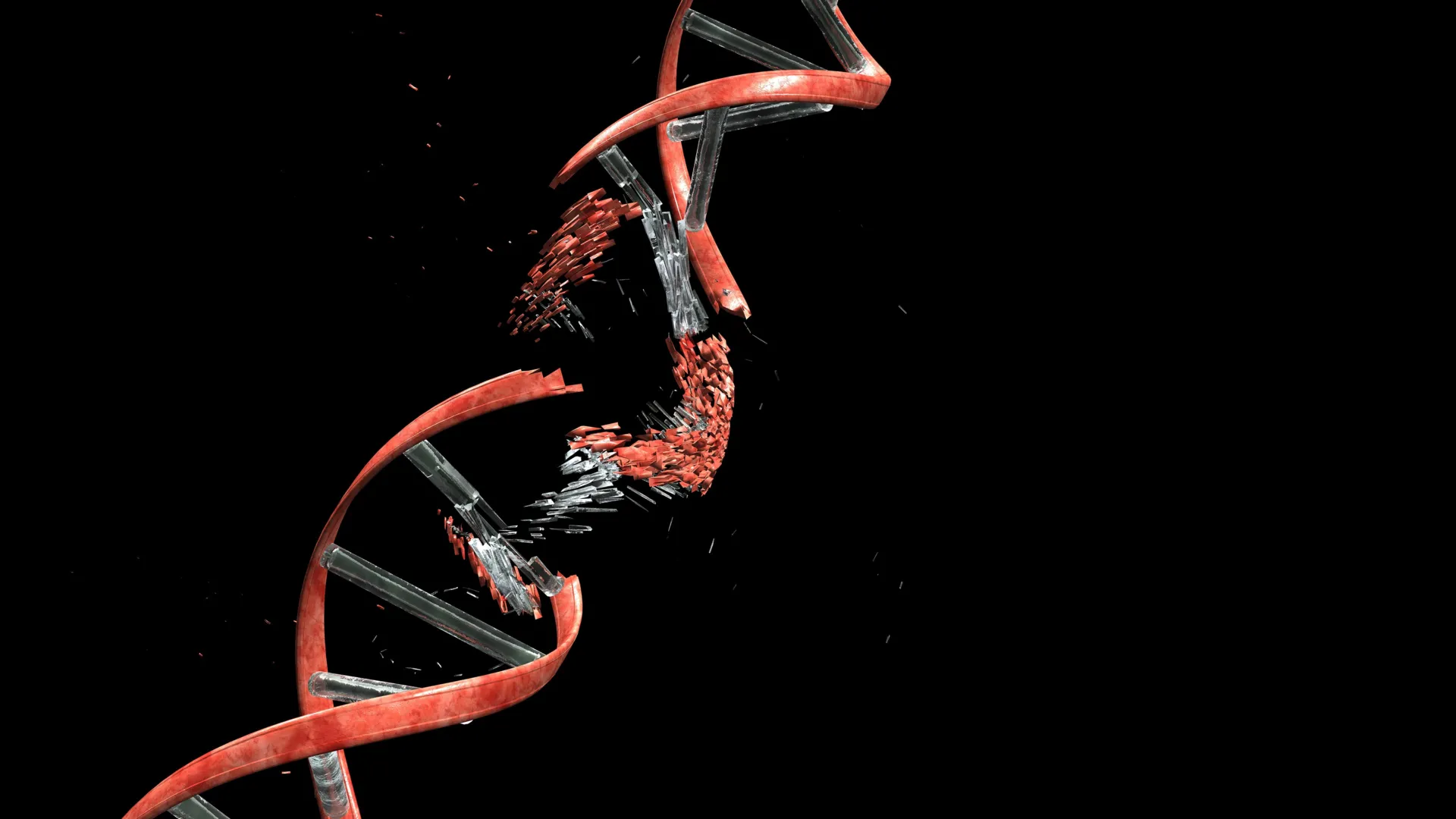
As the brain develops, newly formed neurons must travel through tightly packed tissue to reach their final destinations in the cerebral cortex, where they become part of the brain’s communication network. This journey forces the cells through narrow gaps between fibers and neighboring cells.
A new study published in Nature has revealed an unexpected consequence of that process. Researchers from Kyoto University’s Institute for Integrated Cell-Material Sciences (WPI-iCeMS) and collaborating institutions found that migrating neurons routinely experience significant DNA damage. Specifically, the cells develop double-strand breaks, a severe form of DNA damage in which both strands of the DNA double helix are cut.
Although double-strand breaks are typically associated with mutations, cell dysfunction, and even cell death, the researchers discovered that they are a normal part of brain cortex development. In healthy brains, the damage is rapidly repaired before it can cause lasting problems.
“The developing brain appears to have evolved to tolerate and repair the neuronal damage efficiently,” says Professor Mineko Kengaku, of WPI-iCeMS, who led the study. “But understanding the limits of that tolerance — and what happens when repair is incomplete — brings us closer to understanding a range of neurological conditions.”
DNA Damage During Neuronal Migration
To investigate how this damage occurs, the researchers recreated the physical challenges faced by developing neurons. They guided neurons through tiny microchannels designed to mimic the confined spaces found in growing brain tissue.
Using fluorescent markers, the team observed double-strand DNA breaks appearing as neurons moved through the channels. Once the cells emerged from the other side, the damage gradually disappeared. Most of the breaks were repaired within 24 hours, and the neurons continued functioning normally.
The researchers identified the source of the damage as Topoisomerase IIβ, an enzyme that normally helps cells manage stress within DNA. Under ordinary conditions, the enzyme temporarily cuts DNA strands to relieve twisting and tension generated by routine cellular activity before reconnecting them.
The process can be compared to cutting a tangled cable to remove twists and then reconnecting it. However, when neurons are subjected to mechanical stress while squeezing through tight spaces, the enzyme can become trapped midway through the process, leaving sections of DNA broken. The cell then relies on a repair mechanism called non-homologous end joining to reconnect the damaged DNA ends.
Why Neurons Recover While Other Cells Do Not
The team found that neuronal DNA damage differs from the damage seen in certain cancer cells moving through the same microchannels. In cancer cells, DNA damage tends to occur more randomly and can disrupt normal cellular activity or trigger cell death.
In contrast, the DNA breaks in neurons were concentrated mainly in regions of the genome that are not actively involved in critical gene functions. Because essential genes are largely spared, the cells are able to maintain normal function despite the temporary damage.
When DNA Repair Falls Short
To explore the consequences of failed repair, the researchers engineered mice whose newly formed cerebellar neurons lacked Ligase 4, an enzyme required for repairing DNA breaks.
The mice developed normally and showed no obvious early abnormalities. However, as they reached adulthood, they began to experience mild but gradually worsening balance problems. These symptoms resemble those seen in certain human disorders linked to genome instability that affect the cerebellum.
Clues to Brain Diversity and Disease
The findings suggest that DNA breakage and repair may play a larger role in brain biology than previously recognized. Researchers now want to understand whether these early DNA changes contribute to differences between individual neurons and whether they influence neurodevelopmental or neurodegenerative diseases later in life.
“It shifts how we think about the neuronal genome,” says Professor Kengaku. “All neurons originate from the same DNA, but DNA damage and repair can introduce small genetic differences between individual neurons through a small mechanical journey. Some of that history may be written into the genome itself.”
The study was conducted through a collaboration involving Kyoto University, the University of Tokyo, the University of Osaka, the National University of Singapore, and the Tokyo Metropolitan Institute of Medical Science.