dailynewsnblog
The Boeing 757-300 was developed back in 1996, primarily at the request of German leisure airline Condor. At the time, the airline wanted an aircraft with the lowest possible cost per seat for its leisure network across the Mediterranean and Canary Islands. This aircraft required more capacity than a 757-200 at lower operating costs than a widebody.
In an effort to keep development costs low, Boeing’s solution to Condor’s request was fairly simple: the manufacturer decided to simply stretch the fuselage of the already popular 757-200. While cheap at the time, this solution would later turn out to be relatively expensive for  Boeing as only a handful of airlines opted to operate the longer -300 as the stretch introduced a number of structural inefficiencies which made the aircraft uncompetitive to other aircraft.
A Brief Overview Of The Popular 757 Program

When the Boeing 757 was first announced over four decades ago on August 31, 1978, to be developed alongside the Boeing 767, it became clear a new chapter for commercial aviation was unfolding. The aircraft was around 20% more fuel-efficient than its predecessor, the Boeing 727, and its powerful engines delivered strong thrust, allowing the Boeing 757 to operate at high altitudes, on short runways, and under high-temperature conditions. Adding to the Boeing 757’s appeal to airlines was its long range of up to 3,900 nautical miles (7,200 km). This made it one of the first twin-engine aircraft to receive ETOPS certification, allowing for transatlantic flights with a lower capacity than the long-haul aircraft available at the time.
Revolutionary at the time were a new flight management system and the introduction of electronic flight instrument systems (EFIS), eliminating the need for a flight engineer. Later, a new winglet design improved the aircraft’s aerodynamics, resulting in enhanced lift, reduced drag, and improved fuel efficiency. Furthermore, the cockpit of the Boeing 757 is nearly identical to that of the Boeing 767, allowing for crew cross-training, a groundbreaking concept at the time. Pilots even compare the Boeing 757 with a sports car, praising the aircraft for its hands-on flying and responsive handling. Something newer aircraft, such as the Boeing 777, lack.
The 757-200 was the first 757 variant to be produced by Boeing, with the aircraft’s first commercial flight taking place in January 1983 with Eastern Air Lines. At first, Boeing also announced a shorter 757-100 model to be launched alongside the -200, with around 150 seats, to replace the Boeing 727. However, the large wing and landing gear of the 757 were found to be excessively heavy for an aircraft of that capacity, and the project was discontinued in March 1979. After the initial success of the 757, Boeing later introduced a stretched variant, the 757-300, which entered service in March 1999 with German leisure airline Condor.

The Aircraft Set To Replace The Iconic Boeing 757
There isn’t a single airliner that can replicate all of the Boeing 757’s capabilities, but perhaps the market doesn’t require one.
Here Is How The -200 And -300 Compare Beyond Fuselage Length

As the 757-300 is a stretched variant of the -200, the most notable difference between the two aircraft is their length. The -200 is 155 feet 3 inches (47.32 meters) compared to 178 feet 10 inches (54.50 m) for the -300. In a typical two-class configuration, this comes down to 243 and 200 passengers, respectively, and an exit capacity of 239 and 295 passengers. The wings of both variants are identical, with a wingspan of 124 feet 8 inches (38 meters) and a surface of 1,995 ft² (185.30 m²). Also, in terms of total height, the two variants are identical at 44 feet 7 inches (13.60 meters). The additional meters of fuselage allowed the -300 to carry up to 295 passengers, compared to only 239 for the -200.
Boeing 757-200 | Boeing 757-300 | |
|---|---|---|
Wingspan | 124 feet, 8 inches (38 meters) | 124 feet, 8 inches (38 meters) |
Wing Area | 1,995 ft² (185.30 m²) | 1,995 ft² (185.30 m²) |
Height | 44 feet, 7 inches (13.60 meters) | 44 feet, 7 inches (13.60 meters) |
Thrust per Engine | 40,200 lbf (179 kN) | 43,500 lbf (193 kN) |
Total Thrust | 80,400 lbf (358 kN) | 87,000 lbf (386 kN) |
MTOW | 255,000 lbs (115,680 kgs) | 272,000 lbs (123,600 kgs) |
Range | 3,900 nm (7,222 km) | 3,395 nm (6,287 km) |
Cruise Speed | M0.8 | M0.8 |
Typical Capacity | 200 passengers | 243 passengers |
Exit Capacity | 239 passengers | 295 passengers |
Source: aviatorjoe.net | ||
The larger size of the 757-300 also increased the aircraft’s Maximum Take-off Weight (MTOW) compared to the -200. The -300 has an MTOW of 272,000 lbs (123,600 kg), whereas the -200 has a limit of 255,000 lbs (115,680 kg). This increased weight also introduced the key trade-off to the increased capacity, as the -300 has a range of only 3,395 nautical miles (6,287 km) compared to the 3,900 nautical miles (7,222 km) of the -200. Both aircraft are powered by the same families of high-bypass turbofan engines, with airlines having the choice between the Rolls-Royce and the Pratt & Whitney PW2000 families. Despite this, the -300 does have a higher-thrust Pratt & Whitney option to compensate for the additional weight; the 757-300 also has more powerful engines with additional thrust.

Why Boeing Stopped Building The 757
Orders dried up by the turn of the millennia as airlines opted for other narrowbodies.
Why The 757-300 Wasn’t So Popular

With 3 feet, 4 inches (4.06 meters) forward of the wing and another 10 feet (3.05 meters) to the rear, the -300 is around 15% larger compared to the -200 while having the same wings, engines, and fuel capacity. While this lowered the cost per seat, it also introduced new challenges, resulting in only 55 ever being built. As mentioned above, the aircraft’s range was shorter compared to the -200, limiting operational flexibility. Furthermore, the 757-200 is overpowered relative to its size, allowing it to excel at high-altitude, hot-temperature, and short-runway airports. However, the much heavier MTOW of the -300 results in more sluggish take-off and climb performance.
Catch what other flight trackers miss
Emergency squawks, holds, NOTAMs — live signals, no signup.
Open tracker
Catch what other flight trackers miss
Emergency squawks, holds, NOTAMs — live signals, no signup.
Open tracker
One of the most significant challenges created by the Boeing 757-300’s fuselage stretch was an increased risk of tail strikes during takeoff and landing. The aircraft’s tail sat considerably farther behind the main landing gear than on the 757-200, reducing the margin for error during departure rotation or landing flare. To mitigate this risk, Boeing equipped the aircraft with a retractable tailskid designed to protect the rear fuselage in the event of a strike. The manufacturer also incorporated a pitch-attitude protection system linked to the spoilers that can automatically lower the nose if the aircraft’s pitch attitude becomes excessive during touchdown. These measures highlight how the 757-300’s record-breaking length pushed the practical limits of narrowbody aircraft design.
The Longest Narrowbody Aircraft Compared | |
|---|---|
Aircraft | Length |
737 MAX 10 | 143 feet, 8 inches (43.8 meters) |
A321XLR | 146 feet (44.5 meters) |
757-200 | 155 feet, 3 inches (47.3 meters) |
757-300 | 178 feet, 7 inches (54.5 meters) |
The additional length also came with several operational challenges for airlines during turnaround. Boarding and deplaning took significantly longer because the aircraft still had only one aisle and two passenger doors for boarding, despite seating 295 passengers in an all-economy configuration. Tests during the certification process reportedly showed an eight-minute increase in the time it took to board and deplane versus the shorter 757-200. While this might not appear as much, eight minutes across multiple daily flights do add up. Something especially relevant for low-cost and leisure airlines, where high utilization is everything. To mitigate this, Condor and Boeing together developed specific zone-based boarding procedures to reduce congestion.

How Long Will The Boeing 757 Keep Flying?
More than 500 examples of the 757 are in service.
These Airlines Are Still Operating The 757

As of writing, only a handful of passenger airlines remain that operate the Boeing 757, with the two largest operators being  Delta Air Lines and
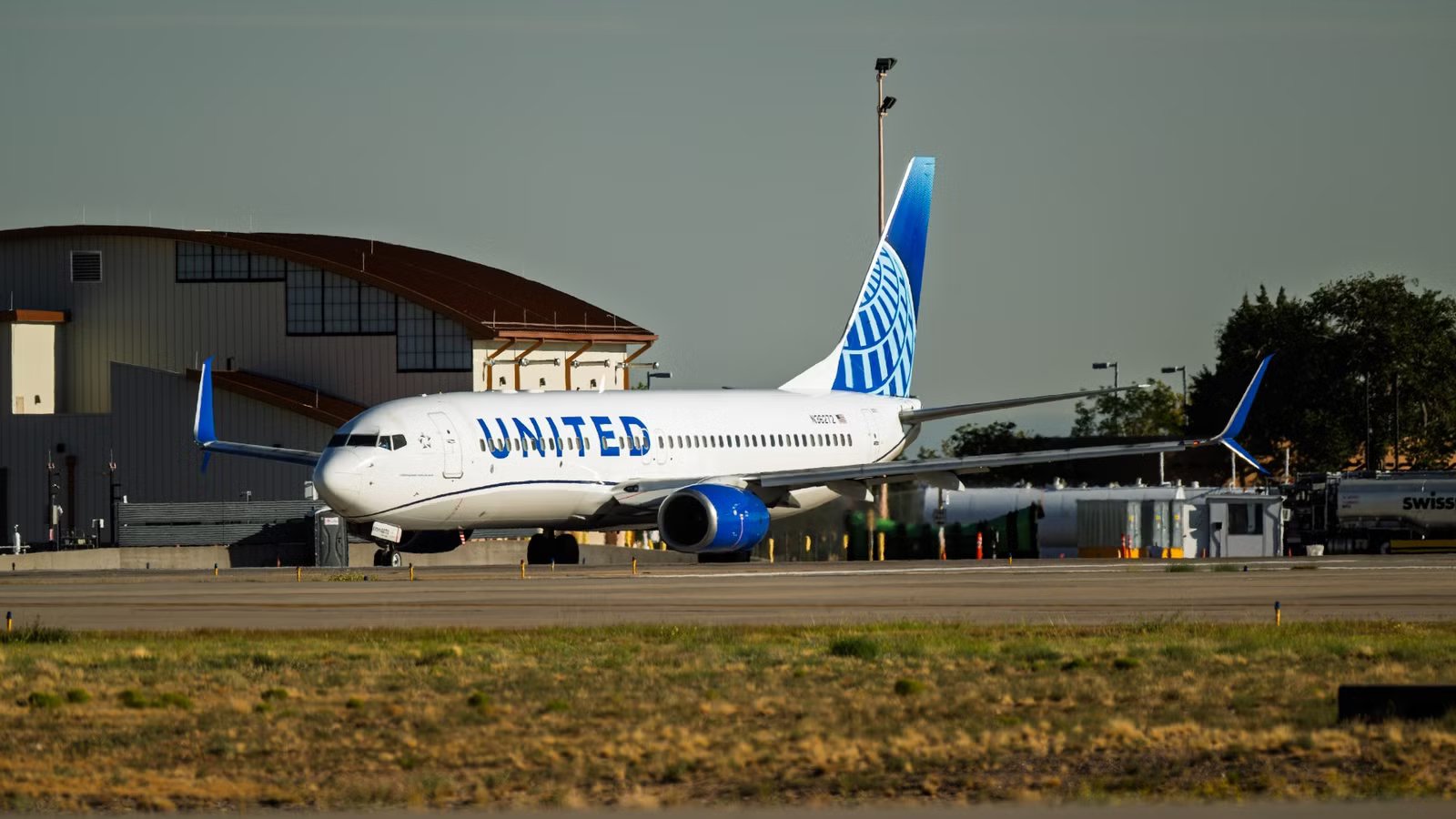
  United Airlines. The two American carriers currently operate 90 and 61 757 aircraft respectively, and are also the last remaining airlines to still operate the Boeing 757-300. United is the largest operator of the subtype with 21 aircraft at an average age of 21.8 years. The airline inherited its entire fleet of Boeing 757-300s from Continental Airlines following their merger in 2010. Similar to United, Delta also received its fleet of -300s in 2010, through the carrier’s merger with Northwest Airlines. Today, the airline operates 16 757-300s with an average age of 23.4 years.
Catch what other flight trackers miss
Emergency squawks, holds, NOTAMs — live signals, no signup.
Open tracker
Catch what other flight trackers miss
Emergency squawks, holds, NOTAMs — live signals, no signup.
Open tracker
For both Delta and United, the combined fleet age of their 757s is approaching 30 years. Unsurprisingly, this means their days are numbered, and both airlines are actively working to replace the aging twinjet. While a true direct successor to the 757’s specific thrust-to-weight, runway, and payload capabilities doesn’t exist, the closest replacement for the aircraft is Airbus’ A321XLR, especially on longer transatlantic routes. United has 50 of these aircraft on order, whereas Delta has only ordered the regular A321neo to serve domestic routes and flights to the Caribbean, suggesting the airline does not see a future for narrowbody long-haul flights. Additionally, the highly anticipated Boeing 737 MAX 10 ordered by United is expected to replace many domestic and short-haul high-demand routes that previously relied on 757s.
Boeing 757 Operators In June ’26 | ||||
|---|---|---|---|---|
Airline | 757-200 | 757-300 | Total | Average Age |
1. Delta Air Lines | 74 | 16 | 90 | 27.4 years |
2. United Airlines | 40 | 21 | 61 | 27.5 years |
3. Azur Air | 10 | 10 | 27.8 years | |
4. Icelandair | 8 | 8 | 26.6 years | |
5. SCAT Airlines | 3 | 3 | 33.7 years | |
Source: planespotters.net | ||||
Other smaller operators of the 757 include Russian leisure airline Azur Air, Kazakh airline SCAT Airlines, and Icelandic flag carrier Icelandair. The two former airlines do not appear to have any formal plans to retire the aircraft as of writing, while the latter decided to accelerate the retirement of the aircraft amid rising operating costs due to high oil prices. Also, Icelandair is replacing the 757 with brand-new A321XLRs. Besides the mentioned passenger airlines, there are also numerous cargo airlines still operating the aircraft, either as purpose-built freighters or as converted passenger aircraft. Additionally, a number of other organizations, such as charter airlines, air forces, and governments, still operate a number of 757 aircraft.