dailynewsnblog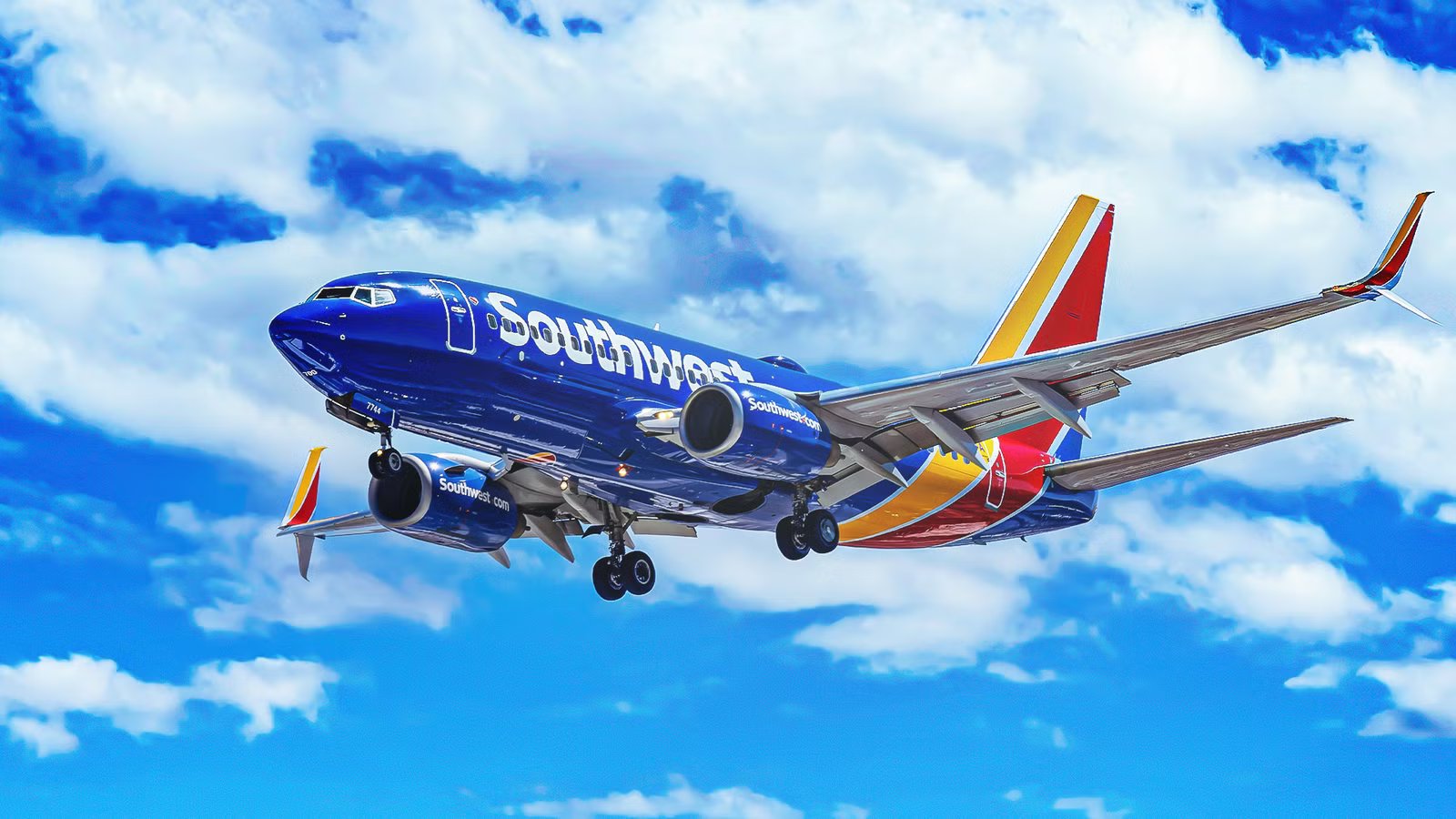
 Southwest Airlines‘ Hawaiian experiment has produced one of the more unusual contradictions in the US airline industry. On flights between the mainland US and Hawaii, Southwest appears to be performing extremely well, filling more than 90% of all seats over the past year. But within Hawaii itself, the story is very different.
According to US Department Of Transportation (DOT) data covering the 12 months to March 2026, Southwest’s inter-island flights were just 57.2% full. This was actually an improvement from the prior year, but only after the airline cut capacity sharply. The numbers suggest that Southwest is still struggling to break Hawaiian Airlines’ grip on the short, high-frequency market between the islands, but there are also other intricacies hidden within the data.
Southwest’s Inter-Island Flights Remain Deeply Underwater

Southwest launched inter-island flights in Hawaii in 2019 with the promise of bringing fresh competition to one of the most distinctive aviation markets in the US. Its arrival was significant because Hawaiian Airlines had long dominated travel between the islands, while Southwest’s traditional low-cost model (at the time) with no change fees and free checked bags gave travelers an attractive alternative.
Seven years later, however, the inter-island numbers remain challenging. Southwest carried 1.77 million passengers on its inter-island routes in the 12 months to March 2026, with an average load factor of 57.2%. As bad as that figure is, it was actually an improvement on the 46.7% average in the previous 12-month period, but the improvement came only as Southwest reduced capacity by 18%.
Southwest Inter-Island Performance | ||
|---|---|---|
Route | Passengers | Load Factor |
Kahului – Kauai | 53,336 | 41.8% |
Kahului – Kona | 66,207 | 51.8% |
Honolulu – Kahului | 540,107 | 53.9% |
Honolulu – Kona | 334,504 | 54.3% |
Honolulu – Kauai | 355,180 | 57.2% |
Honolulu – Hilo | 418,270 | 65.0% |
Total / Average | 1,767,604 | 57.2% |
To put this in context, Southwest’s system-wide load factor across all US markets over the same period was 77.4%, so inter-island routes are under-performing by more than 20 points, and therefore almost certainly deeply unprofitable. The worst of a bad bunch were the routes from Maui, with flights on all three routes from Kahului Airport (OGG) barely half-full. Even the best-performing route from Honolulu International Airport (HNL) to Hilo had a 65% load factor, which would be unacceptable performance for Southwest back on the mainland.
Hawaiian Is Winning With Scale, Frequency, And Smaller Aircraft

Hawaiian Airlines‘ performance shows how different the picture looks for the incumbent carrier. Over the same period, Hawaiian carried more than 5 million inter-island passengers with an average load factor of 77.6%. That’s nearly three times as many passengers as Southwest, using a higher frequency service, and with a 20-point load factor advantage. It’s not difficult to imagine the stark difference in the financial outcomes for both airlines.
Southwest vs Hawaiian Inter-Island Performance | ||||
|---|---|---|---|---|
Route | Southwest Passengers | Southwest LF | Hawaiian Passengers | Hawaiian LF |
Kahului – Kauai | 53,336 | 41.8% | 205,889 | 74.3% |
Kahului – Kona | 66,207 | 51.8% | 223,301 | 80.1% |
Honolulu – Kahului | 540,107 | 53.9% | 1,457,603 | 76.6% |
Honolulu – Kona | 334,504 | 54.3% | 1,103,963 | 77.4% |
Honolulu – Kauai | 355,180 | 57.2% | 1,141,799 | 73.6% |
Honolulu – Hilo | 418,270 | 65.0% | 915,547 | 81.1% |
Total / Average | 1,767,604 | 57.2% | 5,048,102 | 77.6% |
That passenger advantage matters. In a short-haul market like Hawaii, frequency is a major part of the product. More flights mean more convenient departure times, better options for same-day travel, stronger local loyalty, and more reliable connectivity across the islands. Hawaiian’s scale creates a virtuous circle: more passengers support more flights, and more flights make the airline more useful to passengers.
Aircraft size is also central to the story. Hawaiian operates 128-seat Boeing 717s on inter-island flights, while Southwest uses 175-seat Boeing 737s. At their respective average load factors, both airlines are carrying roughly 100 passengers per departure. The difference is that Hawaiian does so with a much smaller aircraft that is better matched to the market, while Southwest has to fill 47 additional seats on every flight just to reach the same load factor.
The Evolution Of Southwest Airlines’ Hawaiian Network
The carrier has come a long way from its first flight to the state nearly seven years ago.
The Data Contains Warning Signs For Both Airlines

For Southwest, the warning is obvious. It operates an exceptional business with its flights from the mainland to Hawaii, where average load factors are above 90% (versus 83% for Hawaiian), the best of any airline. But the inter-island network remains very weak, despite seven years of investment and the recent capacity cuts.
That raises the question of whether Southwest should keep offering the same breadth of inter-island service, or whether it should adjust its inter-island fleet to its smaller, 137-seat Boeing 737-700s. Right now, it appears that Southwest still sees value in maintaining an inter-island presence, supporting mainland travelers who want to visit more than one island. But the data suggests that Southwest might be forced to refocus on bringing visitors to Hawaii rather than moving them around once they get there.
For Hawaiian, the warning is more subtle but equally important. Its 717 fleet is aging, and the Alaska Air Group is already talking about replacements, suggesting that its existing 737-800s are “the default.” But that runs the risk of introducing the same problem Southwest already faces: too many seats per departure in a market where frequency and right-sized capacity are critical.
This presents a conundrum for the group. The larger Boeing 737-800 aircraft may simplify fleet planning, but it would also make Hawaiian’s inter-island economics harder if demand does not support the extra seats. Smaller aircraft such as the Airbus A220 or Embraer E2 may be more complicated from a fleet perspective, but they could preserve the balance that has made Hawaiian so effective between the islands.
The broader lesson is that Hawaii rewards the right aircraft as much as the right brand. Southwest’s weak inter-island load factors show that a strong mainland reputation are not always enough. Hawaiian’s stronger performance, meanwhile, suggests that frequency, local scale, and aircraft size remain decisive. As both airlines plan their next moves, the latest traffic data offers a warning neither can afford to ignore.