dailynewsnblog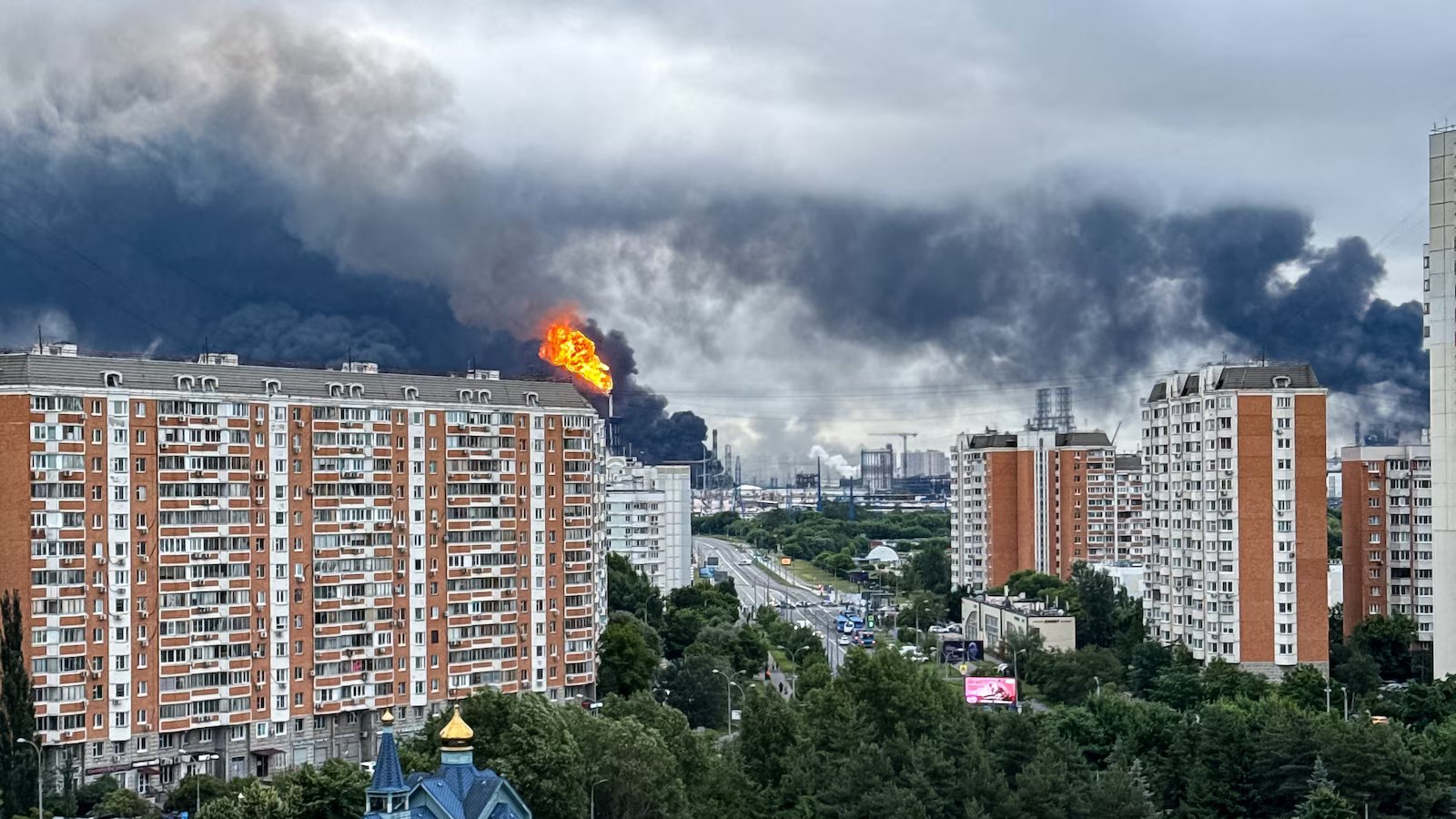
LONDON — Ukraine launched hundreds of drones on Thursday targeting more than a dozen Russian regions, including Moscow, where they struck an oil refinery, sending plumes of black smoke into the air over the Russian capital.
Russia’s Ministry of Defense said the country’s defences destroyed some 555 drones in the early morning hours. About 180 of those were shot down as they approached Moscow, the city’s mayor, Sergei Sobyanin, said in an update in Russian on the Telegram messaging app.

Black smoke rises from the area of the Russian oil producer Gazprom Neft’s Moscow oil refinery on the south-eastern outskirts of Moscow on June 18, 2026.
-/AFP via Getty Images
Ukraine laid claim to the aerial attack, with President Volodymyr Zelenskyy saying it marked the second time within a week that Kyiv had targeted the Moscow Oil Refinery, a sprawling facility in the city’s southeast that’s run by a subsidiary of state-owned Gazprom. Video verified by ABC News showed blasts at the Kapotnya district refinery.
“This is a fully justified response to Russian attacks on our cities and communities, and another important result of our warriors’ work against facilities that sustain Russia’s war machine,” Zelenskyy of Ukraine said on social media.

The area of the Russian oil producer Gazprom Neft’s Moscow oil refinery on the south-eastern outskirts of Moscow on June 18, 2026.
-/AFP via Getty Images
Zelenskyy sought in his post to position Ukraine’s long-range strikes, which have escalated in recent weeks, as a means to push Moscow toward diplomacy.
The Moscow public prosecutor’s office said “several” districts in the city were attacked by drones on Thursday, claiming there had been damage to apartment buildings. The office said there were casualties reported, but did not detail them.
Russia’s Department of Defense said it had launched in response a drone-and-missile attack against “fuel and energy facilities used by the Ukrainian Armed Forces.”
ABC News’ Victoria Beaule, Helena Skinner, Anna Sergeeva, Oleksiy Pshemyskiy and Jamie Dorrington contributed to this report.