dailynewsnblog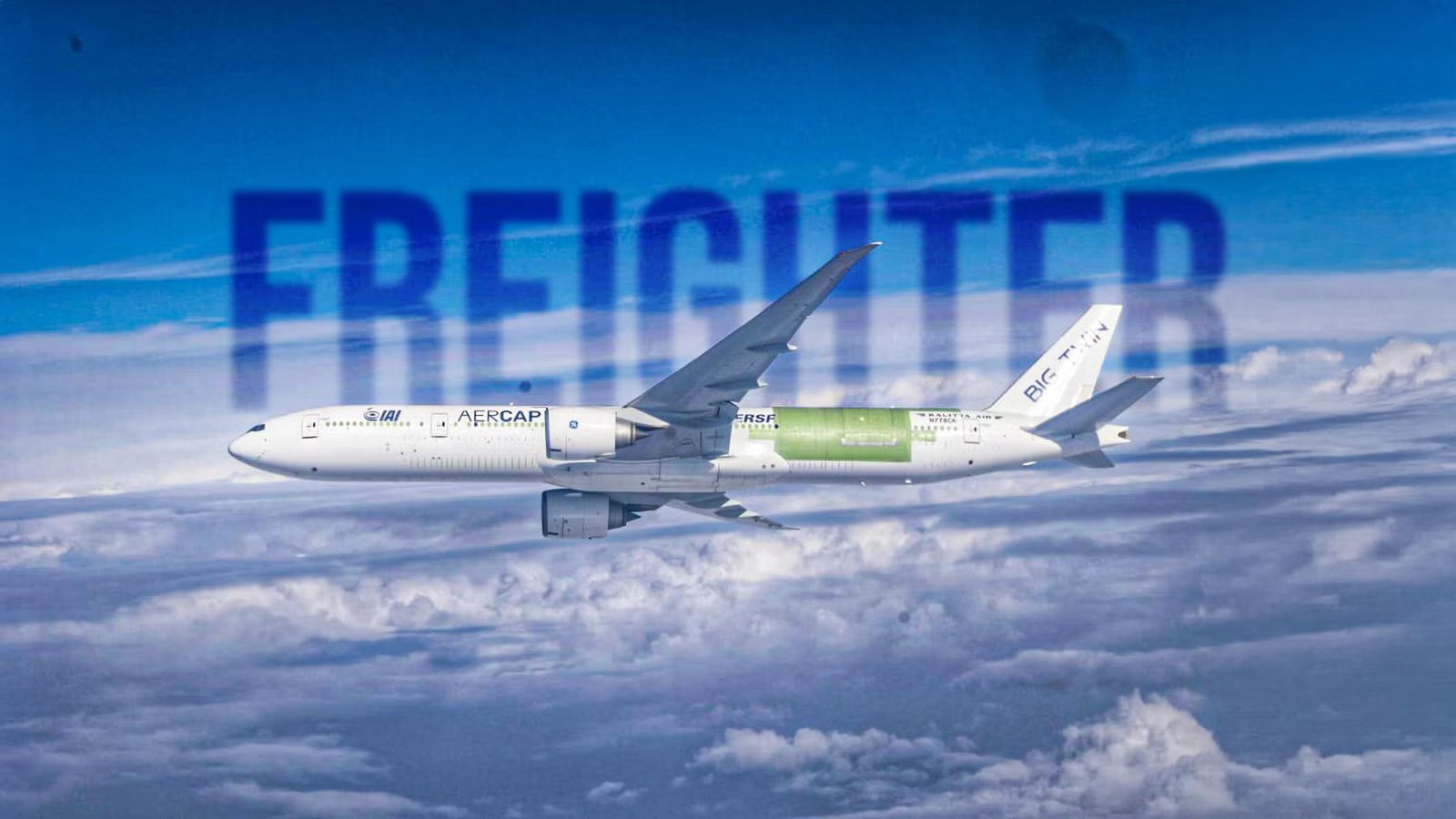
Airlines typically retire planes when they no longer hold any economic value for the carrier, rather than because the planes themselves are no longer airworthy. Around the world, it’s quite common for airlines to dump their aircraft far before retirement age, and these planes have to find second lives.
Most commercial airliners are leased, and the lessor will simply assign the planes to another customer, while some airlines will also directly purchase used aircraft. Meanwhile, aircraft that have been in service for 30 years or more will be parted out. In recent years, however, used airliners have been increasingly selected as candidates for freighter conversions.
Today, airlines are using the Airbus A320-200, A321-200, A330-200, A330-300, Boeing 737-800, 757-200, 767-300ER, and 777-300ER. Many of these programs are quite recent, as aging examples continue to find their way onto the used market, and the planes are more popular than ever for cargo airlines.
The Process To Convert An Airliner To A Freighter

The process to convert an airliner to a cargo plane is fairly straightforward. The aircraft’s passenger cabin needs to be removed, and the windows need to be plugged. The floor needs to be modified to accommodate heavy cargo, while a new main deck side loading door needs to be installed. This involves cutting a physical hole in the fuselage and then installing the large hydraulic door. This is typically a multi-month process and can cost anywhere from under $10 million to over $30 million.
It’s not a laborious process, and airlines can often pick up these airframes for very little money. While many of the passenger-to-freighter conversion programs are newer, airlines have long been purchasing converted passenger planes for cargo service, centering on the 747-400, 757-200, 767-300ER, and the McDonnell Douglas MD-11. While these types also had new-build models available, several of the more recent programs have been centering on aircraft types that are not available as a freighter from the factory.
This includes the Airbus A320 family, A330-300, and the 777-300ER. The A320P2F has only found limited use, but the A321P2F has proven far more popular, with dozens of examples in service. There are over 60 A330 P2Fs in service, while demand for the 777-300ER is also growing. In addition, some models are being converted by multiple companies: for instance, there are three companies performing conversion programs for the 777-300ER alone.
The Economics Of Flying Cargo Planes

The primary benefit of buying a brand-new, current-generation airliner is its increased fuel efficiency and greater range compared to an older aircraft. The downside, however, is that new planes are expensive to purchase or lease, which means that airlines need to fly their planes extremely often to make the investment worthwhile, upwards of 12 hours per day. However, cargo airlines do not use their planes nearly as often, which makes acquiring new-build aircraft less attractive.
Cargo airlines heavily time their flights around connection banks and leave their planes sitting on the ground for the rest of the day. In addition, cargo airlines don’t operate as many long-haul flights as passenger airlines. As such, it’s far more difficult for cargo airlines to make back the investment that they’d place in a brand-new airplane, so they tend to acquire used aircraft instead. Used freighters come up on the market and are quite lucrative, but these needs also make converted passenger planes appealing.
Since cargo airlines use their planes with less frequency than passenger airlines and rarely stretch the capabilities of their aircraft, a new-build aircraft is far less lucrative. A used passenger plane is a compelling option, given that it has similar qualities to an equivalent cargo plane and may be cheaper. Of course, the other downside is that a converted passenger airliner might not always be as capable or durable as a factory-built cargo aircraft.

The Aircraft Replacing The Boeing 747 Freighter
When the Boeing 747 freighter era ends, discover how Boeing’s 777s and Airbus’ A350F will redefine the future of global air cargo.
The Narrowbody Freighter Market

Today, the majority of commercial cargo airliners in service are converted. In the narrowbody space, however, there are currently no new-build freighters available, meaning that any airline wishing to acquire a narrowbody aircraft needs to source a converted passenger plane. The 757 conversion program is no longer turning out a high volume of aircraft, and airlines instead have to turn to the A320-200, A321-200, as well as the 737-800. In addition, AEI launched a conversion program for the 737-900ER.
Ultimately, a new-build narrowbody freighter will provide few benefits for cargo airlines, and the market is small. These planes are only needed to serve smaller markets close to the origin and destination. With the short stage lengths and low frequency, turning to a converted passenger plane is the more cost-effective option. The most recent new-build narrowbody freighter was the 737-700C (a convertible passenger-cargo aircraft), and this was preceded by the 757.
Boeing 737 Model | New-Build Subvariants |
|---|---|
737-100 | 737-100 |
737-200 | 737-200, 737-200 Advanced, 737-200C (combi), 737-200QC (quick-change) |
737-300 | 737-300 |
737-400 | 737-400 |
737-500 | 737-500 |
737-600 | 737-600 |
737-700 | 737-700, 737-700ER, 737-700C, BBJ1 |
737-800 | 737-800, BBJ2 |
737-900 | 737-900, 737-900ER, BBJ3 |
737 MAX 7 | 737 MAX 7, BBJ 737-7 |
737 MAX 8 | 737 MAX 8, 737 MAX 200, BBJ 737-8 |
737 MAX 9 | 737 MAX 9, BBJ 737-9 |
737 MAX 10 | 737 MAX 10 |
Today, these planes are increasingly becoming available due to the prevalence of the A320neo family and the 737 MAX. These aircraft provide material fuel savings compared to their predecessors and are being delivered to airlines in large numbers. They’re also popular with lessors, an ideal solution for airlines that want new planes sooner than what Airbus and Boeing can provide on their own. This is resulting in higher retirements of the A320ceo family and the 737NG, which can then start new lives.
The Dynamics Of The Widebody Freighter Market

Unlike in the narrowbody space, widebody airliners do operate longer flights and are utilized more frequently. This is why there remains a market for new-build freighters, with Airbus selling the popular A350F, while  Boeing currently sells the 777F and 777-8F. Still, even large, long-range freighters frequently make stops on longer journeys, and this makes demand for expensive new planes low, albeit higher than for narrowbodies, which is why converted passenger planes remain popular.
A converted 767-300ER is fairly similar to a 767-300F that came from the factory as a freighter, while a converted 747-400 provides the floor space, but has a lower cabin ceiling due to the stretched upper deck, carries less payload, and lacks the nose door. Two of the most recent freighter conversion programs are for the A330-300 and the 777-300ER, but there’s a reason why Airbus and Boeing based the freighter models of these planes on the smaller version rather than these planes.
Aircraft Family | Freighter Models |
|---|---|
Airbus A330 | A330-200F (based on the A330-200) |
Airbus A350 | A350F (shrink of the A350-1000) |
Boeing 777 | 777F (based on the 777-200LR) 777-8F (based on the 777-8) |
These aircraft largely retain the same maximum takeoff weight as their smaller siblings, but are heavier due to their increased length. As such, they carry less payload. Where they shine is in carrying lightweight cargo, such as packages.
While there are only so many airlines that carry large numbers of packages in a single flight, these programs are less expensive than developing a new-build freighter. The economics of developing these programs is also boosted by high supply, which is why you don’t see conversions of rare planes like the A340 or 747-8.
The New-Build Freighter Market

Boeing is still selling the 777F, but this is mainly to serve as a bridge until the 777X is certified. Once the 777-8F is certified, that will be Boeing’s only new-build freighter on sale, and the 777F will be discontinued, while Airbus’s only new-build freighter is the A350F. Both of these are fuel-efficient, capable airliners that are designed for the same goal: to replace the 747-400F. According to ch-aviation, there are still around 170 747-400Fs in service across all subvariants, and there has yet to be a clear replacement.
These planes will have a similar range to the Boeing 747-400F, and their use on long-haul flights, such as from Asia to Alaska, will justify the high purchase price. They will also have close to the same payload capacity and nearly as much floor space, while being far more fuel efficient. In addition, Airbus is hoping to mimic the unique capabilities offered by the 747’s nose door through the massive main deck cargo door, which will have a cut-out width of 175 inches (4.5 meters), the largest of any new-build freighter.
The 777-8F’s cargo door will be smaller, with Boeing instead targeting airlines who use the 747-400F for its capabilities and size rather than the nose door. Given the massive number of converted 747-400 freighters in service, it’s a valid decision as well. The A350F has received 107 orders, while the 777-8F has received 68 orders, showing that there remains demand at the top of the market for new-build cargo planes. Meanwhile, the older 777F collected a total of 364 orders, while the 747-8F outsold the passenger 747-8.