dailynewsnblog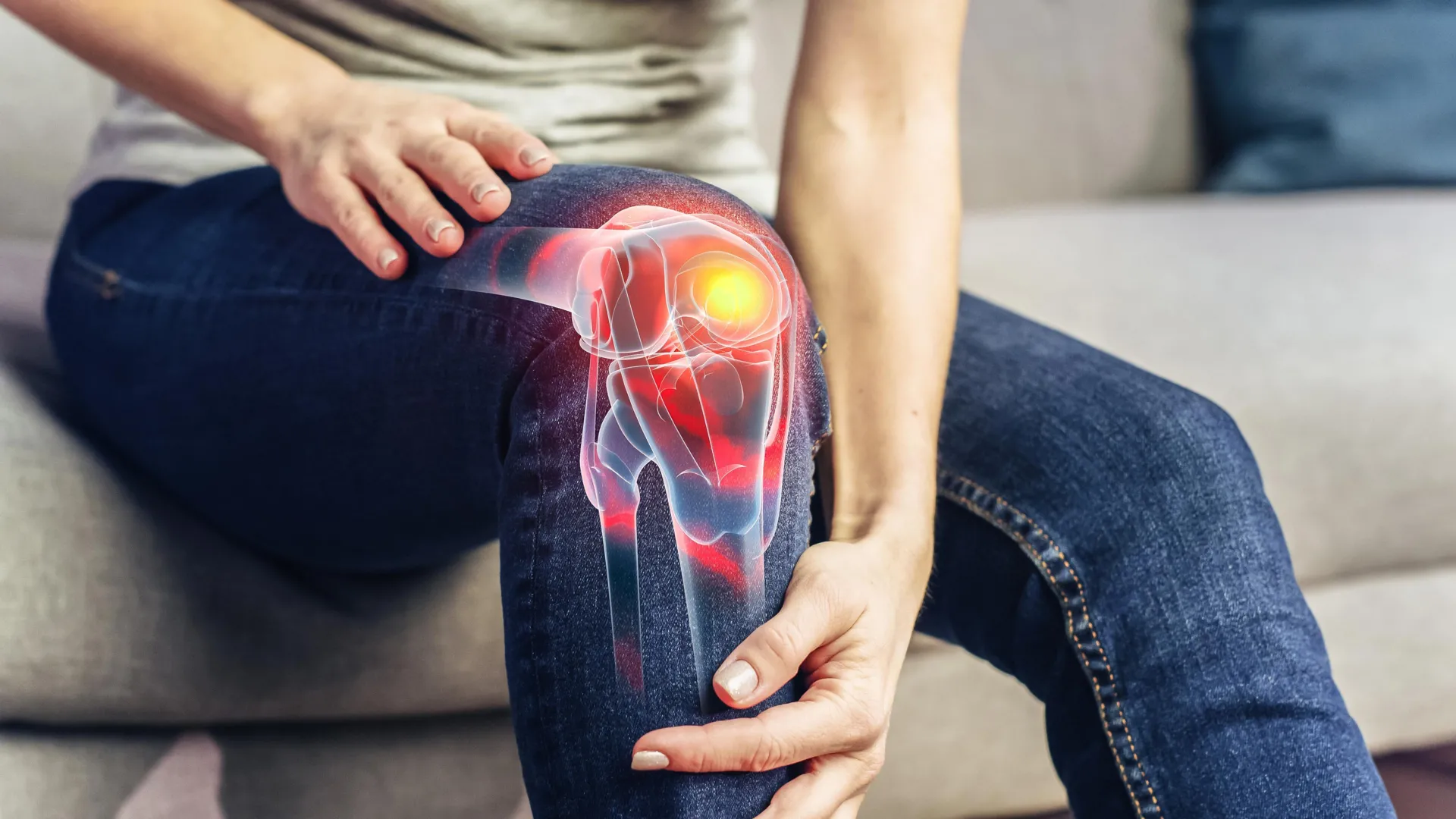
A minimally invasive procedure that blocks abnormal blood vessels around the knee may offer long lasting relief for people with osteoarthritis, according to new research published on June 16 in Radiology, a journal of the Radiological Society of North America (RSNA).
Osteoarthritis is the most common type of arthritis and is a major cause of disability worldwide. The condition can lead to joint inflammation, stiffness, reduced mobility, and pain caused by sensory nerves. The World Health Organization estimates that more than 365 million adults around the world live with knee osteoarthritis.
“For many patients with knee osteoarthritis, there is a real treatment gap today,” said Florian Nima Fleckenstein, M.D., deputy head of Interventional Radiology Campus Mitte, Charité — Universitätsmedizin Berlin. “Conservative measures such as intra-articular injections no longer provide sufficient relief, but joint replacement is not an option for medical or personal reasons.”
A New Approach to Knee Osteoarthritis Pain
The treatment, known as genicular artery embolization (GAE), is an emerging nonsurgical procedure designed to target abnormal blood vessels that develop around arthritic knee joints. These excess vessels are believed to contribute to ongoing inflammation and pain.
During the procedure, an interventional radiologist uses a thin catheter to reach the affected blood vessels and injects tiny particles that block blood flow to them. By shutting down these abnormal vessels, the treatment aims to reduce inflammation and relieve pain without surgery.
For this study, researchers evaluated GAE performed with rapidly resorbable, gelatin-based microspheres. These specially designed spherical particles are calibrated by size and dissolve within hours after being delivered. The team proposed that the material could combine some of the advantages of both temporary and permanent embolization agents while avoiding some of their drawbacks.
“GAE is a whole new treatment regimen that targets abnormal hypervascularity around the joint and, in turn, modulates the pathological neurovascular environment,” Dr. Fleckenstein said. “By reducing both inflammation and pain, GAE with resorbable microspheres may be the first procedure that alters the course of the disease, slowing its progression.”
Nearly 200 Patients Studied
The prospective single-center study enrolled 194 patients with osteoarthritis-related knee pain, including 114 women and 80 men. All participants had failed to achieve adequate relief after at least three months of conservative treatment, including physiotherapy, anti-inflammatory medications, and intra-articular injections.
The participants had a median age of 69 years and a median body mass index of 28.4.
“We believe these results carry real weight because they come from real-world data,” Dr. Fleckenstein said. “With this broad, inclusive study design, our participants are exactly the patients that physicians encounter every day in their practices.”
All patients underwent GAE using the resorbable microspheres between July and November 2024. Forty-five participants (23%) received treatment in both knees, with the second procedure performed within four weeks of the first.
In total, researchers carried out 239 GAE procedures. Treatments were performed using image (fluoroscopic) guidance. Every procedure was technically successful. No moderate or severe adverse events occurred, and only 6.7% of participants experienced mild reactions that resolved on their own.
Significant Pain Relief and Improved Mobility
Researchers assessed outcomes before treatment and again at six weeks, three months, six months, and 12 months afterward. The six-month evaluation was conducted in person by an orthopedic surgeon.
Follow-up rates remained high throughout the study, reaching 94% at six weeks (183/194), 89% at three months (172/194), 89% at six months (171/194), and 79% at 12 months (154/194).
“In our cohort, we saw a significant drop in pain and a significant increase in function, including sports and recreation and daily activity,” Dr. Fleckenstein said. “Most importantly, their quality of life significantly increased.”
Pain levels improved quickly and continued to improve over time. On the Numeric Rating Scale (a 0-to-10 measure of pain intensity), the median score fell from 7 before treatment to 4 after six weeks and then to 3 at both the 6-, and 12-month follow-ups, indicating sustained relief throughout the year.
Patients also showed improvement across every category of the Knee Injury and Osteoarthritis Outcome Score.
Median scores for daily activities increased from 53 to 71.5, while sports and recreation scores rose from 15 to 36. Osteoarthritis-related symptoms improved from 51 to 68. Pain scores increased from 44 to 65 (where 0 indicates extreme knee pain and 100 indicates no pain at all). Quality of life scores improved from 19 to 40.
Most Patients Experienced Meaningful Improvement
Previous research has shown that a reduction in a Numeric Rating Scale pain score of ≥ 2.0 points and an increase of ≥ 10 points in the Knee Injury and Osteoarthritis Outcome Score sub-scores represent clinically meaningful improvements, known as a minimum clinically important difference.
At the 12-month follow-up, 80% of participants exceeded that threshold based on their Numeric Rating Scale pain scores.
“Our study demonstrates that GAE using rapidly resorbable gelatin-based microspheres is a safe, minimally invasive therapy that provides meaningful pain relief and functional improvement in participants with osteoarthritis-related knee symptoms for at least 12 months,” Dr. Fleckenstein said. “By embolizing the pathological vessels, we’re able to normalize the vessel structure — and, in turn, the neuronal structure of the knee.”
According to Dr. Fleckenstein, the study represents the largest body of evidence so far examining GAE with rapidly resorbable microspheres, involving nearly 200 patients.
“This lets us speak about safety and efficacy with real confidence,” he said. “For the right patient, it can mean lasting relief from a single, minimally invasive procedure — a meaningful new option between injections and joint replacement.”
The study, “Genicular Artery Embolization Using Rapidly Resorbable Gelatin-based Microspheres for Osteoarthritis-related Knee Pain,” was conducted by Dr. Fleckenstein and colleagues Dina David, M.S., Paolo Garducci, M.D., Tazio Maleitzke, M.D., Stephan Oehme, M.D., Lynn Jeanette Savic, M.D., Timo Alexander Auer, M.D., Bernhard Gebauer, M.D., Tobias Winkler, M.D., Ph.D., and Federico Collettini, M.D.