dailynewsnblog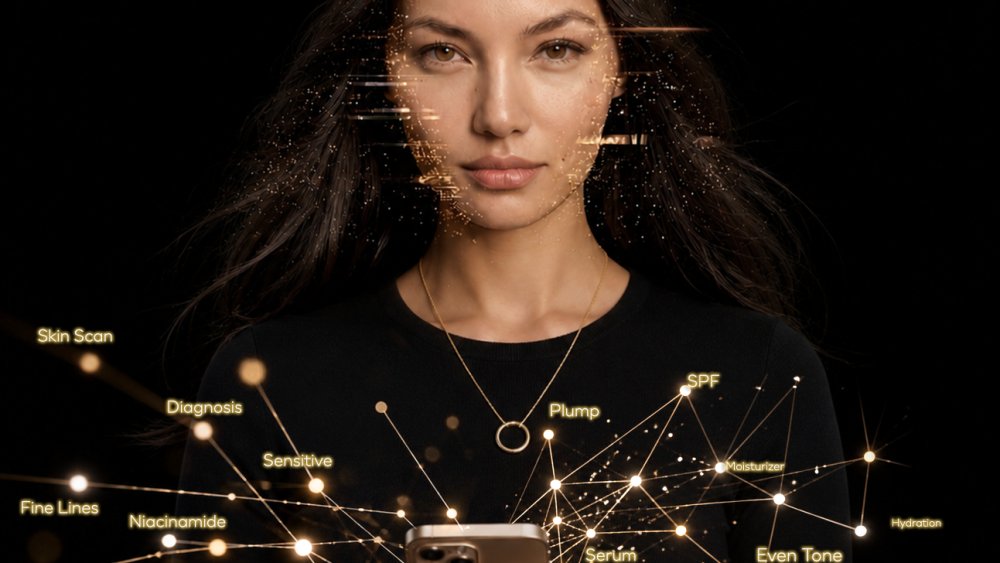
PARIS — L’Oréal is tackling what it calls “the 11-minute paradox.”
“We can be more demanding of AI,” said Asmita Dubey, L’Oréal’s chief digital and marketing officer, explaining it can be used to augment the consumer’s journey, as well as the marketer’s.
The paradox is emerging in the consumer’s journey, she said, speaking prior to her presentation at VivaTech, the technology conference in Paris being held on Wednesday, where L’Oréal is unveiling a major collaboration with OpenAI.
“It will happen over time that AI will make the journey more seamless,” Dubey said. Agentic AI will play a large role in that.
Belief thus far was that by removing friction the journey would be shorter.
“We were thinking that probably everybody will be like one minute done, purchased,” Dubey said. But research shows that as people can chat naturally with AI and it becomes multi-model, interfaces such as cell phones or computers will vanish.
“It can see what you’re seeing, it can talk what you’re talking,” Dubey said. AI will be able to understand nuances, like whether someone is serious or not, wanting to buy our not, and their intent.
“The friction will go, but not the time,” she continued. “What we are seeing is that as people are chatting more and more, they are spending a lot of time on that chat.”
In a traditional Google search, people typically spend three to four minutes browsing. That might be to GEOlocate where to shop for a product at a mall and whether it has the item in question, for instance.
“But when you start chatting, then you’re saying: ‘But you told me that it’s very hot outside. Can you tell me if it’s humid also? What should I do?’” Dubey said. AI would then make suggestions.
That might lead to the person asking something like: “But which product choice is better?” The conversation thereby lengthens to roughly 11 minutes on Google AI Mode sessions, according to research by Google Analytics and eMarketer AI Mode Session Tracking.
“Because you’re talking,” Dubey said.
Critical mass keeps building, as there is a huge migration to AI usage today. OpenAI’s ChatGPT has more than 1 billion monthly active users, or MAU. Google AI Overviews boast more than 2.5 billion MAU, while the purely LLM app Google Gemini has 900 million MAU.
“If anything is being used regularly by 1 billion people, there has to be some value for them in it,” Dubey said. “What is that value is what we want to understand. How does it impact the beauty consumer journey?”
It is where L’Oréal’s workstream begins. “I’m not talking about creating images,” Dubey said. “I’m talking about what is the consumer doing?”
The seasoned executive has never encountered a year like 2026, with such radical shifts. Things can change, but crystallize later, she explained, adding some changes will be good, while others not so. But one thing is for sure: The pace of change affects the beauty consumer and the business of beauty overall.
Platforms such as OpenAI, Google, Meta or Amazon are all bringing in AI and spending $700 billion combined to do so.
L’Oréal looked into how shoppers discover, how they have deep consumer experiences after discovery, and how they buy.

Asmita Dubey
Stephane Gallois Photography/Courtesy of L’Oréal
“How they discover was the search,” Dubey said. “The front door to beauty discovery is an LLM now.”
As such, the question then becomes as a consumer is in a chat with that medium, how do L’Oréal brands appear in the answer layer?
“That’s our interest,” Dubey said. “That is what we are calling ‘discoverability’ in this LLM age. You hear a lot about searches changing to GEO [generative engine optimization]. So we have been exploring GEO as a subject and to us, GEO is a content transformation, because you will appear in the answer layer if your content is right.”
That can be authority-building content. Dubey gave as an example a L’Oréal-owned brand like La Roche-Posay with strong authority-building content already. It has 250,000 health care professional relationships and 850 medical-grade scientific studies, of which 50 were produced in 2025.
The second is the brand content, which moved from text to images to video, TV, Reels and short videos. “The format keeps changing for the branded content,” Dubey said. “Whether it is a brand say, a creator say or a people say. We are reviewing all that content on our websites, on social media pages.”
Does it have a transcript? Does it say the same thing everywhere? Is it on brand territories? Consistency through all that is key.
“Extremely fundamental to appearing in LLM is product content, the product data,” Dubey said. It’s becoming increasingly about descriptions. Let’s say there’s the descriptor “for all skin types.”
“When I’m reading on Amazon, I understand ‘for all skin types’ means dry skin, this and this,” she explained. However, more description is needed for AI to pick up.
“Does it give you the context of: ‘I was on a beach,’ ‘I was on a flight,’ ‘I think I’m aging now,’ ‘ever since I am 50-plus my skin is drier,’” Dubey said. “Product data needs to be enhanced with more context.”
Tomorrow it’s about the digital shelf, which is moving to a decision set based on intent and context. “You have to be readable for the machine and readable for the human,” Dubey said.
Therefore, L’Oréal is working on product data with Amazon, as its Brand 360 lead partner for beauty in the U.S., and Alibaba, as its first beauty partner for AI in China.
L’Oréal was among the first alpha testers using Google’s AI Max in 2025 across 800 unique campaigns in 23 countries and 30 brands. That drove its consumer growth and increased sales for direct-to-consumer brands such as NYX Professional Makeup by 23 percent, according to Alphabet, Google’s parent company, during its fourth-quarter 2025 earnings call.
With a longer chat, how does one customize the beauty experiences to the LLM world? When digitalization came, experiences became Instagram. So brands needed to be Instagrammable. When Instagram Reels arrived, brands had to be funny. Next up was virtual reality, and that led to virtual try-ons.
“In the LLM world, what is that experience?” Dubey said. “How do we shape that experience? If everything is coming back to something as simple as a conversation, which is 5,000 years old, on beauty, what do you do with it?”
Here’s where the “knowledge graph” comes in. Taking into account all the knowledge within L’Oréal, how does one create a beauty knowledge graph, where one word links to the other?
“It’s the whole word cloud, on which LLMs are based, because they are probabilistic,” Dubey said. “Would that help us make our conversations more appropriate, more personalized — either direct or indirect?”
The idea is to make the conversation quality better. “It is a new work,” Dubey said. “We have to see where it is going, and how we will use it.”
She thinks it’s important to revert to being more human, more about how people speak, and to give them the right information to have the right conversations.
The commerce piece will be agentic, with an agent either buying for or with the consumer. L’Oréal aims to be the category captain. It has already been named the number-one most admired digital commerce company among consumer-packaged goods for the second consecutive year, according to Digital Commerce Global.
L’Oréal’s thousands of marketers’ end-to-end processes and journeys are changing due to AI, too. It has, for instance, one Intelligence company-wide insights and data platform. For CreAltech, the group’s content creation platform, L’Oréal is adding a CO2 estimator given the increasing concerns over the environmental impact of AI and the data centers required for it.
“So when somebody is building an image, they are able to say: ‘Hey, by the way, you just created that image. Remember, it’s like driving two miles in your car,’” Dubey said. “So that people are responsible.”
L’Oréal keeps bringing AI to its employees. “L’OréalGPT continues to evolve,” Dubey said. “But in the end, our focus on marketing is always on creativity. So we come back to beauty and entertainment.”
The group has been working with major entertainment IPs, including “The Devil Wears Prada,” “Emily in Paris” and “Minions.”
L’Oréal keeps building strong tie-ins with major tech companies as well. This year, the group is expanding its Nvidia partnership to the research-and-innovation department, which will use a Nvidia model called Alchemi, which is AI for chemistry and material sciences.
“It is very good for formulation,” Dubey said.
The new OpenAI collaboration being revealed at Vivatech will center on the domains of AI-powered métiers, such as research and marketing, and the consumer journey.
L’Oréal will begin using the OpenAI model GPT-Rosalind, which can study bacteria microbiomes on skin. For the brand La Roche-Posay, that will begin investigating which are best to help inform product development.
L’Oréal’s content-creation platform CreAltech will integrate OpenAI’s latest model. “They are very good with image rendition — text to image,” Dubey said.
For the AI-powered consumer journeys, L’Oréal has just developed its Makeup Virtual Try-On inside OpenAI’s ChatGPT, to go live this summer, starting with Maybelline New York. It’s set to give consumers a new way of trying on makeup looks in real time via AI-powered conversation.

Maybelline New York’s new virtual try-on
Courtesy of L’Oréal
“We are working very closely with OpenAI to do product detail pages and information on our products on a direct feed, so that they don’t have to pull information from the web,” Dubey said. That is for thousands of product stock keeping units in the U.S. to strengthen L’Oréal discovery within ChatGPT.
As another part of the collaboration, SkinCeuticals, CeraVe and Garnier are taking part in the global ChatGPT ad pilot pioneering AI-native advertising on OpenAI.