dailynewsnblog
What I love:
- Zenni EyeQLenz offers all-in-one protection: blue light, UV, and infrared in a single pair
- Peace of mind in a time where facial scanning is a real and growing privacy concern
- Surprisingly affordable and easy to order online, around $80 all in
- The frames have held their shape and stayed put after weeks of wear
Things to keep in mind:
- Face ID won’t work while you’re wearing them (worth noting, but a good thing! It means they work.)
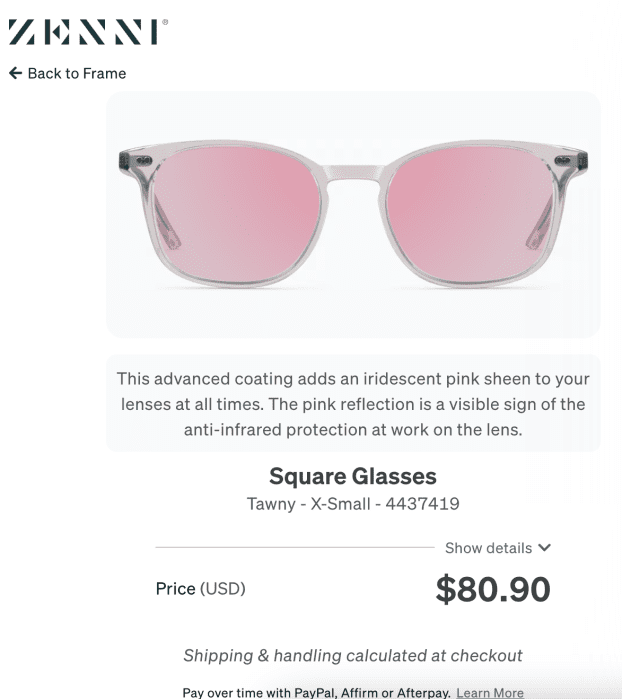
- The lenses have a subtle pink sheen from the coating
- The $21.95 starting price is for frames only, so budget closer to $80
- Not compatible with all lens types, worth checking before you order
Since I graduated college 11 years ago, my work has been 99% online. I studied graphic design, so I spent long hours staring and squinting at my screen, moving shapes around and trying to perfect layouts and logos. Then I went on to brand strategy and marketing work, which meant hours of presentation design, social media research, and endless scrolling. My head would hurt, my eyes would start watering, and eventually I heard about blue light glasses. I didn’t know if they were a scam or not, but I bought a pair, wore them when I remembered, and it might be placebo, but I think it definitely helped with my fatigue.
“Since I graduated college 11 years ago, my work has been 99% online.”
As wellness trends have risen over the last few years, the concept of light hygiene has also come into my awareness. Turns out, not all light is created equal, or even detectable to the human eye. Being intentional about which types you expose yourself to (and when) can actually make a real difference in how you feel and sleep.
I started wearing red lens glasses before bed, yellow ones during the day, and at this point I have an entire glasses collection, despite not needing them for vision. Truth be told, I didn’t even fully understand what all these different types of light were; I just knew I wanted to feel protected. I can’t imagine how overwhelming it would be if I did need a prescription on top of all that. It’s a lot, and it’s hard to know what to buy or where to start.
What I’ve learned about light blocking and infrared protection
To pause on my glasses journey for a moment: I’m also writing this en route to Kenya. And if you’ve traveled recently, you may have noticed that airports have started scanning your face instead of just checking your ID. This has started creeping me out, and I’ve noticed it more and more over the course of many flights. But this Kenya trip was the first time I really started seeing scanners everywhere and thinking seriously about what that tracking actually means. I think it’s all done in the name of safety, but you can’t help but wonder what else facial recognition technology might be able to do on the more nefarious side.
“So what do light hygiene, my ever-growing glasses collection, and the facial scanner at the airport have to do with each other?”
So what do light hygiene, my ever-growing glasses collection, and the facial scanner at the airport have to do with each other? Honestly, I had no idea until I had the chance to review Zenni ID Guard glasses.
Not only have they helped me consolidate my glasses collection into one pair, but they also sent me down a rabbit hole into infrared light, which is exactly what’s scanning your face at the airport, and why you might want to start protecting yourself from it out in the world.
You’ve probably heard a lot about blue light by now. It comes from your phone and laptop screens; it messes with your sleep, personally gives me a headache, and it’s why half the internet has a pair of red-tinted glasses on their nightstand (me included!). Blue light sits on the visible end of the light spectrum, meaning you can actually see it, even if you don’t realize it. It’s what makes screens look bright and harsh.
“Infrared is actually an extension of red light… but it’s invisible. It’s the next wavelength over, just beyond what our eyes can pick up.”
Infrared light operates completely differently, and no, it’s not the same as those red light face masks or panels you see wellness enthusiasts meditating in front of — even though they both use the word “red.” Infrared is actually an extension of red light… but it’s invisible. It’s the next wavelength over, just beyond what our eyes can pick up. (I’ll admit I thought they were the same thing before writing this piece!)
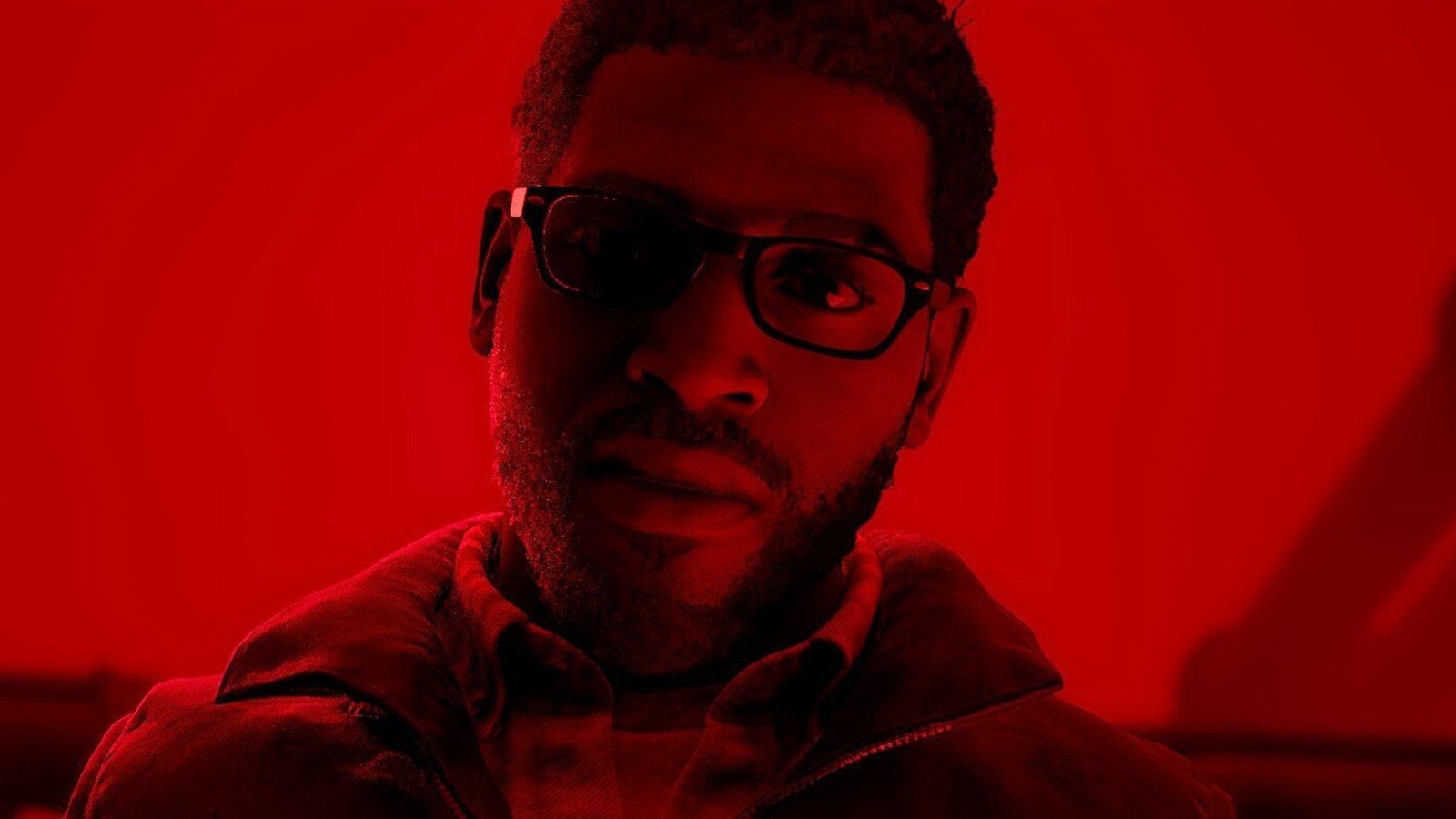
But here’s the key difference: Red light therapy is something you seek out intentionally, for collagen production, anti-aging, inflammation. The infrared hitting your face out in the world isn’t the controlled therapeutic kind. You can’t see it or feel it, but infrared is coming at you all day long, from the sun, from LED lighting, from security cameras, and from the invisible projectors inside your iPhone that make Face ID work. And I don’t want to freak you out, but it can be used to scan your face, often without your knowledge or consent.
“You can’t see it or feel it, but infrared is coming at you all day long, from the sun, from LED lighting, from security cameras, and from the invisible projectors inside your iPhone.”
The first reason that matters is privacy. Cameras use infrared to map the unique geometry of your face: the distance between your eyes, the shape of your nose, the contours that make your face yours. This happens in airports, in stores, in public spaces, and increasingly in places you’d never expect. It’s passive, it’s fast, and most of the time you have no idea it’s happening.
The second is health. Infrared light from the sun generates heat that penetrates into your skin and eyes at a cellular level. Over time, it breaks down collagen and elastin, the proteins responsible for keeping skin firm and youthful. It also raises the temperature inside your eye, which over time can affect your vision and long-term eye health.
How does Zenni ID Guard help to protect you?
Zenni ID Guard is a lens coating that reflects that infrared light back, up to 80% of it. So whether it’s a facial recognition camera or the afternoon sun, your Zenni ID Guard lenses bounce the light back before it reaches you, affects your eyes, or scans your face. The coating shows up as a subtle pink sheen on your lenses. It doesn’t change how you see, but it’s the visible proof that the coating is there and working. And if your Face ID stops recognizing you while you’re wearing them, that’s actually the coating doing its job.
“Whether it’s a facial recognition camera or the afternoon sun, your Zenni ID Guard lenses bounce the light back before it reaches you, affects your eyes, or scans your face.”
Zenni launched in 2003 with a simple mission: Make stylish and protective glasses accessible and affordable. Since glasses can be expensive and out of reach for a lot of people, they’ve made it a mission to give back, donating 2.3 million pairs to those who need them most. Their most recent innovation, EyeQLenz, bundles blue light filtering, UV protection, and infrared blocking into a single lens, which stacks all the light protection you need to make glasses that are actually effective and protective, with or without a prescription. Since I spend so much time on the computer for work and have been traveling a lot recently, I was excited to finally have a pair that could protect my eyes and my privacy at the same time, and multitask as well as I do.


My review of Zenni ID Guard from purchase to daily use
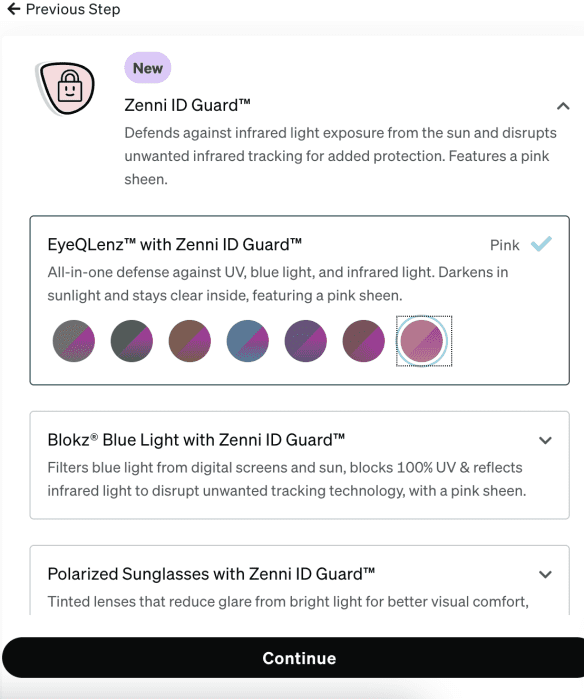
Ordering is easy. You start by picking your frames, then select your prescription type. I chose non-prescription since I don’t actually need vision correction. I’m here purely for the protection. From there, you pick your lens type: This is where you decide what you actually want the lenses to do. I chose Zenni ID Guard to test out the privacy technology, but you can also go with standard clear, blue light blocking, or photochromic lenses that darken in sunlight. If you go with EyeQLenz and ID Guard, you also get to pick a tint color for when the lenses darken outdoors. I picked purple, which felt very me.
“If you go with EyeQLenz and ID Guard, you also get to pick a tint color for when the lenses darken outdoors.”
Next up is the lens index, which is just a fancy way of saying how thick or thin your lenses are. Thicker lenses are the standard and work fine for most people, especially if you have a mild prescription or no prescription at all. Thinner lenses are usually only necessary if you have a stronger prescription and don’t want the lenses to look chunky in the frame.
After that, you add a coating if you want one. Think of this as the finishing layer on top of your lenses: ID Guard adds scratch resistance, water repellency, and glare reduction on top of the infrared protection. Finally, there’s an optional one-year extended warranty for $12.14, which covers breaks, scratches, and daily wear with one replacement pair included. Since I’m not exactly gentle on my products and am always shoving them in bags without a case, that felt like a no-brainer.
The frames I tested are the Tawny Square style, a warm brown acetate that looks a lot more clear and neutral on your face than the name suggests. The frames are handcrafted, fade-resistant, and hypoallergenic, which is important for sensitive skin. The fit is what Zenni calls a Universal Bridge Fit, and in practice that has meant they stay put. They don’t slide down my nose when I look down, which is something I can’t say for most of my glasses. A few weeks in and they’ve held their shape, feel supportive, and haven’t loosened up the way cheaper frames tend to do.
“The frames are handcrafted, fade-resistant, and hypoallergenic, which is important for sensitive skin.”
On price: The frames start at $21.95, which is genuinely hard to believe, but once you add in the lenses and coatings you’re looking at closer to $80. Still extremely reasonable for everything you’re getting, and a fraction of what you’d pay at a traditional optician.
I’ve been wearing these glasses for a few weeks now, and I’ve really put them to the test. Every time I work on my phone or computer, watch TV in the evening, sit in my car (I drive an EV with a big screen, so that counts!), and most significantly, over two weeks of travel through Iceland, Amsterdam, and Kenya, these glasses came with me. Wearing them on the plane is my BIGGEST travel hack: Aircraft are full of fluorescent light and screens on every seat. I keep them on the full flight and feel less exhausted after, with significant benefits for sleep, eye strain, and jet lag. I’ve been doing this for years with other blue light glasses, but Zenni ID Guard is a level up!
“Wearing them on the plane is my BIGGEST travel hack: Aircraft are full of fluorescent light and screens on every seat.”
The airport experience was the most notable. There’s a difference between the intentional facial scans at security checkpoints, where you’d remove your glasses anyway, and the ambient scanning that may be happening as you move through terminals and public transportation on your journey. It’s the latter that had been creeping me out, and wearing these through the airport gave me a sense of safety and more peace of mind as I moved around the world.
On the planes, where you’re stuck under fluorescent lighting for hours with a screen in your face, I noticed less of that end-of-flight eye strain that usually hits me hard. And back at my desk, the screen fatigue I’ve come to accept as a normal part of my workday felt more manageable. It’s hard to separate out exactly what’s doing the work, but the combination of blue light filtering and infrared protection seems to be making a difference in how I feel after long stretches at my computer.
“The combination of blue light filtering and infrared protection seems to be making a difference in how I feel after long stretches at my computer.”
If you’ve been curious about light hygiene, or have started noticing those airport scanners and wondering what they’re actually capturing, Zenni ID Guard is an easy, affordable way to start being more intentional about it. At around $80 all in, it’s the kind of purchase that’s hard to talk yourself out of. And if it means one less thing to worry about as you move through our ever-changing world — that feels worth it to me!
Grace Abbott is a LA-based freelance Brand & Marketing Strategist and a Contributing Editor at The Good Trade. She has a degree in Graphic Design from Parsons School of Design and is the founder of How To Go Freelance — a brand dedicated to empowering creatives to monetize their skills and build personal brands. Beyond work, she’s always studying a new spiritual modality, painting her bedroom a new color, practicing Pilates, hosting friends, or going on a nature walk with her chihuahua, Donnie. Find her on Substack or Instagram.