dailynewsnblog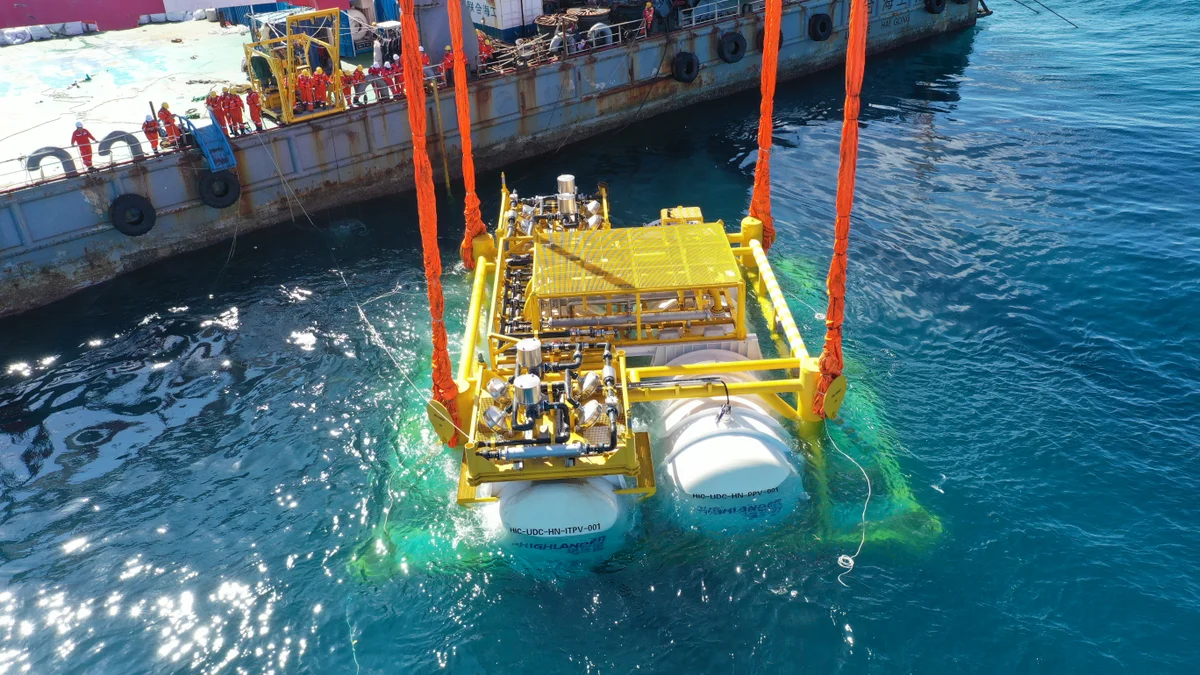
The preceding post linked to an article in The Guardian about China’s underwater data centre. British Columbia is well positioned to follow this innovation, if it is interested in using clean energy to power these debatable projects. From The Guardian:
In a traditional, land-based datacentre, anywhere between 25% and 40% of the total electricity demand comes from the need to pipe chilled water around the servers to prevent them from overheating. …Having datacentres in the sea reduces the need for freshwater supplies.
This week the United Nations University Institute for Water, Environment and Health warned that the water footprint of datacentres could reach 9.3tn litres by 2030—enough to service the annual domestic water needs of all 1.3 billion residents of sub-Saharan Africa.
China is the first country in the world to operate an underwater data center. It is part of a strategy to reduce dependence on fossil fuels and reduce the environmental impact of powering artificial intelligence facilities.
This is a partnership between HiCloud Technology and state-owned China Communications Construction, which involved an investment of about C$330 million. Project Manager Pu Ding from Shenzhen HiCloud Data Centre Technology explains the primary benefit of the underwater location.
We put the entire data cabin in the deep sea because seawater can help cool down the temperature. Compared to their land-based counterparts, underwater data centres can reduce the energy consumption needed for cooling, helping to lower operational costs.

China’s province of Hainan has a 5-year plan to add up to 100 underwater data cabins to serve the region’s AI facilities.
China’s commitment to renewable energy has outpaced every other nation. In the following chart, Canada doesn’t even make the top ten of countries deploying solar and wind.
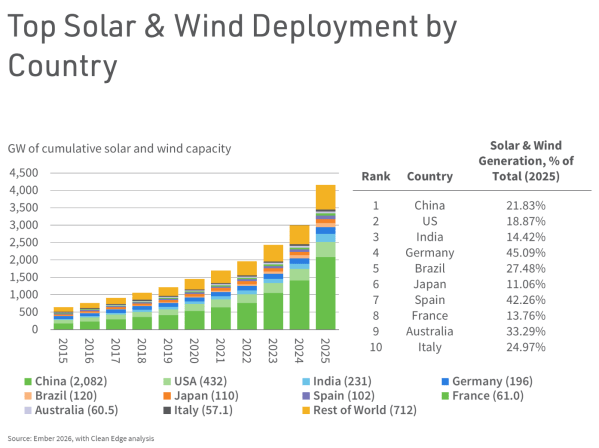
In 2022, China installed roughly as much solar photovoltaic capacity as the rest of the world combined, then went on in 2023 to double new solar installations, increase new wind capacity by 66 percent, and almost quadruple additions of energy storage.
How China Became the World’s Leader on Renewable Energy