dailynewsnblog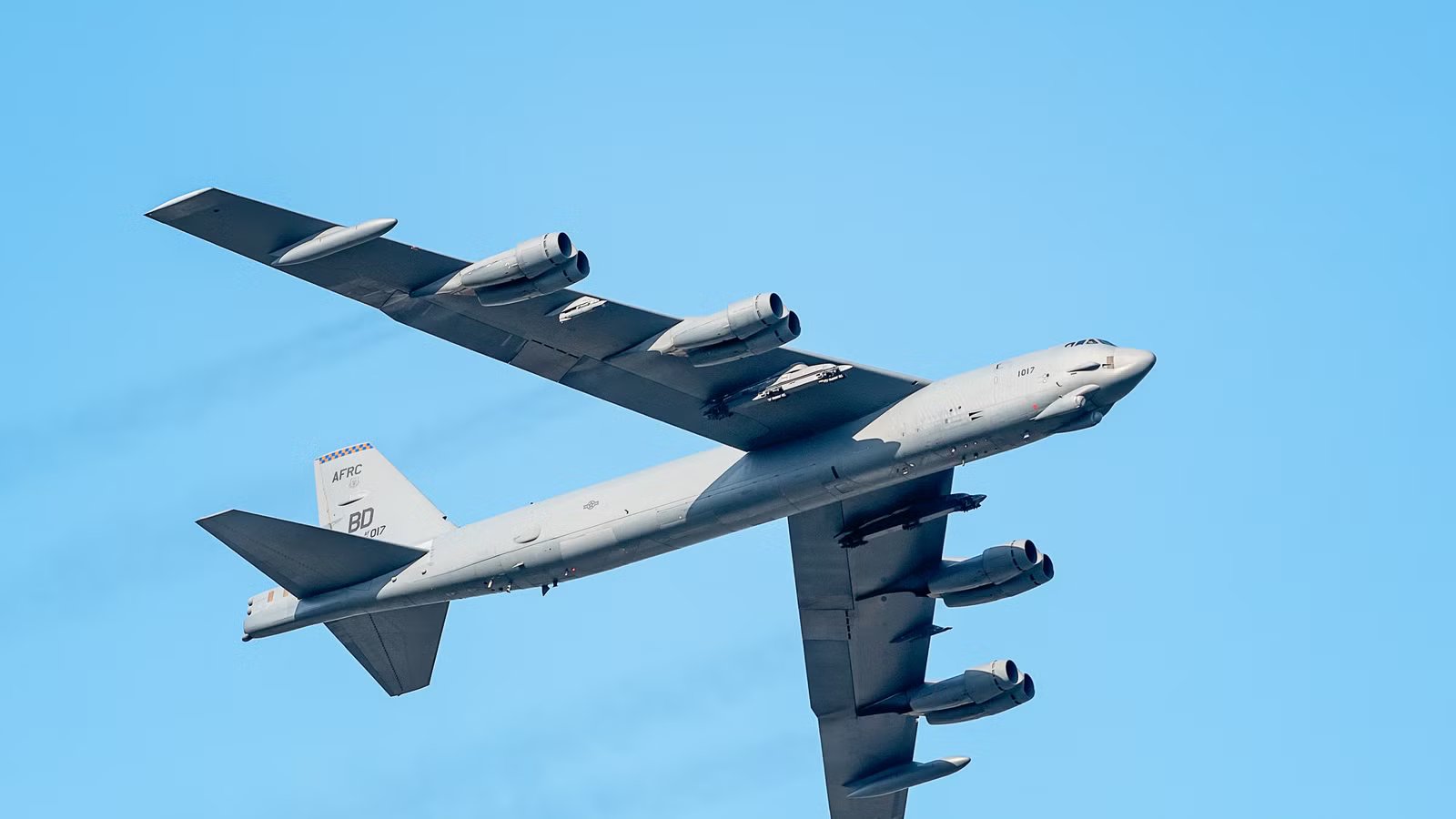
While it is debatable if the B-52 has literally survived 20 retirement attempts, it has proved a survivor. The more nuanced truth is that these retirement attempts have resulted in the partial retirement of the aircraft. All earlier B-52A through B-52G model aircraft have been retired, and of the 744 built, only 76 (around 10%) remain in service today.
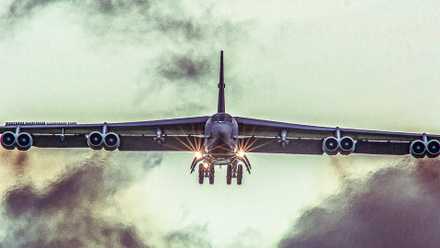
Design work on the Boeing B-52 Stratofortress “BUFF” started in the immediate post-WWII period, with the aircraft’s production lasting from 1952 to 1962. To the surprise of many, the Air Force was already looking for a B-52 replacement in the 1950s. Fast-forward almost 70 years, and the first B-52H bomber is about to be delivered for a major overhaul that will see it revamped to the B-52J standard. After many retirement attempts, including ones starting when it was still being produced, the B-52 is perhaps the first combat aircraft whose original airframes may live to see 100 years of service with the USAF.
The B-52 As The Final WWII Bomber

The B-52 was designed in the 1940s at the junction of World War II and the Cold War. The B-52 arguably incorporates features associated with both eras. In some respects, it can be considered the last WWII bomber and the first Cold War strategic bomber. In some aspects of its doctrine, the B-52 can be thought of as the last of the WWII series of subsonic heavy strategic bombers. These include the B-17, B-24, B-29, and B-36.
Each of these bombers was built to brute force its way through enemy airspace in massed formations protected by enemy piston engines, early jet fighters, and ground-based flak fire. As the B-52’s name “Stratofortress” suggests, it was designed as a fortress to fly high and weather the storm of incoming flak fire. That said, its high altitude made flak fire less effective, with Soviet interceptors seen as the primary threat. The aircraft were intended to absorb a large amount of punishing enemy fire and return to base.
They were also built in sufficient numbers (744) to be able to sustain lower attrition rates. The B-52 was designed to carry a large number of imprecise bombs and carry out carpet bombing operations similar to WWII. Until the 1990s, the B-52 famously came with a tail machine gun for self-defense against enemy fighters. In 1972’s Operation Linebacker II, it reportedly even managed to score a couple of victories with the gun. But the B-52 can be considered the first of the Cold War bombers departing from WWII-era doctrines for reasons discussed below.
The B-52 As The First Cold War Bomber

The B-52 can also be considered the first Cold War bomber. It was the first intercontinental strategic bomber to successfully combine jet propulsion, swept wings, and global nuclear reach. The unreliability, relatively low thrust, and need for military redundancy saw the B-52 designed with an impressive complement of eight engines. Additionally, it can be argued that the B-36 was the last bomber designed with WWII-era technological assumptions, while the B-52 was the first strategic bomber fully designed around the jet-powered nuclear age.
One important Cold War doctrinal shift was that previous bombers had been built around conventional bombing runs, while the B-52 was built with delivering nuclear payloads in mind. While the B-52 was designed to sustain attrition and operate in massed formations, it was not to the degree as true WWII bombers (e.g., B-17). In fact, the B-52 presents a major step from attrition to survivability.
Initially, its primary threat was seen as the USSR’s new interceptor aircraft, although its primary threat would later on be surface-to-air missiles (SAMs). Another important shift was the change of primary adversaries. Previous bombers had been planned around operations over Germany and Japan, but the B-52 was built explicitly for the USSR.
Why Does The US Air Force Still Rely On The B-52?
The B-52 stays relevant thanks to its low operating costs, its plentiful remaining flight hours, and the ability to use stand-off munitions.
How SAMs Changed Everything

The early Cold War bombers like the B-47 Stratojet, B-52, B-58 Hustler, and XB-70 were built around Soviet interceptors as the primary threat. It was seen that bombers could become survivable by flying higher and faster than these fighters. The B-52 was built to fly higher than its WWII B-29 and B-36 predecessors, while the later Convair B-58 Hustler flew even higher (up to 63,400 feet) and had a top speed of Mach 2.
The USAF thought it had a winning formula and doubled down on this by building the impressive XB-70 Valkyrie, designed with a service ceiling of around 77,000 feet and a top speed of Mach 3.1 at altitude. Then came the incidents in 1960 and 1962, when a Soviet SA-2 SAM successfully intercepted a Lockheed U-2 spy plane. At the same time, the development of ICBMs made air delivery of nuclear missiles less imperative.
These developments changed everything. The USAF switched tactics to flying low with the B-1A Lancer, then low with reduced radar cross-section with the B-1B. Finally, they turned into stealth bombers (B-2, B-21) capable of flying at reasonable altitude. Older aircraft had to adapt to the new reality, including the B-52. Oddly enough, the older design of the B-52 lent itself to better adaptation.
The B-52’s Transition To Flying Low

The saving grace of the B-52s over their B-58, XB-70, B-1A, and even B-2 counterparts often lies paradoxically in their older, larger designs. The B-58 and XB-70 were specifically designed to fly at high altitude in thin air at speed. At low altitudes, their high-altitude designs became counterproductive. The B-52 was never designed for supersonic flight; it was designed for intercontinental range, heavy payloads, and long missions.
For these missions, it came with a large wing, large fuel capacity, and significant structural margins. When engineers started experimenting with flying the B-52 at low altitude in the 1960s, they found it could be modified to withstand much greater turbulence and gust loads without the penalties of bombers designed for high-altitude supersonic flight.
At the same time, the B-1B was explicitly designed for low-level flight. But years of ultra-low flight, coupled with complications from its variable-geometry wings, have caused its airframes to wear out much faster. The Air Force is struggling to keep these aircraft airworthy. The B-2 Spirit faces another issue. It was built to be the cutting-edge, the tip of the spear, and that is a difficult position to keep. A platform that is designed to be the best and is required to keep that position is inherently more susceptible to becoming obsolete compared to one that doesn’t have to be cutting-edge.

The Last Boeing‑Built Heavy Bomber Still Airworthy
A closer look at the veteran Boeing warbird.
Only Partially Retired

The B-52, specifically the B-52H variant, has survived many attempts at retirement. The first of these dates from when it was expected to be phased out in the 1960s and 1970s with a new bomber. However, those bombers were either canceled or only partially materialized. The Air Force did procure 100 B-1B Lancers as a partial replacement.
The secret sauce to the B-52’s longevity is a mixture of comparative adaptability and low cost on its part, and the struggles of the Air Force to develop a fully suitable replacement. Obsolescence is not just about how old or vulnerable a particular platform is; it’s equally about having another system that can fill its role. This is why the B-2 Spirit becomes largely infeasible to operate once the B-21 is mature and available in sufficient numbers. The B-2’s obsolescence is arguably less about itself and more about the B-21.
US Air Force’s bomber fleet in 2026 (per USAF) | |
|---|---|
B-52 Superfortress | 76 (including reserve) |
B-1B Lancer | 46 (mandated, around 45 in service) |
B-2 Spirit | 19 (one written off in 2022) |
B-21 Raider | 2+ (in testing, service entry expected 2027) |
The Air Force has yet to develop a replacement for the B-52. When the aircraft entered service, it was intended to be the primary intercontinental nuclear bomber. Those days are gone, but the development of heavily defended airspace and the rise of stand-off munitions (e.g., JASSM, hypersonic missiles) have left the Air Force in need of a stand-off delivery truck. This is a role the B-52 is able to serve.
The B-21 Raider Is Not A B-52 Replacement

The incoming B-21 Raider is expected to be the world’s most advanced strategic bomber, able to penetrate the most heavily defended airspace. It is intended to directly replace the B-2 Spirit and the worn-out B-1B Lancers. However, the aircraft is designed for a higher sortie rate, carrying high-end precision munitions against high-value targets. It is not intended to be a hulking missile truck.
The Air Force sees the need for a complementary stand-off missile carrier with a high payload capacity, range, and operating cost. This is a role the B-52 is able to fill. To enable it to serve that role, the Air Force is undergoing a major effort to upgrade its systems, avionics, and (importantly) its engines to the B-52J standard.
The Air Force describes this as “a massive undertaking to replace the iconic bomber’s original 1960s-era TF33 engines. This effort is crucial for keeping the B-52 Stratofortress a formidable asset in the nation’s long-range strike arsenal through 2050 and beyond.” The Air Force said in May 2026 that the design is now finalized, and the program is “rapidly moving toward aircraft modification.” It adds that the first B-52 bomber is scheduled to arrive for modification later in 2026.