dailynewsnblog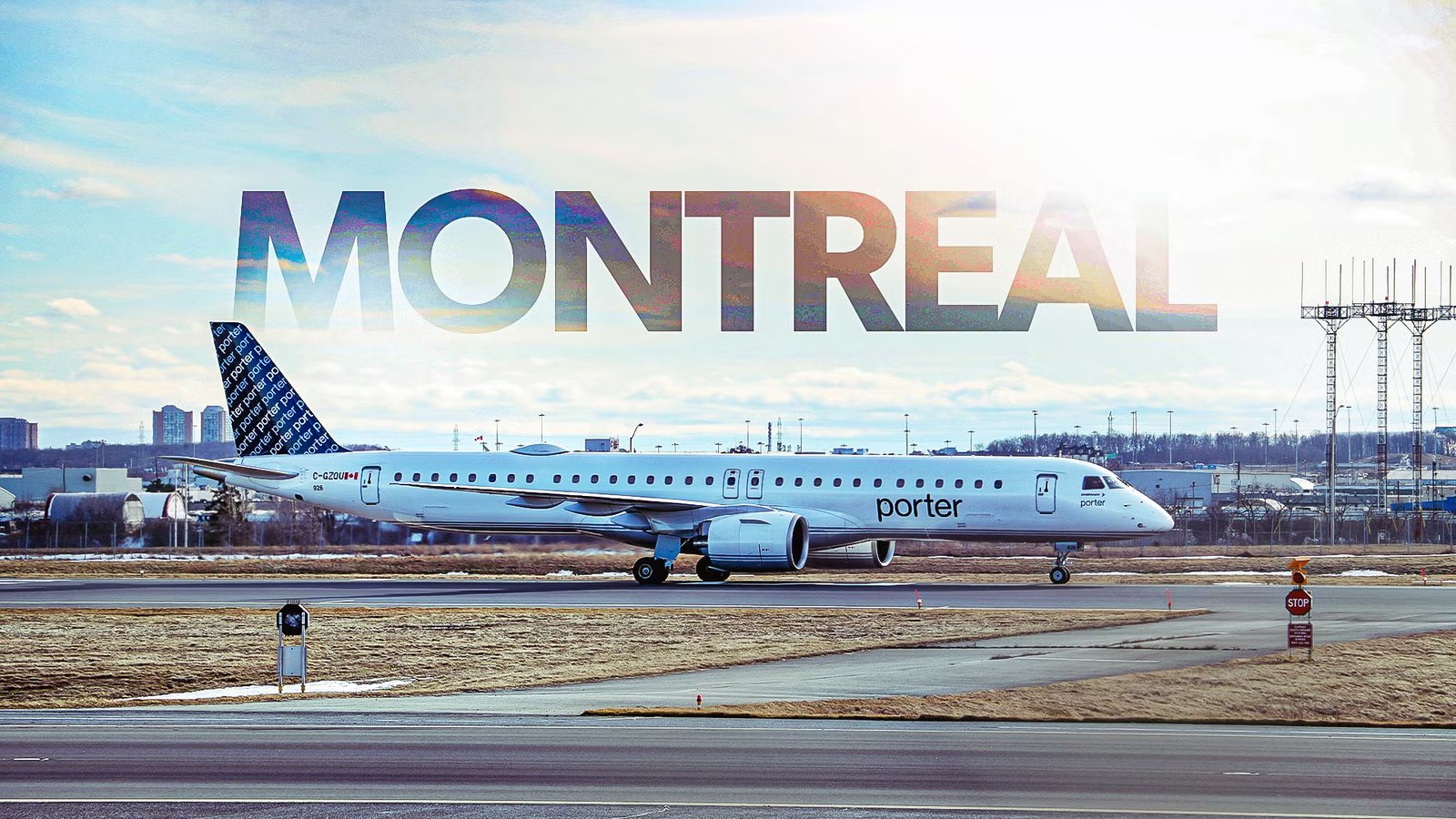
Montreal has spent half a century living with the consequences of one of aviation’s most infamous planning mistakes. When Mirabel Airport opened in 1975, it was envisioned as the future of Canadian aviation, a massive international gateway capable of handling tens of millions of passengers and eventually replacing Montreal’s existing airport. Instead, travelers rejected its remote location, airlines struggled with split operations, and the airport never came close to fulfilling its ambitious promises.
Passenger service eventually disappeared altogether, leaving Mirabel as a symbol of how even the biggest infrastructure projects can fail when they prioritize grand visions over passenger convenience. Now, Montreal is preparing for another attempt at building a true two-airport system. On June 15, 2026, Montreal Metropolitan Airport (YHU), formerly known as Saint-Hubert Airport, will officially open a new $450 million commercial terminal designed to handle up to four million passengers annually.
Backed by Porter Airlines, Macquarie Asset Management, and the Canada Infrastructure Bank, the project aims to relieve pressure on Montreal-Trudeau International Airport (YUL) while avoiding the mistakes that doomed Mirabel. Rather than chasing international prestige, YHU is focused on something much simpler, and potentially far more successful: making domestic air travel easier, faster, and more convenient.
The Ghost Of Mirabel Still Haunts Montreal Aviation

Few airport projects in North America have become cautionary tales quite like Mirabel. Built north-west of Montreal, the airport opened with enormous expectations and one of the largest land reserves ever assembled for aviation development. Planners believed passenger demand would explode over the coming decades, requiring a giant new facility capable of handling future growth.
The problem was that passengers never embraced the location. Situated roughly 34 miles (55 km) from downtown Montreal, Mirabel was inconvenient for travelers and lacked the rapid transit connections that had been promised during planning. Airlines were forced to split operations between Mirabel and Dorval Airport, creating confusion and inefficiencies.
By the early 2000s, most passenger flights had returned to Dorval, now known as Montreal-Trudeau International Airport. The collapse of Mirabel’s passenger operations became a costly lesson in airport planning. Every major decision surrounding YHU appears designed to ensure that history never repeats itself.
Why YHU Is Taking The Exact Opposite Approach

If Mirabel represented ‘build it, and they will come,’ YHU represents a much more cautious philosophy. Rather than constructing a giant airport far from the city center, developers chose an existing airport located approximately 9 miles (15 km) from downtown Montreal on the South Shore.
The new terminal spans 226,000 square feet (21,000 square meters) and features nine boarding bridges, a 900-seat passenger lounge, and facilities capable of processing up to 15,000 passengers per day during peak periods. However, despite these impressive numbers, the airport remains intentionally compact compared with major international hubs.
Simple Flying Quiz
What Aircraft Type Are You?
Five questions. One aircraft. Find out which plane best matches your personality.
Question 1 of 5
How do you prefer to travel?
Question 2 of 5
What’s your ideal weekend away?
Question 3 of 5
How do you handle a busy schedule?
Question 4 of 5
What matters most to you on a long trip?
Question 5 of 5
How do others describe you?
Your Result
The Explorer
Cessna 172
You value freedom, simplicity, and the joy of the journey itself. You’re happiest when you’re in control, taking life at your own pace and discovering the world one small airfield at a time. No crowds, no queues — just sky.
Your Result
The Workhorse
Boeing 737
Reliable, efficient, and always in demand. You get the job done without fuss, keeping things moving for everyone around you. You’re the backbone of any operation — proven, dependable, and trusted the world over.
Your Result
The Icon
Airbus A380
You think big. More space, more comfort, more presence — you believe in doing things properly and on a grand scale. When you walk into a room, people notice. You’re built for the long haul, and you do it in style.
Your Result
The Pioneer
Concorde
Speed, ambition, and a refusal to accept limits define you. Every second counts, and you’d rather break the sound barrier than wait in line. You were ahead of your time — bold, brilliant, and utterly unforgettable.
Airport executives repeatedly emphasize convenience over scale. The goal is not to replace Trudeau Airport but to complement it. This distinction is critical because successful multi-airport systems around the world typically work when each airport serves a distinct role rather than directly competing for the same passengers.
Major Expansion For Montreal Airport Deemed “Not Likely” To Have Significant Environmental Effects
The expansion project includes a new satellite jetty that will add 16 new gates to YUL.
Porter Airlines Is Betting Big On Domestic Travel

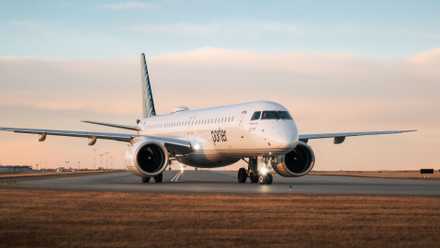
The biggest driver behind YHU’s launch is Porter Airlines, which has transformed itself from a regional carrier into one of Canada‘s fastest-growing airlines. Porter will become the airport’s anchor tenant and launch operations with 138 weekly flights serving 12 domestic destinations.
These routes will be operated using two aircraft types. The airline’s modern Embraer E195-E2 jets seat 132 passengers and offer the range needed for transcontinental routes, while the Bombardier Dash 8-400 turboprops provide efficient service on shorter regional sectors. Together, they give Porter flexibility to match capacity with demand.
Importantly, Porter’s initial strategy focuses exclusively on domestic routes. Unlike Mirabel, which pursued international traffic from the outset, YHU is targeting a market segment where convenience often matters more than global connectivity. This approach reduces risk while allowing the airport to gradually build a loyal customer base.
A $450 Million Project With Private-Sector Discipline

Another major difference between YHU and past airport megaprojects is how it was financed. The new terminal carries a total project cost of approximately US$330 million (C$450 million), making it one of the largest privately backed airport developments in recent Canadian aviation history. Of that figure, roughly US$22 million (C$30 million) was dedicated to airfield improvements, including upgrades to taxiways, aprons, and other infrastructure needed to support increased commercial operations.
Unlike many airport expansions that rely heavily on taxpayer funding, the YHU project was designed from the outset to attract private capital while limiting the burden on public finances. Funding comes primarily through YHU Infrastructure Partners, a partnership between Porter Aviation Holdings and Macquarie Asset Management, one of the world’s largest infrastructure investors with hundreds of billions of dollars under management across airports, ports, roads, and utilities globally.
The Canada Infrastructure Bank supplemented the financing package with a US$66 million (C$90 million) loan, helping bridge the gap between public transportation objectives and private-sector investment. Because private investors have significant capital at stake, success depends on attracting real passengers rather than simply building impressive facilities.
Every aspect of the airport must generate enough demand to justify the investment, encouraging a strong focus on efficiency, customer experience, and sustainable growth. Unlike Mirabel’s government-led expansion, which was built around ambitious long-term forecasts, YHU is being developed around proven demand and commercial viability.
Porter’s 50th E2: Inside One Of Aviation’s Fastest Fleet Build-Ups
The carrier is one of the world’s largest E2 operators.
The Airport Is Selling Time, Not Just Flights

One of YHU’s most intriguing features is its attempt to redefine the airport experience. Rather than encouraging passengers to arrive hours before departure, the terminal has been designed around speed, simplicity, and convenience. In an era when travelers have grown accustomed to long security lines, crowded terminals, and lengthy walks to departure gates, YHU is positioning itself as a faster alternative to the traditional airport model.
Airport operators say travelers may be able to arrive as little as 30 minutes before boarding and still complete the entire journey comfortably. The new 226,000-square-foot (21,000-square-meter) terminal has been specifically designed to minimize unnecessary steps, with short walking distances and streamlined security processes. It also has an intuitive layout that moves passengers from curbside to gate as efficiently as possible.
The focus on convenience extends well beyond the terminal itself. By launching with domestic-only operations, YHU avoids the customs, immigration, and international processing requirements that often create delays at larger airports, allowing passengers to move through the airport far more quickly.
Combined with its location on Montreal’s South Shore and a compact terminal design, the airport aims to replicate the successful model Porter pioneered at Billy Bishop Toronto City Airport, where convenience and time savings became major selling points. For Porter, the terminal is as much a part of the product as the flight itself. The airline is betting that many travelers will choose a smaller, easier airport if it means spending less time navigating terminals.
Can Montreal Finally Support Two Airports?

The ultimate question is whether Greater Montreal can sustain a genuine multi-airport system over the long term. Montréal–Trudeau International Airport continues to handle the overwhelming majority of the region’s passenger traffic and remains the primary gateway for international travel, long-haul connections, and global airline networks. YHU is not attempting to challenge that dominant role, nor is it designed to replicate it at scale.
Instead, Montreal Metropolitan Airport is positioning itself as a complementary facility, absorbing a portion of domestic demand while offering an alternative for travelers prioritizing speed, convenience, and reduced airport friction. This mirrors established multi-airport systems in cities such as London, New York, Tokyo, and Paris, where different airports specialize in distinct roles rather than competing directly for the same passenger flows.
Whether YHU succeeds will depend less on the terminal’s physical infrastructure and more on passenger behavior and airline commitment over time. If travelers adopt the convenience-first model and Porter expands its route network as planned, Montreal could finally achieve the balanced dual-airport system long envisioned by planners. If not, the legacy of Mirabel will persist as a reminder that while building airport infrastructure is straightforward, changing entrenched travel habits is the far greater challenge.