dailynewsnblog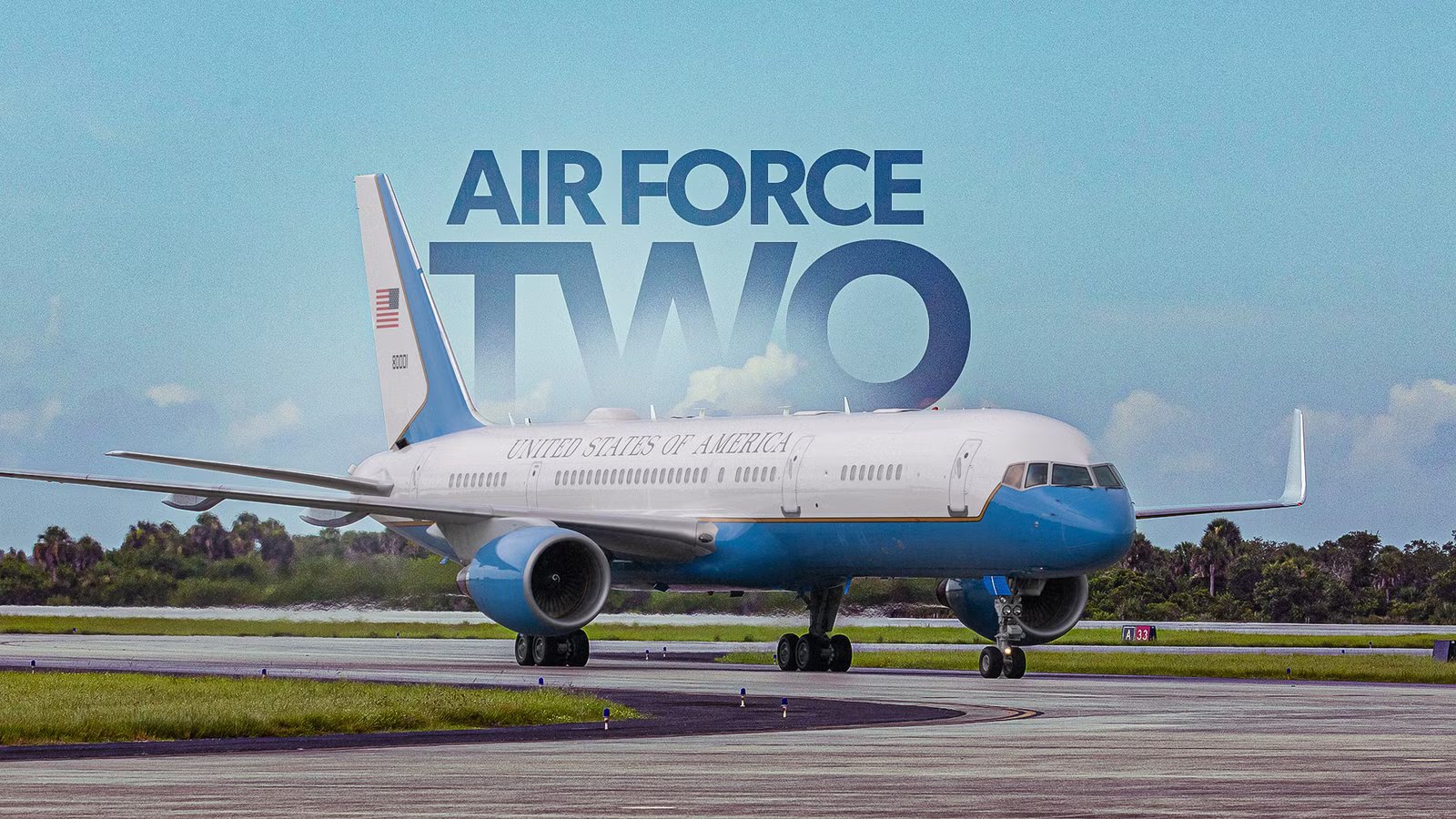
The Boeing 757 was designed with an extraordinary combination of high-thrust engines, massive lifting wings, and a narrowbody frame. This gives the C-32A two critical operational capabilities that no modern aircraft can replicate simultaneously. That is the reason it was adapted into the  Boeing C-32A to serve as ‘Air Force Two’ for the US Vice President. It can land and take off from short, tight, or high-altitude runways at smaller airports globally, as Key Aero highlighted. It flies roughly 5,500 nautical miles (10,186 km) unrefueled while loaded down with heavy, classified military hardware and communication armor.
Yet there is a complete lack of a direct, modern replacement for the unique performance profile of the 757 that has served since the late 1990s. Because Boeing permanently shuttered the 757 assembly lines in 2004, the global aerospace market has been left with an empty mid-market segment. As the National Interest wrote, while the replacement of US executive aircraft focuses heavily on the delayed and over-budget 747-based Air Force One program, VC-25B, the looming crisis facing the ‘Air Force Two’ fleet is quietly ignored.
Market Gap: No Substitute For The 757

The heavily modified military variant, the Boeing C-32A, made its first official test flight on February 11, 1998. The US Air Force officially deployed the aircraft into active VIP service on June 19, 1998. It was delivered to the 89th Airlift Wing at Andrews Air Force Base (ADW) to begin operations as ‘Air Force Two.’ Because the USAF has no viable replacement path, it has been forced to continuously sustain these aging airframes. The aircraft are heavily stressed by intensive executive schedules, leading to a rising volume of component wear and high-profile breakdowns.
The 757, also called the ‘Flying Pencil,’ is famously overpowered. It features a massive wing paired with exceptionally strong engines. The closest commercial alternative is Europe’s Airbus A321XLR, which commercial airlines use to replace their civilian 757s. However, the US military cannot realistically purchase an Airbus plane to serve as one of its prominent primary head-of-state transports due to industrial base policies, domestic political optics, and the intense engineering required to integrate top-secret, hardened US defense systems into a foreign-built airframe.
Smaller planes, like the Airbus A321neo or Boeing 737 MAX, can match its passenger capacity and range, but they do not have the raw power to lift heavy cargo out of short or high-altitude runways. Modern Boeing 737 MAX variants cannot handle the heavy weight of heavy armor, defensive countermeasures, and massive satellite communications equipment over long oceanic distances. Modern widebody jets are too large to fit into the smaller, secondary airports that the Vice President routinely visits for strategic regional diplomacy.
New Midsize Airplane: Not Made In America

Boeing’s primary concept to replace the 757 is the New Midsize Airplane, NMA, widely nicknamed the Boeing 797. Boeing did not create a direct, clean-sheet 757 successor due to a combination of miscalculated airline demand, the financial allure of derivative aircraft, and an engineering focus on other programs during a critical market window. Instead of building a clean-sheet replacement, Boeing opted for a cheaper strategy: stretching and upgrading the existing 737 platform.
When the 757 line shuttered, airlines were demanding efficient, twin-engine widebodies to fly long distances between major hubs or long point-to-point routes. Boeing poured its engineering capital and billions of dollars into developing the 787 Dreamliner. For shorter domestic routes, airlines prioritized the lowest possible operating costs per seat. The 757, with its massive wings and heavy, high-thrust engines, was expensive to operate on short flights compared to smaller, lighter aircraft.
The NMA concept was envisioned to bridge the gap between Boeing’s narrowbody 737 MAX and its widebody 787 Dreamliner. Unlike the single-aisle 757, Boeing’s most prominent concept for the 797 was a small, ultra-efficient widebody. It features a unique 2-3-2 cabin layout. This structure provides passengers with the comfort and fast boarding times of a dual-aisle jet while utilizing composite materials to keep the plane light and fuel-efficient.
How The MAX Falls Short Of The Flying Pencil

By creating the 737 MAX 9 and MAX 10, Boeing hoped to match the passenger capacity of the 757 at a fraction of the development cost. However, because the 737 airframe sits very low to the ground and was originally designed in the 1960s for short regional hops, it faces inherent limits. It cannot fit the massive, high-bypass engines needed for extreme short-field takeoff performance without complex landing gear extensions. It cannot carry heavy fuel and payload weights off short runways or over transatlantic distances simultaneously.
Boeing paused the NMA project in January 2020 to divert all engineering and financial assets toward resolving the 737 MAX grounding and subsequent factory quality challenges. A smaller variant carrying roughly 225 passengers with a 5,000-nautical-mile range. This was explicitly targeted as the true 757-200 successor. A larger variant carrying about 275 passengers with a 4,500-nautical-mile range, meant to replace older Boeing 767s.
Boeing stated that the program will not officially launch until next-generation propulsion and engine technologies are mature enough to deliver the promised 40% reduction in operating costs. Yet it has quietly revived internal studies for a new commercial aircraft positioned at the upper end of the single-aisle market. This project draws heavily from the old NMA concepts, targeting a potential official launch and entry into service in the mid-2030s. As a stopgap measure, Boeing offers the 737 MAX 10, the largest 737 ever built, as its current, closest option for airlines needing a 757 capacity replacement.
The Aircraft Set To Replace The Iconic Boeing 757
There isn’t a single airliner that can replicate all of the Boeing 757’s capabilities, but perhaps the market doesn’t require one.
Sense Of Urgency: The Needs Of The Air Force

The USAF cannot afford to wait for Boeing to make a new plane. It has officially abandoned plans to buy a single, direct replacement airframe. The Pentagon canceled the dedicated C-32A replacement program. The Air Force’s primary plan is to simply keep the aging 757s alive via continuous, aggressive mechanical and system upgrades. As The War Zone covered, the fleet undergoes periodic deep-depot overhauls at specialized maintenance facilities like L3Harris in Texas. Airframes are stripped down to fix micro-cracks and corrosion.
Because the 757 has no true successor, the USAF is studying a compromise that drops the requirement for a single ‘do-it-all’ aircraft. It is leaning toward replacing the C-32A with a modified commercial narrowbody, likely a militarized variant of the Boeing 737 MAX 9 or MAX 10. The Air Force would accept an operational split. They would use 737-based variants for medium-range or standard-runway missions, while relying heavily on midair refueling or switching the VP to massive widebody backup jets, like the 747-based VC-25B.
Since Boeing stopped building 757s in 2004, the USAF has quietly acquired used, low-flight-hour civilian 757-200s from the commercial market. These secondary jets form a ‘shadow fleet.’ These spread the flight-hour stress across a larger pool of airframes or are systematically stripped down to serve as a critical spare-parts reserve as commercial airlines slowly retire their own 757 fleets. When the Pentagon pulled funding for a traditional 757 replacement, it redirected those research funds toward evaluating advanced high-speed transport aircraft.
The USAF has funded study contracts with aerospace startups like Boom Supersonic and Hermeus. While a hypersonic or supersonic Vice Presidential transport sounds futuristic, these programs are decades away from being viable, safe, or affordable head-of-state transports. They serve as a long-term tech bet rather than an immediate fix for the 2030s.
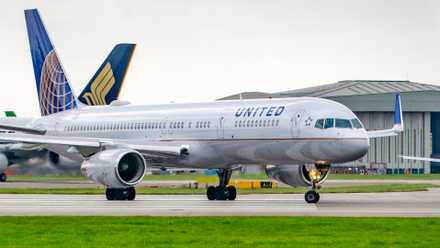
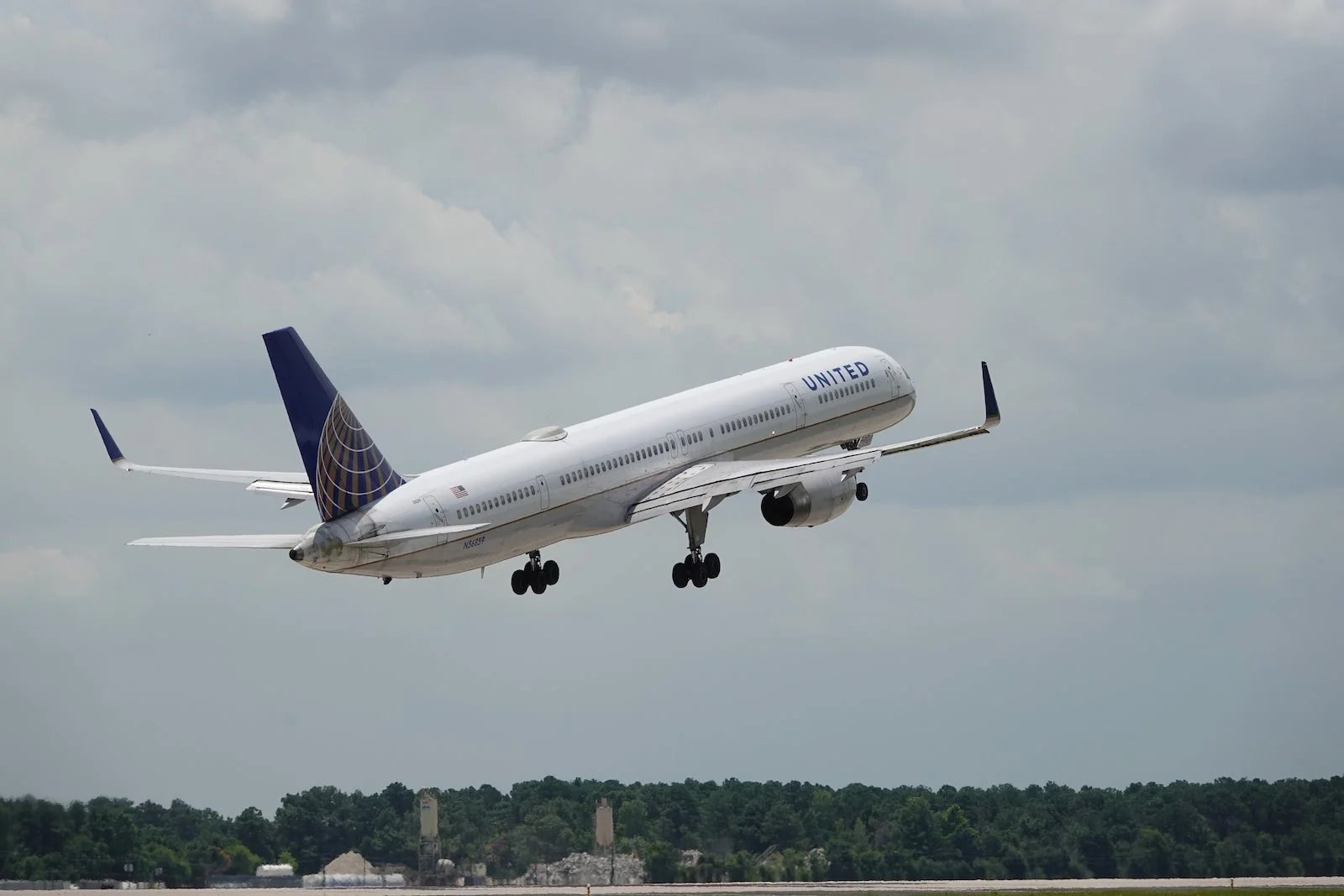
No Regrets: Why United Airlines Has Easily Kept Flying The Boeing 757
United and Delta have kept their aging 757s airworthy for years and years.
The Only Act In The Mid-Market Segment: Enter Airbus

While Boeing dithered, Airbus dominated this market by creating the A321neo and A321XLR. These heavy, long-range single-aisle aircraft successfully poached many of Boeing’s traditional 757 customers. The worldwide grounding of the 737 MAX in 2019 forced Boeing to divert its top engineering talent, cash reserves, and corporate focus toward fixing and recertifying its existing fleet. Subsequent production flaws on the 787 Dreamliner and major certification delays for the large 777X drained Boeing’s capital, leaving no financial room to launch a risky, clean-sheet aircraft program.
The Airbus A321 airframe successfully captured the exact transatlantic, narrowbody market that Boeing abandoned. While it doesn’t match the 757’s raw horsepower, it dominates the ‘middle of the market’ via specific advantages. The defining feature of the A321XLR is a permanently integrated Rear Center Tank built directly into the aircraft’s fuselage structure. The RCT sits in the lower fuselage behind the wings, holding up to 3,400 gallons (12,870 liters) of fuel while occupying minimal space.
The 757 is a 1980s design with a high empty weight and thirsty engines. The A321XLR utilizes modern, ultra-high-bypass LEAP-1A or Pratt & Whitney GTF engines. The engines and RCT allow the plane to carry maximum fuel without sacrificing passenger luggage capacity, a limitation that crippled previous 737 and A321 variants trying to fly long routes. The A321XLR boasts a maximum range of 4,700 nautical miles (8,704 km), allowing it to fly up to 11 hours non-stop. This significantly beats the standard Boeing 757-200, which tops out around 3,900 nautical miles.

How Many Boeing 757s Are Still Flying In 2026?
Despite a declining operator base, the 757 remains an important part of many airlines’ fleets in 2026.
No Import Models Allowed: Why The A321XLR Is A No-Go

While Airbus manufactures highly capable aircraft like the A321XLR that fit the physical profile, utilizing a foreign-headquartered aerospace company for the US executive fleet is a legal impossibility. The aircraft carrying the US President and Vice President serve as flying diplomatic embassies and visible symbols of American industrial power. Buying from Airbus would send a message that American manufacturing is incapable of building its own flagship executive transport.
An executive aircraft is not just a commercial airliner with luxury seating; it is a hardened, classified, flying military command center. To install the mandatory nuclear command-and-control systems, secure satellite arrays, and anti-missile defense shields, engineers require top-level US military security clearances. Under US defense protocols, sharing these hyper-sensitive, classified military blueprints and integration schemes with a foreign corporation is strictly prohibited by law.