dailynewsnblog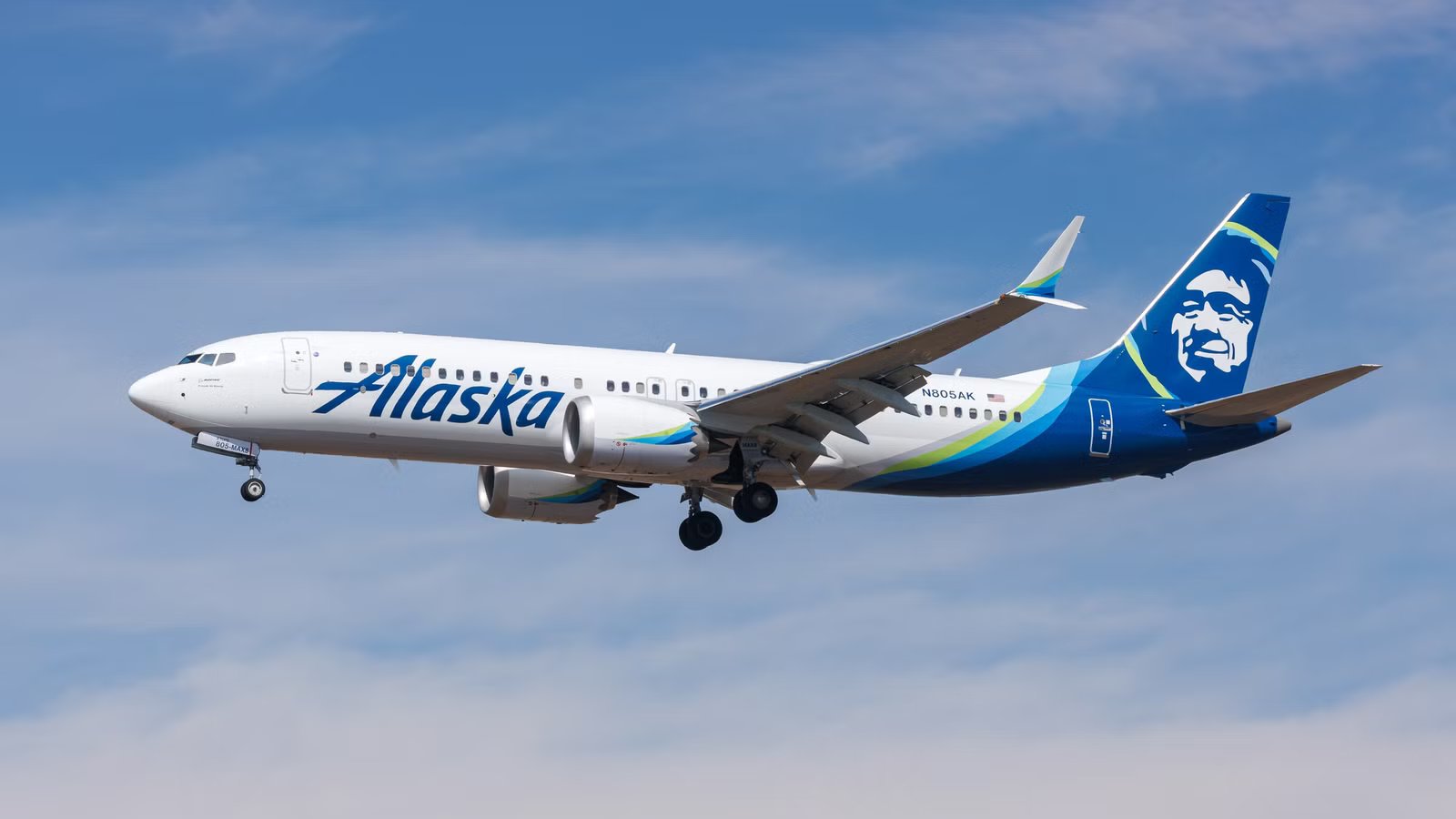
 Alaska Airlines has launched the first-ever nonstop service between Anchorage and
  Boston Logan International Airport (BOS), opening a new long-haul domestic route that links Alaska directly with New England. The airline launched the service on June 13, with the route scheduled to operate weekly through August 15 using the Boeing 737 MAX 8 (7M8). The return sector from Boston to Anchorage is scheduled for up to 7 hours 53 minutes, placing it among the carrier’s longest nonstop flights operated by the 737 MAX this year.
The new route eliminates the need for a connection, which had previously been required for all travelers moving between Boston and Anchorage. During the 12 months from March 2025 through February 2026, about 43,000 round-trip passengers traveled between the two cities, according to airline market data. Alaska Airlines carried the largest share of that traffic at roughly 47%, primarily via Seattle, followed by Delta Air Lines at 33% and United Airlines at 14% through hubs such as Seattle, Minneapolis, Chicago, and Denver.
A New Long-Haul Domestic Route

The Anchorage-Boston flight is notable because it creates a direct link between two markets separated by more than 3,300 miles. Alaska has historically relied on Seattle as the principal connecting point for traffic moving between Alaska and the East Coast, but the carrier has increasingly used the 737 MAX to support longer point-to-point routes where demand is strong enough to sustain nonstop service.
The weekly operation is aimed at the peak summer travel season, when tourism to Alaska reaches its highest levels and demand for direct access from the eastern United States increases. By operating the route only during the summer window, the airline can test demand while keeping aircraft utilization aligned with its broader network schedule.
Among Alaska’s Longest 737 MAX Flights

With a scheduled westbound flight time of up to 7 hours 53 minutes, Boston-Anchorage becomes Alaska Airlines’ third-longest nonstop 737 MAX service this year. The airline’s two longer MAX routes are New York JFK-Anchorage at up to 7 hours 57 minutes and Reykjavik-Seattle at up to 7 hours 55 minutes.
The aircraft assigned to the service is the Boeing 737 MAX 8, which offers the range and fuel efficiency needed for flights approaching eight hours. Alaska has used the MAX fleet to expand its network beyond traditional West Coast flying, adding longer domestic and transatlantic services while maintaining commonality with the rest of its narrowbody operation.
Catch what other flight trackers miss
Emergency squawks, holds, NOTAMs — live signals, no signup.
Open tracker
Catch what other flight trackers miss
Emergency squawks, holds, NOTAMs — live signals, no signup.
Open tracker
For passengers, the new service removes the uncertainty associated with connections and reduces total journey time. A traveler who previously routed through Seattle, Minneapolis, Chicago, or Denver can now reach Alaska on a single flight during the seasonal operating period. Demand for direct point-to-point operations has grown significantly in recent years, and Alaska Airlines is just one of many global airlines adjusting operations to meet market trends.
Alaska Airlines Strips Miles Earning For Basic Economy Passengers Starting This Summer
The change comes in a market where many legacy carriers have done the same.
Demand Suggests A Viable Niche Market

The Boston-Anchorage market is relatively small compared with major transcontinental city pairs, but the passenger figures indicate a meaningful basis of demand. The 43,000 round-trip passengers recorded over the past year averaged more than 100 travelers per day each way, all of whom previously had to connect through another airport. Alaska’s leading market share reflects the strength of its Seattle hub and its established Alaska network. Delta and United also captured substantial portions of the traffic through their own connecting hubs, showing that demand has been distributed across multiple carriers rather than concentrated in a single network.
Whether the route expands beyond weekly service or returns in future summers will likely depend on booking performance during the inaugural season. For now, the launch represents a targeted effort by Alaska Airlines to use the Boeing 737 MAX on longer nonstop sectors that can differentiate the carrier in markets where direct service has not previously existed.