dailynewsnblog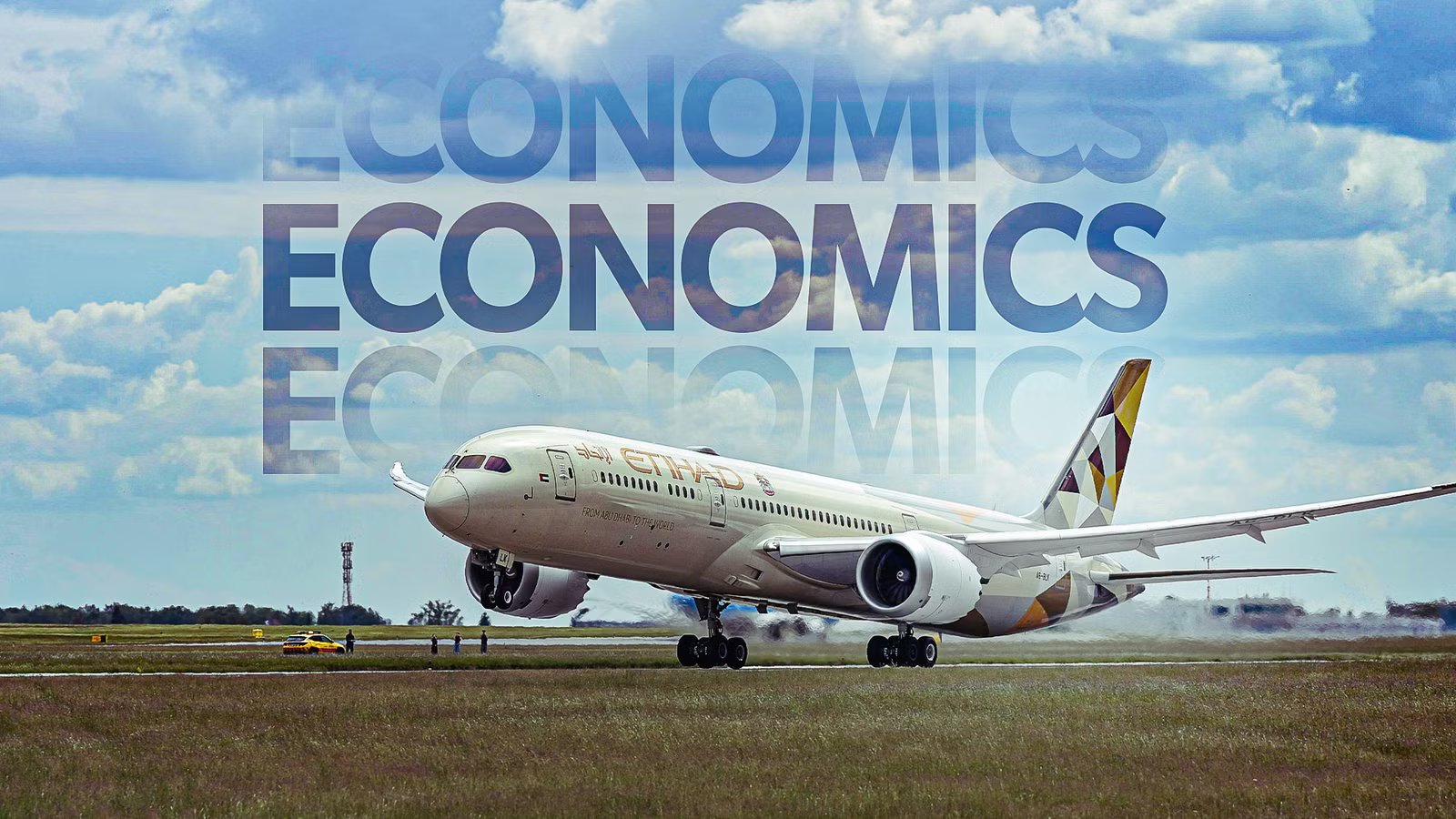
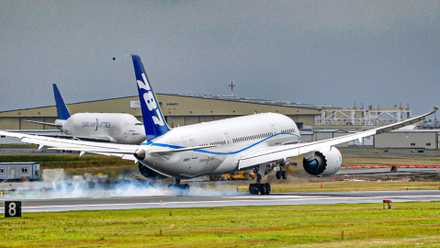
Over a billion passengers have flown on the over 1,200 Boeing 787s that have been delivered across three variants. The reason for this immense popularity is that the 787 changed the way that long-haul aviation works. It has dragged us away from the awe and romanticism of the superjumbos in the late 20th and early 21st century. We now live in a world of incredibly efficient twin-jets that are flying further than ever before.
The 787 also set efficiency standards, offering a significant drop in fuel required. However, the largest variant, the 787-10, has been able to leverage its high capacity to break out of conventional Dreamliner service on high-demand routes.
Winning Through Midsize Efficiency

Before the 787 revolutionized long-haul aviation, airlines were forced into an inefficient hub-and-spoke model. Huge aircraft like the Boeing 747 and Airbus A380 could travel great distances and had a large capacity. Furthermore, only the largest airports could handle them. That made these aircraft the kings of long-haul hub-to-hub operations. Yet passengers would then have to connect to a smaller jet to fly to their final destination.
Passengers were demanding a direct service, but there were no aircraft capable of facilitating it until the 787 arrived. The aircraft can carry 240 to 330 passengers with a range of up to 7,565 nautical miles (14,010 km). As a much smaller aircraft, it could also land and takeoff from smaller airports. That meant new city pairs became possible and commercially viable, with a rise in long and thin routes.
Since entering service, the jet has allowed 523 new nonstop routes to come into existence across 85 countries. It currently serves 2,000 city pairs. With this achievement, we have undoubtedly seen the rise of long-haul point-to-point aviation. Previously, regional and short-haul airports began international service, and passengers can reach their destination far faster.
Incredibly Low Fuel Burn

The 787 doesn’t just excel in its flexibility and ability to carry out thin long-haul routes. It also set a new standard for the efficiency demanded by carriers of their twin-jet widebodies. The most notable development was an upgrade in the types of materials used in aircraft construction. Rather than using the aluminum-heavy construction that had been traditional for decades, the 787 used composite materials like carbon-fiber reinforced polymers. These materials are lighter and have fewer issues with fatigue and corrosion. Boeing’s By Design resources claim that this advance contributed to a 25% reduction in fuel burn. That means airlines can make substantial fuel savings that compound as routes get longer.
In addition to being lighter, composites are also stronger and easier to mold into complex, seamless shapes, which allow for more aerodynamically efficient designs. The Dreamliner changed the way wings looked, longer, more flexible, and with a higher aspect ratio than anything that had been seen before in commercial aviation. The raked wingtips were another iconic and highly efficient addition.
The final aspect of the 787’s efficiency was its engines: General Electric GEnx-1B or Rolls-Royce Trent 1000. The table below compares specifications for the two options:
Feature | Rolls-Royce Trent 1000 | General Electric GEnx |
|---|---|---|
Thrust Range | 53,000–78,000 pounds (235–347 kilonewtons) | 69,800–76,100 pounds (311–339 kilonewtons) |
Bypass Ratio | >10:1 | Up to 9.0:1 |
Overall Pressure Ratio | 50:1 | Up to 58.1:1 |
Fan Diameter | 112 inches (2.84 meters) | 111.1 inches (2.83 meters) |
Compressor Stages | 8-stage intermediate pressure | 10-stage high-pressure |
Configuration | Three-shaft turbofan | Two-shaft turbofan |
While both of these engines have different performance markers, strengths and weaknesses, they share a number of substantial advances that continue to be mainstays in modern widebody engine design. This includes improved compressors, high aspect ratios, high thermal efficiency, and composite fan blades.

Why The Boeing 787 Dreamliner Has Such Unparalleled Fuel Efficiency & Range Flexibility
The Dreamliner achieves its fuel efficiency and range flexibility through advanced materials, aerodynamics, and smart design.
A Revolution In Cabin Experience

For decades, long-haul aviation has been exhausting for passengers across all classes, as well as for crews. Widebody aircraft were traditionally pressurized to an altitude equivalent to 8,000 feet (2,400 meters) above sea level. This altitude is low enough to be safe, but approaching the threshold of altitude sickness as the air pressure drops off significantly. The humidity is also lower than comfortable, while legacy long-haul jets were exceptionally noisy and had harsh artificial lighting. These combined factors produce headaches, jet lag, fatigue, and dehydration, with effects often felt for days afterward.
The 787 transformed the cabin experience by bringing the pressurization down to an equivalent of 6,000 feet (1,830 meters) above sea level. At this altitude, the air is significantly denser and easier to breathe, while having a higher humidity. The jet’s composite fuselage facilitates this pressurization as it places a level of strain on the airframe that would not be sustainable on older aircraft. The result is passengers disembarking feeling far less dehydrated and fatigued.
The table below displays the specifications for a 787, taking data from Boeing:
Specification | 787-8 | 787-9 | 787-10 |
|---|---|---|---|
Passengers | 248 | 296 | 336 |
Range | 7,305 nautical miles (13,530 kilometers) | 7,565 nautical miles (14,010 kilometers) | 6,330 nautical miles (11,730 kilometers) |
Length | 186 feet (57 meters) | 206 feet (63 meters) | 224 feet (68 meters) |
Wingspan | 197 feet (60 meters) | 197 feet (60 meters) | 197 feet (60 meters) |
Height | 56 feet (17 meters) | 56 feet (17 meters) | 56 feet (17 meters) |
Boeing also introduced a number of other features to make long-haul aviation more comfortable. Its windows are 30% larger than usual, so that the cabin is filled with natural light. These windows are electronically dimmable. LED systems onboard automatically replicate day-night cycles. The absence of harsh blue light limits the disruption to passengers’ circadian rhythms.
5 Reasons Why Pilots Prefer The Boeing 787 Dreamliner
The aircraft offers exceptional long-haul capabilities.
The Dreamliner Also Has Use For High-Demand Routes

Long and thin routes are not the only area in which the 787 excels. It has three variants, with the largest (Boeing 787-10), having a standard two-class capacity of 92 seats higher than the smallest (Boeing 787-8). That has allowed the 787-10 to prove its worth on high-demand routes in recent years, matching high-capacity with a lighter load than larger widebody aircraft like the 777-300ER. The balance is ideal for routes where demand is too high for smaller 787s, 767s, A330s, or Boeing 737 MAXs, but too low to sustain operations from large aircraft, which are incredibly expensive to run. Although the 787-10 has a shorter range than the smaller variants, it still has the ability to operate transatlantic services, along with flights across Asia and the Middle East.
The table below ranks the world’s top-five 787-10 operators by the number of this aircraft in their fleets:
Ranking | Airline | Boeing 787-10 |
|---|---|---|
1 | Singapore Airlines | 26 |
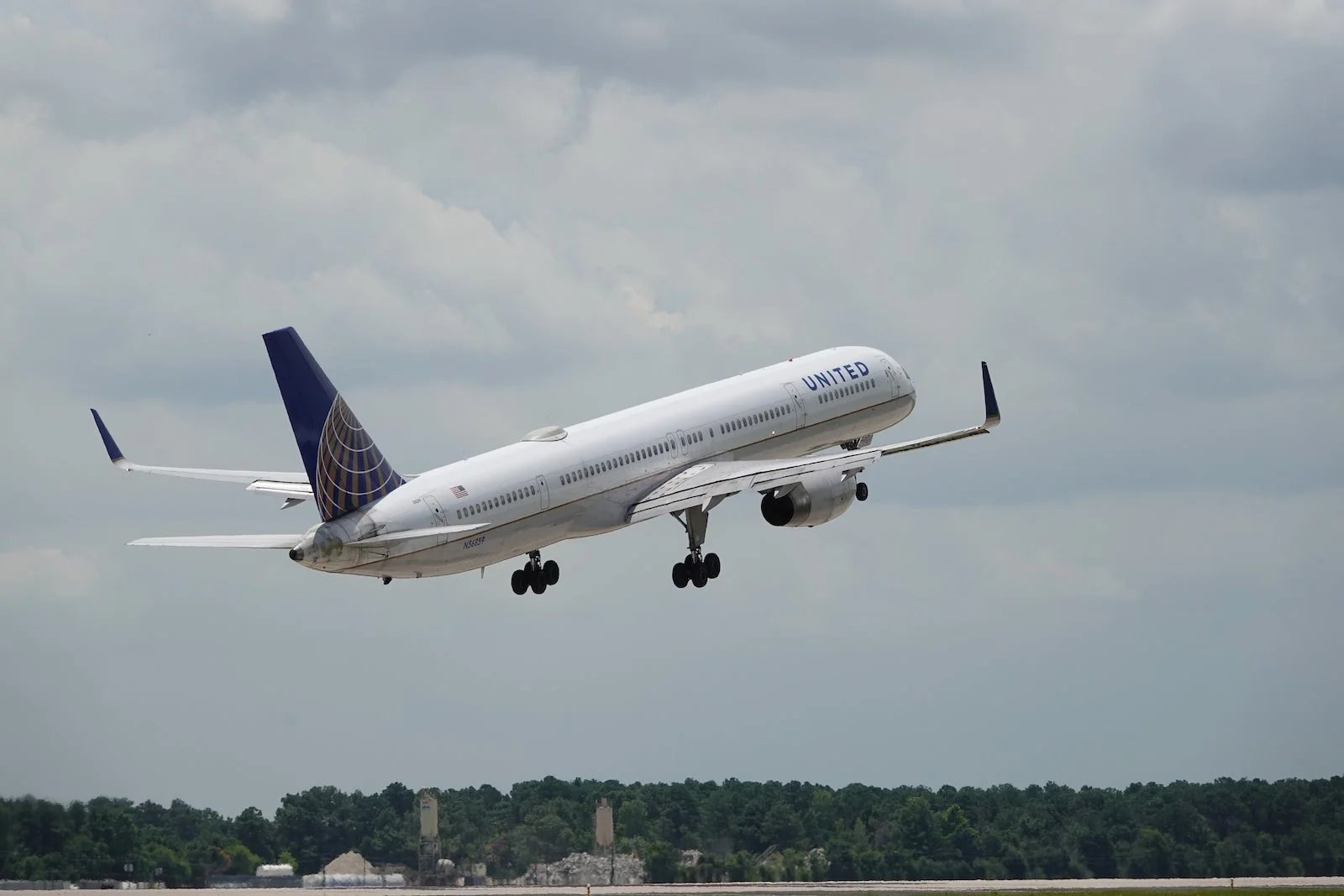
2 | United Airlines | 21 |
3 | British Airways | 12 |
4 | EVA Air | 12 |
5 | KLM | 12 |
Slot constraints mean we will likely see increasing usage of the 787-10 on some of the world’s highest-demand routes. Airports like  London Heathrow Airport (LHR) place limits on the slots airlines can use, allowing them to maximize their capacity. Using larger aircraft means maximizing revenue and capacity without needing to beg, borrow, and steal for more slots. Dozens of additional seats on each aircraft quickly translate to hundreds of thousands of additional seats available a year.
787-10s are now seen throughout much of the world, but All Nippon Airways (ANA) has all three of the busiest 787-10 routes. According to Cirium data for March 2026, these are Sapporo New Chitose Airport (CTS) at 169 flights, Okinawa Naha Airport (OKA) at 153 flights, and Fukuoka Airport (FUK) at 110 flights. All start at the hub Tokyo Haneda Airport (HND). All other 787-10 flights for March 2026, such as EVA Air’s Tokyo Narita Airport (NRT) to Taipei Taoyuan International Airport (TPE) service, had fewer than 100 frequencies.
Boeing’s Next Widebody Is Both Continuity And Change

Shutterstock, Simple Flying
Boeing’s next major widebody release is the Boeing 777X. This jet is huge. The 777-9, the large variant, has a length of 251 feet 9 inches (76.7 meters) and can accommodate 426 passengers. That means 777X owners will not be able to use the jet for thin routes, as even with enormous fuel burn savings, it won’t be commercially viable to fly the aircraft if it cannot be filled.
However, the 777X incorporates features designed to facilitate point-to-point services, clearly inspired by the changes that the Boeing 787 has brought to commercial aviation. An example is the folding wingtips, which convert that wingspan from 235 feet five inches (71.8 meters) to 212 feet 9 inches (64.9 meters), a reduction of 23 feet (7 meters). The difference has enormous significance. The full wingspan would make the 777X a Category F aircraft, a classification reserved for the largest planes that can only fly to hubs. With the folding wingtips in the upright position, the 777X has the same wingspan as a standard Boeing 777 and is considered a Category E aircraft. As a result, they can use the taxiways and gates available at much smaller airports.
The 777X is also built with efficiency in mind, as was the case with the 787 and every twin-jet widebody after. Substantial investments have been made in this effort. One example is the wings, which are made of composite materials like carbon fiber. The choice of material allows for substantial weight savings without compromising the strength required to lift such a large aircraft into the sky.