dailynewsnblog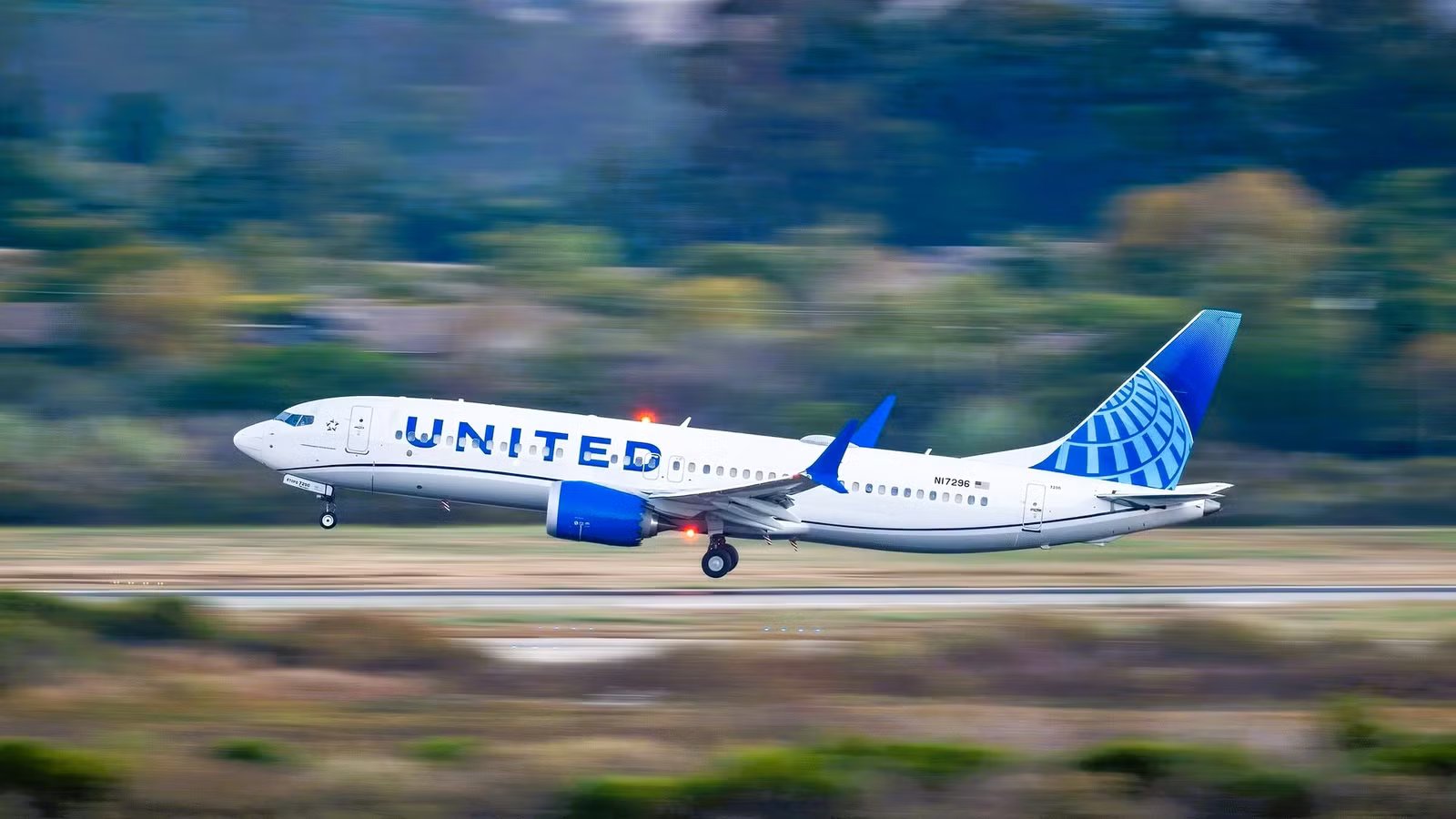
 United Airlines encountered an unusual problem with one of its aircraft before departure from
  Cancun International Airport (CUN), when a swarm of bees gathered on the aircraft’s wing. The incident, captured on video and widely shared online, showed the Boeing 737 on the ground with bees clustered underneath part of the wing, before the pilot elected to “remove” them during his takeoff roll.
At first glance, it was the sort of oddball aviation moment that seems made for social media. But while a bee swarm on a wing is usually more of an operational nuisance than a flight-safety emergency, insects have caused serious problems for aircraft before. In the wrong place, particularly inside pitot tubes, vents, drains, or other small openings, a tiny insect can create a major safety issue.

USA Today reported that the incident occurred on Thursday on United Airlines Flight 1275, bound for  Los Angeles International Airport (LAX), causing a brief delay of departure. The sight of a swarm of bees on the wing of a commercial airliner was a strange enough occurrence that it lit up social media, with numerous posts stating incorrectly that it was a
  Delta Air Lines flight.
In the video, hundreds of bees can be seen clustered beneath part of the aircraft’s wing, and the pilot can be heard saying, “bees on the wing, that’s a new one!” In previous instances of bees swarming an aircraft (yes, there have been quite a few), the situation usually involves a delay as the ground crew calls a beekeeper to remove the insects safely. But as one social media user posted, in this case, “the pilot wasn’t messing about, he said ‘Hold my beer’ and went,” opting to depart with the bees in place, and letting them be swept off the wing by the airflow during takeoff.
The situation was quickly resolved as the swarm began to disappear as the aircraft picked up speed, although the last bee that appeared to hold on right up until V1 became an unlikely internet hero. United Airlines later confirmed the incident in a statement:
“Some bees created a ‘buzz’ around United flight 1275, which experienced a short delay while we addressed the issue. The flight safely departed afterwards, and our unexpected guests fortunately chose not to join us for the remainder of the flight.”
When Tiny Insects Create Major Aviation Risks

When people think of wildlife hazards in aviation, they usually picture bird strikes, deer on runways, or larger animals straying onto airport property. Yet insects have also been responsible for serious incidents, and in some cases, fatal accidents. The greatest danger is not normally insects gathering on exterior surfaces, but insects entering critical aircraft systems such as pitot tubes, static ports, drains, and vents.
Year | Airline | Aircraft | What Happened | Why It Matters |
|---|---|---|---|---|
1996 | Birgenair | Boeing 757 | A suspected mud dauber wasp nest blocked a pitot tube before departure from Puerto Plata. | Erroneous airspeed data contributed to a fatal crash that killed all 189 on board. |
2018 | Virgin Australia | Boeing 737 | Insect nest residue almost completely blocked the captain’s pitot probe. | The crew declared a Mayday and returned for an overweight landing. |
2021 | British Airways | Boeing 787-9 | Insect eggs and debris were found inside the right pitot probe before departure. | The aircraft failed inspection and required probe replacement. |
2021 | Various airlines at LHR | Various | Eight aircraft suffered pitot/static issues linked to wasps and bees nesting in the pitot probes. | Two events resulted in rejected takeoffs. |
2023 | Delta Air Lines | Airbus A320 | Bees gathered on the aircraft’s winglet before departure. | The flight was delayed for several hours while beekeepers dealt with the swarm. |
2025 | IndiGo | Airbus A320 | Bees swarmed the cargo door during baggage loading | The aircraft was evacuated, and the passengers transferred to a new aircraft. |
The most famous example remains Birgenair Flight 301. In February 1996, the Boeing 757 crashed shortly after departing Puerto Plata Airport (POP) in the Dominican Republic, killing all 189 people on board. Investigators concluded that one of the aircraft’s pitot tubes had become blocked while the aircraft sat on the ground, with a mud dauber wasp identified as the most probable cause. The resulting erroneous airspeed indications contributed to a chain of events that ultimately led to the loss of the aircraft.
More than two decades later, a similar threat emerged in Australia. In 2018, a Virgin Australia Boeing 737 departing Brisbane Airport (BNE) suffered unreliable airspeed indications shortly after takeoff. The crew declared a Mayday and returned to the airport, making an overweight landing. Investigators later determined that the captain’s pitot probe had been almost completely obstructed by residue from an insect nest, demonstrating that even modern aircraft remain vulnerable to tiny intruders.

When A Swarm Of Bees Delayed A Delta Air Lines Flight From Houston
After delaying a flight four hours, bees resting on the wing of a Delta Air Lines aircraft finally buzzed off when the aircraft moved.
Keeping Insect Hazards Under Control

United is far from alone. One of the most widely reported examples occurred in 2023 when Delta Air Lines Flight 1682 from Houston to Atlanta was delayed for approximately three hours after a swarm of bees attached itself to the aircraft’s winglet before departure. Attempts were made to resolve the situation, and the bees ultimately dispersed when the aircraft’s engines were started and the aircraft moved from the gate.
To reduce the risks posed by insects, airports and airlines employ a variety of mitigation measures. Wildlife hazard management programs increasingly address insects alongside birds and larger animals, while maintenance crews routinely inspect pitot probes, static ports, drains, and vents for signs of contamination. Aircraft parked in high-risk environments are often fitted with protective covers, and airports often work with pest-control specialists or local beekeepers when swarms appear near aircraft or terminal areas.
The United 737’s experience in Cancun may have provided a lighthearted viral moment, but it also highlighted why aviation treats even the smallest wildlife hazards seriously: history has shown that insects can occasionally create problems far larger than their size would suggest.