dailynewsnblog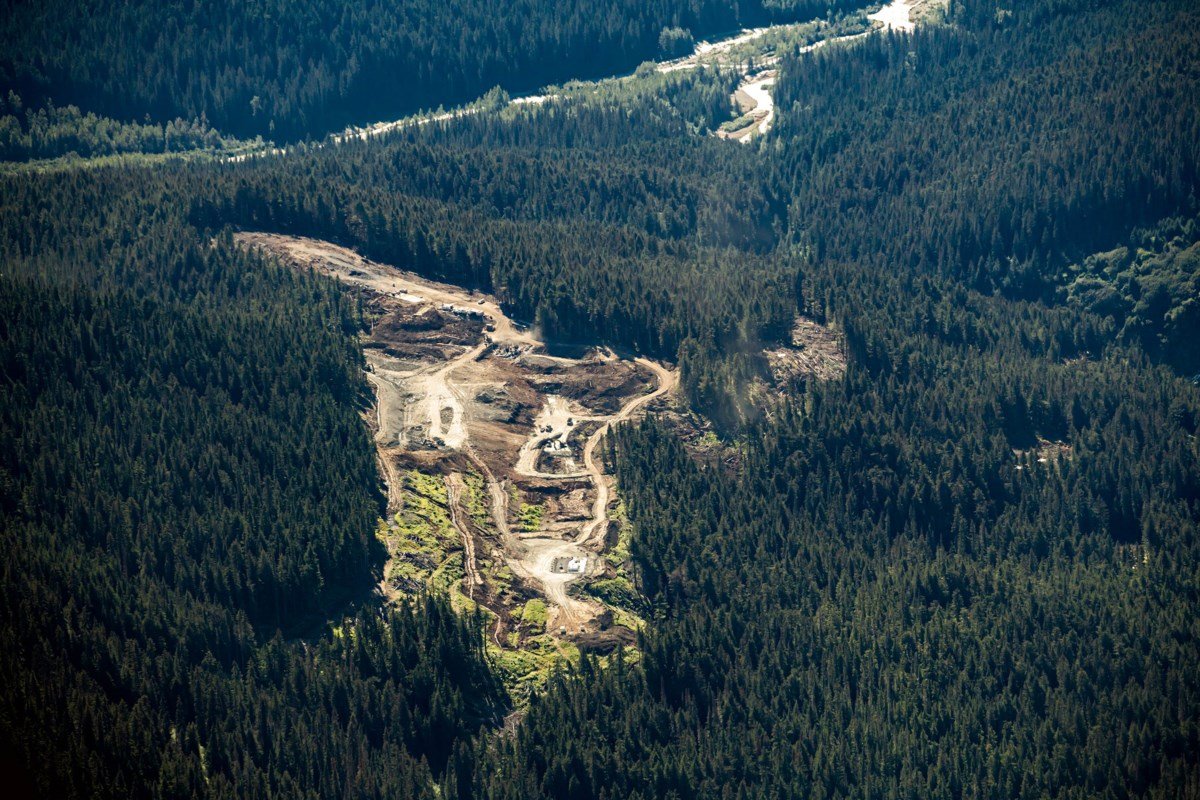
A B.C. court has ruled the province failed to consult a First Nation before granting a key regulatory status to the $8B KSM gold mine
A court has ruled British Columbia’s government failed to consult a First Nation before granting a major regulatory designation that allowed one of the world’s largest undeveloped gold mines to keep its environmental approvals alive indefinitely.
The province declared Seabridge Gold’s (TSX:SEA) KSM mine “substantially started” in 2024, a status that prevents its environmental assessment certificate from expiring and saves the project from having to restart a lengthy regulatory review.
In a decision handed down Monday, B.C. Supreme Court Justice Emily Burke found that when the government made the designation, it failed to satisfy its duty to consult with the Tsetsaut Skii km Lax Ha Nation (TSKLH).
TSKLH Chief Darlene Simpson, who has spent decades trying to get the province to recognize a claim over its territory, said that with only 56 members, her nation is slowly having its rights extinguished.
“There’s truth and reconciliation that has to happen,” Simpson said. “And the truth is that’s our territory, and they need to reconcile that.”
Located in B.C.’s mineral-rich “golden triangle” region about 65 kilometres from Stewart, the mine site is said to contain gold, copper, silver and molybdenum.
The B.C. and federal governments have already designated the KSM mine a “critical mineral project.” Seabridge says the mine will serve as a significant economic anchor that will help supply copper and other minerals Canada needs to drive down carbon pollution and boost renewable energy targets.
The company estimates the mega-project will inject about $47.9 billion into B.C.’s economy over 52 years.
At a cost of roughly $8 billion, the KSM mine project involves the construction of four open pits and two underground mines. Seabridge and its subsidiary, KSM Mining ULC, also plan to drill twin 23-kilometre-long tunnels under a mountain range to move crushed ore, distribute electricity, and transport fuel and people. The tunnels will link the mine site with a massive mine waste reservoir known as a tailings pond.
“The tailings facility proposed to be built in that area would be one of the largest tailing facilities in North America, with a proposed reservoir said to be as deep as the New York Times Tower is tall,” Justice Burke wrote in her ruling.
Seabridge, which has legal title to the lands under the project, has been working to develop the project since 2008.
The province issued the mine its original environmental assessment certificate in 2014. In the years since, the proponents have received multiple extensions. The latest, set to expire July 29, 2026, was issued during the COVID-19 pandemic to give them more time to secure a partner with enough money to begin developing the project.
To keep it active and avoid restarting the lengthy regulatory process, the proponents sought a “substantially started” determination. The status shows they have garnered enough investment and done enough work on the ground to have their environmental assessment certificate never expire.
Nation’s territorial claims backed by mounting evidence
Seabridge and its subsidiary have so far spent nearly $1.2 billion on the project. That includes $444 million spent between 2021 and 2023 on clearing trees, building roads and developing a switching station for a transmission line.
For years, the TSKLH nation insisted that the province carry out a proper review of historical evidence showing the extent of its traditional territory.
But as a small First Nation, it had relatively few political connections and little lobbying power, according to TSKLH lawyer Ryan Beaton.
After years of delay, B.C.’s Ministry of Attorney General finally provided the nation with an updated ethnographic report in 2021.
Reviewed by Business in Vancouver, the 425-page document includes dozens of maps, and delves deep into colonial records, archaeological evidence, past court cases and oral testimony.
Named Awiijii after the sound the wind makes at a local mountain peak, TSKLH’s traditional territory encompasses a wide swath of northwestern B.C., including the Bruce Jack mine, parts of the Nass, Skeena, Bear and Stikine River watersheds, and where KSM proposes to build a mine waste facility.
The TSKLH traditionally used the area to pick huckleberries, trap marten and beaver, and hunt game like grizzly bear, moose and mountain goat. They also harvested salmon and trout at cabins and smokehouses built along key fishing sites directly downstream of the proposed tailings pond, according to the ethnographic report.
‘Left off the radar’
In 2023, the Tahltan First Nation and the Nisga’a Nation partnered to form the Treaty Creek Limited Partnership, part of a plan to capitalize on jobs and contracts at the massive KSM project.
Requirements to consult the two Indigenous nations are listed in draft mine permits for the KSM project. But according to the TSKLH, those consultation requirements are built on a “false historical narrative” that rewrites who has a right to claim traditional territory in the area.
The 2021 ethnographic report relates to how in the late 18th and early 19th centuries, attacks by interior raiders forced the TSKLH to relocate south, integrating into Gitxsan society.
Among its pages, the report officially documents an 1898 peace treaty at Treaty Creek that permanently transferred exclusive ownership of hunting, trapping and fishing grounds to the TSKLH.
In court, the TSKLH claimed B.C. has known they were a distinct nation since the 1980s. And since 2003, the nation says it has actively asserted its distinct Tsetsaut cultural heritage and identity. The nation currently operates independently and is no longer politically associated with or represented by the Gitxsan Nation.
On Feb. 5, 2023—days after the Tahltan and Nisga’a announced their intentions to launch a KSM-targeted venture—Beaton sent a letter to the Ministry of Indigenous Relations and Reconciliation. The lawyer pointed to the 2021 ethnographic report that concluded the Nisga’a and Tahltan had no 19th century treaty over the territory.
“The TSKLH Nation will act reasonably but firmly to counter the false narrative being put forward by the Nisga’a-Tahltan partnership announced last week,” Beaton wrote.
Consultations and agreements between First Nations, companies and government must be ground in historical records, he wrote, “not blatant distortions of the evidence.”
‘All evidence suggests’ mine waste facility on TSKLH territory
Despite overlapping claims with the Tahltan Nation, in 2023, Dale Morgan, the ministry’s regional executive director of B.C.’s north area, wrote a letter the TSKLH acknowledging that “all evidence suggests” the land occupied by the proposed KSM mine waste facility is TSKLH traditional territory.
After going generations without any recognition of their traditional territory, the nation finally appeared to have a seat at the consultation table, said Beaton.
Within months, that hope started to collapse.
Seabridge requested a “substantially started” determination in January 2024, and about a month later, B.C.’s deputy minister of Indigenous relations and reconciliation co-wrote a letter to TSKLH playing down the province’s previous acknowledgement of the nation’s territory and denying it represented a revised strength of claim assessment.
A flurry of correspondence followed, with TSKLH requesting the government carry out an official assessment of the territory.
On July 19, 2024, TSKLH received an email from a government official saying its views would be put before the decision-maker, Burke noted in her ruling.
Six days later, the KSM project was declared “substantially started.”
In late November 2024, Simpson—on behalf of the Tsetsaut Skii km Lax Ha Nation—filed a petition for judicial review asking a B.C. Supreme Court judge to quash that decision as unreasonable.
“It’s not a question of support or oppose at this time. It’s a question of not even being part of the conversation,” said Simpson in an interview before the ruling was released. “We want to be accommodated. We want to be educated. We want to be able to work.”
Last fall, TSKLH’s challenge was heard alongside the second petition from SkeenaWild Conservation Trust that alleged the project designation was unreasonable because so little had been built.
Beaton, who litigated on behalf of the TSKLH, said the case offers a window into how the province’s tactic to pick winners and losers doesn’t benefit anyone.
“This way of trying to get around laws is just a recipe for disaster and more delay,” said Beaton. “It’s just not the way to get projects moving forward.”
In its own filings, the B.C. government rejected both petitioners’ claims. It argued that it was entirely reasonable to weigh the project’s permanent road and power construction alongside non-physical factors like financial expenditures and active Indigenous partnerships. The province also argued that it had deeply consulted the TSKLH.
Decision based on flawed consultation record
In her June 8 ruling, Burke dismissed Skeena’s petition and deferred to the Ministry of Environment’s decision-making role.
But when it came to TSKLH’s petition, Burke found that a lack of meaningful discussions with the nation led the province to rely on “critically incomplete” information when it made its substantially started determination.
The judge found that TSKLH had worked with the province in good faith for many years, but at a critical time, disregarded its own conclusions that the mine tailings facility would likely be built on the nation’s traditional territory.
“While the province continues to assert that it consulted on a deep basis, the consultation record suggests otherwise,” wrote Burke.
While her ruling does not mean that the nation has “veto” power over the KSM tailings pond, Burke said it does support the TSKLH claim that it should have been deeply consulted.
The judge’s ruling sends the substantially started determination back the to minister of environment and parks for redetermination. Before that happens, the government must consult TSKLH, and give them 90 days to present submissions over the 2024 substantially started application.
Meanwhile, KSM’s environmental certificate is set to expire on July 29, 2026.
In a statement Monday, Seabridge chair and CEO Rudi Fronk said the work at the mine site would continue as the province carries out consultation and reconsiders the substantially started determination.
Fronk said the company was “satisfied” that the court has upheld key aspects of the 2024 decision. Since then, he said physical improvements at the mine site have been “significantly enhanced.”
“We remain appreciative of the continued support of the Nisga’a and Tahltan Nations, and the Gitxsan Hereditary Chiefs Office, for KSM,” said Fronk.
An emailed statement from a spokesperson at B.C.’s environment ministry said its Environmental Assessment Office had just received the court’s decision.
“We are taking time to review the judgment carefully to determine the implications and next steps,” the statement read.
“The Environmental Assessment Office remains committed to fulfilling its constitutional duty to consult with First Nations and to meet its legal obligations under the Environmental Assessment Act.”
The province did not comment on whether it would appeal the decision, how it will handle the looming regulatory deadline, or how the ruling could have a broader impact on B.C.’s economy.