dailynewsnblog
The leading air forces all across Europe are on the same trajectory of rapid modernization, with their sights set on the same target: sixth-generation fighter jets. The collective surge toward next-gen weapons technology and advanced stealth aircraft is currently divided between two similar yet distinct programs. First is the Future Combat Air System, a collaborative development between Germany, France, and Spain, with the option for Belgium to join as well. Second is the Global Combat Air Program of the United Kingdom, Italy, and Japan.
GCAP has advanced further than the FCAS so far, as the latter is still stuck in the demonstrator phase with industrial work-sharing negotiations ongoing. However, the urgency of each program has significantly increased over the past year, largely due to the shortcomings in the Lockheed Martin F-35 Lightning II. The 668 orders for F-35s are distributed among many European nations, including on the list of 20 Joint Strike Fighter partners. Yet with around 180 delivered, some prospective buyers are opting out, and others have reduced their orders for the troubled fifth-generation fighter.
It now appears that the air power of Europe will essentially skip the fifth-generation for many militaries on the continent. Instead, these nations now plan to significantly increase investment in the next-gen of both crewed and uncrewed platforms. Projections now estimate a total force of over 400 piloted next-gen fighters complemented by as many as 2,000 advanced drones, or loyal wingmen.
In The Lead: Global Combat Air Program

Originally conceived as the BAE Tempest, GCAP is currently the most promising sixth-generation fighter program in Europe. It was able to successfully progress to the next stage of development on April 2, 2026, when Edgewing was officially awarded a design and development contract worth £686 million ($908 million) by the GCAP Agency. Edgewing is a trinational industrial joint venture set up by the partners to manage all activities under one roof going forward.
This trilateral venture builds on the momentum that began in 2022 when GCAP officially launched. In addition to BAE Systems, Leonardo and Japan Aircraft Industrial Enhancement Company are also major partners. Edgewing is expected to remain the design authority throughout the life cycle of the GCAP aircraft in the future. Masami Oka, GCAP Agency Chief Executive, made this remark in the official press release:
“This contract is an important moment for GCAP, as activities previously conducted under three nations’ contracts will now be carried out as part of a fully-fledged international programme.”
The first flying supersonic tech demonstrator is scheduled to take flight in 2027, with the finalized production jet slated for entry into service by 2035. This puts the GCAP roughly on pace with the American Next Generation Air Dominance program that awarded Boeing a contract in early 2025 to develop the F-47 next-gen fighter. This is also notably much faster than the apparent progress made in China, which was the first nation in the world to fly a prototype sixth-generation jet but has since stalled, at least based on publicly available information.
How Does The European Next-Gen Stack Up?

The design of the Tempest, or GCAP, is notably different from both the American engineering solution and the Chinese prototypes that have been seen through social media leaks. The Boeing F-47 is expected to be a tailless diamond-shaped airframe that will prioritize all aspects of stealth and use variable cycle engines to optimize range and speed. GCAP will have an advanced stealth profile but will leverage advanced electronic warfare systems for ‘active signature management’ to enhance its ability to defeat the latest integrated air defense systems.
Leonardo is spearheading the engineering development of a massively powerful radar capable of collecting and processing 10,000 times more data than legacy fighters. This would also make the Tempest a superior flying supercomputer compared to the F-35, which is currently heralded as the leader in data-centric airborne combat. Following this same doctrine, the engine in the GCAP will differ from the American performance-focused power plants and instead be a high-power generation engine that makes megawatts of electricity to power future systems like directed energy weapons, such as lasers.
The design of the Tempest is also expected to be more open-architecture than that of the American stealth fighter in the spirit of the trilateral defense pact behind the jet. This is designed to solve the sovereignty ‘trap’ that has led F-35 customers to hesitate over a potential ‘kill switch’ controlled by America. The other upside of this modularity is a highly exportable airframe that adds another layer of financial and logistical stability to the overarching supply chain by building a larger customer base.
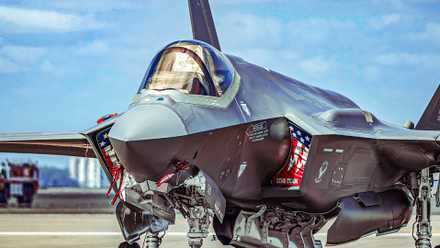
The Pentagon Declared The F-35’s Most Critical Upgrade ‘Predominantly Unusable’
The problem with the Joint Strike Fighter.
Failure To Launch: Future Combat Air System

The Franco-German-Spanish FCAS program is trapped in a severe industrial and political deadlock that threatens to completely fracture the project. At the heart of the failure is a bitter corporate turf war over workshare, intellectual property, and prime contractorship for the New Generation Fighter element. Dassault Aviation was designated as the prime contractor for the crewed airframe but has continuously refused to share IP with Airbus under the FCAS program. Airbus argues that this is not a true co-development model and the dispute remains unresolved to this day.
While GCAP smoothly created a single joint venture with equal 33% shares, FCAS has stalled due to the separate interests of hostile national champions. Negotiations over phase two to build a flying demonstrator have not advanced because neither side will compromise on the issue of IP access. On top of this industrial dispute, Germany and France have very different requirement criteria, further fueling conflict that has prevented any forward movement in design.
To succeed the 4.5-generation Dassault Rafale omnirole fighter jet, which is built in both land-based and carrier-based variants, France wants to develop a highly versatile airframe capable of conducting nuclear deterrence missions. Germany, on the other hand, also seeks to include the nuclear deterrence role but has no need for a carrier-capable airplane and instead wants to develop a long-range interceptor.
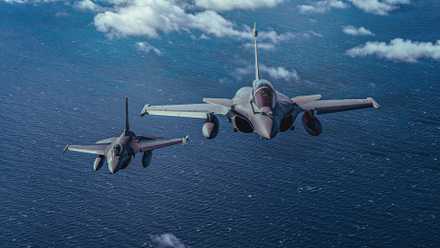
How The Dassault Rafale Stacks Up Against The F-16, Gripen, & Typhoon In 2026
Comparing France’s exquisite omnirole jet to the leading fighters.
Tempest Takes Center Stage

As of earlier this year, Airbus CEO Guillaume Faury formally proposed a ‘two-fighter solution’ to keep the program alive, according to Aviation Week. France has procured zero F-35s to date. But Germany has already purchased 35 American F-35s as a stopgap measure; thus, Berlin faces significantly less pressure to compromise with France. According to the Defense Watch, Germany is now considering additional JSFs or even joining GCAP, as the path forward for FCAS shows little sign of hope.
Reuters reported that Italy’s Defense Minister, Guido Crosetto, confirmed to parliament that global interest in GCAP is swelling, with Saudi Arabia, Poland, and Australia closely monitoring the program. In addition to Germany, Canada is now showing strong indications that it may join a Europe-based consortium as its rift with the U.S. over rising costs of its 88-strong F-35 order has made headlines for the past several months.
Although the F-35 should be a more timely and suitable replacement for the Royal Canadian Air Force’s Boeing F-18 Hornets, the bottleneck at the Lockheed Martin plant has continued to worsen. Acquiring zero American-made fighters would lead to a massive capability gap and is therefore not an option; however, reducing the total number of JSFs could create an opportunity to build a ‘high-low’ fleet, with the Tempest added later. This would mirror the strategy the U.S. Air Force is following with the acquisition of NGAD, F-35, and 4.5-generation jets such as the Boeing F-15EX Eagle II.
5 Fighter Jets That Will Define Air Combat In The 2030s
The next era of air power is on the horizon.
The Next-Gen Air Power Arms Race

Although the GCAP and NGAD have not produced a flyable prototype yet, the current design and engineering momentum is building up greatly, overshadowing what has been seen in near-peer adversary defense industrial bases like China and Russia. The Chinese prototypes have been seen flying multiple times, the first spotting on December 26, 2024, but with little apparent change. Russia, on the other hand, hasn’t been able to get the MiG-41, or PAK DP, design off the drawing board, much like its Western counterparts. In contrast, its heavily sanctioned wartime aerospace industry is a major cause.
If every military on the continent were to fulfill the full potential of all current programs, by the mid-2030s, Europe could field a combined multinational force of over 600 F-35s and more than 400 sixth-generation fighters. Adding 1,000 to 2,000 remote carriers, similar to the collaborative combat aircraft development in the U.S., would make this force exponentially more powerful as well.
Russia’s only true fifth-generation fighter, the Su-57 Felon, remains plagued by manufacturing bottlenecks. The Kremlin originally planned a fleet of 76 jets by 2028, but only 25 to 30 are believed to have been delivered. Similarly, Russia has only manufactured two to three functional test prototypes of the S-70 Okhotnik-B unmanned combat air vehicle since the project began.
Looking to the Pacific Theater, Japan is currently the second-largest operator of the F-35 aside from the US; thus, adding the Tempest to its fleet would give the Japan Air Self-Defense Force a technological and numerical advantage over its primary adversary, the People’s Liberation Army Air Force and Navy.
China is on track to produce as many as 500 of the Chengdu J-20 Mighty Dragon, according to 19FortyFive. Although the total potential fleet strength of 1,000 is staggering, its performance compared to Western fifth-generation fighters is inferior in terms of both stealth profile and performance. At 147 strong, the Japanese fleet of F-35A and F-35B jump jet stealth fighters will be smaller, but the addition of the GCAP as a long-range interceptor will make the total force a powerful deterrent to Chinese aggression in the region.
Catch what other trackers miss
Emergency squawks, holds, NOTAMs — live signals, no signup.
Open tracker
Catch what other trackers miss
Emergency squawks, holds, NOTAMs — live signals, no signup.
Open tracker