dailynewsnblog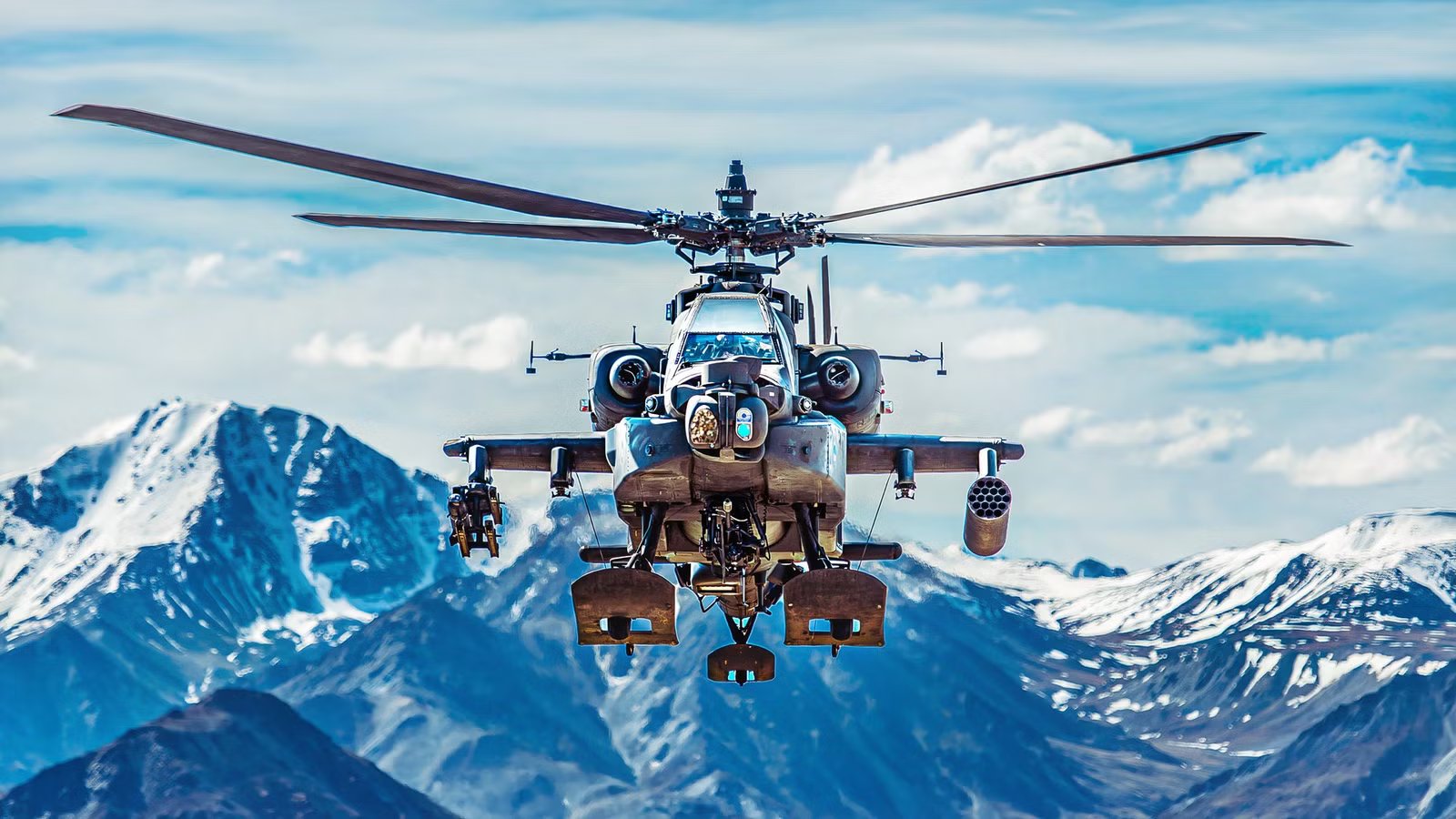
In terms of combat aviation, helicopters made their first significant contribution during the Korean War. During the latter, the most widely recognized rotary aircraft was the Bell H-13 Sioux. While it was primarily employed for medical evacuation missions, the aircraft was also utilized for reconnaissance, artillery spotting, and command transport missions.
Following the conclusion of that war, the helicopter has been in continual use for military and civilian applications. The utility of the helicopter was on full display during the Vietnam War, and one can say that the latter was really the coming of age for rotary aircraft. This is due to the central role that helicopters play at both the strategic and tactical level. It was during this war that the first true attack helicopter, the Bell AH-1 Cobra, made its appearance.
With their ability to carry a substantial quantity of missiles and rockets, in addition to their forward-mounted rotary cannon, the attack helicopter is a fearsome machine. These aircraft are not only capable of supporting infantry operations, but they are also more than capable of operating in stand-alone missions, in which they attack and destroy static targets or vehicles, including main battle tanks. For these reasons, so many countries possess these versatile aircraft.
By The Numbers: The Countries That Maintain The Largest Fleets Of Attack Helicopters

Presently, the United States (US), Russia, China, Japan, and South Korea are countries that maintain the largest fleets of attack helicopters. The US, which has been operating rotary aircraft since the Korean War, has made the rapid and tactical deployment of soldiers a pillar of its offensive strategy since the Vietnam War. In support of these operations, the US Marine Corps and the Army have approximately 900 attack helicopters, with the  Boeing AH-64 Apache being the most numerous by fleet size, with about 824 in active service.
For the Soviet Union, the attack helicopter became an important variable within its offensive strategy during the Cold War, with particular emphasis on Europe. The Mi-24 was manufactured to provide tactical support for the rapid movement of its tanks and infantry if a conventional war with NATO ever broke out. Presently, the Russian military maintains a fleet of about 576 attack helicopters. Of those, there are around 300 to 350 Mi-24s and Mi-35s.
While China has not engaged in any large-scale conflict aside from its limited border war with Vietnam in 1979, it has nonetheless been heavily influenced by foreign wars, particularly the Gulf War. At that time, the Chinese army (PLA) was similar in structure and equipment to its Iraqi counterpart.
Catch what other flight trackers miss
Emergency squawks, holds, NOTAMs — live signals, no signup.
Open tracker
Catch what other flight trackers miss
Emergency squawks, holds, NOTAMs — live signals, no signup.
Open tracker
China witnessed the quick evisceration of the Iraqi army in real time, particularly as a result of American combined warfare and the liberal use of precision weapons. This, more than any other factor, convinced Chinese military planners to engage in a massive modernization program, reducing their vulnerability to modern weaponry. Part of this modernization was the production of attack helicopters for battlefield scouting and attack roles. The most numerous helicopter that the PLA maintains is the Harbin Z-10, an attack helicopter, and it has a fleet of 200 units.
In the case of Japan, between Cobras and Apaches, Japan has around 50 to 60 attack helicopters, with the Cobra being the dominant model at approximately 50 units. The latter are optimized within Japan’s largely defense-focused strategy. In terms of inventory, South Korea is a mirror image of Japan, with a dedicated fleet of attack helicopters consisting of the Cobra and the Apache, with a total of about 180 between the two. And much like Japan, the Cobra dominates the attack fleets of both nations, with about 120 units between the two.
Which Country Has The Most Superior Attack Helicopters In The World?
With many different missions and air forces, let’s make a quick comparison of the toughest and hardest hitting attack helicopters.
The Apache: The US Army’s King Of Close Air Support

The first true, purpose-built attack helicopter was the Cobra, which entered service during the Vietnam War in 1967. This came at a time when the US Army needed a lighter and more maneuverable helicopter to support infantry operations. This was due to the fact that the Bell UH-1 “Huey” presented too easy a target for the waiting gunners of the North Vietnamese Army, even when this aircraft was configured as a heavily armed gunship.
Following on the success of the Cobra, and nearly eleven years after the end of the Vietnam War, the Apache entered service in 1976. This attack helicopter was equipped with highly effective night-fighting capability, an advanced sensor suite, increased armor protection, and it has as a core capability to target and destroy tanks and armored vehicles, with its wing mounted AGM-114 Hellfire missiles.
To date, approximately 2,500 Apaches have been manufactured and, according to Boeing, there are 1,300 of these aircraft in operation around the globe in the militaries of 19 countries, a testament to its effectiveness. While there is a great deal in use abroad, the US Army is the largest operator with a fleet of around 824. Of this number, the most numerous variant is the advanced AH-64E Guardian. Per Boeing, this fleet has accumulated approximately “…5.3 million flight-hours, more than 1.3 million of which have been in combat.”
Presently, the US Army is in the process of consolidating its inventory of Apaches, having confirmed that it will retire its remaining 152 AH-64D variants and focus its fleet on the AH-64E. This will result in the elimination or restructuring of 11 squadrons, with the Army’s goal of procuring 812 of the E model by inducting new builds and remanufactured Ds.
The Boeing AH-64 Apache: Everything You Need To Know
A detailed look at the AH-64 combat helicopter and its use as a precision instrument of war.
Russia’s Attack Helicopter Fleet: A Mauled Force

Russia operates three primary attack helicopters, the Mi-24, Ka-52 and the Mi-28, and between them Russia has a combined fleet of around 576 purpose-built gunships (which is an overstatement of their operational capability). Of this group, the Mi-24 is, by inventory, the most widely used by the Russian military. In sum, about 2,648 have been built, and there are around 325 in active service.
While this is an impressive number, according to Flight Global, the Russian armed forces have lost over 100 (but possibly as many as 150) of its strike helicopters within the first two years of the Ukraine War. The primary driver of this loss was due to the use of shoulder-launched antiaircraft missiles, and one of the most effective in this respect was the FIM-92 Stinger, which was greatly supplied to the Ukrainian Army early in the war.
The losses to Russia’s attack helicopter fleet have reduced their operational flexibility and forced their more cautious deployment near the front line, but they have not significantly affected Russia’s ability to deploy troops, which relies mainly on transport helicopters. As losses have mounted, the Russian defense sector has been unable to rapidly produce new builds. This is due to supply chain pressure, with the ongoing sanctions reducing imports of needed components. Thus, any “new deliveries” have largely been upgraded versions of older airframes.
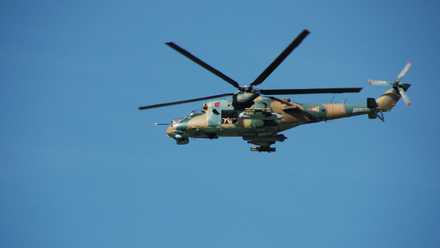
US Navy EA-18G Growler Takes Out Houthi Mi-24 Hind Helicopter
A Navy Growler destroyed one of the few attack helicopters the Houthis have in service using an AARGM missile.
The Chinese Helicopter Fleet, A Growing and Improving Force

Witnessing the destruction of the Iraqi armed forces during the Gulf War, China began to quickly modernize its military to not only be more competitive in a world where an advanced, networked, and intelligence-driven force is the most dominant, but also to reduce its vulnerability. The latter was particularly glaring as the Chinese armed forces had heavily relied on Soviet/Russian equipment, the same equipment that was easily destroyed during the Gulf War. Additionally, the growth of China’s helicopter force is also linked to a possible invasion of Taiwan, where it would need to rapidly move its army around the island.
From the inception of the modern Chinese state in 1949 until around 1980, the PLA was an infantry-heavy force, with limited mechanization and mobility. This constrained its ability to conduct fast-paced tactical battlefield maneuvers compared to other more modernized militaries.
While the tactical mobility of PLA units is the function of the Harbin Z-20 helicopter, this fleet is supported by around 375 total armed attack/scout helicopters. Of that number, the Z-10 heavy attack helicopter forms the backbone of this fleet with around 200 units, and the Harbin Z-19 follows with approximately 175 units.
With China’s expanding global interests, particularly its resource extraction operations in Africa (a continent with numerous threats ranging from violent terrorist groups to armed rebels), China very well may need to execute a rapidly mobilized expeditionary operation to rescue its citizens working on the continent in the near future. In such situations, they will make full use of their growing amphibious fleet, new destroyers such as the Type 055, and its Z-10 for inland missions for infantry support.
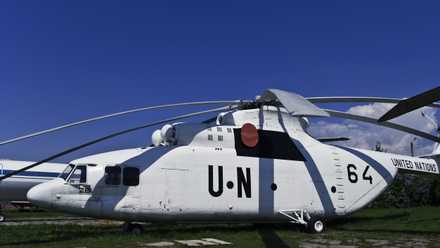
Top 5: The World’s Largest Military Helicopters
An overview of some of the most impressive helicopters still being produced today.
Japan and Taiwan, Similar Threats And Similar Attack Helicopter Fleets

Presently, both Japan and South Korea are under pressure from China and North Korea, respectively. South Korea has faced hostility from its northern neighbor since the signing of the 1953 Korean Armistice Agreement, bringing an end to the Korean War. While the war has ended, tensions remain, and South Korea maintains a large active-duty army of around 365,000–375,000 soldiers.
Japan, on the other hand, faces repeated air and maritime pressure from Chinese forces, including incursions near its airspace and territorial waters, with a key flashpoint being the dispute over the sovereignty of the Senkaku/Diaoyu Islands. However, the scale and intensity of these pressures differ, with Taiwan facing more direct and acute operational contingencies.
An aspect of the extensive, layered defense strategies of both South Korea and Japan is the use of attack helicopters. In the case of the former, its use of the Apache and Cobra will be tied directly to defending against a possible large-scale land assault.
If North Korea did launch an invasion of the south, they would rely on large, vulnerable formations of ill-trained infantry, supported by an older generation of Soviet-style tanks. Further targets would be the north’s rocket and ballistic launch sites. To this end, South Korea maintains around 60 Cobra and 36 Apache attack helicopters.
The primary concern for Japan is not an outright invasion but the erosion of its national sovereignty and grey zone tactics designed to keep pressure below the threshold of war. A concern of Japanese military planners is called a fait accompli assault. In such a case, Chinese assault forces could perform a rapid landing, claim the islands as their own, and any response by the Japanese could trigger a larger war. In such a case, Japan may theoretically be forced to cede these islands to China.
To defend against such a contingency, Japan has some of its 60–70 Cobras and 12 Apaches stationed on Okinawa and Kyushu for rapid reaction missions against any possible landing by Chinese expeditionary forces. Were this to happen, these attack helicopters would be used against landing craft, fast attack boats, or heavier amphibious vehicles.
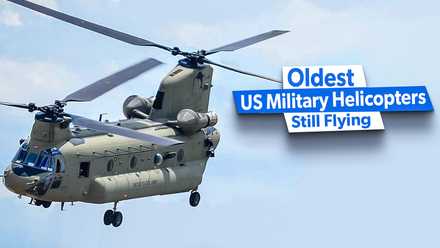
Top 5 Oldest US Military Helicopters Still Flying
Many of the US 1950s and 1960s-designed military helicopters remain in use in the US and around the world.
A World Of Attack Helicopters

In terms of military applications, the helicopter has proven its versatility from its humble beginnings in the Korean War to the present day. In many ways, a successful combat operation would not be possible without the use of attack, scout or transport helicopters. These aircraft provide invaluable insertion of assault troops, support throughout a mission, medical evacuation, and needed resupply. In all such scenarios, rotary aircraft reach down to the tactical level and provide essential service.
To this point, all the militaries listed in this article currently use helicopters and, in combat missions, employ their attack variants. The helicopter will continue to be a force in the battle for decades to come, perhaps longer. In particular, heavy gunships will continue to receive upgrades, and new research will be conducted to discover ever more potent models.