dailynewsnblog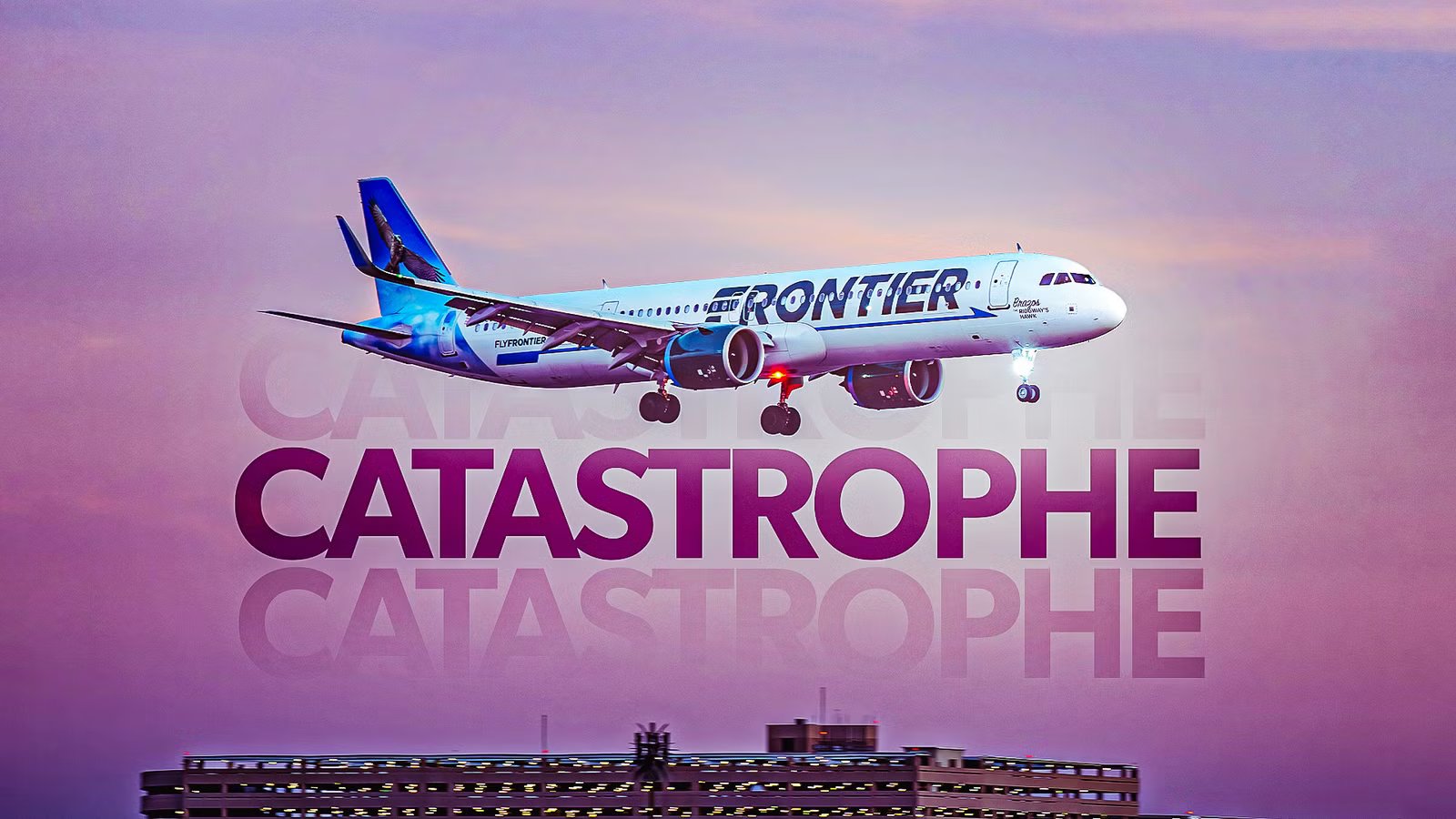
Commercial aviation safety is often defined by margins that seem impossibly small to those outside the industry. A few seconds, a few hundred feet of runway, or a handful of knots of airspeed can determine whether an incident remains survivable or develops into a disaster. Few recent events illustrate that reality more clearly than Frontier Airlines flight 4345, an Airbus A321neo that aborted takeoff at  Denver International Airport (DEN) after striking a trespasser on the runway during its departure roll.
The May 2026 incident immediately attracted attention because of its unusual circumstances. An unauthorized individual had breached airport security, climbed the perimeter fence, and reached Runway 17L shortly before the aircraft began its takeoff run. The jet, operating from DEN to Los Angeles with 224 passengers and seven crew members aboard, struck the individual while accelerating for departure. Moments later, the flight crew executed a high-speed rejected takeoff, reported an engine fire, and ordered an emergency evacuation after smoke entered the cabin. Aviation professionals quickly focused on a critical number: 127 knots. According to flight data, that was the maximum speed reached before the captain initiated the rejected takeoff. Analysts estimate the aircraft’s V1 speed, the critical takeoff decision speed, was approximately 138 knots. That meant the crew acted roughly 11 knots before crossing one of the most important thresholds in aviation. Those 11 knots represented the narrow margin between a textbook-rejected takeoff and a far more complex emergency involving an aircraft committed to flight.
A Tragic Incident Unfolds In Seconds

Frontier flight 4345 was registered as N646FR. The aircraft was departing DEN for Los Angeles late in the evening when the event occurred. According to reporting and flight data analysis, the trespasser had breached the airport perimeter fence only about two minutes before the collision, leaving airport security with virtually no opportunity to intervene before the aircraft reached the runway. As the aircraft accelerated, it fatally struck the individual, creating immediate uncertainty about potential damage to the aircraft. At high speeds, any collision with an object on the runway raises concerns ranging from landing gear damage to engine ingestion and structural impacts.
Catch what other flight trackers miss
Emergency squawks, holds, NOTAMs — live signals, no signup.
Open tracker
Catch what other flight trackers miss
Emergency squawks, holds, NOTAMs — live signals, no signup.
Open tracker
The captain responded by initiating a rejected takeoff at approximately 127 knots. Air traffic control (ATC) communications indicated that the crew reported both the strike and indications of an engine fire. Following the stop, smoke was observed in the cabin, prompting the decision to evacuate passengers directly onto the runway. The evacuation itself was successful despite the challenging circumstances. All 231 occupants survived. Twelve individuals sustained minor injuries during the evacuation process, while five were transported to local hospitals for evaluation. The outcome reflected the effectiveness of modern aircraft evacuation procedures and the rapid response of airport emergency personnel. Although the circumstances were highly unusual, the sequence of events highlighted a central principle of aviation safety: crews are trained extensively for rare emergencies precisely because they can emerge without warning and develop within seconds.
Understanding Why V1 Matters So Much

To appreciate why aviation experts focused on the 11-knot margin, it is necessary to understand the concept of V1. Often described as the takeoff decision speed, V1 represents the point during the takeoff roll at which a pilot must commit to either continuing the takeoff or rejecting it. Before reaching V1, crews can stop the aircraft within the available runway distance if a serious problem develops. After passing V1, the safest option is usually to continue the takeoff, become airborne, and address the emergency afterward. This principle exists because high-speed aircraft require enormous stopping distances, and attempting to reject takeoff after V1 can result in a runway overrun.
Contrary to popular belief, V1 is not a fixed speed. It varies according to aircraft weight, runway length, weather conditions, elevation, and other performance factors. For Frontier 4345, that number was 139 knots. That estimate places the crew’s rejected takeoff at approximately 11 knots below the decision point. While 11 knots may sound insignificant, it represents a meaningful difference in stopping distance and reaction time. At these speeds, an aircraft covers substantial ground every second. Even a brief hesitation can consume the remaining runway rapidly and reduce the margin available for stopping safely.
This is why pilots train extensively on decision-making around V1. The challenge is not merely technical. It is psychological. Crews must rapidly assess whether an event justifies rejecting the takeoff while simultaneously monitoring aircraft performance, runway remaining, and system indications. In the case of Flight 4345, the captain faced an extraordinary scenario involving a runway strike, potential aircraft damage, and subsequent indications of fire. The decision had to be made almost instantly. The fact that it occurred before V1 gave the crew an opportunity to stop the aircraft on the runway rather than confront the uncertainty of becoming airborne with potentially significant damage.
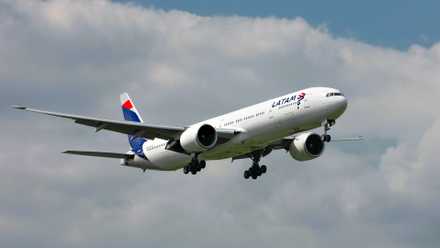
Seconds From Disaster: LATAM Boeing 777 Rejects Takeoff During Rotation
The aborted takeoff appears to have happened after VR, creating a potentially disastrous situation.
Split-Second Judgment That Defined The Outcome

Rejected takeoffs at high speed are among the most demanding maneuvers in airline operations. Modern airline pilots practice them repeatedly in simulators because real-world opportunities to perform one are exceptionally rare. The difficulty stems from the fact that pilots are conditioned to continue accelerating once takeoff power is set and the aircraft reaches higher speeds. The closer the aircraft gets to V1, the more mentally committed the crew becomes to flying. Reversing that process requires immediate recognition of a serious hazard and decisive action.
In the flight 4345 event, the captain had only moments to process multiple factors. There was the impact itself, uncertainty about what had been struck, the possibility of aircraft damage, and emerging indications suggesting a fire-related issue. The crew then had to execute the rejected takeoff procedure flawlessly. A high-speed rejected takeoff involves several coordinated actions. Maximum braking must be applied. Thrust reversers are deployed, if possible. Then communication with air traffic control begins. Meanwhile, pilots monitor aircraft behavior and prepare for potential secondary emergencies.
What makes the Flight 4345 case particularly noteworthy is that the situation evolved into more than a simple stop on the runway. Reports of an engine fire and smoke in the cabin introduced new risks that required immediate assessment. The crew’s subsequent decision to evacuate demonstrated an understanding that the emergency no longer involved only safely stopping the aircraft. Passenger safety after the stop had become equally important. The aviation industry’s response has largely centered on this decision-making chain. While investigations continue to examine technical details, the available evidence suggests the crew recognized the threat quickly, acted within the narrow window available, and successfully transitioned from a rejected takeoff to an emergency evacuation under highly stressful conditions.
Why Continuing The Takeoff Could Have Been Far More Dangerous

One of the most discussed questions following the incident is what might have happened had the aircraft reached or exceeded V1 before the strike was recognized. Once an aircraft passes V1, pilots are generally trained to continue the takeoff except in a limited number of catastrophic situations. The reason is straightforward: stopping may no longer be possible within the available runway length. However, continuing the takeoff introduces a different set of risks if the aircraft has sustained damage.
Had flight 4345 become airborne, the crew would likely have faced a complex emergency involving possible engine damage, uncertain structural impacts, and indications of fire or smoke. Managing those issues while climbing away from one of the busiest airports in the United States would have been significantly more complicated than addressing them on the ground. Smoke in the cabin is particularly concerning because its source is not always immediately apparent. Crews must determine whether it originates from an engine issue, an electrical malfunction, air conditioning systems, or another source. In flight, those assessments occur while maintaining aircraft control, communicating with air traffic control, and preparing for a potential emergency landing.
Furthermore, any damage caused by the collision would have required a detailed inspection before the aircraft could safely continue operating. Remaining on the ground allowed emergency responders immediate access to the aircraft and reduced the consequences of any hidden damage. This does not mean continuing the takeoff would necessarily have resulted in a disaster. Modern airliners are designed with substantial redundancy, and crews train extensively for airborne emergencies. However, the available evidence suggests that stopping before V1 provided the flight crew with the safest set of options under extraordinarily difficult circumstances. The significance of the 11-knot margin lies in the fact that it preserved those options. It provided just enough room for the crew to reject the takeoff, stop safely, assess the situation, and evacuate before the emergency could escalate further.
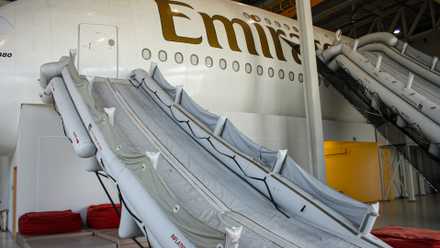
Is It True That Business Class Passengers Get Priority During An Emergency Evacuation?
It’s a common myth, but all passengers are given equal oppurtunity to evacuate.
Security Questions Raised By The Runway Intrusion

While the crew’s response has attracted widespread praise, the incident also raises important questions about airport security and perimeter protection. According to reports, the trespasser breached the airport perimeter and reached the active runway environment only minutes before the collision. Airports operate extensive security systems that include fencing, surveillance technologies, patrols, and restricted-access controls. Nevertheless, large facilities cover vast areas, making complete prevention of unauthorized access difficult.
DEN encompasses more than 50 square miles, making it one of the largest airports in North America by land area. Monitoring every section of perimeter fencing continuously presents significant operational challenges.
The timeline reported in the Flight 4345 incident illustrates the problem. Even if security personnel identify a breach immediately, the time required to locate, intercept, and stop an individual may be insufficient when aircraft are already operating nearby. Aviation security experts will likely examine whether additional detection technologies, surveillance systems, or response protocols could reduce the risk of similar incidents. Airports worldwide have increasingly invested in advanced perimeter monitoring systems that can detect and track unauthorized movement in real time. However, no security system can eliminate risk entirely. The incident serves as a reminder that aviation safety depends on multiple layers of protection. When one layer fails, others must compensate. In this case, the final and most critical layer was the flight crew’s professionalism and judgment.
Key Takeaways

Frontier Airlines flight 4345 will likely be remembered not only for the unusual circumstances of a runway intrusion but also for the extraordinary importance of a seemingly small margin. The aircraft reached 127 knots before the captain initiated a rejected takeoff, approximately 11 knots below the estimated V1 decision speed. In aviation terms, that difference was enormous. Those 11 knots preserved the crew’s ability to stop safely on the runway, respond to reports of fire and smoke, and evacuate 231 people without loss of life. The outcome demonstrated the value of rigorous pilot training, disciplined decision-making, and well-rehearsed emergency procedures.
Investigators will continue examining the technical and security aspects of the incident. Yet one conclusion is already clear. The defining factor was not merely that an emergency occurred, but that the crew confronted it at precisely the moment when action was still possible. The narrow gap between 127 knots and V1 became the space in which experience, training, and judgment prevented a serious accident from becoming something far worse.