dailynewsnblog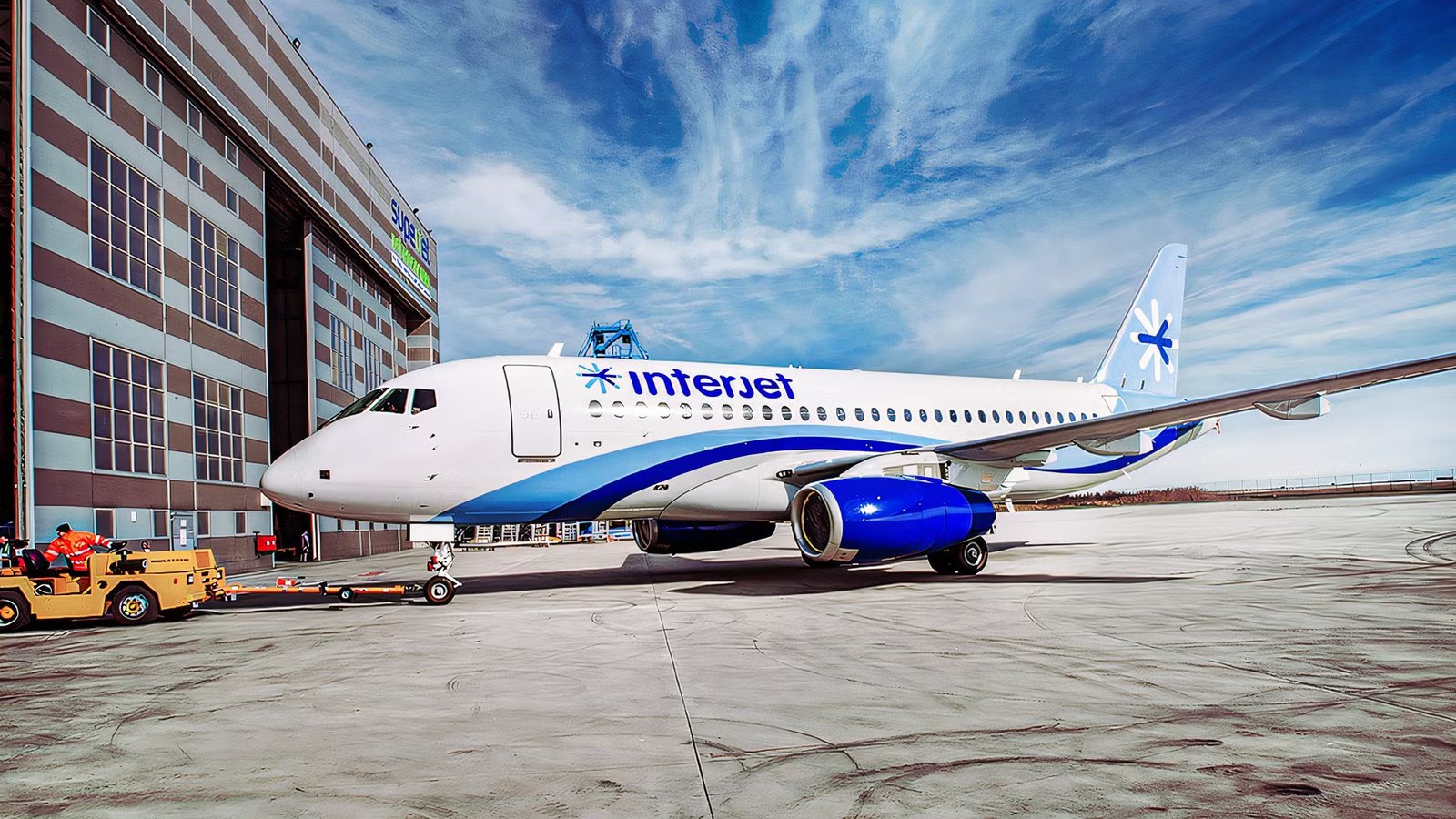
Dozens of jet airliners are retired every year, but few have followed a path quite as unusual as the regional jets sitting idle at Mexico’s Toluca International Airport(TLC). Once intended to play a major role in a growing airline’s network, these aircraft became part of one of the most distinctive fleet stories in modern commercial aviation. This article explores how they arrived there, what happened after operations ceased, and why their future remains uncertain.
Drawing on airline records, industry reporting, bankruptcy proceedings, and previous Simple Flying coverage, this article examines the complex mix of fleet planning, operational challenges, ownership disputes, and broader industry developments that shaped the fate of these aircraft. It also looks at the broader lessons their story offers to airlines operating specialized fleets in an increasingly interconnected aviation market.
How Interjet Became The Only American Superjet Operator

To understand why these jets are sitting in Mexico, it helps to understand why they arrived there in the first place. In 2011, Interjet was Mexico’s third-largest airline by passengers and was looking for a regional aircraft in the 75–100 seat class to feed its domestic network. The obvious candidates were established types from Bombardier and Embraer— tried, tested, and supported by dense parts networks across the Americas. What Interjet signed instead was a deal for 30 Sukhoi Superjet 100s, making it the first and only operator of the Russian-built type in the entire American continent.
The financial logic was understandable at the time. According to The Points Guy, the SSJ100 was being offered at roughly 15% below the price of comparable Western regional jets, and Interjet’s then-CEO José Luis Garza called the deal a “sweet deal,” noting that the capital cost of 10 SSJ100s was approximately equal to the pre-delivery payment for a single Airbus A320. On paper, the SSJ100 was a credible aircraft — a clean-sheet design developed with significant Western input, including systems from Thales and Safran, and powered by the PowerJet SaM146, a Franco-Russian turbofan built through a joint venture between France’s Snecma (now Safran Aircraft Engines) and Russia’s NPO Saturn. The aircraft could carry up to 98 passengers and was certified to EASA standards for Western markets.
As reported by Leonardo, Interjet took delivery of its first SSJ100 in June 2013 and eventually accepted 22 of the 30 aircraft it had ordered. The airline flew the type across its domestic Mexican network and on short-haul international routes to the United States, Cuba, and Central and South America. At its peak, it was one of the most visible, and geopolitically interesting, examples of a Russian-built commercial jet operating in the North American aviation system. That situation began to unravel almost immediately after deliveries began.
The Parts Shortage That Was Destroying The Fleet Before COVID Arrived

By January 2018, just four and a half years into operations, a report surfaced that four of Interjet’s Superjets had been grounded for five months while waiting for spare parts. This was the first public sign of a structural problem already endemic: operating a Russian-built airframe from a country with no local maintenance, repair, and overhaul (MRO) infrastructure for the type was proving far more difficult than Interjet’s management had anticipated.
Catch what other flight trackers miss
Emergency squawks, holds, NOTAMs — live signals, no signup.
Open tracker
Catch what other flight trackers miss
Emergency squawks, holds, NOTAMs — live signals, no signup.
Open tracker
As Simple Flying reported at the time, Sukhoi Civil Aircraft (SCAC) acknowledged the situation directly, stating: The process of operational deliveries of spares to the Mexican airline is affected by the systematic overdue payment from Interjet itself to spares’ suppliers, including the engine manufacturer. This was not just a supply problem, but a payment problem compounded by a supply problem, in a market where nobody else was flying the type and no spare engines sat waiting on the shelf. The cannibalization of airframes began in earnest in 2018.
Rather than wait months for parts from Russia, Interjet’s maintenance teams began harvesting components from grounded Superjets to keep the remaining active aircraft flying. By mid-2019, according to FlightGlobal, 15 of the 22 SSJ100s were in storage, with dozens of PowerJet SaM146 engines out of service due to unpaid repair bills. By January 2020, the situation had deteriorated further: Simple Flying’s coverage of the fleet’s fate reported that only four of the 22 aircraft were in active commercial rotation, with the number occasionally rising to seven depending on seasonal demand. The other 15 to 18 were parked at Toluca International Airport, some in functional storage, others already cannibalized beyond any reasonable restoration.
Interjet’s financial position was already critical before any pandemic arrived. The airline had posted net losses in nearly every year since 2013, accumulating a combined net loss of over $211 million between 2017 and the first quarter of 2019 alone, according to our bankruptcy coverage. The Superjet fleet was the single biggest contributor to those losses, not because the aircraft was fundamentally flawed as a design, but because Interjet had acquired it without the support network that any commercial airliner requires to generate positive returns. When COVID-19 arrived in Mexico in March 2020, leasing companies immediately began repossessing Interjet’s 66 Airbus A320 family aircraft, leaving the carrier with nothing but the Superjets (the planes it had been trying to eliminate!) as its entire operational fleet.

These Are America’s Most Unusual Flights
Discover the lifeline that connects remote Alaskan towns in a series of extraordinary flights.
December 11, 2020: The Last Flight And What Followed

Interjet flew its last commercial flight on December 11, 2020. The airline’s final weeks were a slow-motion collapse: it suspended operations twice in the preceding months, citing fuel payment failures, before going permanently dark. At the time of the shutdown, the carrier had lost 100% of its international market share and more than 90% of its domestic presence.
Its Airbus fleet had been repossessed in its entirety. The 22 Superjets, the aircraft it had spent two years trying to return to Russia or sell to another operator, were now the only physical assets of any value left in Interjet’s possession.
What happened immediately after the shutdown added a layer of legal complexity that compounded every problem that followed. Former Interjet employees, who had been on unpaid leave for months, launched a strike in January 2021 and physically seized the airline’s remaining assets. According to our report on the gap left by Interjet, the striking workers took control of the airline’s airport counters at Mexico City’s Benito Juárez International Airport and occupied the parked Superjet fleet.
This gave the labor dispute a direct claim over the physical aircraft, entangling them in Mexican employment law on top of the commercial bankruptcy proceedings already underway. What should have been a straightforward asset liquidation was now a three-way dispute between creditors, former employees, and the aircraft’s actual legal owners, a Russian state-backed banking consortium led by VEB, Russia’s state development bank.
VEB, headed at the time by former Deputy Prime Minister Igor Shuvalov, initially had plans for the aircraft. According to RuAviation, industry figure Oleg Evdokimov, president of ATEO Air and a recognized promoter of the SSJ100 in export markets, confirmed in early 2022 that the bank consortium had grown interested in restoring several airframes and offering them to new customers in the region: Peru, Panama, Argentina, and Uruguay have shown interest in our aircraft. The idea was to restore at least six jets at an MRO center in Toluca, then market them to Latin American carriers. It was a plausible-sounding plan, right up until February 2022, when everything changed.
How Western Sanctions Sealed The Superjets’ Fate

The invasion of Ukraine in February 2022 and the Western sanctions packages that followed transformed the SSJ100’s support situation from difficult to impossible. The PowerJet joint venture — the company responsible for the SaM146 engines powering every Superjet 100 — terminated its contract to provide parts, technical support, and maintenance services to Russian entities in late March 2022, effectively dissolving the partnership.
Italy’s police had already frozen €146 million ($153 million) in assets owned by SuperJet International, the Venice-based joint venture between Leonardo(Alenia Aermacchi) and Sukhoi that had marketed and supported the SSJ100 in Western markets, by May 2022. In a single stroke, the two Western-facing support pillars of the SSJ100’s operational system ceased to exist.
For the 22 jets in Mexico, this was decisive. Whatever hope remained of sourcing the parts needed to restore airworthiness, as parts that were already scarce before 2022, evaporated entirely. As Simple Flying has reported in the context of Russia’s domestic aviation sanctions crisis, the wave of restrictions imposed in 2022 went far beyond a supply disruption: they dismantled the entire Western-facing technical support structure that Russian aviation had relied on for its most internationally marketed aircraft.
The SSJ100 in Mexico was first short of parts, and it was then in legal limbo, with the aircraft owned by a sanctioned Russian state bank, the manufacturer unable to send support personnel or ship components, and any prospective buyer facing the near-impossible task of navigating both Mexican bankruptcy proceedings and US and EU export control law before touching a single airframe.
In June 2023, Irkut Corporation, the Russian state aerospace company that had absorbed Sukhoi Civil Aircraft and is now the nominal manufacturer of the type, issued a formal statement through its press service, as reported by Aviacionline.com, citing Russia’s RIA Novosti agency. The statement closed the door on repatriation definitively: Now that time has passed since the operation was closed, the return is technically and legally infeasible. With that, the last theoretical exit route of flying the jets back to Russia was officially ruled out by the only party with the technical knowledge to make it happen.

How Sanctions Can Shatter Entire Airlines
Sanctions don’t just ground aircraft. They can dismantle entire airlines, one spare part at a time.
What Is Actually Happening To The Aircraft Right Now

A reasonable question at this point is: if the aircraft cannot fly, cannot be returned, and cannot be sold to a new operator, what is actually happening to them? The answer, reported by RBC Ukraine in mid-2023, is that components are being stripped and auctioned. Engine parts and landing gear assemblies from the parked Superjets were put up for sale through Mexican commercial auctions — an irony not lost on anyone following Russia’s domestic aviation crisis, given that Russian carriers were simultaneously desperate for exactly those components to keep their own SSJ100 fleets airworthy. The sanctions that blocked Russia from exporting spare parts to Mexico were the same sanctions blocking the return of the Mexican airframes or their components to Russia. The parts were being sold into a market Russia could not access.
Meanwhile, the April 2023 formal bankruptcy declaration — Judge Saúl Martínez Lira of Mexico City’s Second District Court in Commercial Insolvency Matters officially declared a state of bankruptcy for the merchant ABC Aerolíneas SA de CV, ordering the sale of assets by a court-appointed receiver — added Mexican judicial oversight to a situation already crowded with competing authorities.
The receiver’s mandate is to maximize proceeds for creditors, which in Interjet’s case included a debt load estimated by various sources at between 1.4 billion and 40 billion Mexican pesos (approximately $80 million to $2.2 billion at relevant exchange rates, depending on whether the figure includes tax debt and employee claims). Whatever value the Superjets might theoretically represent is not easily convertible into cash when there are no qualified buyers and the aircraft cannot legally be exported to anyone who would know what to do with them.
The physical condition of the aircraft after more than five years of outdoor and semi-covered storage in a climate that is not ideal, as Toluca sits at 8,793 feet (2,680 meters) above sea level, with seasonal rain and high UV exposure, is almost certainly beyond economical restoration for commercial service. Interjet’s cannibalization program, which began in 2018, had already stripped many airframes of serviceable components before the final shutdown. Of the 22 aircraft, some were already non-airworthy before the pandemic; adding five-plus years of idle deterioration to an already compromised condition makes the engineering case for restoration essentially moot. What began as a fleet of regional jets has, over the course of a decade, become a collection of deteriorating structures with no owner willing or able to act on them.
The Wider Lesson These Jets Leave Behind

The Interjet Superjet story is often told as a cautionary tale about fleet decisions, about what happens when an airline acquires a type without the support infrastructure to sustain it. The more instructive lesson is about the systemic risk of operating aircraft whose ownership, support chain, and regulatory framework cross geopolitical fault lines.
When Interjet signed its 2011 deal, the SSJ100’s Franco-Russian engine joint venture and its Italian-Russian marketing subsidiary looked like evidence of international integration, a Russian aircraft credibly embedded in the Western aerospace system. By 2022, those same international linkages had become the mechanism of the aircraft’s destruction, because severing them was precisely the point of the sanctions.
Any airline evaluating a non-Western aircraft type for operation in a Western-regulatory environment faces a version of this calculation. The purchase price advantage and the initial economics can be real. But the support chain for any commercial aircraft is a web of subcontractors, parts suppliers, training facilities, simulator providers, and regulatory relationships, all of which depend on the political environment remaining stable enough to sustain them.
The SSJ100’s design incorporated major Western components, such as Safran engines, Honeywell avionics, Liebherr cabin pressurization, Messier Dowty landing gear, specifically to make it easier to certify, support, and operate in non-Russian markets. That strategy worked brilliantly until it didn’t, because the same Western component dependency that made the aircraft exportable also made it uniquely vulnerable to exactly the sanctions that followed Russia’s actions in Ukraine.
The 22 jets at Toluca and their associated airfields are unlikely to fly again under any commercially credible scenario. The receiver overseeing Interjet’s liquidation will extract whatever scrap and component value remains, and the airframes will eventually be disposed of in whatever way Mexican bankruptcy law permits. What they leave behind is something more durable: the clearest possible illustration of what happens when an aircraft acquisition crosses a geopolitical boundary that subsequently closes. For any airline considering a fleet decision today that involves a manufacturer, ownership structure, or support chain entangled in an active geopolitical dispute, the Interjet Superjets are a precedent: rusting, quietly, in the thin air under the scorching sun.