dailynewsnblog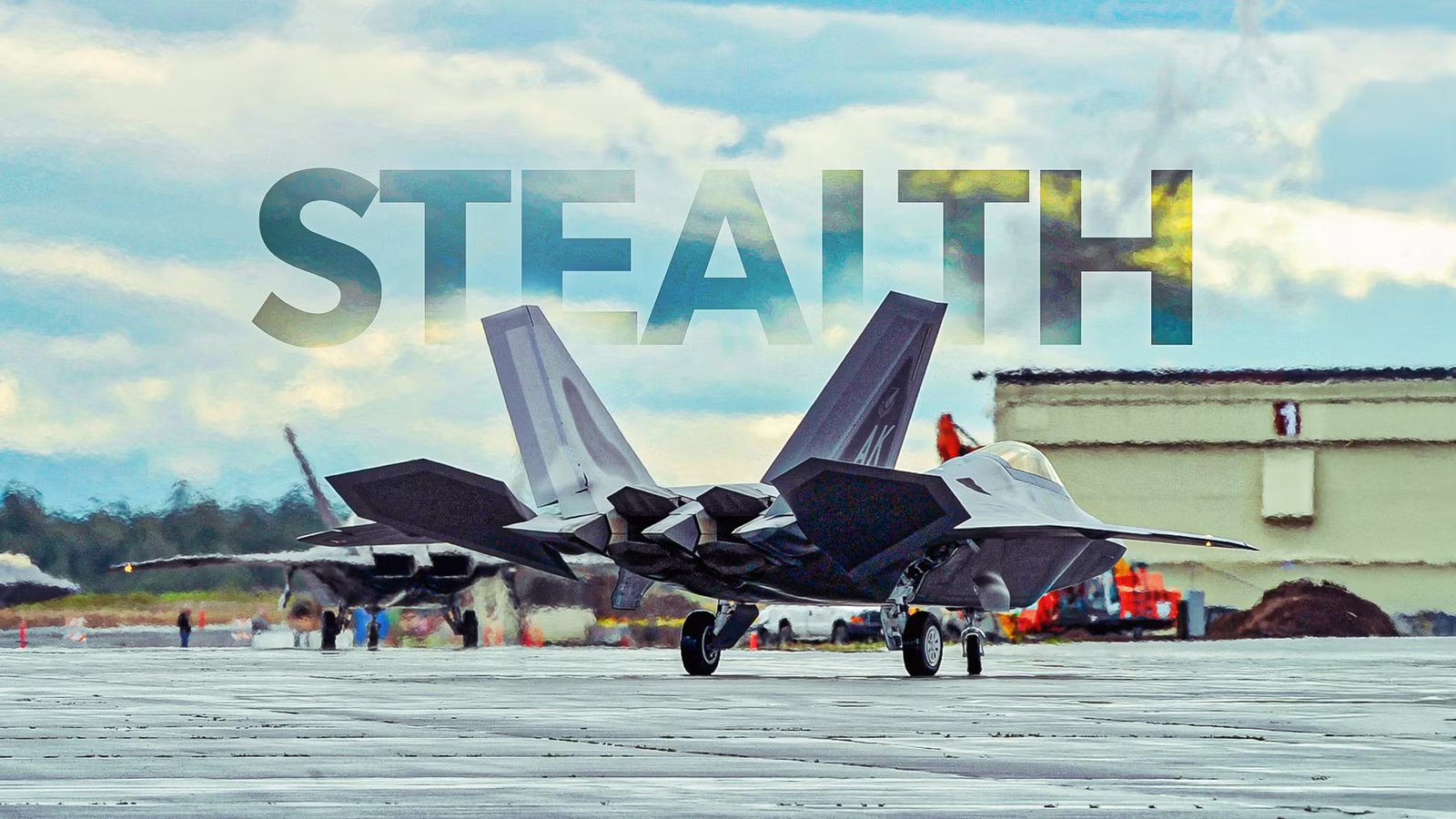
The Lockheed Martin F-22 Raptor’s stealth coatings occupy a somewhat interesting area. On the one hand, by US standards, the coatings are significantly upgraded, but still at their core, dated 1990s designs. On the other hand, they remain one of the most effective in the world and could be more effective than advanced fighter jets from countries like China and Russia.
The F-22 Raptor is regarded as having a lower RCS and being less detectable than the F-35 in some aspects. This is not so much because the Raptor has more advanced stealth coatings than the Lightning II, but because the latter puts a greater emphasis on maintainability and multirole capability. The F-22 can be characterized as a no-expense-spared air superiority fighter, but also one that comes with a high maintenance burden and some 1990s-era design limitations.
What Are Radar Absorbent Materials?

Perhaps one of the endearing attributes of legacy aircraft like the A-10 Warthog is that the crew can still paint nose art on them. This helps give the aircraft a personality and is reminiscent of times like World War II. This is possible because these aircraft have no pretense at being stealthy or low-observable aircraft. Nose art days are gone with modern frontline fighter jets like the F-35 and F-22, as well as 4.5th-generation fighter jets that have low-observable features, even if they are not stealth aircraft.
Catch what other flight trackers miss
Emergency squawks, holds, NOTAMs — live signals, no signup.
Open tracker
Catch what other flight trackers miss
Emergency squawks, holds, NOTAMs — live signals, no signup.
Open tracker
Modern fighter jets, like the F-35 and F-22, come in an impersonal uniform gray and then fight in an impersonal beyond visual range manner. But that gray is not paint. These fighter jets don’t get painted in a classic sense of the word; they are given highly advanced and secretive Radar Absorbent Materials (RAM) designed to reduce the aircraft’s radar signature.
RAM is designed for absorbing or attenuating radar waves and is made of polymers, composites, and magnetic/conductive particles. They are often thicker and sometimes structural and are sometimes built into the composite skin of the aircraft or applied as sheets. Early RAM was notoriously delicate and maintenance-heavy. This was especially true of the “hangar queen” B-2 Spirit that needs a climate-controlled environment.
The F-22 Raptor’s Early Development

As stated, the B-2 has sensitive RAM coats that require the Air Force to maintain climate-controlled hangars for the aircraft. The maintenance burden for the aircraft is heavy. However, F-22 followed the Spirit by about a decade and was able to incorporate lessons learned and advances in technology. While its coatings remain notoriously maintenance-heavy, they are less finicky and don’t require climate-controlled hangars.
The F-35 represents another decade in RAM improvements and followed the Raptor into service in 2015. It was able to take advantage of the lessons learned from the 1990s-era F-22 and comes with more durable RAM that is also much easier to remove, maintain, and upgrade. It is climate-tolerant to the point that it can exist in adverse conditions like the salted air while deployed on aircraft carriers. This would be ruinous for the B-2’s RAM.
The incoming B-21 Raider strategic bomber’s RAM is expected to be low-maintenance by historical standards and present another leap over the RAM found on F-35s. So the Raptor’s RAM can be considered second-generation, placing it between the first generation found on the F-117 and B-2 and the third generation found on the F-35. The B-21 represents a leap that could be considered fourth-generation, although little is known, because so much is classified.
The Striking Differences Between The F-22 Raptor & F-35 Lightning II
F-22 vs F-35: 2 fifth-generation fighters with unique strengths: speed and air dominance vs multirole flexibility. Discover what truly sets them apart
Why The F-22’s RAM Is Difficult To Replicate

The F-22’s RAM composition, layering, application process, and integration with the airframe are a closely guarded secret. Should an F-22 crash and land in enemy hands, they could plausibly learn a lot from the stealth coating. It is plausible they could learn methods for improving their own RAM and develop ways to better defeat the F-22’s RAM by detecting the aircraft.
However, coating doesn’t work in isolation, and how much could be replicated would be limited without the full engineering data. It is also important to note that the F-22’s extreme low-observability also comes from airframe shaping, internal weapons carriage, engine inlet design, heat management, maintenance discipline, electronic warfare, and more. Other aircraft that superficially look like stealthy aircraft, like the Kaan, KF-21, and even Su-57, only replicate some of these layers to varying levels. They are often regarded as low-observable aircraft with stealth features.
One of the most overlooked aspects of stealth aircraft is the extreme precision industry behind it, along with a disciplined maintenance culture. As a hyperbolic example, a Stone Age culture capturing a computer would not result in that culture being able to reverse engineer it. A country like Iran and Russia may simply lack the industrial tooling and institutional discipline to fully replicate F-22 RAM. Russia can develop stealthy coatings, but it also struggles with precision manufacturing consistency.
The F-22’s RAM Is Evolving

It is also worth noting that the F-22’s RAM is not a 1990s or early 2000s-era formula frozen in time. The USAF is constantly investing in upgrade programs for the Raptor, and it has undergone multiple rounds of RAM improvements over its service life. Modernization efforts continue to use better materials. The F-35’s RAM was designed to be easier to upgrade, but that doesn’t mean the Raptor’s coatings can’t be upgraded.
The first significant RAM-upgraded Raptor was delivered in 2014 as part of the Inlet Coating Repair (ICR) Speedline, as was reported by Lockheed Martin at the time. This was the first publicly acknowledged major RAM sustainment improvement. The Raptor’s current comprehensive mid-life upgrade is widely believed to fit the aircraft with a new generation of more durable RAM that is cheaper to maintain. It should also improve its stealth.
Lockheed Martin F-22 Raptor (per USAF) | |
|---|---|
Number built | 187 (serial production) |
Number in inventory | Approx. 183 |
Combat coded | 143 |
Role | Air dominance/multirole |
Entered service | 2005 |
This said, there are limits to the F-22 Raptor’s ability to receive upgrades. Its 1990s-era-designed airframe, panel gaps, edges, and other design choices impose some constraints that the newer F-35 was designed to avoid. The costs and upgrade limitations of the Raptor are a contributing reason to the Air Force’s decision to replace it with the upcoming 6th-generation F-47 air dominance fighter. Precious little has been revealed about the F-47, with the Air Force even keeping the demonstrator out of public view. However, it is a reasonable assumption that its RAM will reflect a massive leap over the F-22’s.

From 76 F-22 Raptors To 200 Next-Gen Fighters: How Much Larger America’s Air Superiority Fleet Could Get
A closer look at the future of air power in the US Armed Forces.
An Aging, But Still Elite, RAM Design

The F-22’s RAM remains one of the most effective in the world, although it is no longer the most advanced the US has. The Raptor remains the tip of the USAF’s air dominance spear, but the core technology of its RAM is (upgraded) 1990s by the US’s standards. There are some aircraft that the US is relatively comfortable losing to enemy forces from a technological point of view.
One example is the F-117 Nighthawk, as this is outdated first-generation stealth by US standards, and it was already compromised by the time it was shot down by Serbia in 1999. Sandboxx News ran a story in 2024 suggesting the US may have used them to strike targets in Syria in 2017 as it was unwilling to risk losing a B-2 for such a lower-end mission. Another example is MQ-9 Reapers. Dozens have been lost over enemy territory in recent years, with the US seemingly not caring about the wreckage.
But this is not true of the F-22 Raptor. Should a Raptor go down behind enemy lines, it is plausible there would be a significant operation to, if feasible, retrieve and otherwise destroy as much of the wreckage as possible. But as time goes on, the Raptor’s cutting-edge design erodes, even if it is fitted with new radars and sensors. From a strictly RAM point of view, it might be more concerning to the US if the coatings of F-35s or B-21s were to fall into the wrong hands. The US has a plan to supplant the Raptor in the 2040s, but the F-35s are expected to remain in service beyond the 2060s.
Limitations Of Stealth Technology
Ironically, if an adversary were to exactly replicate the F-22’s advanced RAM, they would also replicate the formidable maintenance burden that comes with it. Stealth is not free; it comes with numerous design compromises (like carrying munitions internally) and intense maintenance expenses. It changes the way aircraft are flown and imposes a large range of operational limitations.
Stealth is also frequently misunderstood. It is not an invisibility cloak and does not make aircraft immune to being detected, tracked, and targeted. After all, they are visible in the photos embedded in this article. Stealth limitations were on display recently in the 2026 Iran air campaign when an F-35 was hit by Iranian ground-based fire. Details and situation are everything, and those details remain murky. That said, if an F-35 is flown low and slow like an A-10, it can be hit like an A-10.
Finally, aircraft are the most vulnerable on the ground. On the ground, stealth is useless, and aircraft benefit more from shelters and being moved constantly. Almost any shelter is better than none, even a tarp (which obscures the aircraft from satellites). In the very least, basic enclosed shelters impose a targeting dilemma on the attacker. In the air, the F-22 is one of the world’s most formidable machines. On the ground, it’s just another high-value target with high-maintenance skin.