dailynewsnblog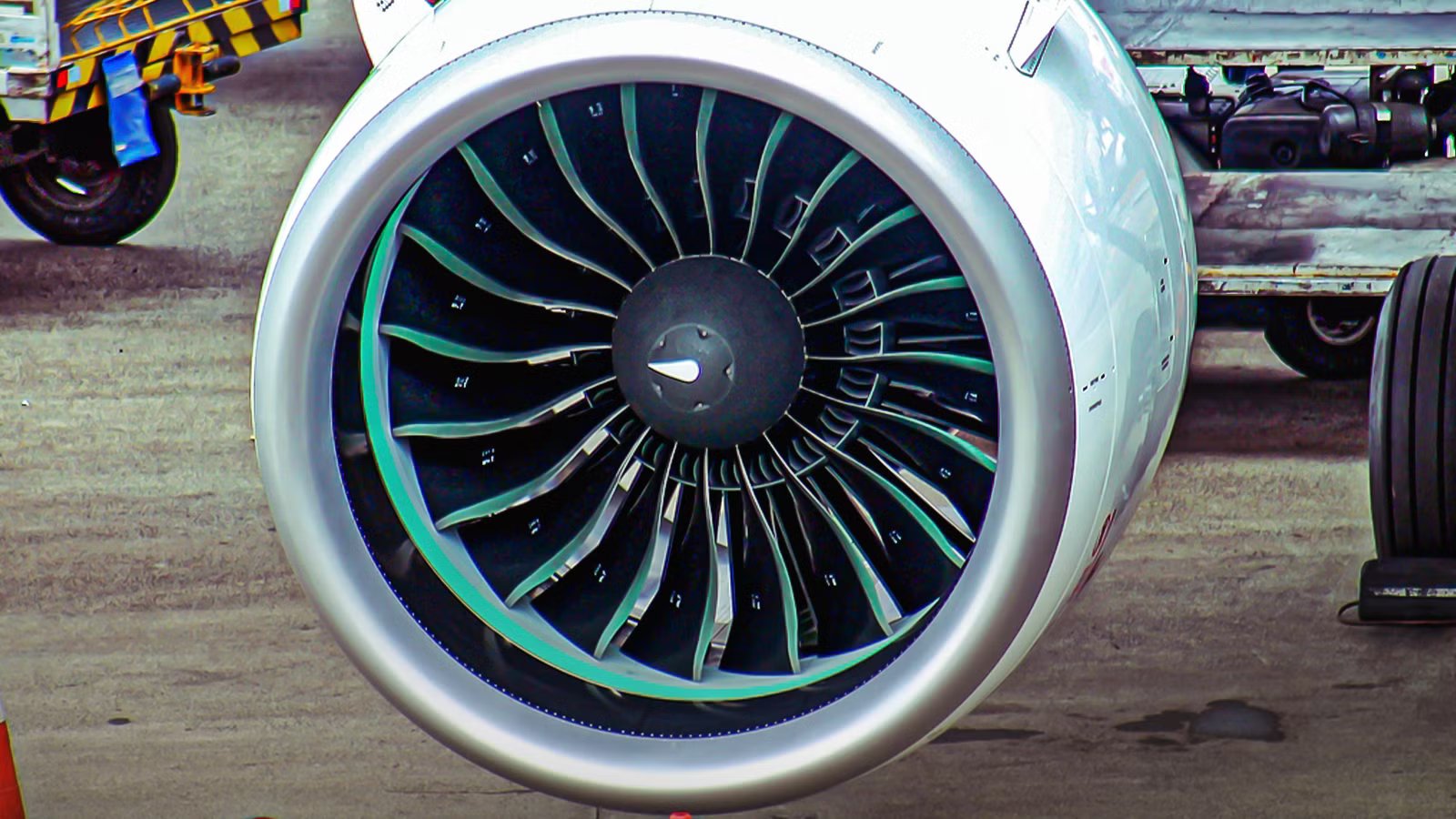
When Pratt & Whitney introduced the geared turbofan, or GTF, engine, it was hailed as one of the most important advances in commercial aviation propulsion in decades. By solving the long-standing aerodynamic compromise between fan and turbine speeds through a reduction gearbox, the engine delivered dramatic gains in fuel efficiency, emissions reduction, and noise performance. Airlines embraced the technology as a cornerstone of the next-generation Airbus A320neo family, attracted by fuel burn improvements of up to 20% and sharply lower operating costs. In only a few years, GTF-powered aircraft helped save more than one billion gallons of fuel while reducing millions of metric tons of carbon emissions worldwide.
But the same engine that promised to reshape airline economics soon exposed vulnerabilities the industry had not anticipated. A powder metal contamination defect affecting critical engine components triggered one of the largest maintenance crises modern aviation has faced, grounding hundreds of aircraft and overwhelming repair networks already strained by post-pandemic demand. Turnaround times for engine shop visits ballooned from a matter of months to nearly a year in some cases, leaving airlines scrambling for spare engines, cutting schedules, and reassessing the long-term economics of GTF-powered fleets. Even as Pratt & Whitney pours billions into manufacturing and maintenance expansion while introducing the redesigned GTF Advantage package, the fallout continues to ripple across airlines, lessors, and the global engine maintenance industry.
The Revolutionary Technology Around The GTF Engine

The Pratt & Whitney GTF engine represented one of the most significant architectural changes in commercial jet engine design since the high-bypass turbofan entered widespread service. For decades, turbofan engines relied on a direct-drive configuration in which the large front fan and the low-pressure turbine behind it were connected by a single shaft, forcing both components to rotate at the same speed. That arrangement created a major efficiency compromise because the fan operates most efficiently at slower rotational speeds, while the turbine performs better at much higher speeds. Pratt & Whitney solved this problem by introducing a reduction gearbox between the two sections, allowing each component to operate independently at its optimal rate. In the GTF engine, the front fan spins at roughly 3,000 revolutions per minute while the low-pressure turbine can approach 10,000 RPM, a performance gap impossible to achieve in conventional direct-drive designs.
The gearbox itself became one of the engine’s most remarkable engineering achievements. Measuring less than a foot across, it is capable of transmitting more than 30,000 horsepower while operating with extremely low friction thanks to advanced materials and precision manufacturing techniques. Combined with a modular core architecture, the geared turbofan concept allowed Pratt & Whitney to scale the same underlying technology across multiple aircraft categories, from the Airbus A320neo family to regional jets and smaller narrowbody platforms. The resulting engine family delivered substantial improvements in fuel efficiency, emissions reduction, and noise performance while maintaining strong thrust-to-weight ratios across different variants. Engines such as the PW1100G, which produce more than 33,000 pounds (14968.55 kg) of thrust with an 81-inch (205.74 cm) fan diameter, demonstrated that the GTF platform could deliver large-aircraft performance gains without the weight and fuel penalties traditionally associated with higher-thrust engines.

Shutterstock | Simple Flying
Pratt & Whitney’s geared turbofan program was designed to deliver lower fuel burn, improved reliability, and quieter operations for the Airbus A320neo and Airbus A220 families. Instead, it became the center of a major industry crisis after defects were discovered in powder-metal components used in critical engine sections. Contamination during manufacturing created microscopic cracks that could expand under normal operating stress, raising the risk of serious engine failures. The issue affected engines built between 2015 and 2021 and forced accelerated inspections across hundreds of aircraft worldwide.
The fallout quickly overwhelmed the global maintenance system. Regulators sharply reduced inspection intervals, forcing hundreds of engines into repair shops at the same time and pushing turnaround times from roughly 60 days to nearly 300 days in some cases. At its peak, the crisis grounded around 835 aircraft, or nearly 40% of the global fleet of GTF-powered A320neo family aircraft. The shortage became so severe that airlines and lessors began dismantling relatively young aircraft for usable engines and spare parts, with some GTF engines generating lease rates of roughly $200,000 per month.
FAA Certifies Pratt & Whitney’s GTF Advantage Engine
Deliveries of the next-generation engine are expected to begin later this year.
The MRO Crisis Airlines Weren’t Prepared For

The Pratt & Whitney GTF crisis did more than ground hundreds of aircraft. It exposed how unprepared the global engine maintenance industry was for a widespread reliability problem involving a next-generation powerplant. After regulators ordered accelerated inspections for affected GTF engines, hundreds of aircraft suddenly required maintenance at the same time. Engine shop turnaround times that once averaged roughly 60 to 90 days quickly stretched to 250 or even 300 days, leaving airlines without enough spare engines or replacement aircraft to maintain schedules.
Airline | Estimated Aircraft Impact | Operational Impact / Notes |
|---|---|---|
Air New Zealand | Up to 4 aircraft grounded at any time | Potential service disruption lasting up to two years; considering leasing additional aircraft |
JetBlue | Up to 6 A321neo grounded by end of 2023; high single to low double-digit grounding expected | Most affected engines post-2021 and not impacted by defect; gradual increase in groundings through 2024 |
Cebu Pacific | Up to 20 aircraft potentially affected; ~10 under inspection at one point | Ongoing inspections and maintenance scheduling uncertainty |
Viva Aerobus | ~3.5 A320neo aircraft grounded on average during Q3 | Wet-leased up to 3 A320s to offset capacity loss; inspections continuing through 2025 |
Volaris | Significant fleet disruption; ~18 aircraft under extended leasing arrangements | Workforce reduction (~200 employees); coordinating compensation and technical support with Pratt & Whitney |
IndiGo | One of the most impacted globally; multiple A320-family aircraft grounded | Additional supply chain constraints; plans to lease aircraft as mitigation measures |
All Nippon Airways (ANA) | ~33 aircraft expected to be impacted by inspections | Fleet-wide inspections across A320neo and A321neo families; expected domestic and international schedule reductions |
Wizz Air | ~45 aircraft grounded | Capacity forecast cut by ~10%; significant network adjustments |
Hawaiian Airlines | Entire A321neo fleet (18 aircraft, partial grounding) | Capacity down ~9.3% year-on-year; route cancellations and reduced frequencies |
Spirit Airlines | Large portion of A320neo family fleet impacted (pre-bankruptcy operations) | Aircraft later feeding teardown and leasing markets; contributes to parts supply dynamics |
The situation became even worse because the industry was already under pressure from deferred pandemic-era maintenance, supply chain shortages, and delayed aircraft deliveries. As Pratt & Whitney GTF engines flooded overhaul facilities, airlines were forced to continue operating older aircraft longer than expected while competing for limited maintenance slots and spare parts. According to Bain & Company, turnaround times for new-generation engines have risen by more than 150% compared to pre-pandemic levels, creating a bottleneck that could persist through the end of the decade.
Airline Impact And Industry Cannibalization

The Pratt & Whitney GTF crisis has created an unprecedented situation in commercial aviation: relatively new Airbus A321neos are being dismantled for parts because their engines are worth more than the aircraft themselves. At facilities like Castellón Airport (CDT) in Spain, teardown companies are stripping apart narrowbody jets that are often less than six years old in order to recover functioning GTF engines and spare components. With hundreds of aircraft grounded and maintenance waits approaching a year in some cases, airlines and lessors have turned usable engines into some of the most valuable assets in the market.
Catch what other flight trackers miss
Emergency squawks, holds, NOTAMs — live signals, no signup.
Open tracker
Catch what other flight trackers miss
Emergency squawks, holds, NOTAMs — live signals, no signup.
Open tracker
The shortage has dramatically reshaped aircraft valuations and leasing economics. Lease rates for a single GTF engine have surged to roughly $200,000 per month, while grounded GTF-powered aircraft have become higher-risk assets compared to equivalent CFM-powered jets. Industry analysts say investors now apply wider stress assumptions, higher maintenance reserves, and more conservative valuations to Pratt & Whitney-powered A320neo family aircraft due to ongoing reliability and downtime concerns.
At the same time, the secondary market for engines and spare parts has become one of the most active sectors in aviation. Lessors and teardown firms increasingly view grounded aircraft as “parts banks” capable of supplying scarce engines and life-limited components to keep other fleets flying. While many industry executives still believe the situation is temporary, the dismantling of nearly new Airbus jets has become one of the clearest signs of how severely the GTF crisis disrupted the global airline industry.

These Are The Most Affected US Airlines By Pratt & Whitney Engine Groundings Today
Spirit Airlines faces the biggest impact.
GTF Advantage: The Fix To The Problem

Pratt & Whitney’s response to the GTF engine crisis centers on a major redesign of the PW1100G known as the GTF Advantage package. Rather than a minor upgrade, it reworks the engine’s core architecture with higher airflow, improved hot-section components, advanced airfoil designs, and enhanced cooling systems to reduce operating temperatures. The goal is to significantly improve durability, with the manufacturer targeting a doubling of time on wing while also delivering performance gains, including up to 4% more thrust at sea level and improved efficiency at altitude alongside a modest fuel burn reduction.
To support operators already flying earlier GTF variants, Pratt & Whitney is also rolling out retrofit and software-based solutions. The HS+ upgrade package allows existing engines to capture most of the durability improvements of the Advantage design without full replacement, incorporating updated combustors, turbine hardware, and bearing improvements. In parallel, software adjustments that reduce climb thrust are designed to lower peak operating temperatures and extend engine life by up to 20%, while similar upgrades are being developed for GTF variants powering the Airbus A220 and Embraer E2 fleets.
The GTF Engine Program Going Forward

The GTF program remains under sustained pressure as Pratt & Whitney continues to manage the fallout from durability issues and the powder-metal defect. Even with the introduction of the GTF Advantage and retrofit packages, the fleet will remain constrained by a large installed base of engines requiring inspection, modification, and extended shop visits. The underlying challenge is not only technical but logistical, with maintenance capacity still lagging behind demand.
Looking ahead, the recovery is likely to be slow and uneven. The upgrade path may improve long-term reliability, but it does not immediately resolve the existing backlog or the operational disruption already embedded in airline fleets. Pratt & Whitney faces several more years of elevated costs, grounded aircraft, and reputational pressure as the industry works through the consequences of the original GTF design and manufacturing issues.
Catch what other trackers miss
Emergency squawks, holds, NOTAMs — live signals, no signup.
Open tracker
Catch what other trackers miss
Emergency squawks, holds, NOTAMs — live signals, no signup.
Open tracker