dailynewsnblog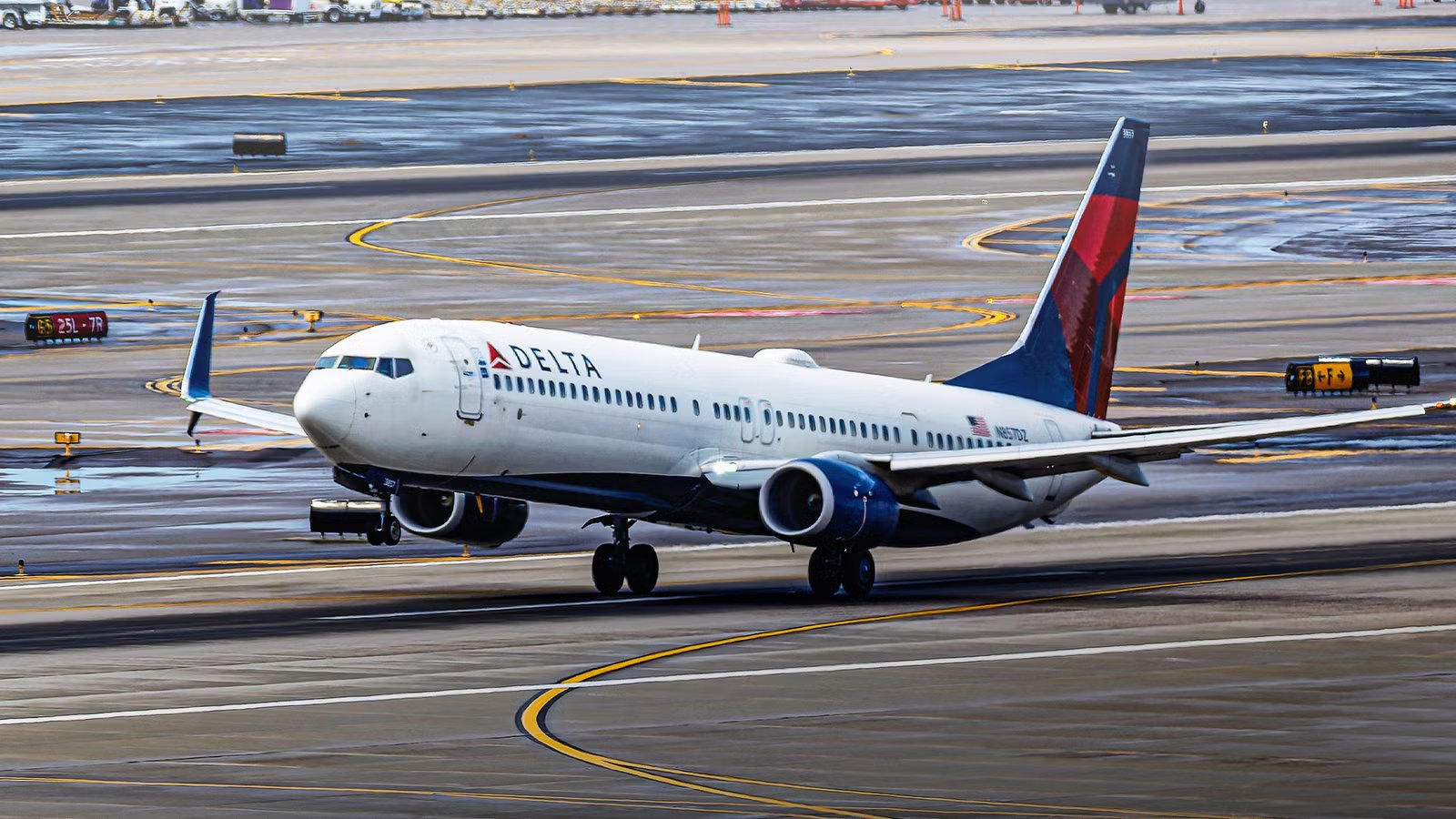
The Boeing 737-900ER was designed to solve a very specific problem for airlines. Boeing needed a narrowbody aircraft capable of carrying nearly as many passengers as a Boeing 757 while remaining within the operating economics and fleet commonality of the long-running 737 family. The result was the largest and heaviest member of the Next Generation 737 line, an aircraft capable of moving more than 200 passengers while still fitting into the same airport gates, maintenance systems, and pilot type ratings as its smaller siblings.
However, stretching an aircraft originally conceived in the 1960s eventually creates compromises that become difficult to hide. While the Boeing 737-900ER proved commercially successful with airlines such as  Alaska Airlines,
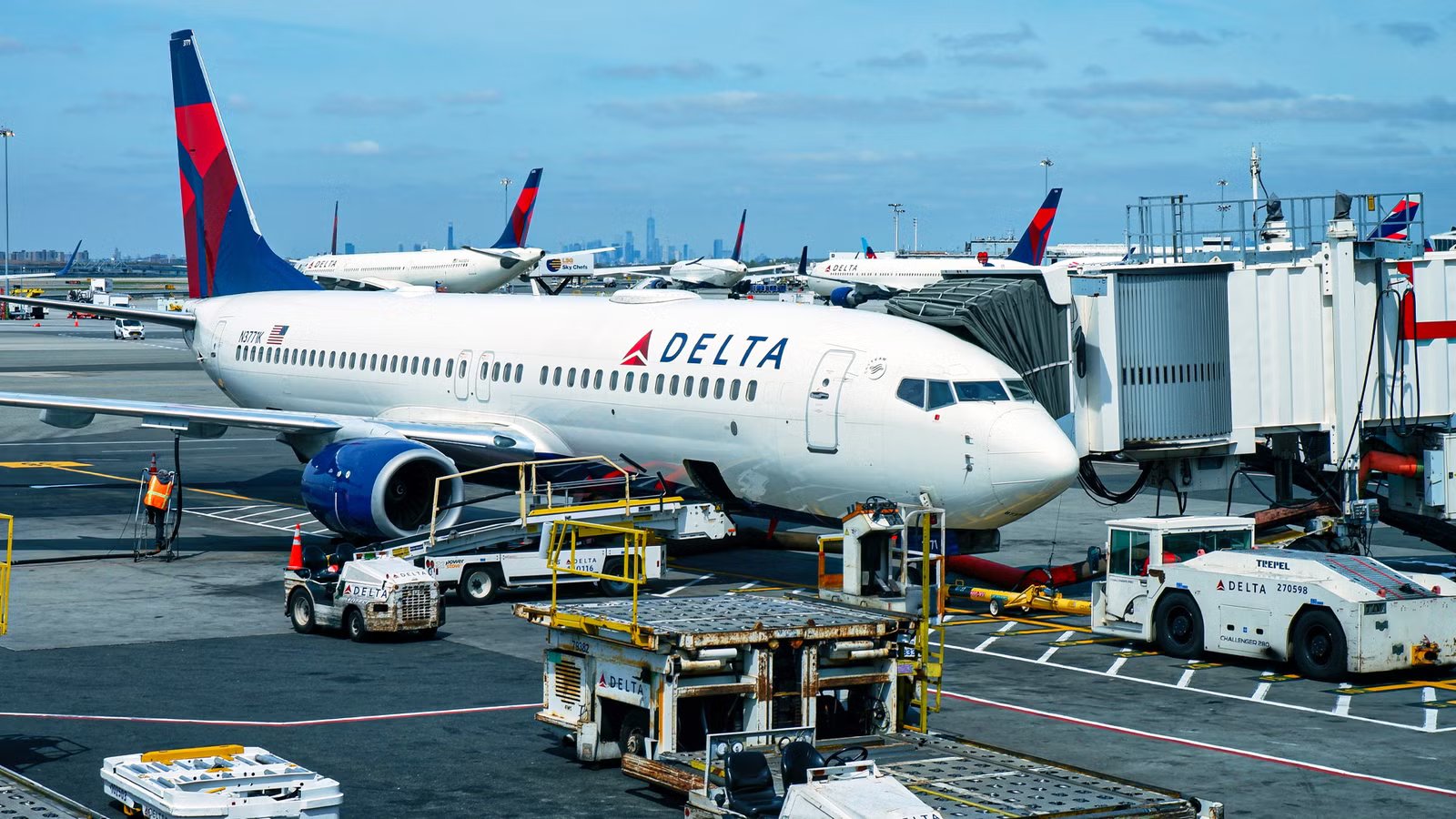
  Delta Air Lines, and
  United Airlines, it also inherited significant aerodynamic and performance limitations. The most visible of those limitations is evident during departure, when the aircraft often requires unusually long takeoff rolls compared to other narrowbody aircraft in the same category. Let’s take a closer look…
The Limits Of Stretching The Boeing 737

The Boeing 737-900ER represented the final and most extreme evolution of the Next Generation Boeing 737 family. Boeing had already stretched the fuselage several times, beginning with the original 737-100 and continuing through the Classic and NG generations. By the time the -900ER arrived, the aircraft had become substantially longer and heavier than the original design ever anticipated.
The problem was that  Boeing enlarged the fuselage, significantly increasing the wing area, so the aircraft retained a relatively small wing for the amount of weight it needed to lift into the air. This imbalance created one of the highest wing loadings in Boeing’s narrowbody fleet, meaning each section of wing had to support more weight during take-off and landing operations.
Catch what other flight trackers miss
Emergency squawks, holds, NOTAMs — live signals, no signup.
Open tracker
Catch what other flight trackers miss
Emergency squawks, holds, NOTAMs — live signals, no signup.
Open tracker
Wing loading directly affects stall speed because, as weight increases without a proportional increase in wing area, the aircraft must travel faster to generate enough lift for safe flight. That naturally pushes both stall speed and rotation speed upward, and pilots must therefore accelerate the aircraft to higher speeds before safely lifting the nose from the runway.
The issue becomes even more noticeable in difficult environmental conditions, such as on hot days or at high-altitude airports, where thinner air reduces wing efficiency and engine performance. Safety margins require pilots to rotate at even higher speeds, extending the runway distance needed to safely continue or reject a take-off.
At maximum take-off weight, the aircraft can weigh approximately 85,130 kilograms, or 188,000 pounds, yet its pair of CFM56 engines each produces only 28,400 pounds of thrust. That creates a relatively modest thrust-to-weight ratio of roughly 0.30, limiting acceleration and increasing balanced field length requirements compared to competing aircraft.
Why Was The Boeing 737-900 A Failure?
Why has Boeing failed to match up against Airbus in the world of large narrowbody airliners?
Why The Aircraft Accelerates More Slowly

Acceleration during the take-off roll depends heavily on thrust, drag, and aircraft mass. The Boeing 737-900ER struggles because it carries substantial weight without receiving a dramatic engine upgrade over smaller 737 variants. Boeing intentionally preserved commonality across the family, but that meant the largest aircraft inherited engines that were approaching their practical limits.
Compared to smaller members of the Boeing 737 family, the -900ER simply feels less energetic during departure. The aircraft can carry many more passengers and fuel, but its available thrust does not increase proportionally with the added mass. Pilots therefore experience slower acceleration, especially when departing near maximum take-off weight on longer routes.
This affects more than runway length, and airlines must carefully calculate payload restrictions whenever runway performance becomes limiting. On especially hot days, carriers may need to reduce cargo or passenger loads in order to maintain required safety margins. Those compromises become costly because the Boeing 737-900ER was intended specifically as a high-capacity Narrowbody optimized for dense routes.
The long takeoff roll also changes operational planning. Dispatchers must account for runway conditions, ambient temperature, airport elevation, and obstacle clearance requirements with unusual precision. At some airports, the aircraft cannot depart at full weight without penalties.
In ideal sea-level conditions, the aircraft typically requires around 2,000 meters, or roughly 6,560 feet, of runway to depart safely. Under hotter conditions or at high-elevation airports, the required distance can approach 3,000 meters, or nearly 9,840 feet. For a narrowbody aircraft, those figures are substantial.
The Tail Strike Problem Boeing Could Not Ignore

The fuselage stretch created another major complication beyond aerodynamic performance. As the aircraft became longer, the geometry during rotation became increasingly unforgiving, and a stretched fuselage naturally reduces tail clearance because the rear section sits closer to the ground during nose-up maneuvers.
Tail strikes, therefore, became a serious concern for the Boeing 737-900ER, and during rotation, pilots must raise the nose carefully to achieve lift-off without allowing the tail to contact the runway surface. Because the aircraft already requires relatively high rotation speeds, there is pressure to rotate assertively enough to leave the ground efficiently while still respecting strict pitch limits.
Boeing attempted to optimize cabin capacity further by flattening the aft pressure bulkhead. This modification allowed the manufacturer to add an extra row of seats, improving airline economics and making the aircraft more competitive against the Airbus A321. However, the design change also shifted the center of gravity farther aft and introduced new loading sensitivities.
An aft center of gravity can reduce pitch stability and alter handling characteristics during rotation, and airlines must carefully manage cargo distribution inside the aircraft. In some cases, operators intentionally leave sections of the rear cargo hold partially empty to remain within approved balance limits. This balancing act affects efficiency because unused cargo space represents lost revenue potential, and the aircraft ultimately became a product of constant tradeoffs between passenger capacity, structural limitations, and acceptable take-off performance.

Why The Boeing 787-10 Dreamliner Can Suddenly Fly Routes Only The Airbus A350 Could Handle
An increased maximum takeoff weight allowance is key for Boeing.
How Rotation Speed Extends The Take-Off Roll

Rotation speed plays a central role in why the Boeing 737-900ER consumes so much runway. The aircraft cannot simply lift off whenever the pilot begins pulling back on the control column, and instead, it must accelerate to a predetermined Vr speed that ensures enough airflow over the wings and control surfaces for safe flight. Because the aircraft is heavily loaded and carries a relatively high wing loading, Vr tends to be significantly higher than on smaller 737 variants. The aircraft therefore spends more time accelerating along the runway before the pilot can even initiate rotation.
The aft center of gravity concerns complicate matters further, and extra aft weight reduces elevator authority during the rotation maneuver, meaning the aircraft can become less responsive during pitch changes. Boeing and airline operators compensate for this by using carefully calculated rotation speeds that preserve handling margins and reduce the risk of unstable departures.
Higher rotation speeds directly translate into longer runway requirements because kinetic energy rises rapidly with velocity. Even modest increases in Vr can add considerable distance to the take-off roll. This effect becomes amplified when combined with slower acceleration from the aircraft’s relatively low thrust-to-weight ratio. The aircraft’s long fuselage also encourages smoother and more gradual rotation techniques. Pilots cannot rotate too aggressively without risking a tail strike, so the maneuver itself may consume additional runway distance before lift-off occurs fully.
The latest data from ch-aviation shows that Delta Air Lines is currently the world’s largest operator of the Boeing 737-900ER, as outlined in the table below:
Ranking | Airline | Boeing 737-900ER |
|---|---|---|
1 | Delta Air Lines | 163 |
2 | United Airlines | 148 |
3 | Alaska Airlines | 79 |
4 | Lion Air | 59 |
5 | Turkish Airlines | 15 |
Hot-And-High Airports Make Everything Worse

Few environments expose the Boeing 737-900ER’s limitations more clearly than hot-and-high airports, such as  Mexico City International Airport (MEX), as high temperatures reduce air density, weakening both aerodynamic lift and engine output simultaneously. Higher airport elevations create the same problem because thinner air contains less oxygen and generates less lift over the wings. For the 737-900ER, which already operates near the edge of acceptable wing and thrust loading, these conditions can become especially restrictive. The aircraft’s CFM56 engines must work harder to produce take-off thrust while remaining within exhaust gas temperature limitations designed to protect turbine components.
Airlines frequently adapt operations to avoid the worst conditions, and early morning departures are common in hotter climates because lower temperatures improve both engine efficiency and aerodynamic performance. A flight leaving before sunrise may carry significantly more payload than the same aircraft departing in the middle of the afternoon.
Crews can also employ procedural techniques to reduce runway usage. One method involves applying take-off thrust while holding the brakes before beginning the take-off roll. This allows the engines to stabilize at maximum power immediately upon brake release, reducing required runway distance. However, the procedure increases brake wear and can conflict with airport noise-abatement procedures, and payload penalties become increasingly common under these circumstances. As a result, airlines may need to leave seats unsold or reduce cargo loads to ensure safe departures.

Inside The Boeing 777X’s Folding Wing Mechanism
Here’s how Boeing’s engineers have ensured the 777X’s iconic folding wingtips can operate safely and reliably.
Boeing’s Short-Field Package Tried To Fix The Problem

Boeing understood the 737-900ER’s performance limitations from the beginning, which is why the manufacturer made the short-field performance package standard equipment on the aircraft. The package incorporated several aerodynamic and structural improvements intended to reduce runway requirements and improve operational flexibility.
One of the most important modifications involved sealed leading-edge slats. These improved low-speed lift generation during take-off and landing, helping the aircraft become airborne slightly earlier and reducing required runway length. Boeing also increased flight spoiler deflection to improve braking effectiveness after touchdown. The aircraft received a two-position tail skid as well, providing additional protection during aggressive rotations and allowing crews to use lower approach speeds without unacceptable tail strike risk. These changes collectively helped the aircraft operate from airports that otherwise might have been impractical.
Many of these developments were driven by the requirements of GOL, as the Brazilian carrier needed improved short-field capability for operations at Rio de Janeiro Santos Dumont Airport (SDU), where the runway measures only about 4,300 feet. Without performance enhancements, larger aircraft carrying meaningful payloads simply could not operate there effectively.
The short-field package undoubtedly improved the aircraft, but it could not completely overcome the underlying physics. The Boeing 737-900ER remained a very heavy narrowbody using a wing and engine combination approaching the practical limits of the original 737 design.