dailynewsnblog

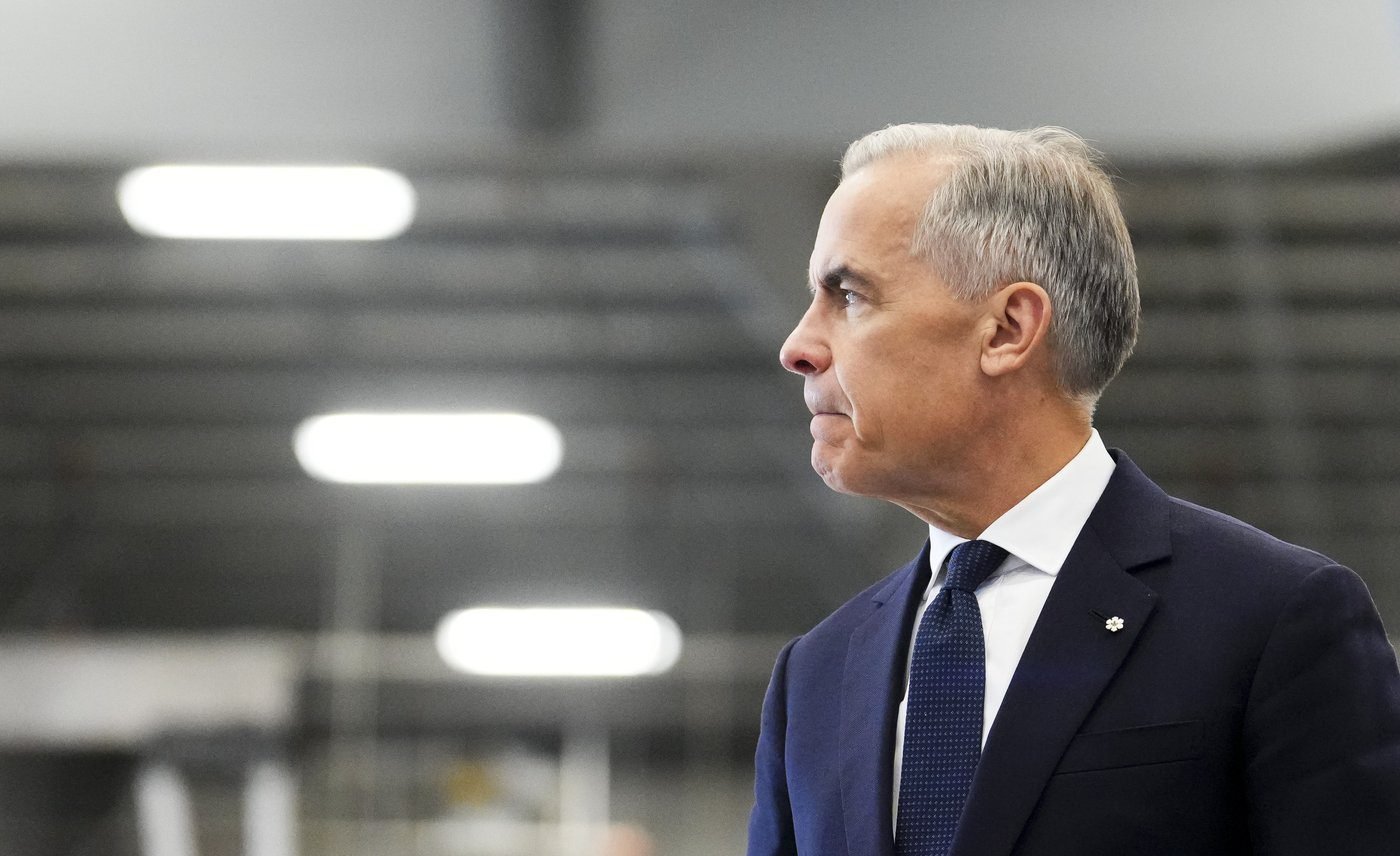
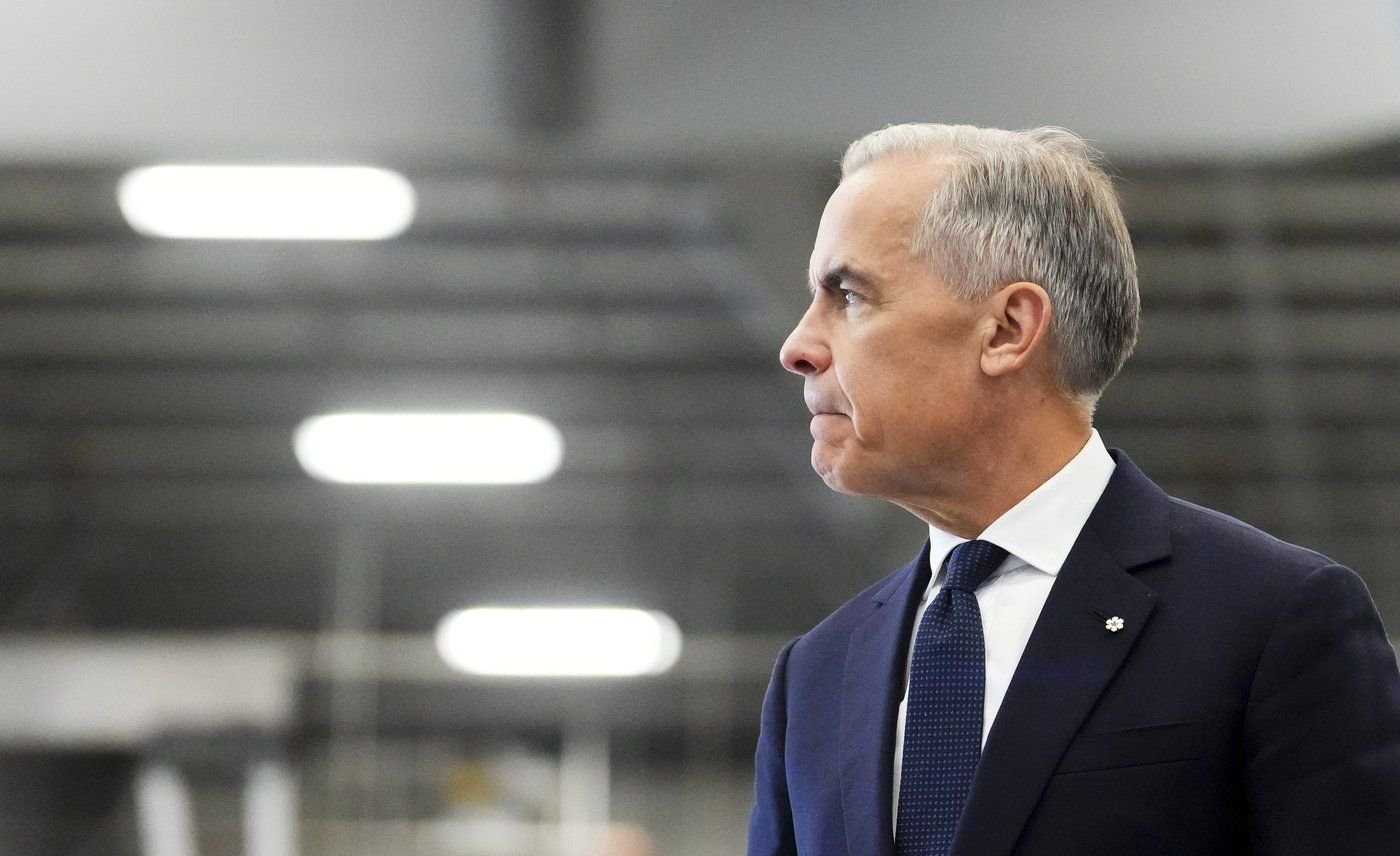
….Over the next five years, this strategy will introduce new legislation, investments, and programs that ensure AI is adopted responsibly, in a way that truly serves all Canadians – building trust, expanding opportunities, and reinforcing control of our sovereignty.
The AI for All Strategy targets an additional $200 billion of economic growth to create 250,000 new AI-related jobs over the next five years and to increase AI adoption from just over 12% to 60% by 2034. The strategy will provide up to 90,000 AI-related jobs and work placement opportunities for young Canadians and make our industries more competitive in the global economy.
Canadians must have confidence that AI is being developed and deployed safely, transparently, and in ways that reflect our values….
The CBC Power and Politics panel talked about it on Thursday:
TL,DW: Panelists Michele Cadario, Shachi Kurl, Rebeca Schulz and Andrew Thomson discuss Carney’s AI for All strategy and the issues that AI raises for data centre environmental impacts, water uses, and AI impacts on jobs. They agree that Canadians are neither knowledgeable nor enthusiastic about AI in general.
I think Carney is trying to use his principles of trust, opportunity and sovereignty to create a moral centre for Canada’s AI strategy:
From technology writer Hessie Jones:
I also found a good substack written by Calgary business advisor Aarn Wennekers called Super Cool & Hyper Critical which has a number of articles about Canadian AI policies and issues:
In The Globe and Mail, columnist Campbell Clark says Canadians appear to want to slow it down:
….“There is a massive gap between where the government is going and where Canadians are,” [gift link] said Shachi Kurl, the president of the Angus Reid Institute.
The institute’s poll of 1,803 Canadians conducted from May 7 to 11 found reticence. An overwhelming majority, 68 per cent, want AI to be regulated heavily, even if it slows down adoption of the technology. And 45 per cent of Canadians believe artificial intelligence will significantly reduce the number of available jobs.
Mr. Carney must know about the deep public concerns. His Artificial Intelligence Minister, Evan Solomon, has spent a year hearing a variety of anxieties, including at the Liberal Party convention in Montreal in April, where several delegates put forward proposal to stop children from using chatbots or to regulate them extensively.
The Prime Minister has obviously decided there is an imperative that must be pursued and the government’s job is to change the public’s mind.
That’s pretty rare in politics. It’s one thing to try to influence public opinion, but a different thing to try to reverse it. Politicians rarely try.
The logic of the AI strategy is that building trust in artificial intelligence will lead to acceptance and adoption. But building public trust is not as easy as the strategy document’s neat boxes suggest. A convincing formula was not spelled out.
There’s no doubt that Mr. Carney is a believer in AI. His speech on Thursday made it clear he sees it as a huge economic opportunity. He spoke about the need to talk about what AI can do for people’s lives. He mentioned he had talked to Pope Leo about his concerns, even if he doesn’t share the pontiff’s deep misgivings. And the Prime Minister thinks artificial intelligence is the future.
“The question isn’t whether AI will transform our lives,” he said. “It will.”
Nevertheless, the AI strategy will run into political headwinds….
Here are some of the AI cartoons I found today, and I think they are a pretty good review of why people distrust AI:


But I’m not sure if Canadians hate AI as such — I don’t think we understand it very well yet actually.
Those billionaire guys like Peter Theil, Mark Zuckerberg, Elon Musk, Jeff Bezos, Tim Cook, and Sundar Pichai who gleefully attended Trump’s inauguration, sitting front and center. And they’ve been fawning all over Trump and his administration ever since.
Anything these guys are pushing, well of course I hate it and I don’t trust it. That’s how we all feel.
And as long as AI and its data centres are associated with these Tech Bros, we will continue to hate AI too.
I hope Prime Minister Carney and his government will heed the words of Brian Phillips, in last week’s The Ringer, who listed 40 Ways the Tech Industry Could Stop Being Such a Colossal Goddamn Pain in the Ass. He describes the problem with AI as the narrow mechanistic mean-spiritedness of its promoters.
…37-39. Please stop seeing every precious and beautiful aspect of life on earth as a commodity to be controlled and exploited for wealth.
Now, see, this is a tough one. It’s so tough that I’m giving it three entries. It’s tough because I know you know you fucked up. You’re aware that much of the world has soured on you. You’ve seen a fleet of headlines like “AI Companies Know They Have an Image Problem” and “AI Has a Message Problem.” You’re aware that the loathing people feel for AI is making them look again at the other products you’ve inserted into every corner of their lives and realize with fresh disgust the many, many ways in which those products represent broken promises. They don’t work as they’re supposed to. They make life more frustrating, stressful, competitive, and alienating rather than easier and more connected. You’re using them to spy on your customers, whom you view as vessels of monetizable data more than as people, and whom you hold in increasingly palpable contempt. You see that we see this, and you’re surely hard at work on ways to fix the problem.
But this is where things get tricky, because I don’t think you want to fix the problem, not really. I think that, to you, “fixing the problem” means fixing the image that conceals the problem. I think you want to keep doing all the same stuff while selling us a better story so that we’ll let you get away with it. And that doesn’t fix anything at all.
Because the truth is, tech doesn’t have an image problem. It doesn’t have a message problem. It has an intention problem. What’s wrong with the axe murderer who broke into my house is not that he hasn’t successfully persuaded me to buy into his narrative. What’s wrong is that he’s trying to kill me with an axe. Similarly, when you launch a product that’s designed to put millions of people out of work, block access to sources of verifiable truth, replace human creativity with slop, and lower the barriers to every sort of atrocity, the problem isn’t that you haven’t told the public a good story about those things. The problem is that you are trying to do them.
There are things in the world that are more important than money. The fact that you seem not to believe this, that you seem to think any motive beyond ruthless acquisitiveness is fake, dishonest, or childish, is the heart of your problem. Your attitude is not by any means unique to tech, but the scale of capital concentrated in the tech industry makes the attitude—this confusion of an adolescent will to power for mature, undeluded realism—uniquely treacherous. You can’t build products that serve humanity while viewing every human good other than your own aggrandizement as bullshit. Thus, tech’s internal problems can’t be fixed unless the people running the industry change their outlook on a deep level (unlikely) or are somehow outmaneuvered as wiser heads reform the market to deprioritize perpetual growth (maybe Paul Konerko is working on this?).
Which means that fixing the problem, as usual, falls to us. The tech industry, which has been selling us maddeningly broken products for years, has itself become one of those broken products: another shiny app that doesn’t do what it’s supposed to and that will force us to invent work-arounds if we’re going to get on with our lives. (Meaning, in this case: If we’re going to continue to work, read, learn, listen to music, make movies, write, avert wars, and all the rest of what—apart from ID’ing tiny crosswalks—we think of as verifiably human.) I don’t know where the work-arounds start; the oligarchs have so much wealth and power, and so few people who could stand up to them are even willing to try. But this is why the pope’s encyclical is so important. Magnifica Humanitas positions a major world power, the Catholic Church, in moral opposition to big tech as it’s currently constituted; maybe more importantly, it serves as a focal point for everyone else, articulating an understanding of what’s happening in the world that we can rally around. Or argue with, or correct, or extend; in any case, it’s a landmark to navigate by. I wish I shared Leo’s optimism about the likelihood of real change. But we’re better equipped than a month ago, and that’s something.
AI needs a soul.