dailynewsnblog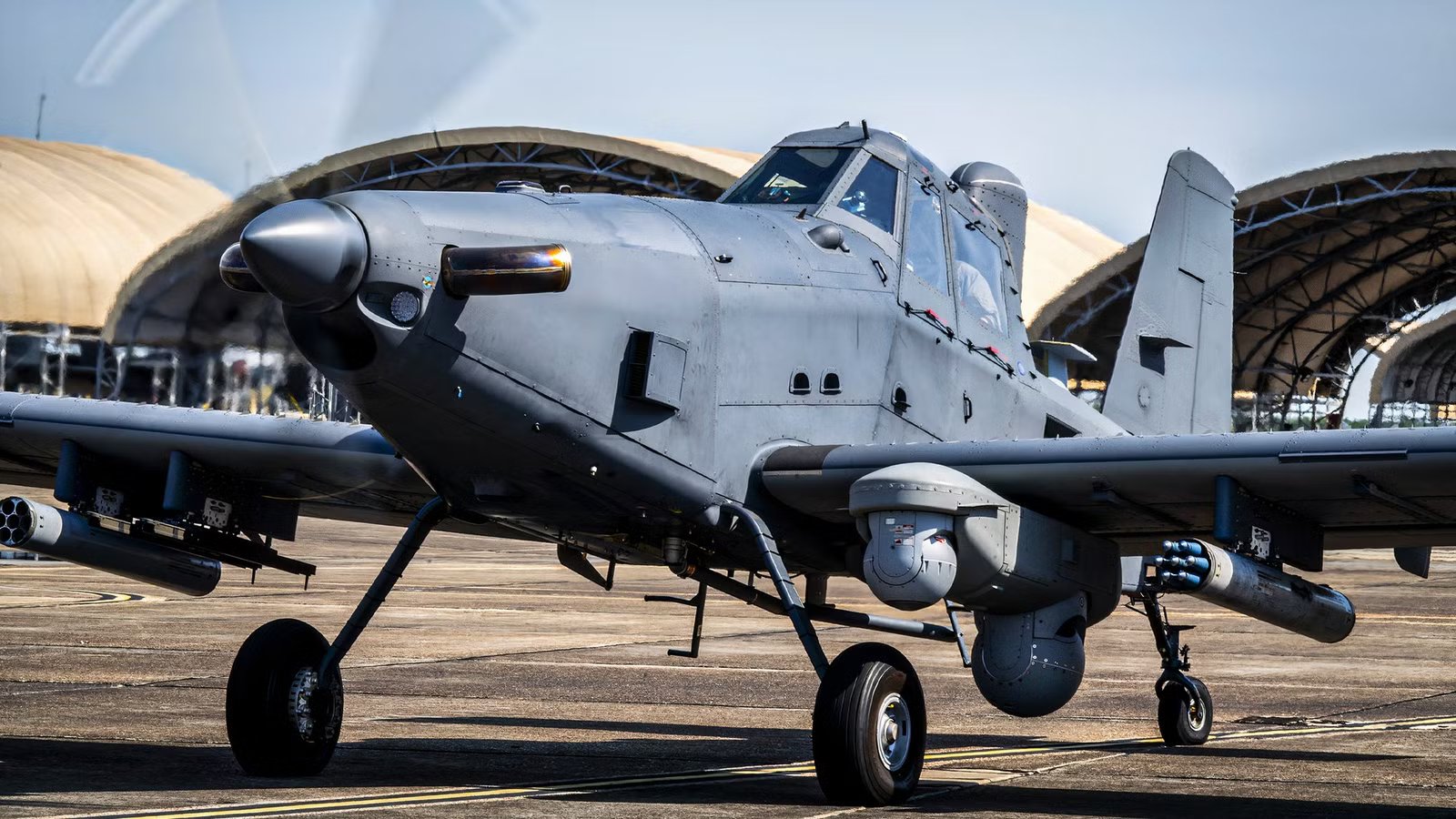
Close air support (CAS) has been a hallmark of United States (US) military ground operations since World War II. Since that time, American service personnel have depended on the ability to coordinate with aviators in situations where they are facing overwhelming enemy forces, indirect fire (such as mortars or artillery), or even well-positioned sniper teams. In such situations, US Marines and Army personnel can coordinate with airborne assets, identify the precise or general location of an enemy threat, and call in overwhelming effects upon it.
This not only serves the practical purpose of neutralizing the threat, but effective CAS also provides a significant psychological advantage. Service personnel on the ground know that if they are at a tactical disadvantage, they can call in immense, destructive firepower against a foe, which can meaningfully increase confidence and survivability. Nowhere is the value of CAS more apparent than with remotely located special operations teams. These groups of highly trained personnel often operate far from larger conventional units, conducting surgical missions in environments where hostile forces may be present in greater numbers nearby. Their small footprint is often their greatest asset, but it also increases their reliance on external support.
The ability to rapidly support their operation or enable a “hot” extraction can be the difference between success and failure. To this end, the United States Air Force (USAF) is currently testing its new armed overwatch and CAS Aircraft, the OA-1K Skyraider II, manufactured by Air Tractor. Once deployed, the aircraft is intended to provide much-needed support to America’s special operations forces in austere environments.
Selection And Testing For The Skyraider II: The Air Force’s Newest Aircraft

The Skyraider II represents the USAF’s newest aircraft. It was named by the USAF in honor of the Douglas A-1 Skyraider, which served effectively during the Korean and Vietnam Wars as a close air support (CAS) aircraft. The commercial variant of the aircraft is the Air Tractor AT-802, a purpose-built crop-dusting aircraft that, after airframe production, is shipped to L3Harris Technologies’ facility in Waco, Texas, for outfitting for its military application. Once completed, the aircraft is given the official designation of the AT-802U Sky Warden for the US Special Operations Command’s (SOCOM) Armed Overwatch (AO) program.
The AT-802U won the AO competition within a field of five aircraft, and Air Tractor, in conjunction with L3Harris, was awarded a $3 billion (£2.25 billion) contract on August 1, 2022, to supply 75 Skyraider IIs. However, this number has since been reduced to a projected fleet of 53 aircraft. USAF Special Operations Command accepted the first missionized Skyraider II on April 3, 2025.
As such, the aircraft is currently undergoing developmental testing by the USAF’s 96th Test Wing in coordination with SOCOM. The testing is intended to evaluate the Skyraider II’s airworthiness, verify the accuracy of the manufacturer’s performance data, and assess how effectively the aircraft can fulfill its intended role in supporting deployed special operations teams.
The aircraft’s certification program with the Federal Aviation Administration is being conducted in two phases. The first phase covers a comprehensive review of everything from munitions integration to its electro-optical/infrared sensor package, while the second phase expands the aircraft’s flight envelope to 25,000 feet (7,620 m). To date, approximately 8,000 flight hours have been logged during these verification trials, and the USAF intends to field the aircraft around the first quarter of FY2028.
Why Does The US Air Force Still Rely On The A-10 Warthog?
Discover why despite years of retirement pressure, the A-10 Warthog remains in service.
A Rugged Aircraft Intended For Distributed Operations

The Skyraider II is intended to support US special operations personnel conducting distributed operations in remote and austere environments. To that end, the aircraft is optimized for mission sets including CAS, precision strike, armed intelligence gathering, surveillance, reconnaissance, and AO operations. This broad mission profile highlights the aircraft’s modularity and adaptability. In addition to being rapidly configured for different operational roles, the aircraft is also designed to accommodate future upgrades, including expanded payload options, more advanced weapons systems, and increasingly capable intelligence-collection sensors.
The need for an aircraft with these capabilities was highlighted on October 4, 2017, when a US Army Special Forces team was attacked in Niger during what became known as the “Tongo Tongo” ambush. The attack resulted in the loss of four American Green Berets and four Nigerien soldiers. According to USAF Colonel Craig Walker, one of the most significant shortcomings during the incident was the absence of a dedicated overwatch aircraft assigned to the mission—an aircraft capable of delivering immediate and scalable firepower in support of the remotely deployed SF team.
Colonel Walker makes the important point that Africa is a vast continent—roughly three times the size of the United States. Across such distances, jets or drones operating from secure main air bases can require hours to reach a target area. This challenge is unlikely to disappear with the rise of great power competition. Within that environment, special operations forces could easily find themselves deployed to remote islands or islets throughout the First and Second Island Chains surrounding the South China Sea, often far from established airbases. With countries such as Indonesia and the Philippines included in this operational space, special forces teams may operate across a massive archipelagic region spanning thousands of islands.
In these circumstances, the Skyraider II could be forward deployed into some of the world’s most remote and austere operating environments. Its rugged landing gear, relatively simple and reliable turboprop engine, and short-takeoff and landing capability make it particularly well suited for austere basing. In the close air support role, the aircraft can carry up to 6,000 pounds (2,722 kg) of ordnance, including Hellfire missiles, the Advanced Precision Kill Weapon System (APKWS), and laser-guided rockets capable of striking targets from several miles away. Depending on mission requirements, it can also be equipped with .50 caliber machine guns or miniguns, such as the GAU-19 or M134, providing flexible fire support for special operations forces operating far from major support infrastructure.
WW2 History: The Legendary US P-47 Thunderbolts In The European Theater
Though not quite as renowned as the P-51, the “Jug” was still a legendary fighter in the European Theater of WW2. And rightfully so.
Rapid Deployability: A Hallmark Of The Skyraider II

From the strategic level down to the tactical level, the support capability offered by the Skyraider II can be transported rapidly from regional main operating bases to remote operational areas within days rather than weeks. This is made possible by the flexibility of the US Air Force’s fleet of roughly 222  Boeing C-17 Globemaster III transport aircraft, which operate from a global network of approximately 22–30 major operating bases.
One of the Skyraider II’s most important features is its ability to have its wings removed for transport aboard a Globemaster III. Once delivered to a remote operating location within the area of operations, the aircraft can be unloaded and rapidly reassembled for use. This concept aligns closely with the USAF’s Agile Combat Employment (ACE) strategy, which disperses combat capability across smaller, mobile operating locations that are more difficult to target and therefore more survivable. Across the First and Second Island Chains, there could ultimately be well over 100 potential ACE nodes distributed throughout the region.
With this strategy already taking shape, the Skyraider II appears well-suited for this evolving method of combat deployment once it reaches full operational status. It would provide commanders with responsive aerial support while maintaining a relatively small logistical footprint. Few other USAF aircraft are designed specifically to combine austere basing, rapid deployability, and persistent close air support in the same way.
How Strategic Air Force Bases Anchor American Air Power In The Pacific
This article will take a look at the utility of US main operating bases and the USAF strategy in the Indo-Pacific.
The Skyraider II Provides a Necessary Capability For Remote Warfare

Great power competition today is primarily centered on Russia, China, and the United States, with Russia and China both fielding extensive conventional arsenals. In any direct conflict, the primary threats to US personnel would likely come in the form of ballistic and cruise missiles, as well as aircraft, helicopters, and drones.
Because of this, reducing the operational footprint of deployed forces has become increasingly important, an inescapable reality on daily display in Ukraine. The need for dispersion is especially true within the First and Second Islands Chains surrounding the South China Sea, due to China’s vast medium and long range missile arsenal. In such an environment, special operations units operating on small islands far from main operating bases would almost certainly require responsive close air support. The deployment of the Skyraider II could make this support far more readily available, given the aircraft’s ability to operate effectively from austere and remote locations.
With the expansion of ACE nodes, special operations forces may rarely be far from the close air support they require. The same logic applies to operations in Africa, where counterterrorism missions continue across remote regions. These environments demand an aircraft that is rugged, forward-deployable, and relatively easy to sustain or replace. Those are capabilities that the Skyraider II brings to the table, and ones the US Air Force has already begun preparing to integrate into future operations.