dailynewsnblog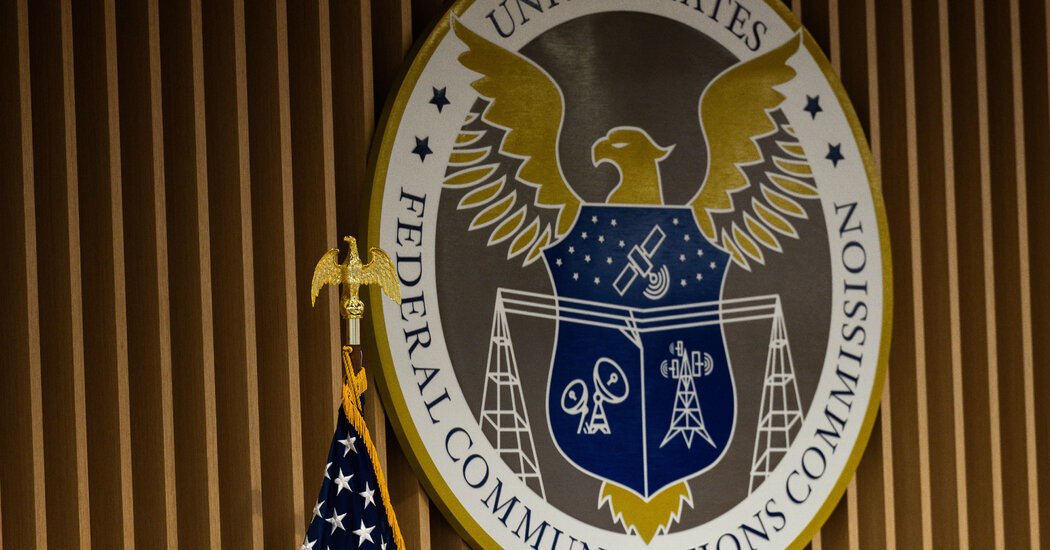
The Supreme Court on Thursday backed the Federal Communications Commission’s power to enforce its rules that protect consumer privacy, combat robocalls and regulate broadcasting, a decision with implications for the government’s ability to protect consumers and the public more broadly.
Two major cellphone carriers, Verizon and AT&T, were fined millions of dollars by the agency as punishment for what the F.C.C. said was their failure to protect customer data. The companies sued, saying those fines violated their rights because they were assessed without a trial, in a case that eventually landed before the Supreme Court.
In its 8-to-1 decision on Thursday, the Supreme Court said the companies’ Seventh Amendment rights were not violated. While the F.C.C. imposed millions of dollars in fines, the companies could have challenged them by refusing to pay and then proceeding to a jury trial in federal court, which the Supreme Court said was sufficient to protect their rights.
The F.C.C. orders “did not create an obligation to pay,” Chief Justice John G. Roberts Jr. wrote. He said the companies were not “impermissibly coerced” into giving up their right to a trial because before a party “can be made to pay, the jury gets the last word.”
Only Justice Clarence Thomas dissented, saying he would have sided with Verizon and AT&T.
The case was a challenge to the power of administrative agencies, long a target of the conservative legal movement. Two years ago, the court rejected the Securities and Exchange Commission’s use of in-house tribunals without juries to enforce rules against securities fraud and impose penalties on the financial industry.
In that case, the conservative majority said the practice violated the right to a jury trial because the penalties the S.E.C. imposed were immediately enforceable.
But in the F.C.C. case, the Trump administration defended the agency’s use of fines, calling them one of the “most important and frequently used enforcement tools.”
The Supreme Court agreed with the administration on Thursday that the F.C.C.’s process differed from the S.E.C.’s. The F.C.C.’s orders are nonbinding, the court said, because there is a path for the companies to reject the government’s allegations to get their case in front of a jury.
The companies had said that scenario was a nonstarter because their main regulator, the F.C.C., would still be essentially branding them as “lawbreakers.” For decades, they said, the private sector has understood the F.C.C. penalties, which are assessed by executive branch officials who serve as prosecutor, fact-finder and adjudicator, to be legally binding.
In his opinion, Chief Justice Roberts rejected the companies’ reputational concerns.
Reputational harm “may befall any party in the preliminary stage of a legal proceeding. The filing of a complaint may trigger negative press. So too may the filing of an indictment against a criminal defendant,” he wrote. “Yet this has never been thought to pose a Seventh Amendment problem.”
Beyond the F.C.C., other federal agencies rely on a similar structure to assess civil penalties before holding a jury trial. Among the regulations enforced through such penalties are the Energy Department’s oversight of nuclear-safety rules and oversight by the U.S. Fish and Wildlife Service.
Caroline Flynn, Supreme Court counsel at Earthjustice, which filed a brief in support of the F.C.C., said the court’s decision ensured those other agencies still have the power to use their expertise to enforce regulations.
“By rejecting this unsupported attack on agency authority, the court’s decision safeguards the government’s ability to enforce laws that protect people, communities and the environment — and makes clear this case was never about the Constitution, but an effort to dismantle how agencies enforce the law,” Ms. Flynn said in a statement.
At issue in the case were fines of more than $57 million against AT&T and more than $48 million against Verizon that were approved in 2020 for what the F.C.C. alleged were breaches of consumer data.
Until 2019, the companies tracked cellphone users’ locations and sold the data to other companies, which then used the information to provide services like roadside assistance. The F.C.C. found that the companies’ practices compromised highly sensitive location information for tens of millions of consumers.
The New York Times reported in 2018, for instance, that a Missouri sheriff had exploited the service to obtain unauthorized access to the data of hundreds of customers, including a local judge.
Soon after, the F.C.C. issued notices saying that the carriers had repeatedly and willfully violated a section of the Telecommunications Act requiring them to take reasonable steps to protect the confidentiality of customers’ location information.
AT&T paid the fine but still appealed to the U.S. Court of Appeals for the Fifth Circuit, which ruled in its favor, saying the Communications Act of 1934 violated the company’s right to a jury trial.
Verizon also paid and appealed to the U.S. Court of Appeals for the Second Circuit, which rejected its challenge because the court concluded that Verizon could have gotten a jury trial by declining to pay. The two cases were then heard jointly by the Supreme Court to sort out the issue.