dailynewsnblog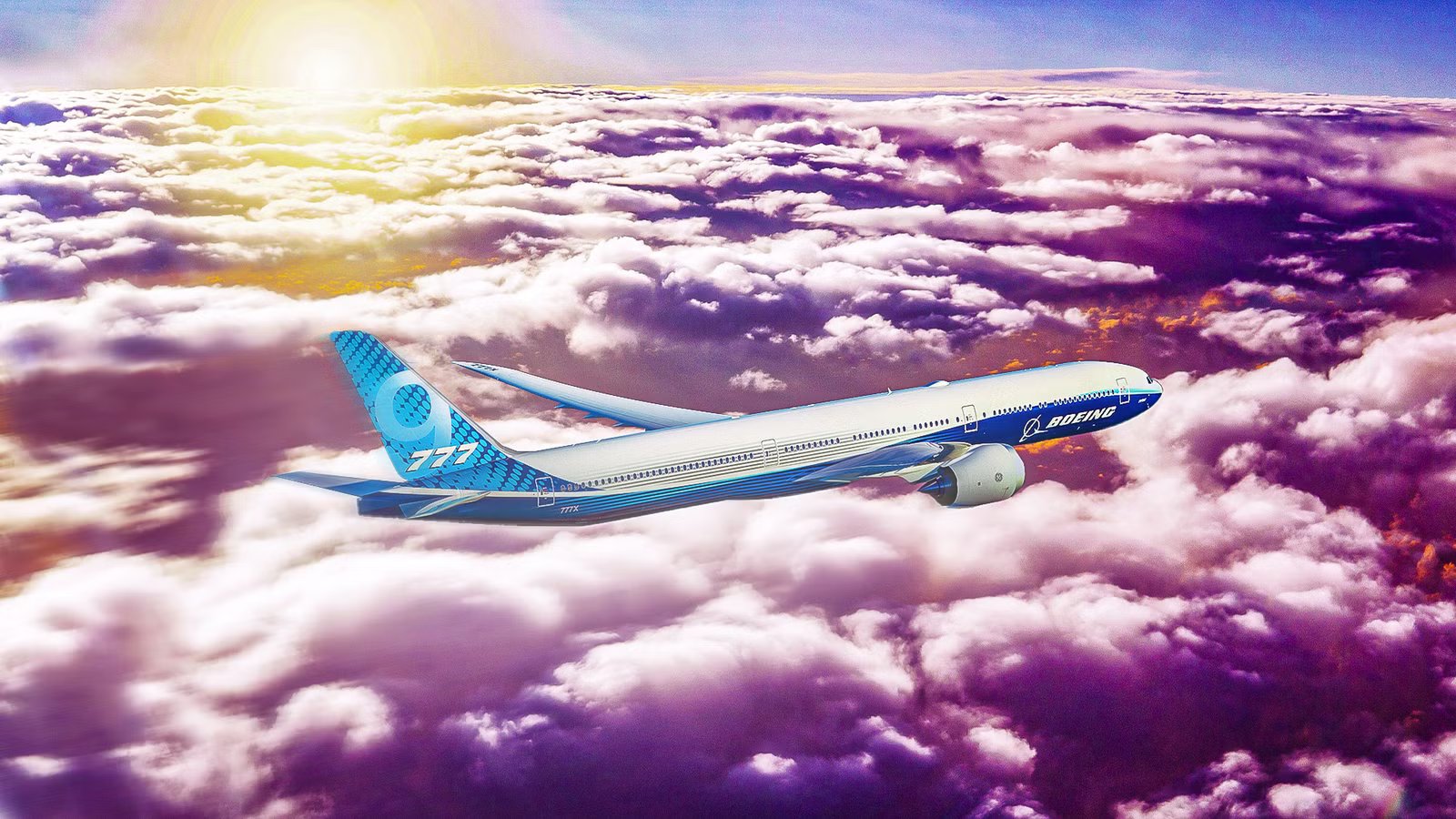
The Boeing 777X program has been a near-unmitigated catalog of failures that have dented its reputation and profits. Yet, the 777X program seems to be marching on thanks to the ongoing support of the airlines that have purchased the aircraft. The vast majority of purchases have not been canceled. For a number of reasons, we can assume this pattern will continue, even though it’s testing the patience of many airlines.
This article explores the state of the 777X program and how the ongoing setbacks have impacted the aircraft’s most significant customers, Emirates and Lufthansa. It then explores why there has been little interest in canceling orders, although it must be said that Airbus has surely profited from increased interest in its Airbus A350 as a result of the damage to Boeing.
Where Is The 777X Program Now?

In October 2025, Boeing once more pushed the date for the first deliveries of its 777X aircraft to 2027, seven years past the initially planned 2020 date. The delays cost the manufacturer an additional $4.9 billion. That raised the cost of overruns to an astonishing and humiliating $15 billion. The delays were due to ongoing problems getting the aircraft FAA certified, particularly involving the General Electric GE9X’s durability issues during high-compression stages. Another issue was flight control redundancies. The 2027 date only applies to the Boeing 777-9, the most popular 777X model, with other variants expected to have even longer waits before delivery.
It is also important to note that not all of the ordered 777Xs, currently standing at 35 Boeing 777-8s, 521 777-9s, and 63 Boeing 777-8Fs, will be delivered rapidly once deliveries of the jet begin. Airlines can expect to have to wait at least several years for their ordered planes to arrive and enter into service. The table below details the top carriers by 777X orders:
Airline | Number of 777Xs ordered |
|---|---|
Emirates | 270 |
Qatar Airways | 124 |
Cathay Pacific | 35 |
Singapore Airlines | 31 |
Lufthansa | 27 |
IAG (on behalf of British Airways) | 24 |
China Airlines | 23 |
All Nippon Airways | 20 |
Korean Air | 20 |
These carriers are now exposed to serious financial and operational risk. Most planned to use the 777X to replace outdated jets. Previous-generation aircraft like the Boeing 747 are coming towards the end of their operational life. The failure of the 777X to arrive means that the carriers who ordered the plane will have to deal with a rapidly approaching capacity problem. Even carriers that can keep their old jets in the skies will have to deal with astronomically higher operating costs, as the 777X promised them an exceptionally low fuel burn. Yet, there are limited signs that the airlines that are waiting for significant 777X orders will cancel.
Emirates Will Be The Most Exposed

As the carrier with the strongest commitment to the 777X, it is unsurprising that Emirates has found itself most exposed. The carrier added another 65 aircraft to its order in November 2025, giving it an order sheet of 270 aircraft. As reported by The Flying Engineer, Emirates President Sir Tim Clark has stated: “We need these aircraft yesterday. Every month of delay costs us operational flexibility.”
To deal with the chance of suddenly losing capacity, Emirates has decided to extend the lives of its aging Boeing 777-300ER, pushing these aircraft long past their optimal retirement window. The decision represents a significant investment, as the carrier will face increased maintenance costs of $2-4 million each year. The airline has also invested $5 billion to retrofit its Airbus A380 and Boeing 777-300ER fleets to ensure they are consistent with the passenger experience the airline aims to produce.
The table below shows the technical specifications that Emirates and other 777X customers hoped to benefit from through ownership of the jet, including both the 777-8 and 777-9. It utilizes data from Boeing:
Specification | 777-8 | 777-9 |
|---|---|---|
Passengers (two-class) | 395 | 426 |
Range | 8,745 nautical miles (16,190 km) | 7,285 nautical miles (13,500 km) |
Length | 232 feet, 6 inches (70.9 meters) | 251 feet, 9 inches (76.7 meters) |
Wingspan | Extended: 235 feet, 5 inches (71.8 meters) | On ground: 212 feet, 9 inches (64.9 meters) | Extended: 235 feet, 5 inches (71.8 meters) | On ground: 212 feet, 9 inches (64.9 meters) |
Height | 64 feet, 1 inches (19.5 meters) | 64 feet, 1 inches (19.5 meters) |
Emirates has also looked to Boeing’s chief rival, Airbus, for an answer to capacity and inefficiency problems. In November 2025, Emirates announced an order of eight more Airbus A350-900 at the Dubai Airshow in a deal worth $3.4 billion. “The Emirates A350’s entry into service last November has given us welcome additional capacity. It has also enabled us to introduce Emirates’ latest inflight products to more customers,” said HH Sheikh Ahmed bin Saeed Al Maktoum, Chairman and Chief Executive, Emirates Airline and Group.

Emirates CEO Blasts Boeing For Pushing Back 777X Deliveries Again
Emirates’ Frustration Grows as Boeing Delays 777X Deliveries Yet Again
Lufthansa Will Use Older Aircraft To Stay Afloat

As reported by Simple Flying’s Jake Hardiman, Lufthansa’s CEO Carsten Spohr recently revealed their plan B should their expected 777Xs be further delayed, although Spohr remains confident that his firm will still receive its first jets in 2027. The center of the plan is using both old and incoming alternative aircraft to fill any capacity gaps. Spohr said, “I think what’s more important is that we have got 27 long-haul aircraft arriving this year. This equates to a new aircraft almost every week, if you include the shorter-haul jets too.”
Simultaneously, Lufthansa is taking a bold step toward ending its use of inefficient legacy aircraft for good. The change comes as part of a restructuring initiative in response to rising fuel prices. October 6 will see the grounding of the German flag carrier’s remaining Airbus A340-600s.
The table below uses Planespotters.net data to reveal the state of Lufthansa’s aging widebody fleet:
Aircraft type | In service | Parked | Total | Average age (years) |
|---|---|---|---|---|
Airbus A330 | 5 | None | 5 | 15.4 |
Airbus A340 | 16 | None | 16 | 24.1 |
Airbus A350 | 31 | None | 31 | 6 |
Airbus A380 | 6 | 2 | 8 | 14.1 |
Boeing 747 | 23 | 3 | 26 | 16.7 |
Boeing 787 | 16 | None | 16 | 2.9 |
Spohr has also confirmed that “at least temporarily, in the winter, two to four 747-400s will be removed from the fleet.” These aircraft may see a short return in the summer of 2027, with the decision surely hinging on the arrival of any 777Xs.
US Carriers Won’t Be Exposed

A notable absence from the 777X order sheet is any US carriers. Although other variants of the 777 have found popularity on the continent, the American commercial aviation sector has shown no interest in Boeing’s latest widebody. As a result, no US carrier has to contemplate its position in the 777X queue and whether it’s better to double down or cut its losses.
Catch what other flight trackers miss
Emergency squawks, holds, NOTAMs — live signals, no signup.
Open tracker
Catch what other flight trackers miss
Emergency squawks, holds, NOTAMs — live signals, no signup.
Open tracker
There are a number of reasons that the US’s legacy carriers have decided not to take the risk of the 777X. Most importantly, it is too big to be suited to the US market. Although bearing the 777 name, this plane is designed to replace the outgoing 747 and A380. But smaller widebody aircraft, like the A350, 787, and A330neo, have proven more popular in this context. Carriers like Delta Air Lines and United have shown success by taking advantage of reduced load-factor pressure. As such, there may be a market for the 777-8 in the future. This smaller variant is in competition with the A350 to replace 777-200ERs and other similarly sized legacy widebody planes. However, these jets still have years of life left before they become truly obsolete.
Any US airlines that could be interested will surely decide to wait out any further problems before they take the plunge. However, any solid suggestions about whether this will be the case can only be speculation among avgeeks. As one user commented below a recent Simple Flying article on this subject, which labeled the 777X impractical for the US, “Eventually they will buy it. I can see United for sure, and eventually American. I think Delta is committed to Airbus.”
The problem-strewn past of the 777X’s development will also have had an impact. Even areas of the US commercial aviation sector where the 777X could make sense will surely be put off by the chances of additional setbacks and capacity issues.

Why Don’t Any US Airlines Want To Order The World’s Largest Twinjet?
Explore why America’s best new widebody jet is not expected to fly in any US airline colors.
Why Airlines Aren’t Looking To Cancel Their 777X Orders

The ongoing purchases for most 777X customers, bolstered by the additional Emirates order — made in full knowledge of the delays, indicate that Boeing’s failures cannot push airlines away from the enormous twinjet. The same point is made by Cathay Pacific’s order for 14 more 777-9s.
These commitments show that the 777X offers customers a unique blend of capacity and efficiency that Airbus has no answer for. Cancelations would cede a company’s position within the queue to receive what is set to be an era-defining aircraft. That fact makes putting up with the rampant uncertainty and investing vast sums in keeping old planes limping along worth it. Perhaps then, the continuing commitment to the 777X should not be seen as confidence in  Boeing, but an acknowledgment that maintaining its position on the order sheet will serve as essential strategic leverage for the decade to come.