dailynewsnblog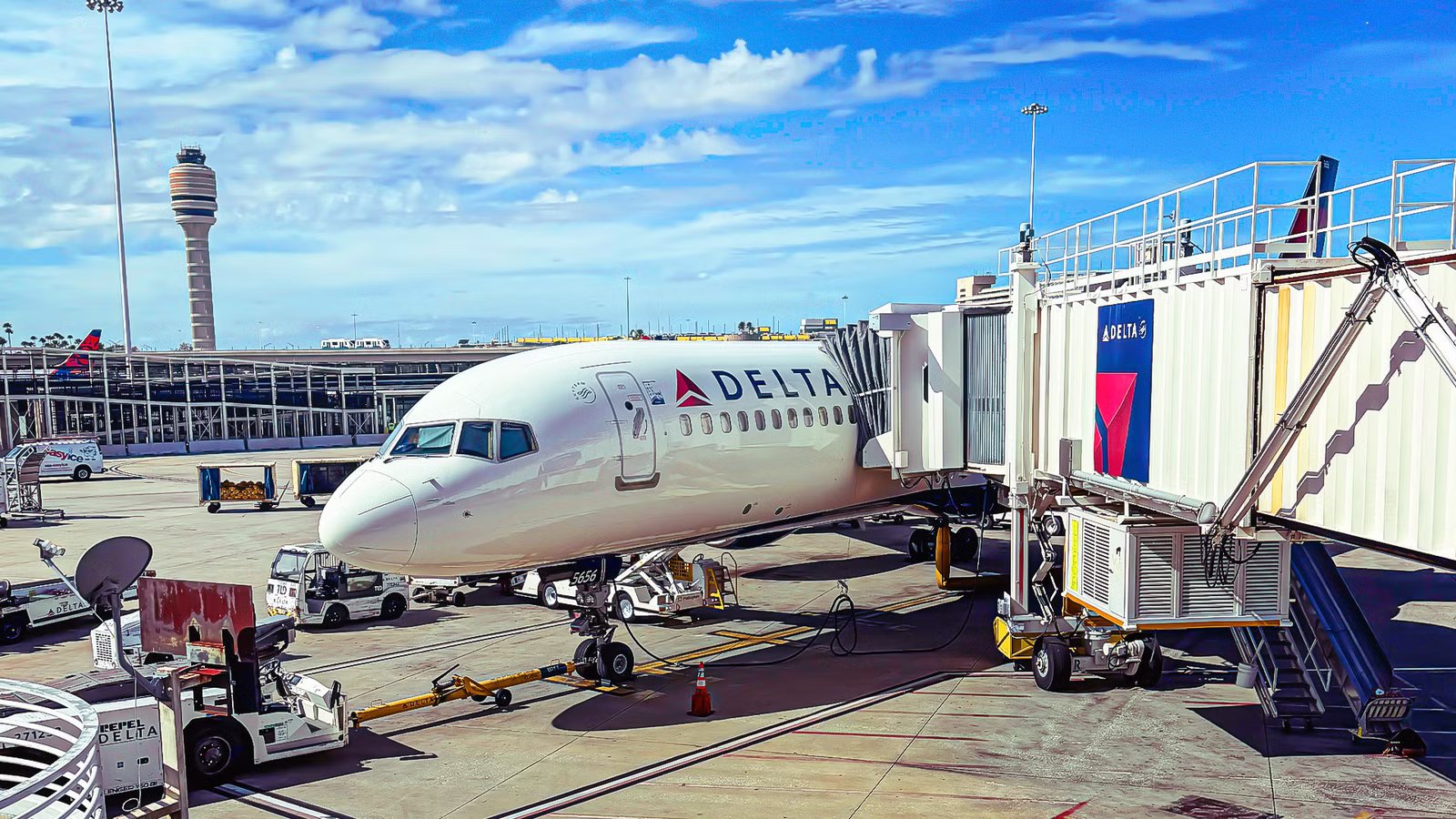
How Widebody Aircraft Board And Why Narrowbodies Usually Can’t

Most commercial aircraft board from a single door at the front of the cabin. On a narrowbody like a Boeing 737 or Airbus A320, passengers enter through door 1L at the nose, turn toward their seat, and fill the cabin from front to back or in whatever sequence the airline’s boarding process dictates. The process works because the cabin is a single continuous space with no structural reason to divide it at the boarding stage.
Widebody aircraft operate differently. A Boeing 777 or Airbus A380 routinely uses multiple boarding doors simultaneously, often with separate jetbridges connecting to both the forward and mid-cabin doors. This reduces boarding time on aircraft carrying 300 to 500 passengers by splitting traffic across multiple entry points rather than funneling everyone through one door. The fuselage width and twin-aisle layout make simultaneous multi-door boarding practical in a way that a single-aisle cabin does not naturally support.
The Boeing 757 sits outside both of those categories. It is a narrowbody with a single aisle, but it boards from its second door rather than its first on routes where gate infrastructure allows it. That makes it the only narrowbody in regular commercial service that routinely replicates the mid-cabin boarding behavior of widebody aircraft. The reason has nothing to do with passenger experience design. It is a consequence of where Boeing placed the wings.
How The 757’s Length Created A Mid-Cabin Door

The Boeing 757-200 is 155 feet (47.24 meters) long, making it one of the longest narrowbody aircraft ever built and significantly longer than the aircraft it is most often compared to. The 737-800 is 129 feet (39.31 meters), and the A321 is 146 feet (44.5 meters). That length has direct implications for how the aircraft must be configured to meet FAA and EASA emergency evacuation requirements, which mandate that exits be spaced along the cabin at intervals sufficient to allow full evacuation within 90 seconds. A longer cabin requires more exits, and those exits must be distributed along the fuselage rather than concentrated at one end.
On the 757, the standard exit arrangement includes two full door sets forward of the wing, two over-wing exits, and one or two door sets aft of the wing. The second set of forward doors, door 2L and 2R, exists specifically because the forward section of the cabin is long enough to require its own dedicated evacuation capacity. On shorter narrowbodies, the forward cabin is compact enough that a single forward door set combined with over-wing exits satisfies the spacing requirement.
The door’s position on the fuselage also gives it enough physical clearance to accommodate a jetbridge without conflicting with the engines or the wing structure. That clearance is what makes it usable as a boarding door in normal operations rather than just an emergency exit, and it is not something that can be taken for granted on a narrowbody. It is the combination of the door’s position along the cabin and its clearance from the surrounding structure that makes mid-cabin boarding on the 757 operationally practical.
How Cabin Crew Rest & Sleep On The Airbus A380
Crewmembers are able to rest comfortably onboard the A380.
What Mid-Cabin Boarding Actually Does For Airlines

When a 757 boards from door 2L, all passengers use the same door. First class passengers turn left toward the nose, and economy passengers turn right toward the rear. Splitting the boarding flow in both directions from a central point means the two groups are not competing for the same aisle space at the same time.
Catch what other flight trackers miss
Emergency squawks, holds, NOTAMs — live signals, no signup.
Open tracker
Catch what other flight trackers miss
Emergency squawks, holds, NOTAMs — live signals, no signup.
Open tracker
First class passengers settling into their seats do not block or slow the economy boarding process, and economy passengers moving toward the rear do not disrupt the premium cabin. The result is a more efficient overall boarding process than a single forward-entry narrowbody typically produces, with traffic moving in two directions simultaneously rather than accumulating from the front and working rearward through the entire cabin.
The second benefit is less operational and more experiential. First class passengers board into a cabin that economy passengers do not enter. The premium section sits physically beyond the boarding door, closed off from coach traffic for the duration of boarding. Passengers turning left into a cabin that no one else walks through during boarding get a meaningfully different experience than passengers economy section that doubles as a corridor for the rest of the aircraft.
Why The A321 Cannot Replicate It

American Airlines operated both the 757 and the A321 on premium transcontinental routes and wanted to replicate the mid-cabin boarding process on the Airbus. The original A321 has a door 2L positioned ahead of the wing, which appears to offer the same opportunity as the 757. In practice, it does not. The A321 is a shorter aircraft, and its door 2L sits considerably closer to the engine than on the 757. American concluded that the risk of a jetbridge contacting the engine during docking outweighed the operational benefit, and mid-cabin boarding was not implemented as a standard feature on the type.
It is worth noting that this applies specifically to the classic A321. The A321neo in Airbus Cabin Flex configuration is a different matter entirely. ACF moves door 2 aft of the wing rather than keeping it forward of it, a change driven by cabin efficiency rather than any consideration of the boarding process. With door 2 positioned behind the wing on an ACF aircraft, the door no longer sits at the premium and economy boundary in the way the 757’s door 2L does. It sits further back in what is typically an economy cabin space.
The ACF configuration exists because Airbus was able to relocate the over-wing emergency exits from full cabin doors to smaller Type-III exits integrated into the fuselage above the wing. On the classic A321, full-size doors were required at the over-wing position to meet evacuation certification requirements, given the aircraft’s passenger capacity. On the ACF-configured A321neo, Airbus received certification for a different exit arrangement that satisfies the same evacuation standards without requiring a full door at that position. That change freed up the door 2 slot to be moved aft, increasing usable cabin floor space in the premium zone and giving airlines more flexibility in how they configure the forward cabin.
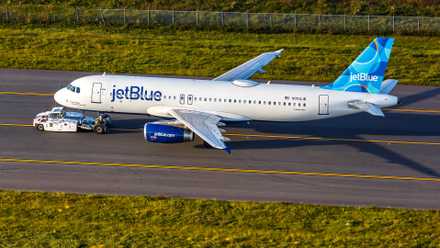
“Capacity Crisis”: JetBlue To Exit Manchester-Boston Regional Airport This Summer
It comes less than two years after the airline launched operations at the New Hampshire airport.
When It Doesn’t Work And What Replaces The 757

Mid-cabin boarding on the 757 only works when the gate’s jetbridge can physically reach door 2L. At airports where the terminal layout, ramp geometry, or jetbridge reach prevents connection to the second door, airlines board from door 1L at the nose, and the process reverts to a standard single-door narrowbody operation. The feature is infrastructure-dependent, which means its availability varies by station even within the same airline’s network.
The aircraft most directly positioned to replace the 757 is the A321neo. It is being positioned as a tool for opening or sustaining thin long-haul and medium long-haul markets that cannot support a widebody but require more range than a standard narrowbody can deliver. The A321XLR in particular, with a range of approximately 4,700 nautical miles (8,704 km), opens point-to-point transatlantic routing options that the 757 has served for decades. For airlines evaluating whether to launch or sustain service on those routes, the XLR (or LR as well) is currently the only credible single-aisle option available in production.
What those aircraft do not carry forward is the boarding arrangement. The A321XLR uses the ACF door configuration as standard, and as covered earlier, that layout does not produce a forward mid-cabin door at the premium and economy boundary. Airlines transitioning from the 757 to the XLR on premium routes will board from the nose like any other narrowbody. The boarding process is not why airlines are making that transition, and it is not a factor that meaningfully delays it. It is simply one characteristic of the 757 that the aircraft replacing it does not replicate.