dailynewsnblog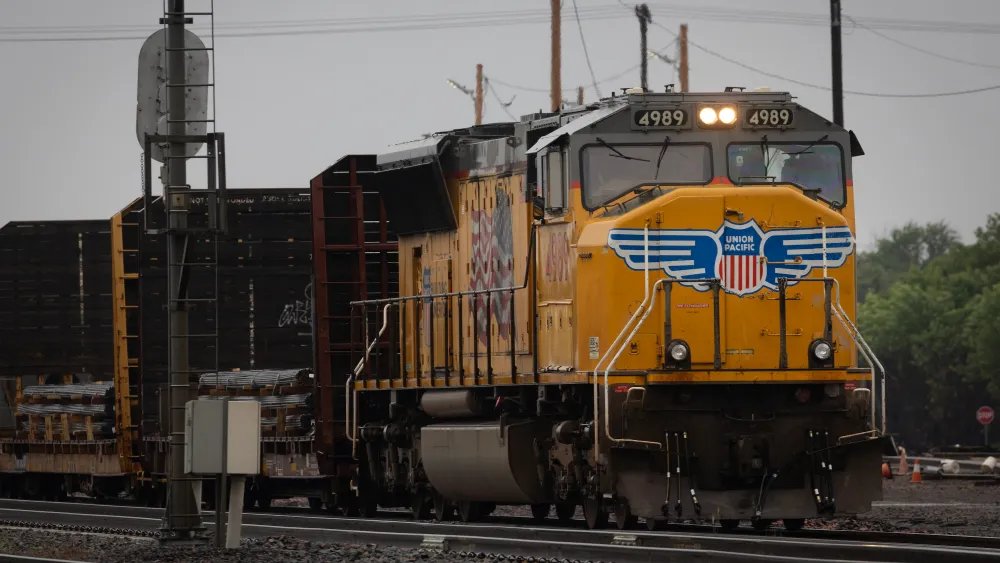
The railroad industry’s chief regulatory body is putting its review of the Union Pacific–Norfolk Southern proposed $85 billion merger on hold, requiring the railroads to provide additional information before the deal can be further evaluated.
The Surface Transportation Board (STB) accepted the merger application but paused the review, indicating it would later establish an appropriate schedule for the rest of the proceeding.
“There are several aspects of the revised application that are unclear or underdeveloped and require supplementation,” said the STB in a 42-page decision on Thursday. Union Pacific and Norfolk Southern will have to provide additional details by July 27.
The railroads acknowledged the STB’s request and said they would “work constructively” with the STB.
On Saturday, a report from Fortune indicated that President Donald Trump has floated the idea of the U.S. government taking a 15 percent stake in a “very big” railroad merger. Although the Commander in Chief did not cite any railroads, the UP-Norfolk Southern acquisition is the only known such deal that would fit the bill.
The federal government taking an equity stake in two merging public companies would have been unusual prior to last year. But the Trump administration has since pushed forward with multiple investments in U.S. corporations including Intel and several minerals firms—all part of industries that the government deems vital for national security.
According to the Fortune report, both railroads declined the stake. But Trump argued they will reconsider. “They said ‘no,’ but they’ll say ‘yes,’” the president said.
Union Pacific is a corporate donor to Trump’s ballroom project at the White House, with CEO Jim Vena having met with members of the administration last year. Both Trump and Commerce Secretary Howard Lutnick have publicly supported the proposed merger.
As for the status of the merger filing, the STB has 12 months from the date it publishes its acceptance to complete its evidentiary proceeding.
While the regulator said the application “does not contain the level of detail on certain issues that the board would have preferred,” it conceded that the issues raised in the comments do not warrant an outright rejection.
Union Pacific and Norfolk Southern filed the application on April 30, marking the companies’ second filing attempt. The STB rejected the first filing in January, calling it incomplete and citing inconsistencies in expected market share projections.
Vena and Norfolk Southern president and CEO Mark George both said they remained confident that the merger would bring more reliable, lower-cost railroad services to U.S. customers.
“We submitted a comprehensive, data-driven application backed by a detailed plan for seamless integration,” said Vena in a statement. “We look forward to the opportunity to show the facts and demonstrate the benefits for our customers, employees and America.”
The board said the revised application raises substantial questions about how the merger would enhance competition, particularly related to the firms’ proposed “committed gateway pricing” model and the potential reduction of railroad options. In the case of the letter, a number of sites across the Union Pacific and Norfolk Southern networks will see options reduced from two railroads to one or three railroads to two.
UP and NS argue that a transcontinental railroad would create a stronger alternative to long-haul trucking, removing an estimated 2.1 million truckloads off the road annually within three years. The railroads said the shifting freight from higher-cost trucks to lower-cost rail is projected to save shippers an estimated $3.5 billion annually, with the companies indicating wholesale and bulk customers would save on inventory and equipment costs.
The STB is seeking more details regarding the trucking-to-rail conversion figure, requesting whether the projection assumes that there would not be a competitive response from other railroads and trucking firms. The railroads would have to identify and describe the most likely responses to the transaction and explain how each of those responses would impact their ability to attract new traffic.
Competing Class I railroads operating across the U.S. and Canada including BNSF Railway, CSX, Canadian Pacific Kansas City (CPKC) and Canadian National (CN) all welcomed the board’s decision to hold up the acquisition.
Union Pacific and Norfolk Southern still expect the transaction to be completed in mid-2027.
A merger between the railroad giants would connect more than 50,000 miles of tracks across 43 states, combining Union Pacific’s presence in 23 states in the western and Midwestern U.S., along with Norfolk Southern’s network across 22 states on the East Coast, southeast and Midwest.