dailynewsnblog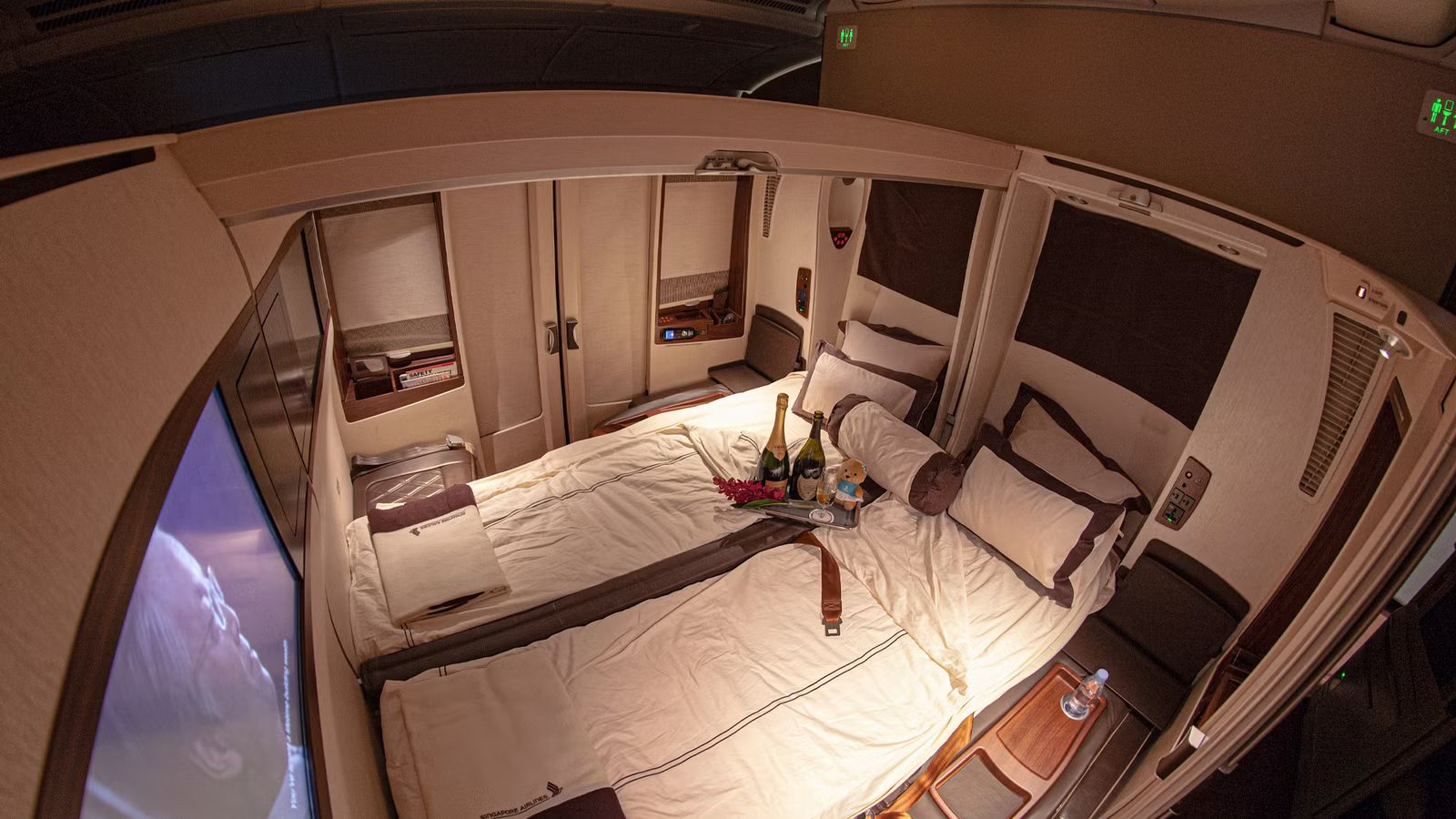
Top Of The Cost Charts

Purchasing a ticket in this ultra-premium cabin with cash is a massive financial commitment that naturally limits the passenger roster to elite circles. Standard retail rates for a single long-haul sector routinely hover in the five-figure range, establishing a formidable barrier to entry. Seasonal fluctuations and specific routing choices influence the final tally, but the baseline cost remains remarkably rigid across the international network.
A definitive benchmark was recently established by an independent passenger who documented a raw cash outlay of $13,980 for a standard point-to-point journey, completely devoid of any loyalty points or promotional discounts. On highly competitive routes, round-trip ticket packages regularly scale upward to approximately $17,000, whereas a standalone one-way segment on the exact same corridor costs roughly $10,000. The premier London–Singapore itinerary represents the longest voyage in the current superjumbo network and can sometimes cost over $20,000.
These numbers reflect the scarcity of the product, as airlines must claw back the immense real estate costs associated with dedicating vast swaths of the upper deck to just six people. Corporate travel desks and luxury concierge services manage the bulk of these cash bookings, often utilizing corporate contracts to secure blocks of seats for multinational executives. The sheer capital needed shows why this cabin functions as a critical halo product, elevating the brand prestige of the carrier while generating massive revenue from a microscopic fraction of the passenger manifest.
Game Of Musical Chairs

Global network planning for a double-decker fleet always rests on a battle between airport slot constraints and localized passenger demand. Because the massive airframe requires specific gate configurations and high runway compatibility, the airline carefully isolates its operation to key high-density global hubs. Today, this deployment strategy has become increasingly agile, rapidly shifting resources to protect profit margins amid international geopolitical disruptions.
Singapore Airlines currently schedules the double-decker aircraft on consistent rotations to Delhi, Mumbai, and Shanghai through October 2026. However, regional instability in the Middle East forced a temporary suspension of the high-profile Singapore–Dubai route, prompting scheduling planners to pivot their capacity elsewhere. This sudden equipment redirection resulted in Melbourne being added to the network from March 29 to October 24, 2026, handing Australian travelers a rare window of opportunity to experience the flagship product.
Making all of these changes highlights the volatile nature of operating a specialized sub-fleet of 12 highly customized aircraft. When a high-yield business destination faces operational headwinds, the carrier cannot afford to let its ultra-luxurious capital assets sit idle on the tarmac at Changi Airport. Redirecting a superjumbo to the Australian continent demonstrates how the airline leverages luxury leisure demand to absorb capacity when traditional corporate pathways encounter unforeseen turbulence.
What Are The Benefits Of Flying Singapore Airlines’ First Class?
A closer look at the unparalleled luxury and exclusivity of Singapore Airlines’ First Class experience.
Exclusivity Even With Points

Bypassing the formidable cash requirements of this elite cabin leads many aspirational flyers straight into the world of frequent flyer miles. However, the carrier guards its most luxurious product with a strict policy of loyalty isolationism, making standard alliance partnerships useless for booking purposes. Travelers hoping to land a seat must play strictly within the boundaries of the airline’s proprietary ecosystem, accumulating points directly within a single centralized program.
This localized restriction means that partner airlines are completely blocked from accessing award space, forcing everyone to book exclusively through the KrisFlyer program. The mileage requirements vary widely based on the physical distance of the route, starting at a modest baseline of 47,500 miles for brief regional hops like Hong Kong. Conversely, long-haul journeys demand a much deeper points vault, requiring a significant sum of 100,000 miles or more.
There are only vacancies for six spaces on the entire aircraft, so the airline frequently holds back inventory for cash-paying customers until the final days before departure. Some frequent flyers often utilize waitlist strategies or accumulate substantial mileage balances to lock in higher-tier awards when the baseline options evaporate. Getting around these internal mechanics is the only reliable way to trade credit card points for a private enclosed room in the clouds, making the front of the cabin that little bit more out of reach.
Keeping Seat Count Low

Achieving a ticket through these cash or mileage pathways ultimately grants passengers access to one of the most meticulously engineered environments in commercial aviation history. The layout of this flagship product is quite the departure from traditional first class seating, functioning as if it were a five-star hotel, almost. By restricting the total capacity to a microscopic level, the carrier ensures an atmosphere of absolute quiet and individualized attention throughout the flight.
Every single one of the 12 active superjumbos in the fleet features this updated layout, which concentrates just six individual rooms on the forward upper deck. Each private sanctuary contains a plush, full-grain leather reclining chair alongside a completely separate, standalone lie-flat bed, allowing passengers to relax without converting their main seat. A sliding privacy door seals the space completely from the aisle, creating a truly isolated haven. However, only the partitions between rows one and two, specifically seats 1A and 2A or 1F and 2F, can be lowered to create a unified double bed. Selecting row three leaves passengers separated by a permanent structural wall.
The luxury extends far beyond spatial geometry, as the onboard culinary program represents a significant portion of the ticket price. Flight attendants serve ultra-premium beverages like vintage Cristal champagne alongside multi-course caviar presentations shortly after takeoff. For routes crisscrossing key Asian commerce hubs, the kitchen offers curated Kyo-Kaiseki multi-course menus designed by Michelin-starred culinary masters.
Simple Flying Quiz
Easy (15s)Medium (10s)Hard (5s)
No Showers Onboard?

Given the extensive amount of space available on a double-decker aircraft, it is natural to assume that a product of this caliber would mirror every amenity found across the industry. However, the architectural philosophy guiding this cabin design prioritized continuous personal space over mid-flight grooming novelties.
Unlike its prominent Middle Eastern rival  Emirates, Singapore Airlines explicitly omitted onboard showers from its double-decker aircraft. Designers deliberately chose to allocate that precious upper-deck space toward expanding individual room dimensions rather than hauling thousands of pounds of fresh water across oceans. Instead of a shower stall, passengers have access to exceptionally large bathrooms outfitted with a dedicated sit-down makeup vanity, premium ambient lighting, and high-end grooming amenities.
This structural decision serves as an important point of comparison for frequent flyers who prioritize pure cabin space over a mid-flight rinse. Transporting massive water tanks adds immense weight to an aircraft, which increases fuel consumption and degrades overall flight efficiency. Focusing strictly on dry luxury, the carrier maximizes the usable square footage for each of the six passengers. The resulting layout provides a significantly wider room footprint than competing superjumbo products.
Plenty Of Value Before The Flight

The ultimate validation of this elite ticket status is what can be experienced pre-flight, beginning at the carrier’s primary hub in Changi Airport. The premium experience is heavily front-loaded with ground privileges designed to eliminate the standard stressors of international transit. From the moment a passenger arrives at the dedicated first class driveway, their journey is far removed from the general public.
Passengers holding these exclusive boarding passes gain access to The Private Room located inside Terminal 3, an ultra-secure airport sanctuary that bars entry to standard frequent flyers and alliance partners. This lounge-within-a-lounge is focused on privacy, offering fine à la carte dining and vintage champagnes in a tranquil environment. Experiencing this ground service reveals how the airline meticulously shields its highest-paying customers from the friction of standard terminal crowds, justifying the immense financial outlay before boarding even begins.
Maintaining a dedicated fleet of 12 highly customized superjumbos remains a brilliant branding decision for Singapore Airlines. Even as younger, twin-engine aircraft take over the bulk of global routes, the double-decker flagship serves as an indispensable marketing tool that anchors the airline’s reputation for luxury. For corporate executives, high-net-worth families, and milestone travelers, the immense financial outlay required to secure a suite continues to be justified by an uncompromising standard of privacy, space, and service.