dailynewsnblog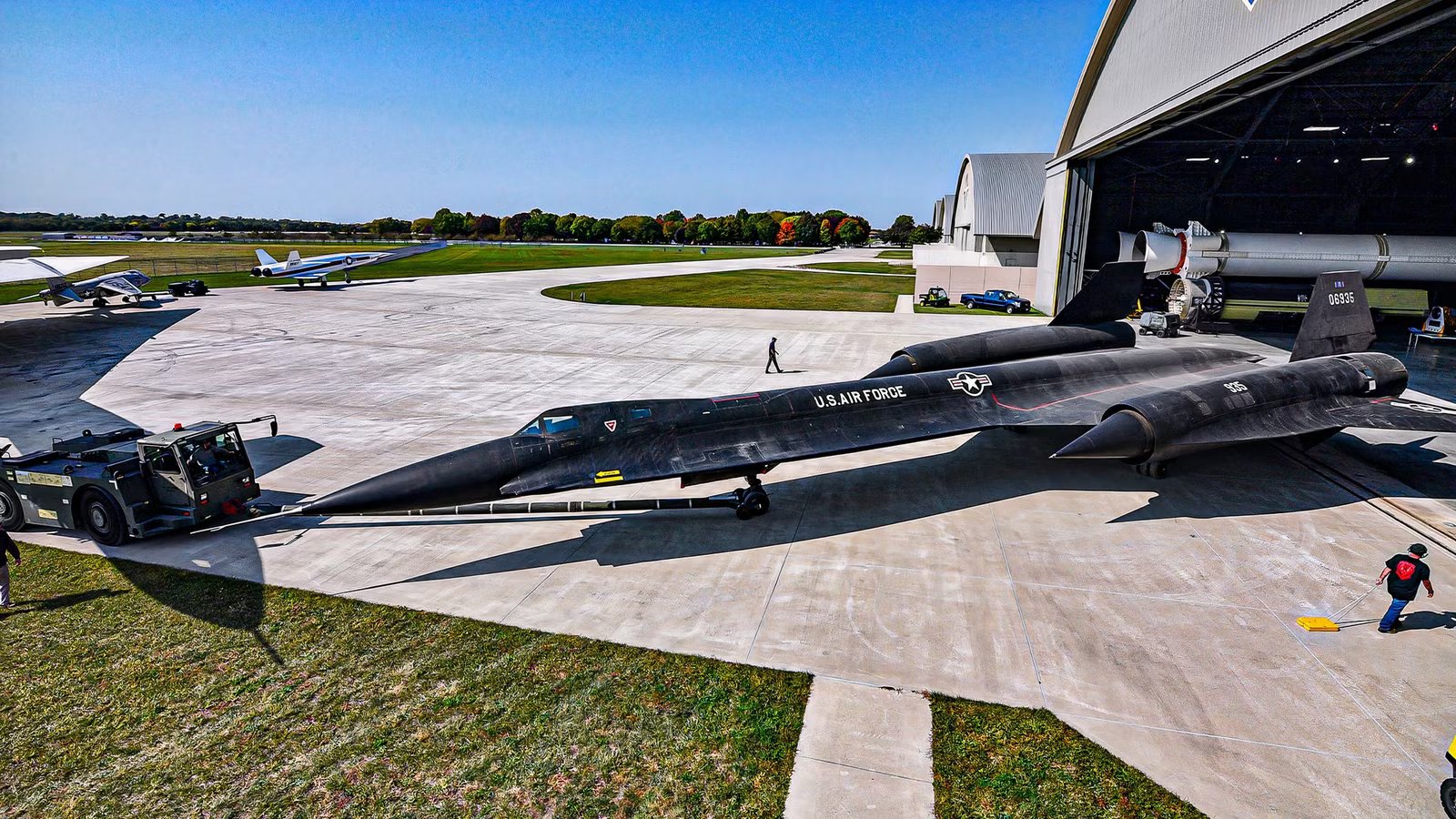
During the early years of the Cold War, US military planners were particularly concerned about the possibility of a large-scale nuclear strike. While the Soviet Union initially fielded prop-driven bombers, it later deployed more capable models such as the Tu-95, which significantly extended its intercontinental strike capability. In response to evolving air defense challenges, the United States developed advanced interceptor concepts, including the Lockheed Martin YF-12.
The Soviet Long-Range Bomber Threat

In the initial years of the Cold War, the nuclear arsenals of both the US and the Soviet Union were predominantly composed of gravity bombs, with the latter deploying its first nuclear-armed ballistic missile (R-7 Semyorka) in February 1959. Up until that point, and for the remainder of the Cold War, a nuclear attack carried out by long-range bombers never left the minds of military planners on both sides. As such, the bomber retained its place in the nuclear triads of each opposing superpower.
In the early 1950s, the primary extended-range bomber that the Soviet Union deployed was the Tupolev Tu-4. This aircraft was a reverse-engineered Boeing B-29 Superfortress. For Soviet military planners, the Tu-4 was foundational to their intercontinental bombing doctrine, as it served as the Soviets’ first credible long-range strategic bomber and bridged wartime aviation with a true nuclear deterrent. The range this aircraft gave the Soviets provided their military planners not only with strategic reach but also with a psychological weapon on par with US capabilities.
According to a 1954 Central Intelligence Agency (CIA) report, the Soviets had an estimated inventory of 1,000 Tu-4s in operational units, with 180 deployed to the Far East. By 1958, a separate CIA report noted that the Soviets had expanded their medium bomber fleet, particularly the Tupolev Tu-16 “Badger”. The report stated that, at that time, the Soviets maintained 900 Badgers and were producing 30 of these aircraft per month. Regarding a direct attack on the US, the latter report states that attacks could be carried out by:
“…staging through Arctic bases, Badgers could reach: Alaska, Greenland, and part of Canada on unrefueled two-way missions; more of Canada and a small portion of the US on refueled two-way missions; all of Canada and much of the US on unrefueled one-way missions; all US targets on refueled one-way missions.”
Additionally, the aforementioned report states that bases in the Chukotski region in north-east Siberia, the Kola peninsula, along the Baltic, and Eastern Germany were the geographically closest to the US. Further, the report goes on to detail that bases in Chukotski and the Kola Peninsula are particularly advantageous for a surprise attack, as great circle routes would avoid initial overflights of nations that were allied or friendly with the US.
The threat was real and, according to a report produced by Bulletin of the Atomic Scientists, the Soviet Union, in 1958, maintained an estimated stockpile of 8,322 nuclear warheads. At that time, the vast majority of that number would have been gravity bombs, ideally suited for delivery by the Tu-4 and the Tu-16.
A Look At The Bombers Used By The Russian Air Force
Still using the Tupolev Tu-95 turboprop as its long-range strategic bomber.
Interceptors Needed

Among other interceptors designed and manufactured to confront the threat posed by the Soviet bomber fleet was the experimental YF-12. Work on its development began in secret in the late 1950s at Lockheed’s Advanced Development Projects office, under its moniker, “Skunk Works,” as part of the broader A-12 program.
The interceptor variant itself emerged later, in the early 1960s (as part of the US Air Force KEDLOCK interceptor program), when the threat of a Soviet nuclear attack—plausibly delivered by Soviet bombers—was at its highest. Like the A-12, work on the YF-12 interceptor was performed by “Skunkworks”. The YF-12 made its first flight on August 7, 1963, and (according to NASA) set a speed record of 2,070.101 mph (3,332.68 km/h) and an altitude record of 80,257.65 feet (24,464.99 meters) by May 1, 1965.
|
YF-12A Specifications |
Related Data |
|---|---|
|
Armament |
Three Hughes AIM-47A missiles |
|
Engines |
2x Pratt & Whitney J58s of 32,000 lb (14,515 kg) thrust each (with afterburner) |
|
Crew |
Two |
|
Maximum speed |
Mach 3+ |
|
Range |
2,000+ miles (3,218+ km) |
|
Service ceiling |
Above 80,000 feet (24,384 meters) |
|
Weight |
127,000 lb (57,606 kg) when loaded |
The primary mission of the YF-12 was to intercept a new class of Soviet bombers, such as the Tupolev Tu-22 Blinder, long before they reached the United States and deliver their nuclear payloads. The Tu-22 entered service in 1962 and had an operational speed of Mach 0.85–0.95, with a maximum high-speed dash of up to Mach 1.2–1.4.
In order to accomplish its mission of intercepting incoming bombers, the YF-12 could carry three AIM-47 Falcon long-range air-to-air missiles. These were housed internally in a weapons bay on the underside of the fuselage (between the engine nacelles, similar to the A-12/SR-71 family). With a range of approximately 100 miles (160 km), the AIM-47 could more than decimate inbound Soviet bombers, long before they could reach their intended targets.
The United States Air Force (USAF) intended to procure approximately 100 YF-12s. However, only three were built between 1963 and 1964. The program never reached its full potential due to then Secretary of Defense Robert McNamara’s cancellation of KEDLOCK in early 1969 as a cost-cutting measure. Additionally, the three aircraft manufactured were never deployed operationally. While this aircraft never entered service, it did have a productive life as a test aircraft for both NASA and the USAF.
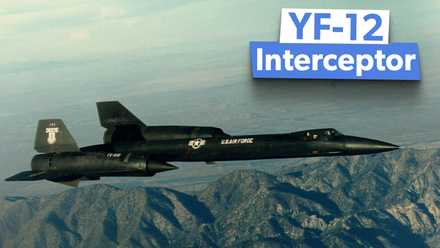
YF-12 Interceptor: The US’s Cold War Mach 3+ Defense Against Soviet Bombers
The experimental aircraft was never mass-produced.
The YF-12’s Highly Successful Role As A Test Aircraft

While their potential role as frontline aircraft for the defense of the United States was officially over, the YF-12 would serve the purpose of the USAF and NASA as a highly capable test aircraft for nearly ten years. On July 18, 1969, the aforementioned organizations announced a joint venture in a YF-12 research program. While the USAF focused on combat applications in its testing, NASA initially focused on flight loads and structural heating, with the majority of the research directed at the viability and development of supersonic cruise aircraft.
The two aircraft used in this testing were removed from USAF storage (tail numbers 935 and 936). The inaugural flight of this testing program was made on December 11, 1969, with 935 making its first flight as a research plane. For NASA’s purposes, the utility of the YF-12 came in the form of its ability to sustain a cruise speed of greater than Mach 3.According to NASA, a “…large amount of flight research was performed in aerodynamics, propulsion, controls, structures, subsystems, and other areas such as the physics of the upper atmosphere, noise tests and measurements, and handling qualities.” This program was successful in generating more than 125 technical reports, with the combined ground and flight research later incorporated into the design of future supersonic aircraft.
During its nine-year lifespan as a test aircraft, the YF-12’s in the joint program logged 297 flights and approximately 450 flight hours. Unless these aircraft were grounded for maintenance or modification, they were in the air nearly every week throughout the project. Regarding the latter, the program was officially terminated in 1977.
It Was Too Good, And Times Were Rapidly Changing

Despite its performance advantages, the YF-12 came with significant operational and economic drawbacks. Its titanium airframe and J58 engines required intensive maintenance, and sustained Mach 3 flight imposed extreme thermal stress on the structure. Even a limited fleet would have been expensive to sustain, particularly given the specialized logistics and low economies of scale associated with the platform.
By the mid-1960s, however, the strategic environment had shifted. The perceived threat of large Soviet bomber formations declined as intercontinental ballistic missiles became the dominant nuclear delivery system. In response, US defense priorities increasingly focused on survivable second-strike capabilities and the broader nuclear deterrent, including systems such as the LGM-30 Minuteman, the UGM-27 Polaris, and the strategic bomber force exemplified by the Boeing B-52 Stratofortress.