dailynewsnblog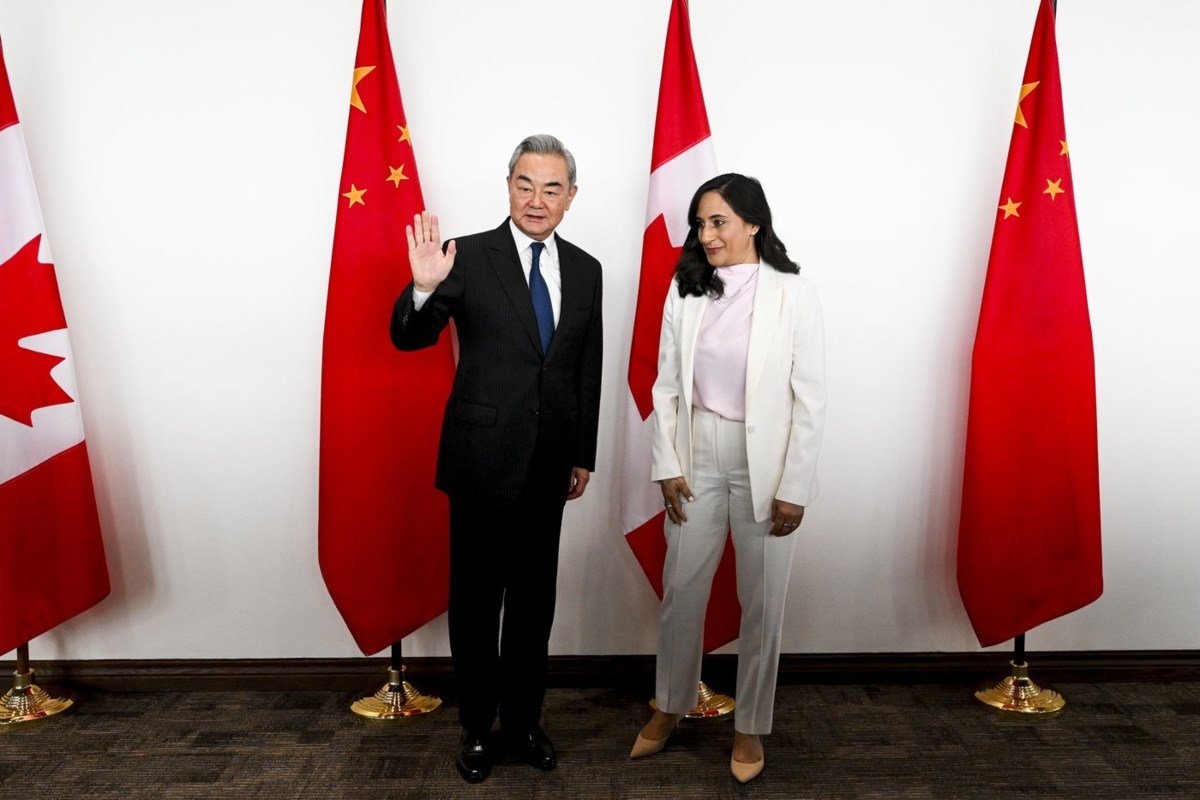

OTTAWA — Just days after a Canadian warship passed through the Taiwan Strait — defying Beijing’s warning that such transits undermine the bilateral relationship — Foreign Affairs Minister Anita Anand welcomed her Chinese counterpart Wang Yi to Ottawa
OTTAWA — Just days after a Canadian warship passed through the Taiwan Strait — defying Beijing’s warning that such transits undermine the bilateral relationship — Foreign Affairs Minister Anita Anand welcomed her Chinese counterpart Wang Yi to Ottawa on Friday for the first such visit in a decade.
Canada aims to increase exports to China by 50 per cent by 2030 while safeguarding Canada’s economic and national security interests and values, Anand said as she down with Wang and his entourage.
Echoing a trade target set by Prime Minister Mark Carney following his visit to Beijing earlier this year, Anand said Canada and China’s leaders have set out a clear and ambitious vision for the countries’ “recalibrated relationship.”
“It includes elevated engagement and co-operation on trade and investment, energy, finance, public security and safety, and people-to-people ties,” she said alongside Wang and his delegation at the Global Affairs Canada headquarters in Ottawa.
“At the same time, each of our countries must address critical issues and priorities to ensure the safety and security of our peoples.”
Wang’s visit to Ottawa is the first for a Chinese foreign minister in 10 years. He is also meeting Carney on Friday.
Anand said Canada is focused on growing its economy and diversifying its trading relationships and will address the Canada-China relationship “responsibly.”
In his remarks, Wang said Canada could surpass its trade goal and even double exports to China if the relationship is maintained.
He said China will soon become the largest market in the world and that it’s open to Canada.
The prime minister visited China in January and met with President Xi Jinping.
Canada and China reached a preliminary trade deal after Carney’s visit, when Beijing agreed to lower or eliminate some tariffs on Canadian agriculture products and Canada agreed to reduce tariffs on some Chinese electric vehicles.
On Thursday, Carney said the meetings in China were important because diplomatic relations had broken down, trade had been undermined by a series of tariffs and the relationship was “in need of a reset.”
Relations between the Canadian and Chinese governments deteriorated after the detention of Huawei CFO Meng Wanzhou by Canada in 2018 and the subsequent detention of Canadians Michael Spavor and Michael Kovrig in China.
Wang and Anand were expected to discuss the recently updated Canada-China Strategic Partnership, trade, investment and global security.
The fate of Taiwan also could come up during the visit.
Beijing’s envoy recently told The Globe and Mail that while he was optimistic about warming relations between Canada and China, official visits by Canadian lawmakers to Taiwan — which China claims as part of its territory — and transits of Canadian military vessels through the Taiwan Strait would risk setting back that progress.
Despite the warning, National Defence spokesperson Andrée-Anne Poulin said this week that the HMCS Charlottetown conducted a routine transit through the Taiwan Strait between May 22 and May 23.
Conservative MP Michael Chong met with Taiwan’s President Lai Ching-te earlier this month. He said the meeting was meant to assert Canadian sovereignty in the face of Beijing’s warnings to Canadian lawmakers.
This report by The Canadian Press was first published May 29, 2026.
Catherine Morrison, The Canadian Press