dailynewsnblog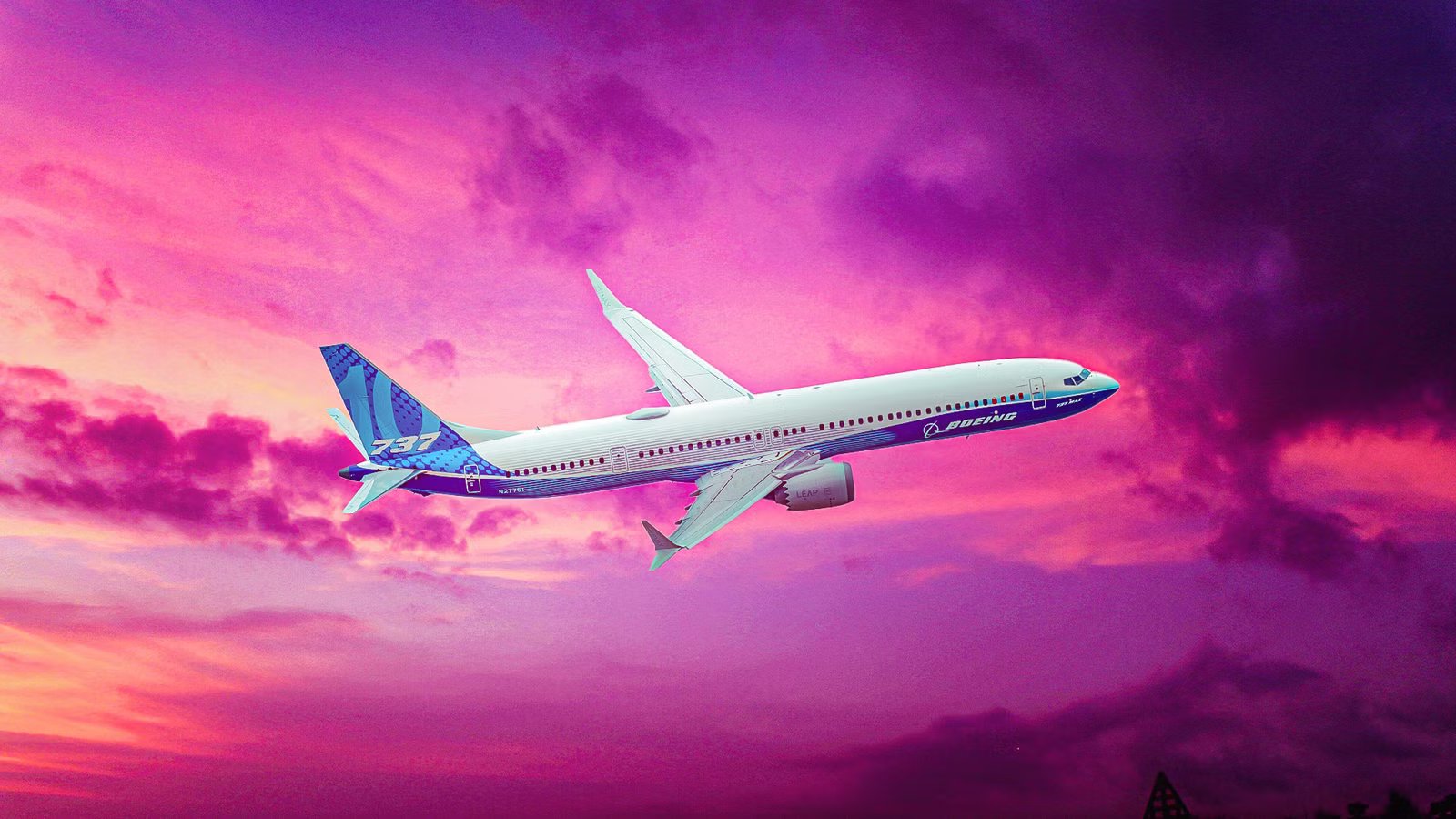
Commercial aviation is one of the safest forms of travel ever created. Serious incidents, accidents and fatal crashes are exceptionally rare: IATA’s 2025 safety report recorded 51 accidents across 38.7 million flights, or roughly one accident for every 760,000 flights. Only eight of those accidents involved fatalities, or roughly one fatal accident per five million flights.
But occasionally, tragedy strikes. A routine flight vanishes from radar. Wreckage is found across an ocean, a forest, a field, or a runway. Investigators recover twisted metal, flight data recorders, maintenance records, certification documents, and warning signs that suddenly look far more ominous in hindsight. Then comes the question that turns an accident into a scandal: how was this allowed to happen?
These are the controversial aircraft that turned from symbols of progress into front-page scandals. They promised speed, comfort, efficiency, or a bold new future for air travel. Instead, they exposed hidden design flaws, missed warnings, corporate pressure, regulatory blind spots, and, in some cases, the chilling suspicion that the truth had been visible before disaster struck.
The most controversial aircraft in aviation history were not merely machines that failed. They were machines that forced the industry to confront the price of ambition.
The Comet: The Jet Age’s First Victim

The de Havilland Comet was the world’s first commercial jetliner, and promised to make piston-powered airliners look obsolete overnight. It flew higher, faster, and smoother than anything most passengers had ever experienced. For a brief moment in the early 1950s, it seemed Britain had not just entered the jet age — it had seized control of it.
Then the future started falling out of the sky. On January 10, 1954, a BOAC jetliner broke up near Elba after leaving Rome. Less than three months later, a South African Airways aircraft crashed into the sea near Naples. Both had been flying normally. Both were modern aircraft. Both disappeared in a way that suggested something horrifying: the danger was not outside the aircraft. It was built into it.
|
The Comet Disasters |
What Happened |
Why It Mattered |
|---|---|---|
|
BOAC Flight 781 |
Broke up in flight near Elba on January 10, 1954 |
Showed a catastrophic failure could occur during an apparently normal cruise. |
|
South African Airways Flight 201 |
Crashed near Naples on April 8, 1954 |
A second similar disaster pointed to a common hidden flaw. |
The final explanation was brutally simple and technically devastating: the aircraft’s pressurized fuselage was failing from fatigue. After repeated pressurization cycles in a water tank at Farnborough, testing revealed that a Comet fuselage failed after 16,000 cycles because of fatigue cracks at the corners of a squarish cabin window.
That discovery rewrote the rules of the jet age. This was not merely a bad design. It was a terrifying lesson in what the industry did not yet know. High-altitude jet travel meant repeated pressurization, depressurization, structural loading, and fatigue cycles at a scale commercial aviation had never truly faced. The aircraft that launched the jet age also became its first great warning: progress could fly faster than understanding.
The Electra: The Turboprop That Tore Itself Apart

The next scandal did not involve a glamorous jetliner. It involved a sleek, powerful turboprop that should have been one of the safest and most advanced aircraft of its era. Instead, it became the subject of an engineering mystery so obscure — and so violent — that it remains one of aviation’s most unsettling forgotten controversies.
The Lockheed L-188 Electra was the first large turboprop airliner built in the United States, which first flew in 1957. It was notable for its high power-to-weight ratio, with four engines, huge propellers, and very short wings, resulting in the majority of the wingspan being enveloped in prop wash. Nevertheless, the aircraft had short runway and high altitude performance capabilities that are unmatched by many jet transport aircraft even today.
But the design came at a cost. In September 1959, a Braniff Airways aircraft broke apart over Texas. In March 1960, another Northwest Airlines example came apart over Indiana. These were not runway overruns, botched approaches, or survivable emergencies. They were catastrophic in-flight breakups. Wings failed. Wreckage fell from the sky. And the industry was left staring at a modern airliner that appeared to have a hidden self-destruct mechanism.
|
Accident |
Date |
Failure Pattern |
Investigation Focus |
|---|---|---|---|
|
Braniff Flight 542 |
September 29, 1959 |
In-flight structural breakup |
Left-wing failure and propeller whirl-mode forces |
|
Northwest Airlines Flight 710 |
March 17, 1960 |
In-flight structural breakup |
Similar failure pattern involving wing and engine-nacelle interaction |
After an extensive investigation, the crashes were found to be caused by an engine-mount problem and a phenomenon called “whirl mode flutter” that affected the outboard engine nacelles. When the oscillation was transmitted to the wings, and the flutter frequency decreased to a point where it was resonant with the outer wing panels, violent up-and-down oscillation increased until the wings would tear off.
This was the kind of failure that could seem almost impossible until it happened. The aircraft was not simply breaking; it was being shaken apart by forces that the original design had not adequately contained. Lockheed ultimately implemented an expensive modification program where the engine mounts and the wing structures were strengthened, and the wing skins were replaced with thicker material.
But the damage was done, and only 170 Electras were produced, leaving Lockheed with losses estimated at $60 million (equivalent to $665 million today).
The DC-10: The Widebody With A Reputation It Could Never Escape

Few aircraft names have ever carried as much baggage as the McDonnell Douglas DC-10. It was big, modern, and commercially important. But it also became the aircraft that many passengers feared by name. Its controversy did not come from one accident. It came from a series of incidents that made the public wonder whether the aircraft, the airlines, the manufacturer, and the regulator had all missed warning signs.
The first major alarm came in 1972, when an  American Airlines DC-10 suffered an explosive cargo-door failure near Windsor, Ontario, but landed safely. That should have been the wake-up call. Two years later, a similar failure became a catastrophe.
  Turkish Airlines Flight 981 departed Paris Orly Airport (ORY), suffered a rear cargo-door failure, lost critical control capability after explosive decompression, and crashed into the Ermenonville Forest. Everyone onboard was killed.
|
DC-10 Crisis Point |
What Failed |
Why It Was So Damaging |
|---|---|---|
|
American Airlines Flight 96 |
Cargo door opened in flight |
The aircraft survived, but exposed a dangerous vulnerability. |
|
Turkish Airlines Flight 981 |
Cargo door failure and decompression |
A known danger became a mass-fatality disaster. |
|
American Airlines Flight 191 |
Engine and pylon separated at takeoff |
Triggered grounding and intense scrutiny of maintenance and design. |
Then came the crash that destroyed the DC-10’s reputation in the public imagination. On May 25, 1979, American Airlines Flight 191 began its takeoff roll from  Chicago O’Hare International Airport (ORD). As it rotated, the left engine and pylon separated from the wing. The aircraft climbed briefly, rolled left, and crashed, killing 273 people.
The FAA said the separation was the result of damage caused by improper maintenance procedures, which led to the failure of the pylon structure. But the scandal was bigger than one maintenance error. If a maintenance procedure could cause such catastrophic hidden damage, what did that say about the aircraft’s design margins, inspection requirements, and guidance from the manufacturer?
That is why the DC-10 became so infamous. It was not just multiple cargo door incidents. It was not just Flight 191. It was the pattern: warning signs, complex systems, deadly consequences, and a growing suspicion that the safeguards around a new generation of widebodies were not as strong as passengers had assumed. The DC-10 continued flying and served for decades, but its name never fully escaped the shadow.
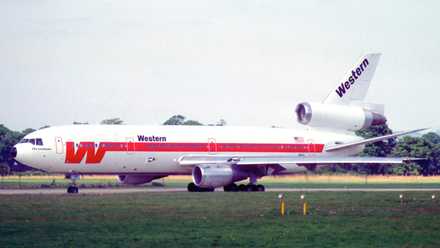
Why Did The McDonnell Douglas DC-10 Crash So Frequently?
The aircraft suffered more from its reputation than its design flaws.
The 787: The Dreamliner’s Nightmare Warning

The Boeing 787 has a slightly different place on the list. It was not defined by a fatal crash. It did not become notorious because hundreds of passengers died. In fact, it has gone on to become one of the most important long-haul aircraft in the world. But before the 737 MAX crisis, the Dreamliner gave  Boeing a very public warning: the future of aircraft design was becoming so complex that even a flagship program could reveal dangerous surprises after entering service.
The 787 promised a new age of flying. Composite structure. Significantly lower fuel burn. Long, thin routes that previous aircraft could not operate economically. A cabin designed to feel fresher and more comfortable. Airlines wanted it badly. Boeing sold it as the future. Then, in January 2013, the future was grounded.
|
Dreamliner Battery Crisis |
Event |
Why It Escalated |
|---|---|---|
|
January 7, 2013 |
Japan Airlines 787 battery fire at Boston Logan |
Fire occurred while the aircraft was parked, focusing scrutiny on the APU battery. |
|
January 16, 2013 |
ANA 787 diverted in Japan after battery warnings and smoke indications |
A second serious event suggested a wider system risk. |
The crisis was caused by two separate incidents involving lithium-ion batteries, one on a Japan Airlines aircraft parked at  Boston Logan International Airport (BOS) and another on an All Nippon Airways flight in Japan. These resulted in fires and emergency landings, with subsequent investigations revealing that the batteries had experienced thermal runaway, a dangerous chain reaction that could lead to overheating and fire. Given the severity of the risk, aviation regulators took unprecedented action, grounding the Dreamliner for 7 months.
What made the 787 controversy deeply uncomfortable was that the aircraft was certified. It was in airline service. It represented Boeing’s technological leap forward. Yet one of its most advanced systems had failed in a way that forced regulators to pull the aircraft from the sky.
The Dreamliner survived the crisis, of course, and has gone on to become the best-selling widebody of all time. But the episode left a mark. It showed that modern aircraft scandals did not need to begin with a crash. They could begin with batteries, software, supplier chains, certification assumptions, and failure modes buried inside systems that passengers would never see. The 787 was not the MAX. But it was a warning flare, one that Boeing didn’t heed.
The 737 MAX: The Scandal That Shook The World

The Boeing 737 MAX was not supposed to be a radical aircraft. That was the point. It was Boeing’s answer to the Airbus A320neo family: a more efficient version of a narrowbody icon that has been in service for decades, promising airlines better fuel burn without forcing them into a costly clean-sheet transition. It was meant to feel familiar, dependable, and easy to integrate.
Instead, it became the most damaging aircraft scandal of the modern era. The larger CFM International LEAP-1B engines changed the aircraft’s handling characteristics, so Boeing added the Maneuvering Characteristics Augmentation System, or MCAS. Originally, MCAS was designed to make the 737 MAX handle similarly to the previous 737NG during high angle-of-attack (AOA) maneuvers, automatically adjusting the horizontal stabilizer to push the nose down, compensating for the handling effects of larger engines.
This was not a visible design feature to passengers. It was software, hidden deep inside a familiar aircraft. And the problem was that MCAS relied on a single AOA sensor and had virtually unlimited authority, able to activate as many times as needed until it sensed the aircraft was flying at an acceptable AOA. But sensors are notorious for failing, and in the case of malfunctions, the MCAS could activate repeatedly, even if the aircraft was flying normally. This is exactly what happened with the infamous Lion Air and Ethiopian Airlines flights.
|
737 MAX Crisis |
Date |
What Happened |
Why It Became Explosive |
|---|---|---|---|
|
Lion Air Flight 610 |
October 29, 2018 |
Crashed into the Java Sea after takeoff from Jakarta |
Raised urgent questions about MCAS, sensor data, warnings, and training |
|
Ethiopian Airlines Flight 302 |
March 10, 2019 |
Crashed shortly after takeoff from Addis Ababa |
A similar pattern triggered the worldwide grounding |
The two crashes led to an 18-month grounding for the MAX as a new MCAS system was designed. This now relies on data from both of the 737’s AOA sensors, providing for redundancy, and it deactivates if the two readings differ significantly (indicating a malfunction). Furthermore, it can only activate once during a high-AOA event, and the amount of trim adjustment that MCAS can make is now reduced.
The technical fix mattered. But the scandal was never only technical. It was about what pilots were told, how much airlines understood, how certification authority had been delegated, and whether Boeing’s commercial urgency had overpowered caution. After two crashes and 346 deaths, the question was no longer just what MCAS did. It was how such a system had ended up on a passenger aircraft in that form.
That is what made the 737 MAX different. The Comet exposed fatigue. The Electra exposed aeroelastic forces. The DC-10 exposed design and maintenance vulnerabilities. The 787 exposed the risks of new technology integration. But the MAX exposed something more corrosive: a breakdown of trust. And once trust breaks in aviation, the repair takes far longer than any software update.

The Complete Guide To The Boeing 737 MAX Family
Boeing has already built more than 1,700 aircraft from its next-generation narrowbody series.
What These Aircraft Changed

These aircraft should not be treated as identical villains. Some were pioneers. Some became very successful after redesigns. Some suffered from technical blind spots. Some became symbols of deeper institutional failure. But each forced aviation to confront something it had either underestimated, misunderstood, or failed to disclose clearly enough.
The pattern is chilling because it repeats across generations. A breakthrough aircraft enters service. A hidden weakness emerges. A crash, fire, breakup, or grounding forces the truth into the open. Investigators trace the wreckage back through design choices, certification assumptions, maintenance practices, testing limits, and corporate decisions. Then the industry changes — but only after passengers and crews have paid the price.
That is why these aircraft remain controversial. Not because they were all failures, and not because their later service histories were the same, but because each became a moment when technical promise collided with aviation’s blind spots. The industry is safer because of the lessons learned from them. But the names still carry weight because those lessons were written in smoke, wreckage, and silence.