dailynewsnblog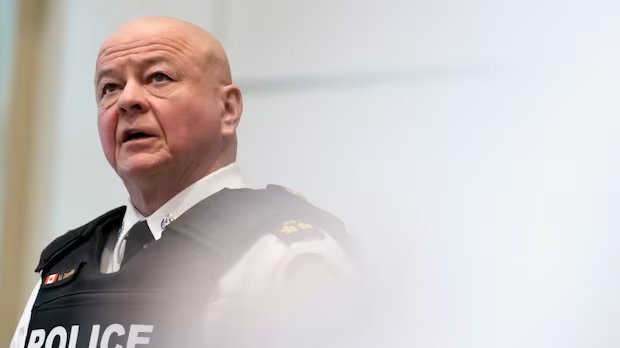

Listen to this article
Estimated 4 minutes
The audio version of this article is generated by AI-based technology. Mispronunciations can occur. We are working with our partners to continually review and improve the results.
Toronto police Chief Myron Demkiw is planning to speak with Ontario’s solicitor general about the restrictions chiefs face when deciding whether to suspend officers with or without pay.
This comes after Toronto residents expressed outrage after three Toronto police officers were suspended with pay after they were arrested in Spain earlier this month.
Spanish police said two of the officers are facing allegations of sexual assault and the third is accused of attacking an agent of authority. The first interaction happened in a taxi in the Ciutat Vella district of Barcelona and involved a sex worker, they said.
Many people do not know or understand that the Community Safety and Policing Act dictates when an officer can be suspended with or without pay — and that it restricts how chiefs of police make their decisions, Demkiw said on CBC Radio’s Metro Morning Wednesday.
He said the act does not allow him to suspend officers without pay if an allegation took place outside of Canada.
“It is something that frustrates me,” he said. “The law is written in such a way that it does not give me that authority.”

Three off-duty Toronto police officers are facing criminal charges in Spain and two of the officers have been charged with sex crimes. CBC’s Michelle Song breaks down what we know and why some experts say incidents like this erode public trust in police.
Demkiw said he’ll be taking this issue up with the solicitor general, as the outrage by Torontonians and Canadians has made it clear that chiefs of police are expected to take appropriate action “when it’s the right thing to do.”
CBC News reached out to the office of Solicitor General Michael Kerzner for comment.
Police suspensions need to meet specific conditions: expert
Suspension without pay for police officers has only been an option since 2024 when an overhaul of Ontario’s policing laws came into effect. Ontario was the last province to have the option, and police chiefs in the province had been pushing for the change for over a decade.
For a police officer to be suspended without pay there are very specific conditions that must be met under the Community Safety and Policing Act, said Mark Baxter, president of the Police Association of Ontario, a policing advocacy group.
“Because everyone is presumed innocent until it’s been proven otherwise, suspension without pay really should only occur in exceptional circumstances,” Baxter told CBC’s Metro Morning last week.
The three officers’ suspension could be changed to without pay depending on their release conditions and if they interfere in their ability to do police work, he said.
He said officers suspended with pay may still be allowed to do non-public-facing police work under the law, if approved by the police chief.
Police badge, uniform ‘not a shield’: chief
While he did not share details on the investigation in Spain, Demkiw addressed allegations that the three officers produced their Toronto police badges to Spanish authorities.
“The badge we carry, the uniform we wear is not a shield,” he said, adding officers should not abuse their position to conceal inappropriate or wrongful conduct.
The purpose of a police officer’s badge and uniform is to represent their oath, said Demkiw. He said over 8,000 other officers uphold that expected behaviour and represent a “long legacy of courage.”
He said it will be “very concerning” if those allegations are substantiated by Spanish police and that he’ll do anything to hold members accountable.
Here and Now Toronto7:36Three off-duty Toronto Police officers face charges related to an incident while on vacation in Spain
Three off-duty Toronto Police officers are facing charges related to an incident while on vacation in Spain, including sexual assault. These aren’t the first high-profile charges against TPS officers. These latest charges put the spotlight back on police conduct and accountability around off-duty behaviour. Patrick Watson is an assistant professor at the Centre for Criminology and Socio-legal Studies at the University of Toronto. He’s an expert in police oversight and was on Here and Now to share more.
Recent concerns with Toronto police officers also extend to arrests from Project South, an ongoing police corruption and organized crime investigation.
Demkiw said changes are already being enacted within the force to address concerns, such as more intensive background screening for officers entering the force. They will now have to undergo home visits and thorough investigations before receiving a conditional employment offer, he said.
That’s a policy that was in practice when he joined the force and has now been brought back for upcoming new hires, said Demkiw.