dailynewsnblog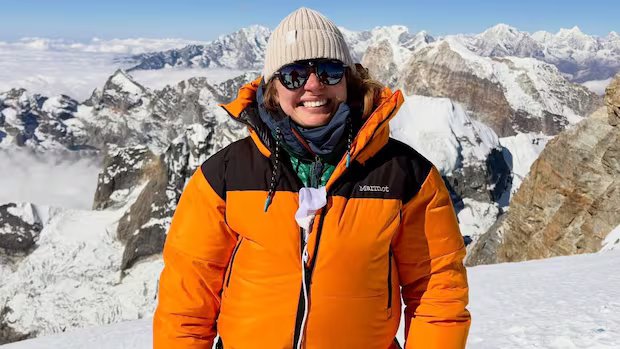

Listen to this article
Estimated 2 minutes
The audio version of this article is generated by AI-based technology. Mispronunciations can occur. We are working with our partners to continually review and improve the results.
When Karolina Pakėnaitė trekked to the Mount Everest base camp three years ago, she met a group of climbers who were aiming to become the first deaf climbers to summit its peak.
Pakėnaitė, who is deafblind because she has Usher syndrome — a genetic condition that causes hearing and vision loss — realized that no deafblind person had ever summited the mountain.
“I started to ask myself, what if? I never imagined myself summiting Everest, but that question never left me to this day,” she told CBC Radio’s Metro Morning Wednesday.
“That question changed everything.”

Pakėnaitė, who is from the United Kingdom, is now training to become the first deafblind person to summit Mount Everest. Leon Lu, an assistant professor at the University of Toronto Mississauga, is helping design a haptic vest to help get her to the top.
The vest will let Everest guides send remote vibration signals to Pakėnaitė to help coordinate her movement, Lu explained on Metro Morning Wednesday.
While Pakėnaitė has limited vision, uses hearing aids and can read lips, guides often give verbal directions while wearing masks from the elements, which poses challenges.

With the vest, the guides and Pakėnaitė can develop codes for each vibration so she can understand what they mean for her movement, like stopping or moving left or right.
The team helping Pakėnaitė consists of Lu, a haptic lab in Germany, a professor in Shanghai, and a local Hamilton fashion designer, according to the University of Toronto’s website.
“We were just inspired to make this happen in some way,” said Lu, who had previously met Pakėnaitė at an accessibility conference.
“It was so exciting to do this project. We met at the conference five years ago and I loved his work,” she said.
Pakėnaitė, who has already summited other mountains like the Mera Peak in the Himalayas, said mountaineering “feels like home.”
“More than anything, climbing and mountaineering gives me a sense of freedom,” she said.
“I hope that my journey will make those people like me feel less alone.”