dailynewsnblog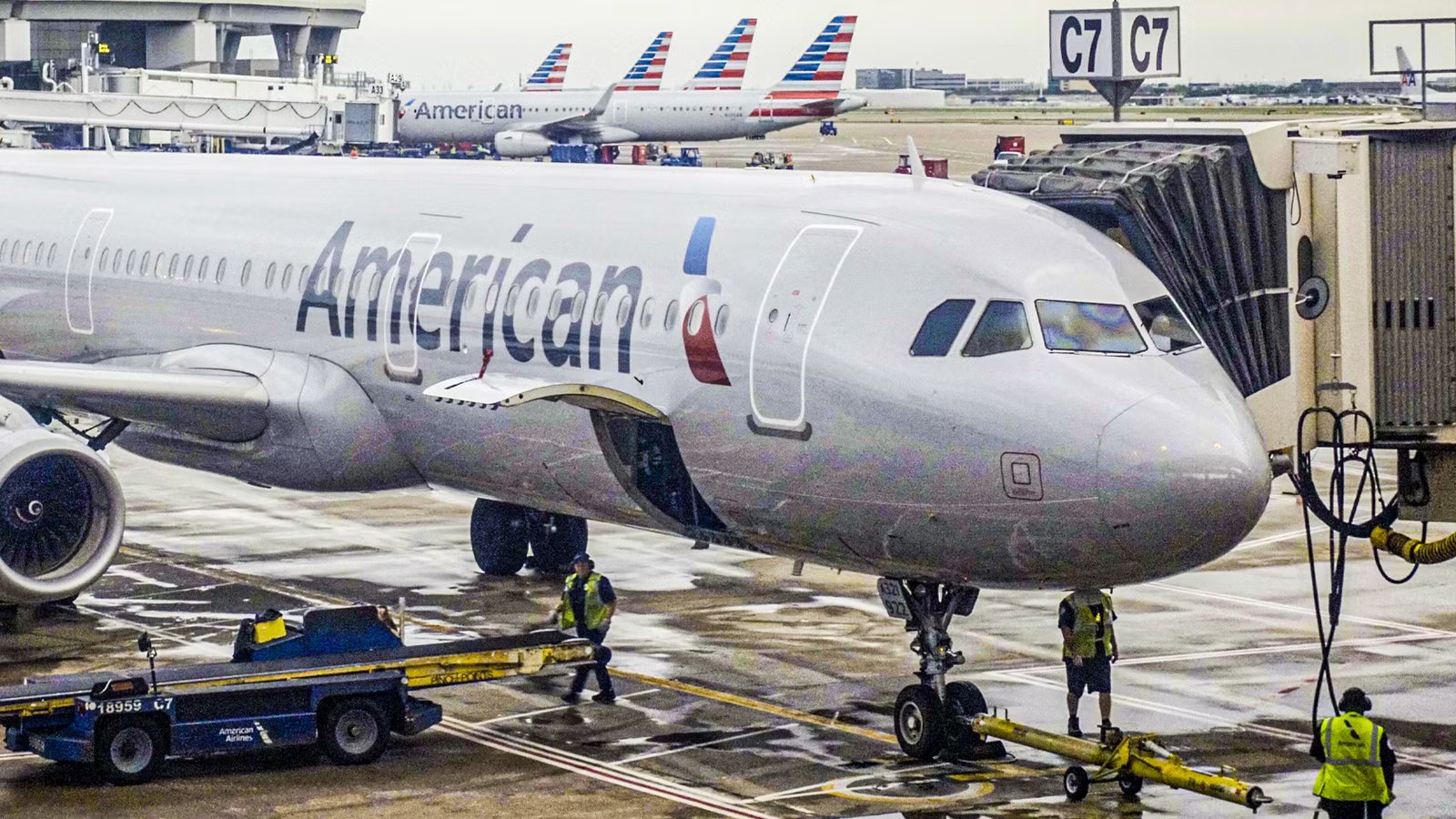
The Airbus A321 has been replacing the Boeing 757-200 ever since it debuted, as it proved more fuel efficient on routes within its capabilities, and has a similar capacity. It’s about nine feet (three meters) shorter than the 757-200, but its cabin is only about five feet (one and a half meters) shorter, as the A321 has a smaller empennage. The A321 has proven more efficient than the 757-200 on routes within its range, and Airbus has continuously worked to improve the A321’s range since its debut, with the recent A321XLR now having more range than the 757-200.
Because the A321 and the 757-200 are of a similar size, they also have similar exit configurations, despite their age difference. The first-generation A321-200 was configured with four pairs of exit doors, while the 757-200 could be optioned with either three pairs of exit doors and two pairs of overwing exits or with four pairs of exit doors. These layouts allow airlines to board from the second exit on the left, Door 2L, which is a common practice on the 757 and on widebody airliners. However, this is rarely done on the A321-200.
The Exits Of The Boeing 757-200 And Airbus A321-200

On the Boeing 757-200, the first, second, and rear pairs of exit doors are certified as Type C exits. In addition, the aircraft could be built with two pairs of Type III overwing exits or with one pair of Type II exits behind the wings. The Type C exits are all the same size except for Door 1R, which is shorter as it’s intended to be used for servicing, although it still meets the requirements for Type C exits. Installing the two Type III exit pairs gives airlines more usable floor space, while the pair of Type II exits allows for a higher exit limit.
The A321-200 comes with four pairs of Type C exits, with the forward and rear pairs of Type Cs being the exact same size. Meanwhile, the third pair of exits and Door 2R are narrower and shorter, while Door 2L is slightly narrower but just as tall as the forward and rear pairs. This is specifically to allow Door 2L to be easily used for boarding, while the other exits are purely to be used in an emergency. All of the exits on the A321-200 are certified as Type C exits, despite varying in exact size.
There are two main benefits of boarding through Door 2L. The primary benefit is that this allows for more efficient boarding, as passengers can split into two groups when entering the aircraft, depending on where they’re seated. The other benefit is that passengers generally do not need to walk through the premium cabin in order to reach their seat, which creates a calmer environment and allows flight attendants to easily perform pre-departure service, which is otherwise challenging on a narrowbody.
Why The A321-200 Does Not Board From Door 2L

Technically, there’s nothing stopping airlines from using Door 2L for boarding on the A321-200.  Lufthansa boards from both Door 1L and 2L at select airports with the A321, while American briefly boarded its transcontinental-configured A321-200s from Door 2L in the type’s early years with the carrier. In addition, Aer Lingus and British Midland also formerly used Door 2L for boarding.
Compared to other aircraft types, including the 757, the A321-200’s second set of exits is extremely close to its wings and engines. This doesn’t automatically prohibit boarding from Door 2L, but it does require heightened caution from jetway operators, and some jetbridge models cannot serve the A321-200 with adequate clearance at Door 2L. But even at gates with jetbridges that can technically service Door 2L, operators risk striking the engines when attaching or detaching to the aircraft.
|
Aircraft |
Number Of Sales |
|---|---|
|
Boeing 757-200 |
994 |
|
Boeing 757-300 |
55 |
|
Airbus A321-100/200 |
1,784 |
Because of the risk, many operators prohibit boarding from Door 2L on the Airbus A321-200. US Airways had long boarded its A321-200s solely from Door 1L, and after merging with American Airlines, the combined company discontinued boarding the A321 Transcon from Door 2L. Aer Lingus only uses Door 1L today, while British Airways (which merged with BMI in 2012) has never permitted boarding at Door 2L. Meanwhile, Lufthansa only permits boarding at Door 2L at select airports.

The Aircraft Replacing The Boeing 757
It’s time to say goodbye to the Ferrari of the skies. Here are the planes that will replace the 757.
The Results Of The A321-200’s Boarding Restrictions

To the unfamiliar eye, an A321-200 essentially looks the same as a 757-200. Therefore, US Airways placed prominent ‘A321‘ stickers by Doors 1L and 2L on its A321-200 fleet so that jetway operators would instantly know to dock at Door 1L. This is a practice that American Airlines still follows, even though the Fort Worth-based carrier no longer operates the Boeing 757. Despite the different exit configuration on the airline’s A321neo fleet, it still places ‘A321neo‘ stickers by Door 1L, while American’s new A321XLRs feature ‘A321XLR‘ stickers in the same place.
Because airlines generally do not use Door 2L for boarding, Airbus allows airlines the option to install overhead bins above this area, which renders the door unusable for boarding. In addition, airlines can put extra seats near Door 2L if they do not intend to board passengers in this space, as Type C emergency exits require less access space than a boarding entrance.
On Lufthansa’s A321-200s, row 10 only consists of seats on the right side of the aircraft, as the space on the left side needs to be clear when passengers enter or disembark. Other airlines place seats in this area, as it’s only to be used for emergencies, and they also benefit from installing extra overhead lockers. On the 757, meanwhile, airlines do need to keep this space clear and cannot install overhead bins, as Door 2L is regularly used for boarding. However, airlines can install seats closer to Door 2R since it’s not used for boarding.
The Layout Of The Airbus A321neo (ACF)

Early examples of the Airbus A321neo were delivered with the same exit layout as the A321-200, but in 2018, Airbus introduced the ACF (Airbus Cabin Flex) layout. It was initially an option on the A321neo and became standard in 2020, while also being standard on the A321LR. It involves structural changes to the aircraft’s exit layout, increasing the A321’s exit limit while also adding more usable space. In addition, the ACF layout is highly customizable, allowing airlines to tailor their exit layouts to their needs.
The base ACF exit layout features two pairs of Type C+ exits at the front and rear of the cabin. There are two Type III overwing exits, while the third pair of Type C exits behind the wings has been pushed back by four frames. Finally, the second set of Type C exits located ahead of the wings has been permanently deleted. This layout allows for an exit limit of 244 passengers. An airline can choose to deactivate the rear pair of Type III exits for an exit limit of 220 passengers, or to plug the mid-cabin pair of Type C exits for an exit limit of 195 passengers. In addition, an airline can choose to deactivate the rear pair of Type III exits and the mid-cabin exits for an exit limit of 165 passengers.
|
Airbus A321neo Exit Layout |
Example Operator |
Exit Limit |
|---|---|---|
|
Two Type C+ pairs, two Type III pairs, one Type C pair |
Wizz Air (239 seats) |
244 seats |
|
Two Type C+ pairs, one Type III pair, one Type C pair |
British Airways (220 seats) |
220 seats |
|
Four Type C pairs (original layout) |
All Nippon Airways (194 seats) |
220 seats |
|
Two Type C+ pairs, two Type III pairs |
Delta Air Lines (194 seats) |
195 seats |
|
Two Type C+ pairs, one Type III pair |
La Compagnie (76 seats) |
165 seats |
The deletion of the second set of Type C exits appears unusual, given the benefits of mid-cabin boarding. However, airlines are increasingly using their A321neos and extended-range A321neo subvariants on long-distance flights with large premium cabins. By removing this pair of exits, this gives airlines added flexibility on how to size their business class cabins, and this also gives carriers more usable floor space. This is especially important on the A321neo, given its small size compared to widebodies.
Airbus Built A Plane No Airline Wanted – Now Enthusiasts Are Racing To Fly It
A closer look at why the Airbus A318 was a flop, and how you can fly on one before it disappears from airline service for good.
Why The ACF Layout Works Economically

Aircraft manufacturers generally prefer to standardize the production of their aircraft in order to keep costs low, while airlines prefer optionality. In recent examples,  Boeing offered three different exit layouts for the 767-300ER and two layouts for the 757-200, while Airbus offered different sizes for the third set of exits on the Airbus A330 and A340-200/300. But beyond production challenges, this can also hurt resale values since airlines prefer to standardize their own fleets regarding options and configuration.
The A321neo ACF is economical for Airbus because each aircraft is constructed in the exact same way, whereas the different exit layouts on the 757 and 767 require separate components. The exit options on the ACF layout are accomplished simply by plugging the exits, which reduces weight, complexity, and increases usable floor space. In addition, this improves values on the second-hand market since airlines can easily plug or unplug these exits.
While offering mid-cabin boarding does reduce turnaround times, the added floor space is more beneficial to airlines, and the Airbus A321neo is easily the most customizable airliner on sale today regarding exit layouts. Meanwhile, the aircraft has also proven efficient and capable, making it one of the most versatile narrowbodies ever made. With its compelling economics, the A321neo continues to be the best-selling commercial aircraft variant of all time with no signs of slowing down.