dailynewsnblog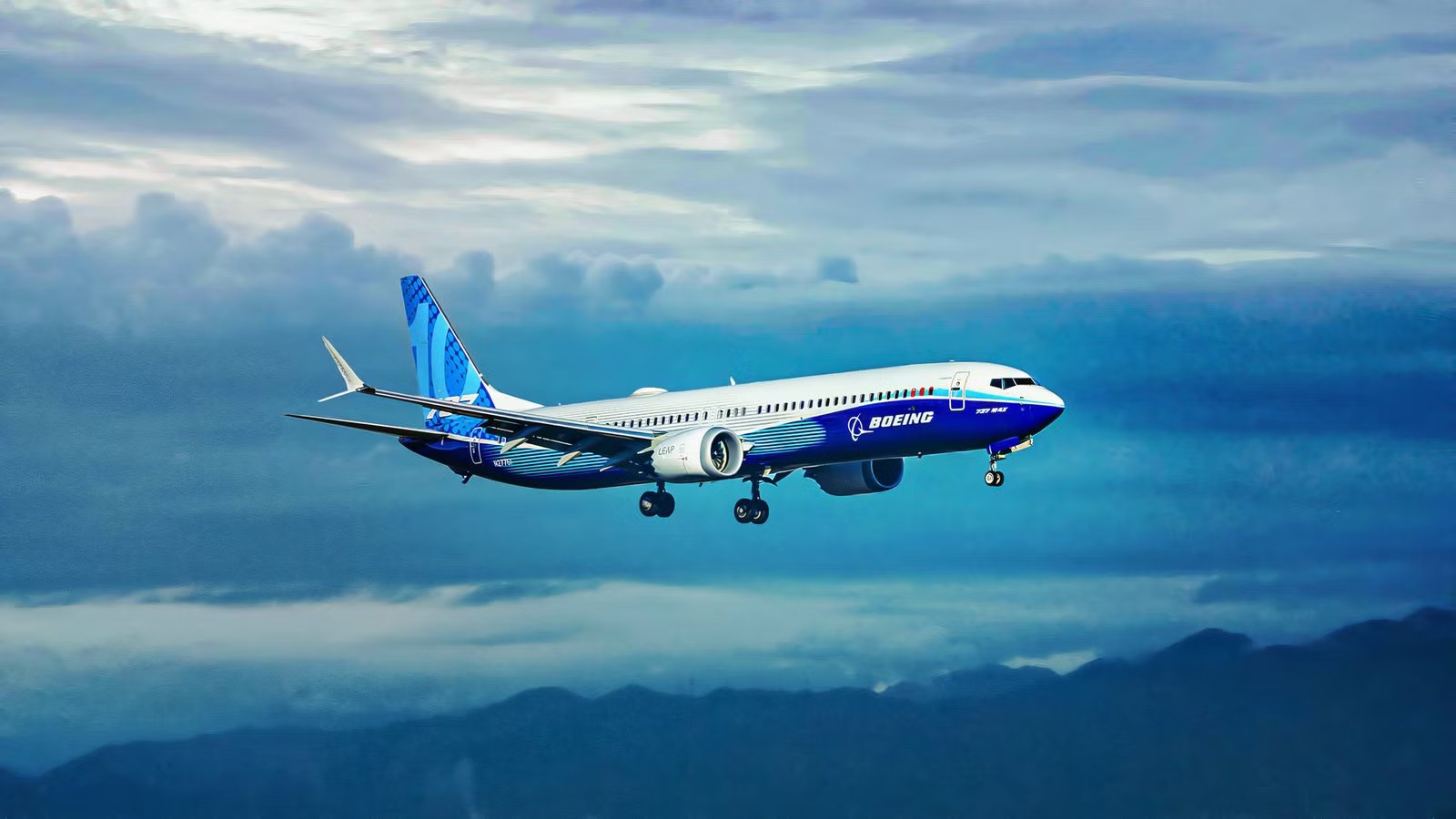
The Boeing 737 MAX is an update to the 737NG. It was built as an answer to the Airbus A320neo, spurred by high demand for a refreshed 737, including a massive order by  American Airlinesfor 100 of the type before it was even announced. The A320neo is essentially a standard A320 family aircraft with Sharklets as standard and new engines, so Boeing largely did the same. But the 737 MAX has faced more issues than almost any other airliner in recent history
The MAX 8 and MAX 9 variants feature CFM LEAP-1B engines as standard, new winglets, a new tail cone, and an updated flight deck. Meanwhile, the MAX 7 was made longer, while the MAX 10 is a new stretch of the MAX 9 variant. But what was also included was the Maneuvering Characteristics Augmentation System (MCAS), a software system that is believed to be the primary cause of Lion Air JT610 and Ethiopian ET302, two fatal crashes less than six months apart. This led to an 18-month grounding while Boeing reworked the 737 MAX. What did this rework amount to?
The New MCAS System

The 737 MAX still has MCAS, but it’s not the same as before. The original MCAS system was developed to address a pitching-up characteristic at a high angle of attack (AOA) due to the new CFM LEAP engines. MCAS adjusted the stabilizer trim down, thereby countering the pitch-up movement. The primary reason behind this was to ensure that the 737 MAX flew as similarly as possible to prior 737s; that way, simulator training wouldn’t be required, and airlines would spend as little as possible to integrate 737 MAX aircraft into their fleets.
The problem is that MCAS relied on a single AOA sensor and had virtually unlimited authority. It would activate as many times as possible until it sensed the aircraft was flying at an acceptable AOA. Boeing has reiterated that it is not an anti-stall system, but rather a flight control system intended to provide specific flight characteristics. But sensors are notorious for failing. If the AOA sensor malfunctions, the MCAS could activate repeatedly, even if the aircraft is flying normally. This is exactly what happened to JT610 and ET302.
The new MCAS system now relies on data from both of the 737’s AOA sensors. This not only provides for redundancy, but the new implementation of MCAS also deactivates if the two readings differ significantly in a manner that would indicate a malfunction. Furthermore, it can only activate once during a high-AOA event, and the amount of trim adjustment that MCAS can make is now reduced. All in all, the big issue wasn’t the presence of the MCAS system, but rather that it was designed poorly. But now, Boeing has redesigned the MCAS system to be significantly safer.
How MCAS Came Into The Public Eye

Pilots had never heard of the term MCAS before the two tragic crashes that claimed 346 lives. It was intentionally omitted from flight operating manuals and was purely a behind-the-scenes mechanism to ensure commonality with the 737NG. When Lion Air 610 dived into the Java Sea, focus was initially placed on the airline, as Lion Air had a poor reputation for safety protocols. But it soon came out that other 737 MAX pilots had experienced similar incidents of the plane randomly pitching down, and then Ethiopian 302 flew nose-down near Addis Ababa.
The Lion Air pilots had no knowledge of the MCAS system and followed the checklist for a runway trim condition. MCAS had also activated erroneously on the previous flight with the same aircraft, and crews nullified MCAS by following this checklist. However, the crew of JT610 didn’t follow the checklist properly, and neither did the crew of Ethiopian ET302, who were made aware of the MCAS system. But you have to consider the circumstances that they were battling.
|
Flight |
Date |
Location |
Aircraft |
Number of MCAS activations |
|---|---|---|---|---|
|
Lion Air JT610 |
October 29, 2018 |
Indonesia |
Boeing 737 MAX 8 (PK-LQP) |
More than 20 times |
|
Ethiopian Airlines ET302 |
March 10, 2019 |
Ethiopia |
Boeing 737 MAX 8 (ET-AVJ) |
Four times |
Both planes were in a high-energy state, given that they were climbing. The MCAS activation was sudden and intense, plunging the plane into a dive. From the pilot’s perspective, elevator trim generally makes the control column lighter, making flying easier. MCAS adjusting the trim to the extent that it did made the yokes impossibly heavy; all the while the engines continued to run at high power. Indeed, the flight crews didn’t necessarily follow the correct procedure, but it was an intense, frantic situation, and the crews were fighting the airplane.
You’re Not Crazy: The Boeing 737 MAX Does Tilt Upwards
Explore why the Boeing 737 MAX tilts upward and how larger engines disrupted the aerodynamics of the jet.
Why Was MCAS Necessary

There are four generations of the Boeing 737 with 15 variants. It is the oldest commercial aircraft still being manufactured. The original 737-100 and 737-200 had long, thin Pratt & Whitney engines that ran the entire length of the wing. The 737 Classic had new CFM56 turbofans with non-circular nacelles to fit under the 737’s low wings. The 737NG retained this same nacelle design, but the CFM LEAP engines on the new MAX variants are larger than the CFM56, meaning they needed to be mounted forward and higher compared to before.
Part of the benefit of the 737 MAX is that it can be seamlessly integrated into an airline’s fleet. Pilot training is expensive, and airlines have faced issues with flying multiple generations of 737s due to handling and cockpit differences. However, the new engine configuration changed how the plane handled at high AOA, and there was concern that this would require different training for flight crews.
|
737 Generations |
Years in production |
Variants |
|---|---|---|
|
737 Jurassic |
1966 – 1988 |
737-100, 737-200 |
|
737 Classic |
1981 – 2000 |
737-300, 737-400, 737-500 |
|
737NG |
1996 – 2020 |
737-600, 737-700, 737-800, 737-900, 737-900ER |
|
737 MAX |
2014 – Present |
737 MAX 7, 737 MAX 8, 737 MAX 200, 737 MAX 9, 737 MAX 10 |
The other issue is that the 737 MAX retains conventional flight controls, with physical cables and pulleys connecting the cockpit controls to the exterior control surfaces. Other modern aircraft like the Boeing 777X are fully Fly-By-Wire, meaning that any changes in flight handling can simply be adjusted in the plane’s electronic programming. As an example, an Airbus A320neo flies nearly the same as a 1987 A320-100. With the 737 MAX, this wasn’t possible, so engineers created the MCAS system.
Where Did MCAS Come From?

The Boeing KC-46 Pegasus is an aerial refueling platform derived from the Boeing 767. Because it’s an aerial refueler, it carries a lot of jet fuel, which is then sent via an extendable boom at the rear. Aerial refueling causes significant shifts in the plane’s weight and balance. It’s a difficult procedure to pull off, so Boeing developed MCAS.
The KC-46 MCAS system has the same basic function in that it adjusts the stabilizer trim. However, the main difference compared to the 737 MAX’s original MCAS design is that it uses two sensors instead of one. Furthermore, while the 737’s original MCAS could activate repeatedly, the version used on the KC-46 deactivates if the pilots make a control input.When the handling differences were discovered, it was decided that the 737 MAX would include a modified version of the KC-46’s MCAS. In this case, the system would make the 737 MAX fly more like the NG. However, what may be the most shocking part is that the FAA was not fully aware of the system’s presence. Furthermore, the FAA and EASA have both issued statements that the MCAS system may not have even been necessary for the 737 MAX to have been certified.
Overview Of The 737 MAX

The Boeing 737 MAX is an interesting aircraft. Now in its fourth generation, it is the oldest commercial aircraft in production, and it comes with certain design elements that wouldn’t be done today. 1960s Boeing engineers did a fine job, and the 737 MAX is the best iteration of the 737 to date. But Boeing made hasty decisions to get the plane out the door, and for its haste, 346 people lost their lives.
The grounding of the 737 MAX lasted 18 months and was the longest grounding of any US-designed aircraft in history. This cost Boeing over $20 billion in fees and compensation. The public reputation was also tarnished, with some carriers, like Singapore Airlines, having removed the MAX name from their aircraft, branding MAX 8 jets as 737-8s, for example.
|
Variant |
Percentage of orders (As per Epsilon Aviation) |
|---|---|
|
737 MAX 7 |
7% |
|
737 MAX 8 |
71% |
|
737 MAX 9 / MAX 10 |
22% |
The 737 MAX 7 and MAX 9 aren’t selling well, but the MAX 8 is the most successful variant of the 737 ever, while the MAX 10 has a promising future ahead of it. These are good aircraft renowned for their fuel efficiency and robust design. But Boeing, in a rush to match the Airbus A320neo, made choices that have forever cast a dark cloud over the plane, and the legacy of MCAS continues to define the 737 MAX as a whole.

How Does The Boeing 737 MAX 10 Match Up To The Airbus A321XLR?
Boeing’s long-awaited answer to the Airbus A321. But how does it actually stack up, and will it find success?
The Rundown Of The 737’s MCAS

The 737 MAX is one of the most troubled aircraft in recent years. The MAX 7 and MAX 10 variants have faced certification delays, while the MAX 9 was grounded last year due to production quality issues that resulted in the Alaska 1282 incident. In the market, the 737 MAX is also struggling more against the Airbus A320 than its predecessor.
The Airbus A320neo proved to be Boeing’s biggest threat to its strong position in the single-aisle market. It could have responded with an expensive new aircraft that would have been better, but late to the market and riskier. The 737, meanwhile, was approaching its limits, and Boeing had to make compromises, compromises that ended up costing lives in the way that Boeing chose to do it.