dailynewsnblog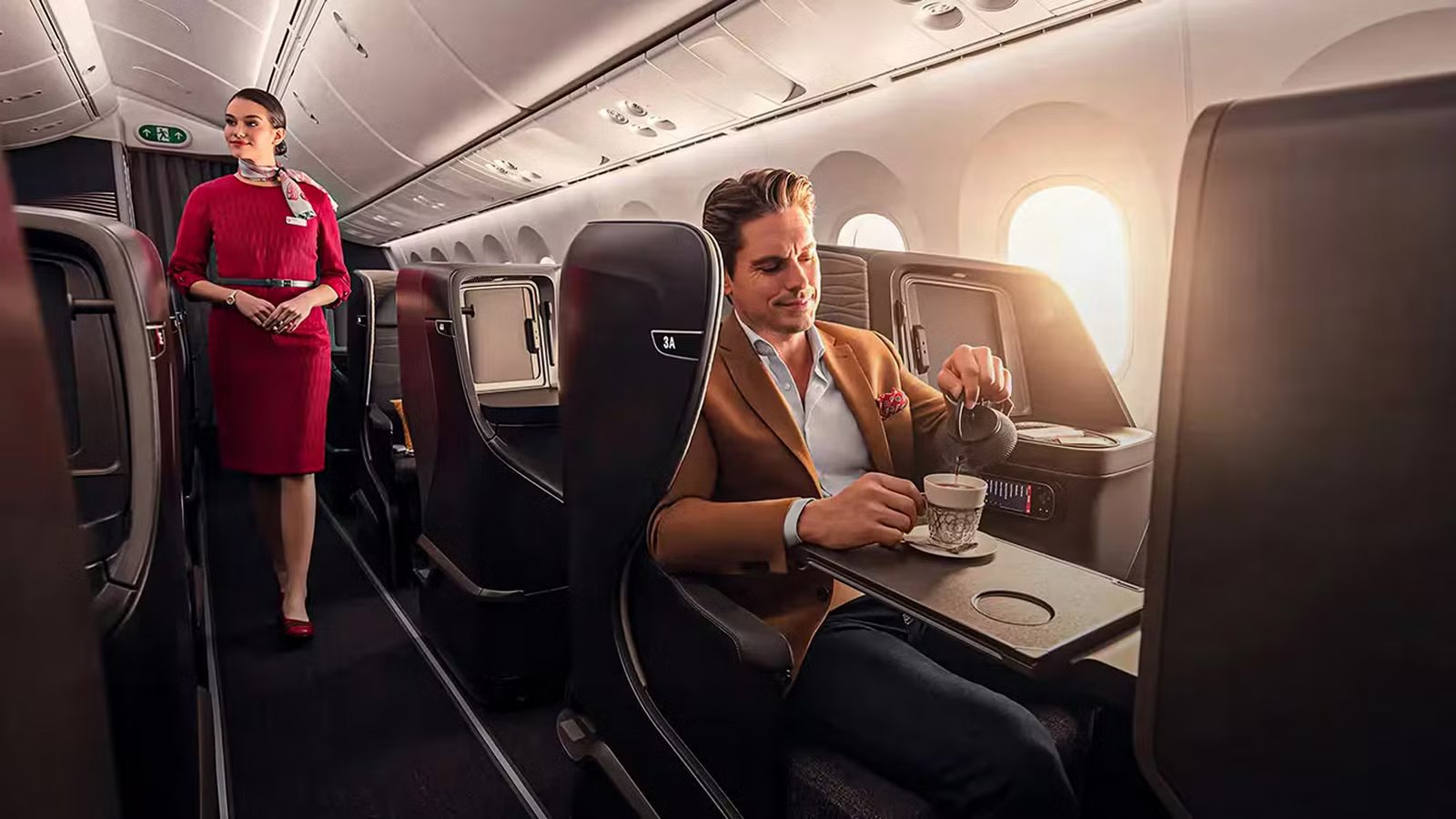
Business class is going through a significant boom, and, in 2024, the premium sector grew by 11.8% to 116.9 million passengers using premium classes. This type of flying isn’t just for corporate executives, but is becoming increasingly popular among leisure travelers, something I have previously referred to as “the democratization of premium travel.” The market is now incredibly lucrative, and carriers are competing to deliver stronger business class products so they can attract more passengers and justify ever-higher air fares.
For every inch an airline adds to its business class bed length or entertainment screen, pounds are added to the aircraft. That increases costs and eats into profit margins. However, with new products like  Lufthansa‘s Allegris coming into play, this trend will likely not go anywhere. Firms are fighting against the weight gain, not by cutting back on their business class offerings, but by incorporating new and lighter materials into seat design.
What Is Making Premium Seats Heavier?

Premium seats are primarily getting heavier because passengers are demanding a higher quality of service. The enormous demand for premium aviation has pushed carriers into an arms race to create the best business-class products, while engineers with their minds set on saving weight are forced to grit their teeth.
Hotel-level privacy, such as full-height dividers and sliding doors, large entertainment systems, comfortable beds, and motorized components are just a few examples of where the extra weight is coming from. These advancements have pushed the average Airbus A350-900 business class seat’s weight to around 220 lbs (100 kg).
The additional weight requires a greater expenditure of fuel to complete the journey. It also creates an engineering challenge because the premium classes tend to be at the front of the aircraft. The heavy seats can upset an aircraft’s weight balance. Airbus has begun filing patents for modular suite architectures that can manage the mass distribution, anticipating that this problem will continue to be a challenge.
The New Business Class Products Driving The Weight Gain

There have been some recent newcomers to the business class market, which have shown that the weight gain trend is likely to continue. Throughout 2026, Turkish Airlines will roll out its new ‘Crystal’ business class. Based on the Safran Unity platform, passengers can expect industry-leading privacy with sliding doors, high sidewalls, and retractable privacy dividers. Additional weight will come from a 22-inch 4K screen, Bluetooth audio, and wireless charging.
The new option will find its way onto the carrier’s retrofitted Boeing 777-300ER jets. The deployment onto legacy aircraft will mean that executives will be able to see the additional costs incurred by the additional weight, and whether higher revenues from a strong business class product offset the expenditure. Speaking at the Farnborough Airshow, Turkish Airlines Chair Ahmet Bolat said that:
“Our new Crystal Business Class suite will add a new chapter for our long-haul luxury travel and will carry the airline into the future with a new level of comfort and privacy across our extensive global network.”
|
Widebody Aircraft |
Number In Turkish Airlines’ Fleet |
|---|---|
|
Airbus A330-200/300 |
49 |
|
Airbus A350-900 |
34 |
|
Airbus A350-1000 |
None |
|
Boeing 777-300ER |
35 |
|
Boeing 787-9 |
26 |
|
Boeing 787-10 |
None |
Another significant offering to arrive in the business class market is Lufthansa’s Allegris suite. After a rocky time passing through the necessary regulations and checks, this winter saw the product unlocked for almost all of the carrier’s Boeing 787-9 seating inventory.
To make the suite stand out in a crowded market, Lufthansa has spent over 2.5 billion euros on heavy hardware and other services, as noted by Forbes. This amounts to a first-class lite experience with a personal minibar and a 27-inch 4K monitor. The bed is also exceptionally long at 7.2 ft (2.2 meters). That easily outstrips Lufthansa’s European competitors, who usually go up to just 6.6 ft (two meters).
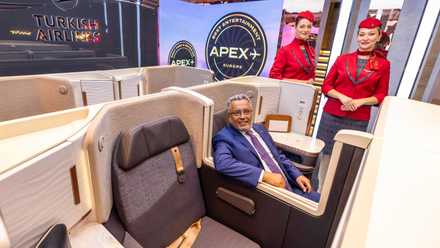
Luxurious Comfort: A Close Look At Turkish Airlines’ Brand New Business Class Seat
Turkish Airlines has also announced it will offer unlimited free Wi-Fi onboard to all customers by the end of next year.
The Revenue Boost From Leading Premium Products

Heavy premium seats are both less fuel-efficient and more costly to build. However, these costs are offset by a far higher revenue generated per seat, with revenue per available seat mile being the key metric to gauge profitability. Business class seats often offer far higher numbers for this metric than any other class.
However, given the large space and weight taken, this business model only works if carriers can regularly sell out their business class products. As such, should the public appetite for premium flying decline, it will be interesting to see if these hotel-standard products can survive. The table below shows how developing more advanced business class products yields much higher revenue.
|
Feature |
Impact on Base Fare |
Average Pitch |
Privacy Level |
|---|---|---|---|
|
Open-Plan Lie-Flat |
Standard premium |
78-80″ (198-203 cm) |
Low (Open view) |
|
Enclosed Suite |
15-25% increase |
80-82″ (203-208 cm) |
High (Sliding door) |
|
Angled-Flat Seat |
Discounted tier |
60-72″ (152-183 cm) |
Low (Limited privacy) |
|
Direct Aisle Access |
10% increase |
N/A |
Medium |
Advancements in long-haul efficiency are also allowing commercial aviation firms to develop heavier business class products. Modern jets have a far lower cost-per-mile due to fuel burn reductions. For example, the Airbus A350-1000 has a 25% lower fuel burn than previous generation jets due to its ultralight design, improved aerodynamics, and Rolls-Royce Trent XWB engines. Carriers can trade in these advances to spend more weight on their premium products.
How Weight Is Saved Elsewhere

Every pound added by a business class seat has to be cut from somewhere else on the aircraft. Both Airbus and Boeing have engaged in substantial weight-saving work. Airbus has launched a structural weight-saving program to cut back on its A350’s empty weight. The work has removed 2,650 lbs (1,200 kg) of empty weight from both the A350-900 and -1000.
The main reduction comes from using composite materials that are lighter while maintaining the strength required to fly safely. Other developments are marginal, but they all add up. A new electrical system reduces the amount of redundant cables, while lighter water and waste tanks have also been selected. Meanwhile, legacy aircraft, such as the Airbus A380, were not built with this spartan philosophy.
Airlines are also cutting back on weight, often taking inspiration from the ultra-low-cost aviation industry. Examples include removing in-flight magazines and seatback screens, asking passengers to bring their own devices instead. It is also worth noting that, although premium cabins have far heavier seats than economy, they pack fewer passengers onto the aircraft, offsetting some of the weight gain.
The average US adult male weighs almost 200 lbs (90.6 kg), not much less than the business class seats at the vanguard of premium travel. Flying lighter reduces fuel consumption, leading to lower operating costs and emissions. According to ATL Europe, cutting just 2.2 lbs (1 kg) saves airlines $4,210 in fuel each year. Such concrete savings make every marginal weight saving worth the effort.
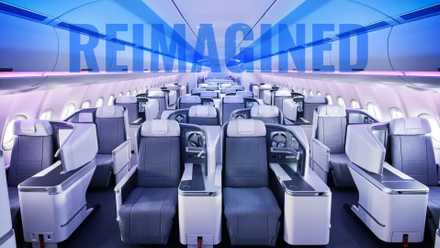
Airbus Files Patent Reimagining The Business Class Seat: What To Expect
The planemaker has big plans for the reimagining of business class travel.
AIRTEK: The Light Business Class Seat With F1 Technology

JPA Design is pushing back against the onward march of business class weight by bringing Formula One technology to aircraft cabins. Its AIRTEK premium seat, introduced in 2021, matches lower-class slimline developments, such as Recaro’s SL3510 seat, weighing just 20 lbs (9 kg). AIRTEK makes use of monocoque, composite construction, as motorsport racing teams have been doing since the 1980s.
Building the seat around a single unit provides rigidity with fewer internal structures, saving substantial amounts of weight. A less bulky seat also aids passengers, as it ensures there is more room to store their belongings. AIRTEK also designed the seat to be built entirely from recycled materials, with a durable and thick outer layer. Plans were reportedly made for the seat to be introduced on Singapore Airlines’ A380’s business class, showing that retrofits for such advanced seats aren’t just for modern airliners.
The time of its planned introduction, at the back-end of the COVID-19 pandemic, also meant that the seat was built with sanitation and safety in mind. The firm hoped to deliver a final seat weighing 200 lbs (91 kg), saving 20 lbs (9 kg) on the weight of an average A350 seat. In a widebody business class cabin of 38 seats, that’s around 760 lbs in weight savings, with financial savings running well into the millions per year as a result.
The AIRTEK innovation was not entirely privately funded. JPA Design received part of a £200 million matched funding grant set aside by the UK Government’s Aerospace Technology Institute to help the aviation industry get greener. The Rolls-Royce UltraFan engine project was another notable recipient, along with a Safran-led project to improve the efficiency of onboard energy use. As a matched-funding grant, recipients had to raise the same amount of money privately as they received from the taxpayer.
Catch what other trackers miss
Emergency squawks, holds, NOTAMs — live signals, no signup.
Open tracker
Catch what other trackers miss
Emergency squawks, holds, NOTAMs — live signals, no signup.
Open tracker