dailynewsnblog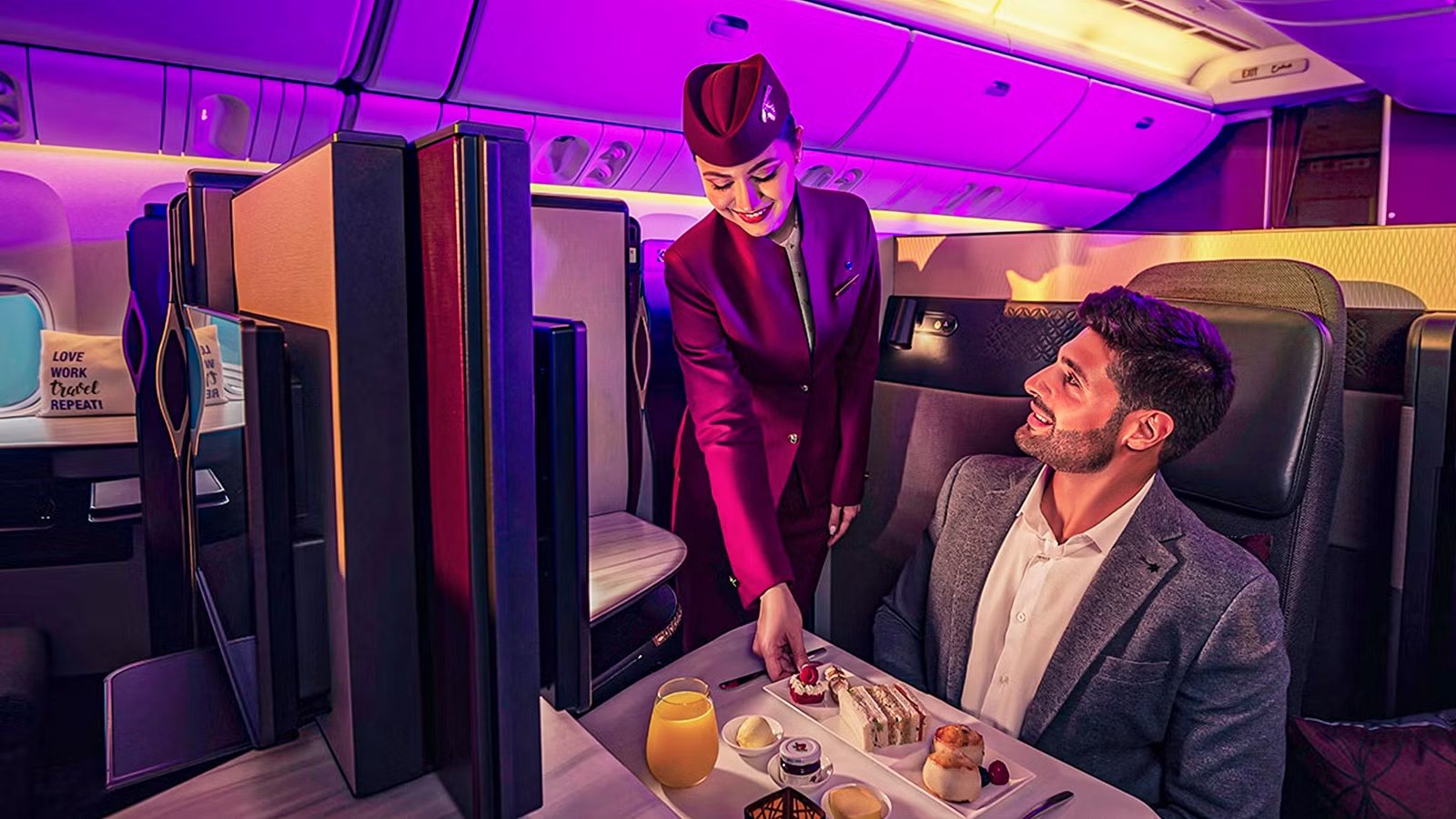
Business class is known to be a rite of passage in the airline world. One’s first business class experience can be found adjacent to the famous fairytale ‘The White Cat.’ After experiencing total opulence and comfort, minor inconveniences of the past are inherently difficult to revert to. A prince enters a world of overwhelming opulence (gold gates, porcelain walls, jeweled light). Once inside, normal life seems drab by comparison.
Imagine being on vacation, flying onboard Qatar Airways’ award-winning business class from  Doha Hamad International Airport to New York-JFK.
  Qatar Airways has been ranked the world’s number one business class product by Skytrax for 2025. Now imagine, 2 weeks later, being booked for a work trip on American Airlines’ domestic economy class from New York-JFK to Chicago O’Hare. This difference is stark and highlights just how different business class can be from economy.
Different Service Classes, Defined

Shutterstock | Simple Flying
The differences between service classes can be dramatic, especially when in contrast between different airlines. There are primarily three main classes of service on airlines globally; it is at the airline’s discretion as to which (if any) classes are offered on a particular route. In general, airlines offer economy on every flight, business class mainly on long‑haul or premium routes, and first class only on select airlines or flagship long‑haul aircraft. The availability depends on aircraft type, route length, and the airline’s strategy. General definitions for these classes are referenced below: (Note: The nomenclature of these class types varies by airline; to be used as a general guide).
|
Cabin |
Within North America |
International Long-Haul |
|
Basic Economy |
Cheapest fare, no seat selection, last boarding, limited or no mileage earning |
Same concept, but usually includes meals and checked bag rules vary by airline, limited or no mileage earning |
|
Economy |
Standard seats, 28–32” pitch, no footrests, buy‑on‑board food |
Standard seats, 31–33” pitch, full meals, larger screens, better recline |
|
Premium Economy |
Rare; usually branded as “extra legroom” only (e.g., Main Cabin Extra, Economy Plus) |
True separate cabin: wider seats, 38–40” pitch, footrests, upgraded meals |
|
Business |
“Domestic First”: wider recliner seats, 37–38” pitch, no lie‑flat except on special routes (JFK–LAX/SFO) |
Lie‑flat pods or suites, direct aisle access, premium dining, lounge access |
|
First |
Recliner seats only; essentially business-lite; no suites |
True international First: private suites, doors, caviar service, ultra‑luxury |
While specific classes vary by airline and region, the idea of a true Business Class is typically bundled with the following keystone features: a lie-flat seat, elevated dining options, amenity kits, lounge access, priority check-in/boarding, and a larger in-flight entertainment (IFE) interface.
Economy class offerings, however, are consistently the default product for airlines around the world, and most commercial fleets are configured with the majority in economy. Outliers here include all business class airline Beond and la compagnie
The Battle With Seat Controls

According to the Business Class Blog, understanding the unspoken rules of business class etiquette is key to making the most of your flight. First-timers may not know the specific finesse involved with adjusting one’s business class seat. Modern business‑class seats are basically small machines disguised as furniture, and the gap between how they look and how they operate is where experience and familiarity matter. Novices often find themselves in a polite wrestling match with their seat.
Airlines innovate with respect to seat engineering: multiple motors, hinged panels, sliding doors, hidden compartments, and touchscreens with nested menus. It’s luxury, but it’s engineered luxury. By no means do such seats require their own Pilot’s Operating Handbook (POH), but prior knowledge and muscle memory can help a first-timer blend in.
Manufacturers such as Safran, Rockwell Collins, and RECARO produce variants of airliner seating and usually collaborate with airlines that align with their own marketing vision. Manufacturers design these seats with passenger comfort and functionality in mind.
The Most Comfortable US Business Class Seats You Can Book Today
Don’t count out American Airlines.
Passengers Photographing Everything

With social media shaping how people share their travels, many first‑time business class passengers instinctively reach for their phones the moment they settle into their pod. They document everything from the lie‑flat seat to the designer amenity kit to the pre‑departure champagne. They aim to capture proof that they’ve crossed into a new tier of flying.
Seasoned business travelers almost never do this; the novelty has long worn off, and the experience no longer feels like something that needs to be recorded. From a similar perspective, seasoned economy passengers may not always film the experience from start to finish, except for influencers or “Avgeeks” such as Sam Chui:
Airlines should treat passenger filming the same way they treat turbulence: it’s normal, it’s manageable, and it becomes dangerous only when left unstructured. The goal isn’t to ban it; it’s to contain it so it doesn’t erode safety, privacy, or crew authority.
Over-Apologizing And Excessive Politeness

Self-consciousness or “Impostor Syndrome” are commonly felt among first-time business class passengers. They may find themselves apologizing for something as simple as a glass of water. This is done in a subconscious attempt to earn their place in the seat, despite having paid or redeemed award miles.
This may, however, present a stark contrast with passengers utilizing standby privileges or buddy passes. In cases such as these, apologizing behavior or excessive politeness may be more pronounced than for the average paying customer, as standby passengers are also known as Non-Rev Passengers.
Additionally, economy passengers may exude such apologetic behavior upon being upgraded free of charge. This is usually due to a particular airline status and empty business class seats to support an upgrade. While such occurrences can be seen as warranted, it asks whether it is fair to customers who paid for their seats or used award miles to purchase such a ticket.
Business Class Is No Longer Just For Frequent Flyers & Cabin Crew Are Noticing The Difference
There has been a huge growth in business class travel, driven by the growth in the premium leisure travel market.
The Call Button

Frequent use of the flight attendant call button may cause passengers to stand out amongst the routine business class crowd. This use may be attributed to the mentality of “getting the most bang for your buck,” where passengers want to take advantage of all premium amenities. Such use of the call button is typically used to replenish amenities, such as snacks, beverages, blankets, pillows, headphones, etc. Passengers may also feel entitled to such use when paying the hefty price for such a seat.
However, flight attendants provide such amenities during scheduled service windows. Depending on the airline, a long-haul business class flight includes a pre-departure service, followed typically by two additional meal services, with many walkthroughs throughout the flight. Those who are not frequently present in a business class setting may simply not know the typical service schedule and may use the call button repeatedly. On the other hand, seasoned business class travelers often eat lightly or skip the meal service entirely to prioritize sleep, recognizing that arriving well-rested is more valuable than a mid-flight steak.
The idea behind the call button is primarily for essential services. It exists for legitimate needs—water, safety concerns, medical issues, seat malfunctions, or when a passenger physically can’t get up. Crew are trained to respond quickly because sometimes it is urgent. Frequent flyers know this and will use it only as a communication tool when absolutely warranted.
Watching Every Move The Crew Makes

To tie it all together, inexperienced business class passengers will be excessively observant of their crew members. The skill, demeanor, and job function as a whole may appear alien to a newcomer. Thus, first-time business class ticket holders may watch the crew with intent. They’re revealing something about their own psychology, comfort level, or expectations of the cabin environment.
Aside from simply being nosy, such passengers may exhibit fascination, curiosity, or even anxiety, nervousness, or self-consciousness. The business class environment provides travelers with a higher level of stimulation than a typical economy class. Think extra service, unusual cabin configurations, higher-quality meals, and more diverse entertainment offerings. Such stimuli hit the senses of a new business class traveler harder, leading to strong fascination and curiosity about the service and what the crew may be doing or planning.
However, such stimuli may cause the passenger to feel self-conscious, anxious, nervous, or harbor “impostor syndrome.” This can cause the passenger to potentially pivot to the cues and leadership of the cabin crew. For example, an anxious flyer may listen intently to the safety briefing as a result of nervousness from their first experience. On the contrary, seasoned travelers may tend to disregard the safety briefing; some may even be able to recite it by memory due to repeated exposure.
In the end, what gives a business‑class novice away isn’t a single behavior but a pattern of subtle tools: an intensity of attention, a hunger for cues, a quiet uncertainty about how to inhabit the space. The premium cabin exposes people. Some respond with wide‑eyed curiosity, others with anxious vigilance, and others with a kind of reverent over‑politeness that seasoned travelers shed long ago. Business class magnifies these reactions because it asks passengers to navigate comfort, autonomy, and elevated service simultaneously. Those who are new to it often reveal themselves not through mistakes but through how they watch, wait, and interpret the surrounding choreography. In a cabin built on ease and familiarity, it’s the passengers working hardest to “get it right” who stand out the most.