dailynewsnblog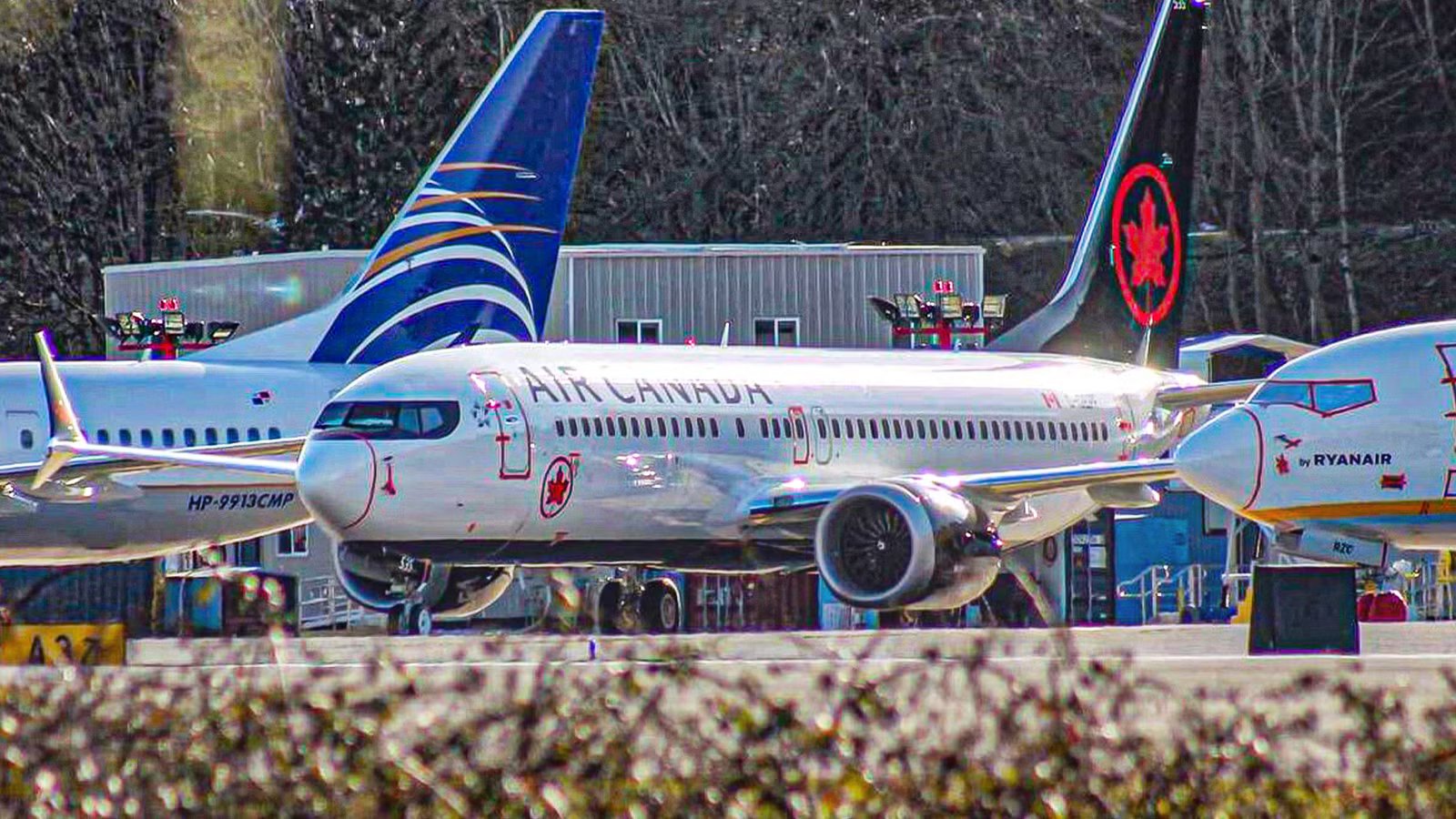
The history of aviation is filled with moments of triumph as pioneering aircraft defied the limits of what was believed to be possible. At the same time, there have been many tragedies that followed the birth of new aerospace technology. Some of those stories have left indelible marks on the world of flying to this day. From the first jet airliner to ever grace the skies to today’s next-gen giants, many of the most iconic and famous planes have experienced difficult births. Unfortunately, some have even claimed the lives of air crew and passengers.
6
McDonnell Douglas DC-10
Fatal structural flaws

The McDonnell Douglas DC-10 was the unfortunate aircraft that suffered the most deadly commercial flying mishap in American history. Even from its debut in 1972, the plane was notorious for flaws with a cargo door that could fail at altitude due to a faulty locking mechanism that caused explosive decompression. But it was the tragedy of American Airlines Flight 191 in 1979 that made the DC-10 the most dangerous airliner in US history.
On the fateful day that American Flight 191 took off from Chicago O’Hare (ORD), the jet’s left engine pylon detached and flipped over the wing. This caused catastrophic damage to the internal systems, severing hydraulic lines and causing an unrecoverable stall. The plane fell out of the sky and killed all 271 passengers and crew, as well as two other bystanders on the ground.
Although the DC-10 is primarily remembered for the horrific mishap at O’Hare in 1979, the cargo door flaw was a more deadly defect. Turkish Airlines Flight 981 in 1974 departed Paris with a door that failed to lock. As the plane was climbing to altitude, it explosively decompressed, and the floor collapsed in flight. The jet crashed into Ermenonville Forest, killing all 346 people on board. At the time, it was the deadliest aviation disaster in history.
5
Concorde
A tragic chain of failure

In the year 2000, supersonic commercial aviation suffered a virtual death blow following an infamous incident of the iconic Concorde jetliner. This mishap was the one and only fatal accident in the history of the famous jet’s career, yet it left such a traumatic impression on the general public that passenger numbers never recovered. Even with major equipment upgrades and safety enhancements, Air France and British Airways eventually decommissioned the entire fleet.
The fateful crash occurred on July 25, 2000, when Air France Flight 4590 took off from Paris Charles de Gaulle Airport (CDG). As the plane accelerated down Runway 26R, the left landing gear struck a titanium wear strip. This foreign object, FOD, had fallen from a Continental Airlines DC-10 that departed ahead of the Concorde. There was no time for the crew to react as the tire exploded and launched a massive piece of rubber into the wing, causing a shockwave that rippled through the fuel tanks.
As the fuel tanks were nearly completely full, a rupture occurred from the overpressurization and began gushing at an extremely high rate into the open air. The damaged landing gear was sparking into the air as the fuel began to mist and vaporize, which combined with the jet exhaust to burst into an enormous fireball. Bystanders on the ground as well as the air traffic control tower watched in horror as the plane took off, completely engulfed in fire.
The intensity of the inferno caused both engines to lose power as the plane climbed. The wheels also could not be retracted due to the loss of system power and damage to the gear. The aircraft fought hard to get airborne but ultimately succumbed to its wounds and never broke 200 feet (60 meters). The stricken jet plummeted into the earth after stalling and rolling hard to the left and crashed directly into a Parisian hotel, killing 109 souls aboard the plane as well as four people on the ground.
Can An Aircraft Survive A Complete Engine Separation During Take-Off?
The UPS Flight 2976 accident has chilling similarities to the American Airlines Flight 191 disaster.
4
Airbus A380 Superjumbo
Composite wing cracking

A few years after Airbus debuted the largest jumbo jet in the history of commercial flying, it was discovered that the composite wings were suffering from a combination of factors that caused cracking through the internal structure. In 2011, it was discovered that the superjumbos had stress cracks and fatigue cracks in the internal aluminum brackets that formed the rib structure inside the composite wings. This forced Airbus to reevaluate manufacturing and maintenance protocols and led to a mandatory global inspection for the entire fleet in 2012.
The initial discovery came after a Qantas A380 suffered an engine blowout in 2010. The inspection of the plane following the power plant mishap accidentally revealed the internal failures that were steadily growing worse. Ultimately, to resolve the scandal and ensure that the planes would be safe to operate for the rest of their service lives, Airbus decided to change the internal rib design. They abandoned the composite components, and all the planes built after 2014 featured full aluminum structures.
The modification program was estimated to cost hundreds of millions of dollars in retrofits and production delays, according to Reuters. In 2023 and 2024, EASA issued new directives for older A380s, particularly those stored during the pandemic, due to accelerated spar cracking caused by hydrogen-assisted environmental cracking and humidity. Concerns continue over composite delamination on the leading-edge slats for some of the aircraft that primarily serve long-haul operations, and another round of inspections is coming soon, according to Aerospace Global News.
Aviation’s Greatest Engineering Breakthrough Of The Last Century
A closer look at the industry’s most impactful leap forward in the last 100 years.
3
Boeing 787 Dreamliner
Runaway battery heat

The Boeing 787 Dreamliner battery crisis in 2013 was a landmark event in aviation safety, resulting in the first global grounding of a commercial aircraft fleet in over 30 years. The innovative aircraft was plagued by lithium-ion batteries that suffered from thermal runaway events, or fires. In just 9 days, there were two separate mishaps on opposite sides of the planet, sparking off a global scandal.
On January 7, 2013, a 787 operated by Japan Airlines was parked in Boston when the auxiliary power unit battery ignited. This released heavy smoke and flames into the electronics bay of the composite widebody jet. The aircraft was saved, but just a few days later, there was a similar mishap. On January 16, an All Nippon Airways 787 made an emergency landing at Takamatsu due to smoke and fumes in the cockpit en route to Tokyo Haneda Airport (HND). It was discovered that the batteries were at fault on this jet as well.
The 787 is Boeing’s first new clean-sheet jetliner in decades. It is packed with electronic systems that eliminate the need for bleed air auxiliaries. In order to assure operators and passengers that the planes were safe, the maker overhauled the manufacturing process of the batteries and added fire insulation around the cells.
The new process heightened defect detection during production and added fire barriers to the batteries in case of failure. Boeing also encased the batteries in stainless steel boxes with a vent that channeled smoke and gas directly outside of the jet in case of malfunction.
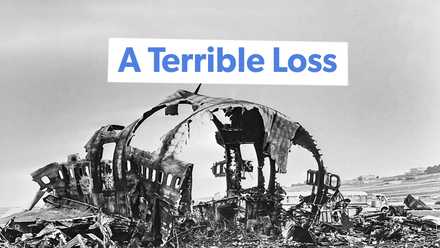
What Caused The 10 Deadliest Aviation Accidents?
The deadliest aviation accident occurred almost 50 years ago in the Canaries when two Boeing 747s collided.
2
De Havilland Comet
Lesson written in blood

At the dawn of the early jet age, the De Havilland Comet was a pioneer of modern commercial aviation. Yet its memory has been largely overshadowed by the fatal accidents that served as lessons written in blood for future engineers that shaped civilian aerospace as we know it today. The tragic accidents were caused by metal fatigue, a phenomenon that was poorly understood in the early 1950s but was exacerbated by the aircraft’s distinctive square windows.
In May 1953, BOAC Flight 783 disintegrated after takeoff from Calcutta. Initially attributed to severe weather, it was later understood to be part of the larger structural failure pattern. Then, in January 1954, BOAC Flight 781 exploded near the island of Elba. The aircraft crashed into the sea, killing all 35 on board. Then just a month later, South African Airways Flight 201 crashed near Naples in nearly identical circumstances to Flight 781.
The 90-degree corners of its large square windows acted as stress concentration points. Every time the cabin pressurized during ascent and depressurized during descent, enormous stress was focused on these corners. It was also found that the use of riveting rather than drilling created microscopic cracks in the thin aluminum skin around the window frames. These findings led to the permanent adoption of rounded or oval windows on all commercial jets and established the fail-safe design philosophy used in modern aviation.
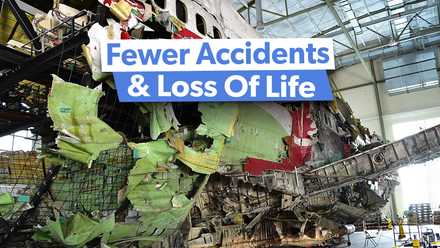
How The 10 Worst Airline Accidents In North America Show Flying Is Much Safer Today
Most of North America’s deadliest air crashes occurred last century.
1
Boeing 737 MAX
Shortcuts cost lives

The Boeing 737 MAX made what could be described as the worst commercial aircraft debut in history. Two fatal crashes in 2018 and 2019 resulted in the largest recall of any airliner in aviation history. Nearly 350 people died when Lion Air Flight 610 crashed off the coast of Indonesia in October 2018, and Ethiopian Airlines Flight 302 crashed in Addis Ababa in March 2019. In both cases, a faulty angle of attack sensor triggered automated software that the pilots were unaware of, causing the plane to crash.
For 20 months, the worldwide fleet was grounded while the aircraft were examined and modified to make them safe to fly. In the history of commercial aircraft, this was the longest grounding. The Justice Department and the National Transportation Safety Bureau concluded that Boeing had deceived the Federal Aviation Administration. It was discovered that the renowned aircraft manufacturer, which was formerly the gold standard for safety, had neglected to provide authorities and air crews with important information regarding the maneuvering characteristics augmentation system.
The fleet didn’t resume regular operations until late 2020, following the company’s software overhaul and pilot protocol corrections to stop any further deadly incidents. Then, on an Alaska Airlines flight in 2024, a door plug broke out of a 737 MAX 9 in midair. As a result, the type was grounded, and the FAA imposed a production rate cap. After a CEO change and a supply chain consolidation with the FAA managing manufacturing, the company is only now starting to increase production rates.
Boeing has claimed to suffer direct losses of more than $23 billion and indirect costs of up to $60 billion as a result of canceled orders. The 737 MAX 7 and MAX 10 remain uncertified, and Airbus has surpassed Boeing in narrowbody sales for the past five years. In 2025, the A320 family officially surpassed the 737 family as the best-selling aircraft of all time. Only time will tell if Boeing can compensate for this with its massive backlog of the two remaining models in the family tree of four variants as production returns to full capacity.