dailynewsnblog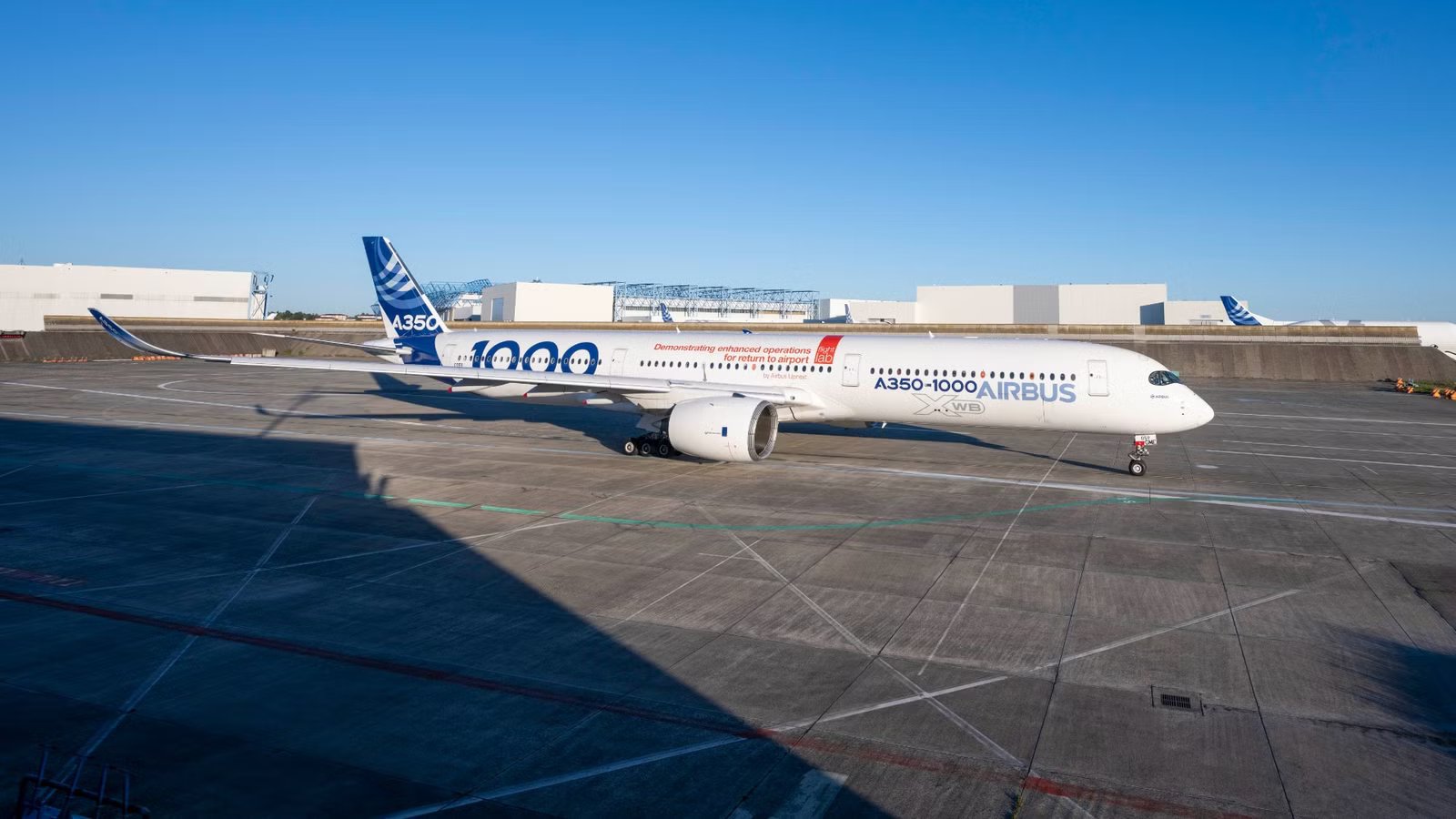
European manufacturer Airbus has informed some of its customers that their A350 widebody jets, which are slated to be delivered later this decade. The reason for this is that the OEM is facing delays due to supply chain issues caused by understaffing at an important component manufacturing facility.
The issue has also reportedly impacted the manufacturing of certain components on the upcoming freighter variant of the A350. Regarding this, however, it has been stated that the current issue is not expected to impact the type’s scheduled first flight or the entry into service shortly thereafter.
Understaffing At Ex-Spirit AeroSystems Facility

This week, Airbus informed some of its customers of the Airbus A350 program that there will be aircraft delivery delays on airframes that are scheduled to be delivered later in the decade. According to information published by Reuters, a key reason for this delay is attributed to short staffing levels at one of the Spirit AeroSystems facilities, which Airbus had acquired.
For context, Spirit AeroSystems used to manufacture components primarily for  Boeing, but also supplied components for Airbus. Last year, when Boeing reacquired Spirit to ensure better quality control in the manufacturing and assembly lines, Airbus bought out certain facilities that were in charge of manufacturing components for its aircraft. One such facility is the plant in Kinston, North Carolina, in the United States.
This facility is where critical fuselage parts and components are manufactured for the A350 aircraft, along with carbon-fiber wing spars, which are important structures within the aircraft wings. That being said, the issue Airbus is facing is that several employees and staff who worked at these facilities have moved to other ex-Spirit facilities working for Boeing. This has resulted in Airbus having to send its own staff from Europe, but this has translated into slower component production, which subsequently results in assembly and delivery delays of future aircraft.
Supply Chain Issues Affecting The A350F As Well

Across the Atlantic, in Europe, Airbus is facing unrelated supply chain issues in its facility in Spain, which could potentially impact the freighter variant of the A350. As per reports, this disruption is primarily impacting the manufacturing of the aircraft’s main deck cargo door.
It was only a month ago that Airbus successfully manufactured its first A350F main-deck cargo door, which is designed to be the largest main-deck cargo door in the world. It features dimensions of 14.76 ft (4.5 m) in width, 14.1 ft (4.3 m) in height, and a door area of 208.1 sq ft (19.35 m²). As such, any prolonged delays or disruptions with such a critical component can have a knock-on impact on the development and certification of the aircraft.
However, it has been reported that, as per a spokesperson from Airbus, the A350F’s schedule has not been impacted. The manufacturer expects the freighter jet to perform its first flight later this year and the first aircraft to be delivered thereafter, in 2027.
Airbus Reaffirms A350F Service Entry Goal For 2027, Despite Delay Concerns
The next-gen freighter is on track.
Airlines’ Growing Need For Capacity

Since the recovery of the COVID-19 pandemic, airlines around the world have been impacted by supply chain issues, which have meant delivery delays of new aircraft at a time when passenger demand is growing. While several airlines reduced their capacity by ridding their fleet of older and less efficient aircraft, the supply chain issues and other production delays in the years following the pandemic left many airlines around the world unable to receive new aircraft and to grow their capacity to match market demand.
Simple Flying Quiz
Easy (15s)Medium (10s)Hard (5s)
Within the widebody space, the most noticeable absence is that of the Boeing 777X, which was originally slated to enter service in 2020 but is not expected to enter service until next year. Airbus too suffered delivery delays on its A350 aircraft due to disruptions in the global supply chain.
On the narrowbody side, both Boeing and Airbus have also suffered delivery delays with their Boeing 737 MAX program and the Airbus A320neo program. Airbus also faced additional issues with its existing fleet currently in service being grounded due to issues with the Pratt & Whitney GTF engines, which impacted both the A320neo family and the Airbus A220 family.