dailynewsnblog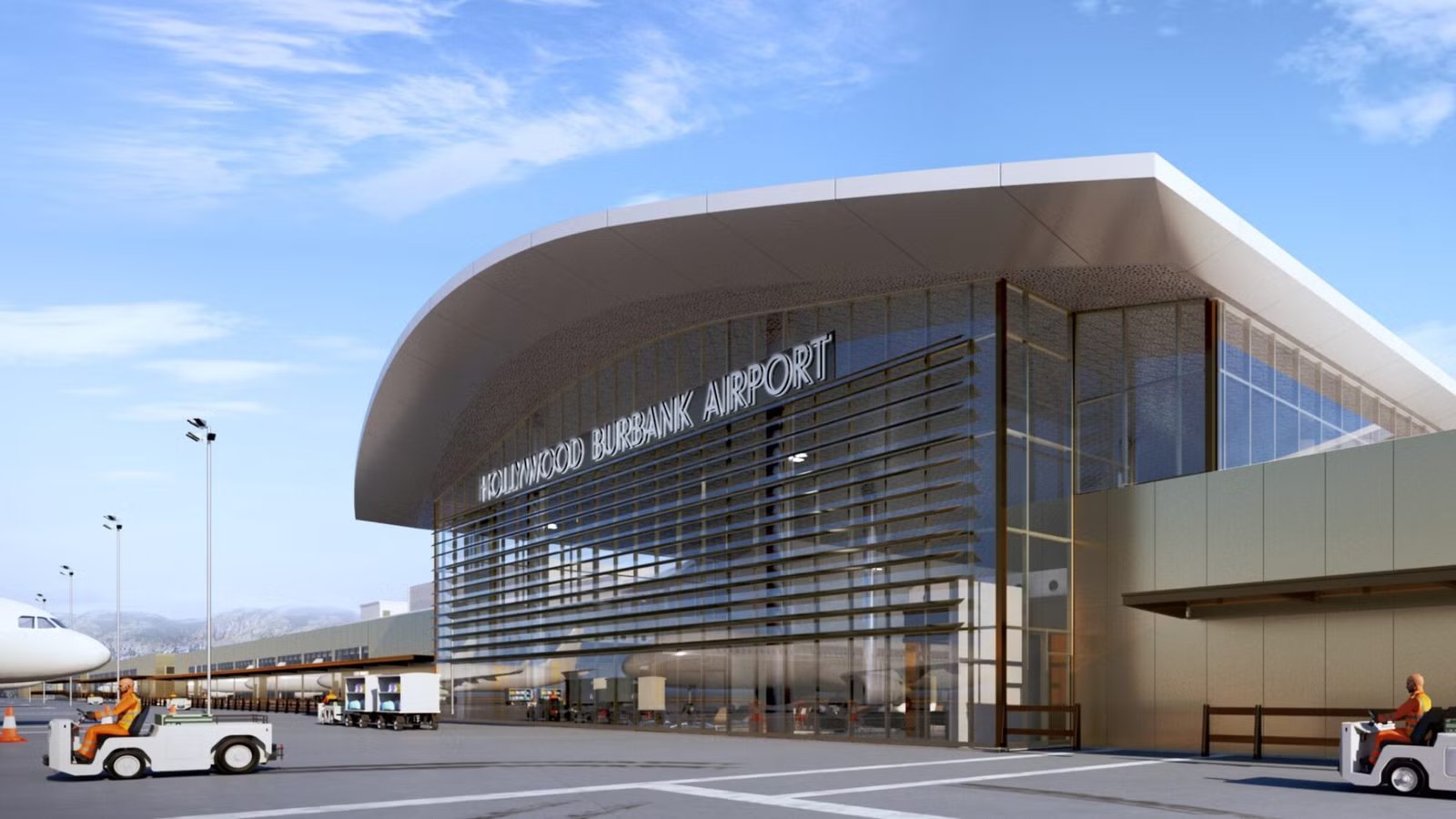
The new Hollywood Burbank Airport (BUR) will open its doors later this year, on October 13. The airport will feature a new 14-gauge terminal as well as parking and other landside transport modernization.
The upgrades come after decades of effort to see the $1.2 billion project through to completion. Beyond enhancing the passenger experience, the replacement of the old Passenger Terminal was driven by the need to bring airport facilities up to modern building code and aviation standards.
21st Century Flying: Elevate BUR

Hollywood Burbank Airport
The Elevate BUR Program will expand the Airfield from its 1930s legacy and deliver the new terminal to Hollywood Burbank Airport this October. A major driving factor behind the need for more modern, significantly expanded infrastructure at the field is the anticipated arrival of Next-Generation single-aisle jetliners.
The upgrade focuses heavily on resolving the severe bottlenecks of the 94-year-old original facility. The existing terminal has already struggled to accommodate larger variants of the 737 Next Generation series, with carriers like Southwest Airlines flying only short-body 737–700 Jets to Burbank. It not only limits the airfield but also makes it more difficult for operators to schedule flights when they are restricted by airframe type.
The Airbus A321 narrowbody jet has already delivered a Quantum Leap in efficient, high-capacity air travel for many operators in the US. Boeing expects the longest variance of its new 737 MAX series, the MAX 10, to be certified later this year and deliveries to commence shortly thereafter. New airside construction features a dedicated aircraft pushback area and optimized taxi lanes.
The design provides the physical clearance necessary to maneuver high-capacity single-aisle aircraft safely. At the same time, BUR will not change the air boarding process on the outdoor apron, which many flyers praise as a nostalgic ‘old Hollywood’ element that is inseparable from the airport’s identity. In addition to much higher passenger and baggage capacity inside, there will be a dramatic expansion of landside travel options to accommodate more flyers per flight.
Hollywood Airport Gets Supersized

Hollywood Burbank Airport
Burbank’s new terminal will be roughly 1.5 times the size of the previous facility. The new building will more than satisfy current California construction standards and the latest requirements set forth by the Federal Aviation Administration. The entire project is also funded by airport customers and operator fees, drawing zero funding from local taxpayers, according to Airways magazine.
The replacement Passenger Terminal will span 355,000 square feet (32,980 square meters) when it is completed this October. That is about 50% larger than the former building, which was 232,000 square feet. Parking is even more dramatically expanded with the new infrastructure. The old short-term garage had a capacity of just 432 spaces, while the new parking area will accommodate over 2,000 vehicles. Streetside access will also separate curbside areas for arrivals and departures to make pickup and drop-off simpler and easier.
Inside the terminal, the new concourses will have five indoor baggage claim carousels, 43 ticket counters, and six curbside service counters. This is a major enhancement over the separated checkpoints with undersized baggage claims, including one that was only partially indoors. Local businesses will fill out new retail, concessions, and dining facilities throughout the terminal. Enhanced airline support spaces will round out the upgrades to provide a better flying experience for every traveler.
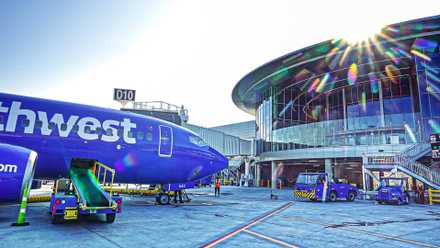
The Massive US Airport Expansions That Will Transform Air Travel
Several of the country’s largest airports are currently undergoing significant overhauls.
Burbank’s Airfield Goes Green

Hollywood Burbank Airport
On top of customer improvements, another equally important element of modernizing Burbank Airport is the functional side of the construction upgrades. The terminal will have improved seismic resilience built into the structure, and its design is made to go above and beyond FAA standards for aviation operations as well. At the same time, the new building will feature a number of eco-friendly and resource-efficient engineering qualities.
The project is expected to receive LEED Gold certification when all the environmentally conscious systems are completed. That includes an all-electric terminal with a 750kW rooftop solar system. Ground service equipment will be powered by electricity instead of fossil fuels. There will also be 300 electric vehicle charging stations inside the parking garage. Additionally, the terminal uses reclaimed water for irrigation that will sustain native and adaptive plants incorporated into the landscaping. The terminal will also have daylight controls and a cool roof structure.