dailynewsnblog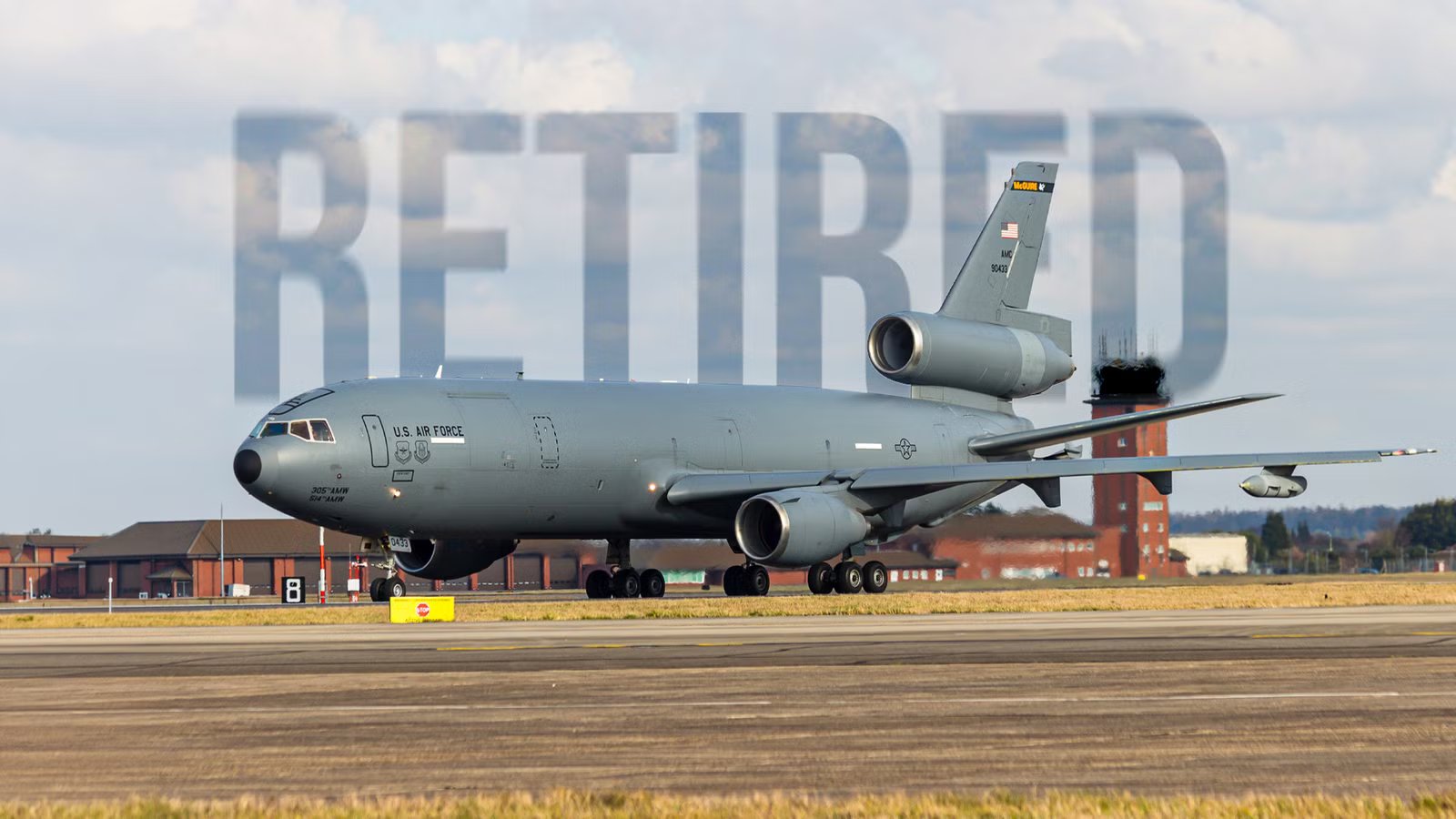
The tri-engine McDonnell Douglas KC-10 Extender was retired in 2024 after 43 years of service, being succeeded by the  Boeing KC-46 Pegasus. Entering service in 1981, the high-capacity tanker was based on the iconic McDonnell Douglas DC-10 widebody airliner. It served with accolades being described as a force multiplier thanks to its strategic airlift capacity combined with its core mission. Fast forward to 2026, the Pegasus continues to be severely afflicted by deficiencies despite over 100 already joining the fleet.
The problems with the KC-46 have been so severe that they have caused tens of millions of dollars’ worth of damage to fighter jets that have experienced refueling rendezvous mishaps. At least three such incidents have been recorded, and the aircraft has been categorized as a Category One deficient system. The problems are so prolific and crippling that new orders have been paused, and the legacy fleet of Boeing KC-135 Stratotanker jets, based on 707s, is being retained past its planned retirement date to sustain force levels and readiness.
Despite the enormous promise that the technology and mission-flexible design of the KC-46 hold for the USAF, it is still very far from reaching that potential. Boeing is currently redesigning major elements of the core systems of the Pegasus, its refueling boom, and the remote camera system that replaces the boom operator station in the tail of legacy tankers. This dismal debut has led many critics to say that the Air Force retired an excellent platform in favor of a ‘downgrade.’
They Don’t Make Them Like They Used To: The KC-10 Legacy

Much like its counterpart that still serves on, the KC-135, the Extender was over-engineered for its mission due to the intensity of the Cold War arms race during which it was developed. The US Air Force considered the KC-10 as a complete force enhancer, allowing it to make its fleet as survivable as possible, even in the worst-case ‘Doomsday’ scenario.
The KC-135, based on the Boeing 707, had a thin body and limited fuel capacity. To transport a squadron across an ocean, the Air Force required tankers to refuel them. The KC-10 was intended to be a ‘mothership.’ It could transport a whole squadron of fighters, maintenance staff, and spare parts across an ocean in a single trip without requiring external assistance.
The KC-10 was designed with both boom and drogue systems ready to use on a single flight, in contrast to the KC-135, which needed an external ‘basket kit’ to refuel Navy aircraft via drogue. It became the main option for joint-service activities as a result. Because of its extensively reinforced cargo floor, it could operate as a tanker and transport 170,000 lb (77,110 kg) of cargo. By successfully integrating two aircraft into a single airframe, its dual-role capability represented the pinnacle of Cold War efficiency.
During the Gulf War, the KC-10 fleet was critical for the rapid buildup of forces in Saudi Arabia, moving thousands of troops and tons of cargo while keeping hundreds of fighters in the air. Later, it supported NATO missions during Operation Allied Force in Yugoslavia. The Extender was also a staple of Middle Eastern operations, flying thousands of missions for Operations Enduring Freedom and Iraqi Freedom. It also guarded US skies as part of Operation Noble Eagle.
Even in the final years of the KC-10’s career, the big jet proved to be an invaluable asset to the US armed forces and its allies. Just before its retirement, the Extender was pivotal in the 2021 Operation Allies Refuge. This mission proved to be the largest non-combatant evacuation in US history as thousands of Afghan refugees were airlifted from Kabul as the American military exited from the fight against the Taliban.
The US Air Force officially retired the last KC-10, tail number 79-1948, on September 26, 2024. Pilots and boom operators frequently cite the KC-10’s digital fly-by-wire boom and high-power engines as providing a more stable and rugged refueling platform compared to the aging KC-135 or the software-dependent KC-46.
The Promise Of Pegasus: More Than A Gas Station In The Sky

In September 2022, the Air Mobility Command formally certified the KC-46A for global combat deployment. It has now completed more than 150,000 flight hours. In 2025, it successfully executed a 45-hour nonstop voyage over three continents, demonstrating its endurance. When all current purchase orders are fulfilled, the overall fleet is estimated to be more than 250 aircraft. There are currently about 180 in service.
Since then, the Air Force has accepted its 100th KC-46A in December 2025, and by 2026, the fleet is expected to number 179. With more durable and survivable structures, infrared countermeasures, and electronic warfare capabilities to fend off missiles, the KC-46A, in contrast to its predecessor, is designed for disputed areas.
|
Feature |
KC-135R Stratotanker |
KC-10A Extender |
KC-46A Pegasus |
|---|---|---|---|
|
Max Fuel Capacity |
200,000 lb (90,718 kg) |
356,000 lb (161,478 kg) |
212,299 lb (96,297 kg) |
|
Max Cargo Payload |
83,000 lb (37,648 kg) |
170,000 lb (77,110 kg) |
65,000 lb (29,483 kg) |
|
Empty Weight |
98,466 lb (44,663 kg) |
241,027 lb (109,328 kg) |
181,610 lb (82,377 kg) |
|
Wingspan |
130 feet, 10 inches (39.88 meters) |
165 feet, 4 inches (50.40 meters) |
157 feet, 10 inches (48.11 meters) |
|
Maximum Speed |
580 miles per hour (933 kilometers per hour) |
619 miles per hour (996 kilometers per hour) |
530 miles per hour (853 kilometers per hour) |
|
Service Ceiling |
50,000 feet (15,240 meters) |
42,000 feet (12,802 meters) |
40,100 feet (12,222 meters) |
|
Range |
11,039 miles (17,766 kilometers) |
11,500 miles (18,507 kilometers) |
7,350 miles (11,829 kilometers) |
The KC-46A is a data center designed for the future battlefield, in addition to being able to perform a greater variety of missions. The Pegasus can receive and send real-time combat data to other aircraft, whereas the KC-135 was limited to gas and transportation. It can also use heat sensors and sophisticated night vision to function in blackout situations.
The KC-46 was made to refuel several aircraft at once using both a boom and wing-mounted, hose-and-drogue systems on a single mission, whereas the KC-135 can often only refuel one aircraft at a time. Compared to the KC-135, the Pegasus can accommodate twice as many people, three times as many cargo pallets, and 30% more aeromedical evacuation capacity.
Engineering Concerns Prompt US Lawmakers To Limit USAF KC-46 Acquisitions & Extend KC-135 Retirements
The Pegasus is hitting turbulence.
Danger In The Air: Unsafe Rendezvous With The KC-46

Following a failed refueling rendezvous with a KC-46, at least three aircraft were claimed to have sustained serious damage costing tens of millions of dollars. According to NBC News, two occurrences were documented in 2022, with a third expected in 2024. Legacy tankers, such as the KC-135, have enough ‘give’ in the boom that even light aircraft may easily push them forward to retain a connection.
Lighter aircraft, such as the General Dynamics F-16 Fighting Falcon and Fairchild Republic A-10 Thunderbolt II, have proven unable to safely hold a connection to a KC-46 fuel probe because the actuator of the refueling boom is too rigid. In addition, nozzle binding accidents have resulted in booms being stuck, causing millions of dollars’ worth of damage and severe mid-air separations.
According to research conducted in 2025, this stiffness and operator input can result in nozzle binding, a condition in which the boom becomes physically lodged in the reception aircraft’s receptacle. Boeing is working on a redesign of the boom telescope actuator. This makes the entire Air Force fleet safe by substituting a more sensitive actuator for the stiff internal hardware, which enables the boom to retract with less force.
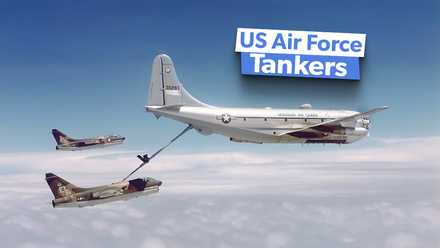
From KC-97 To KC-46: A Brief History Of US Air Force Tankers
The first tanker was propeller-driven and today they are based on airliners (the Boeing 707 and 767), but this is soon set to change.
Reality Check: Boeing’s Technological Shortcomings

Unlike older tankers, the KC-46 uses cameras and 3D screens instead of a rear window. The original RVS suffers from image distortion and poor performance in certain lighting, causing operators to accidentally strike the receiver aircraft.
The KC-46 boom operator is meant to be able to see several aircraft approaching at once thanks to cameras on the bottom of the aircraft that provide a real-time 185-degree panoramic view. Wearing 3D glasses, operators view a sizable 24-inch 3D display that simulates looking out a real window in terms of depth perception.
Although the idea is groundbreaking, the initial iteration had a number of Category 1 flaws that Boeing and the Air Force are now addressing with RVS 2.0 enhancements. Strong sunlight deteriorated video quality, and in certain situations, depth perception was warped. The 2.0 update includes 4K Ultra-HD video feeds with sophisticated geometric calculations that measure distance using LiDAR lasers.
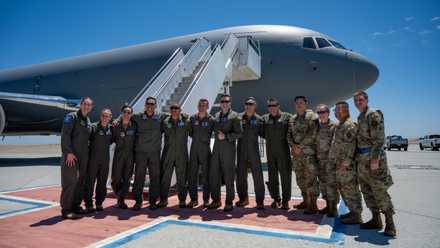
US Air Force May Order More KC-46s, Scrap Stealth Tanker, According To Budget
The NGAS is out and the Pegasus is in.
Pumping The Brakes On The KC-46

Lawmakers have intervened to throttle back the Pegasus program in order to safeguard public funds and guarantee military preparedness. Deliveries were stopped in early 2025 after it was found that the new aircraft’s fuselage and wing supports had structural flaws. Persistent fuel system leaks and early Auxiliary Power Unit failures are additional quality problems.
Funding was limited by Congress until the Air Force could attest to the correction of Category 1 deficiencies. Legislators have argued against purchasing hundreds of aircraft that might later need costly retrofits. The Air Force recently asked for $3.9 billion for 15 more units in its fiscal 2027 budget despite these obstacles.
The program is based on a firm fixed-price contract, which means Boeing is responsible for any cost overruns. While this protects the government from rising costs, Boeing claims to have already absorbed more than $7 billion in losses, causing friction and raising concerns about production stability. The company reported a $565 million loss on the KC-46 program in its fourth-quarter 2025 earnings.