dailynewsnblog
Kristin Shaw
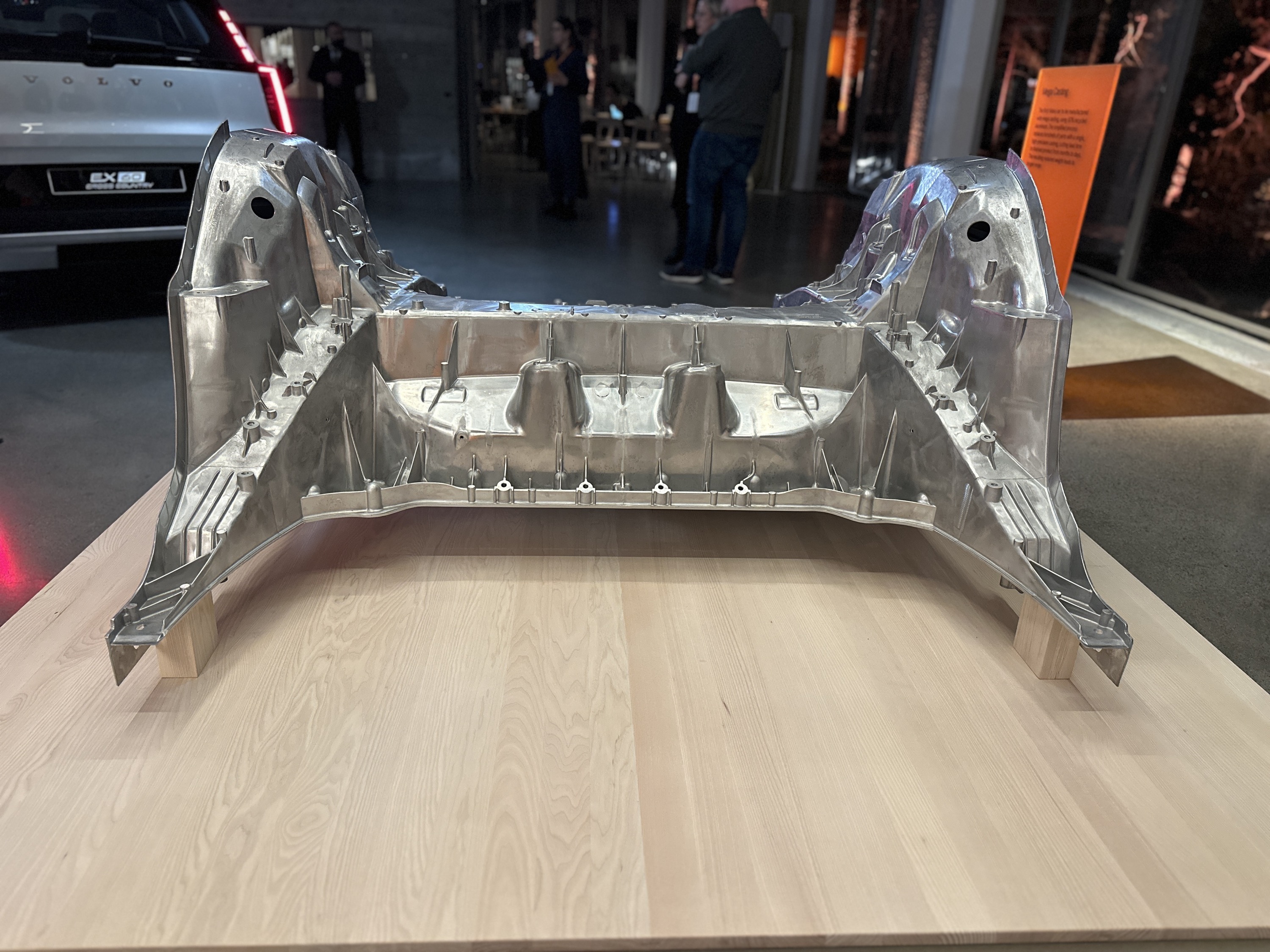
The EX60’s megacasting.
Kristin Shaw

Kristin Shaw
A closer look at the buttresses.
Kristin Shaw
Kristin Shaw
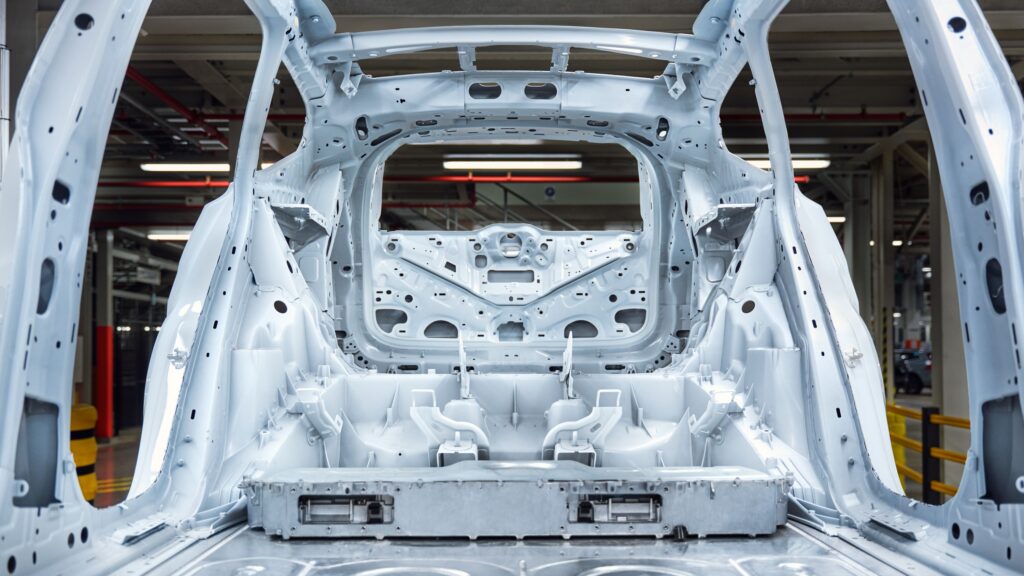
The EX60’s body, with the megacasting floor in place.
Kristin Shaw
A closer look at the buttresses.
Kristin Shaw
The EX60’s body, with the megacasting floor in place.
Kristin Shaw
Volvo engineer Mats Brodin says the rear floor is cast from 50 percent recyclable aluminum collected from post-consumer materials. He describes himself as an “architect of megacasting,” further aligning the Volvo EV to building design.
The cast is primarily made of aluminum mixed with a much smaller amount of silicon and is forced into the megacast machine in roughly 90 milliseconds, Brodin says. It then takes a minute to dry. With two megacasting machines on site in its Torslanda plant, near Volvo’s headquarters in Gothenburg, Sweden, EX60s are ready to roll off the line quickly.
Volvo is using megacasting judiciously. For instance, if the car is involved in a crash and the diecast piece is damaged, it’s more likely to become scrap, as it’s not easily repairable. That’s why it makes sense for Volvo to megacast a single rear floor part rather than a larger one.
The EX60 is the first Volvo car to use megacasting, so while it feels new, the plan has been in place since at least 2022. The company invested 10 billion Swedish kronor—roughly $1.1 billion—in the manufacturing facility, including these giant megacasting pieces.
Smart battery integration and superlative one-pedal driving
The EX60 will use a structural battery design akin to the one used in a BMW iX3 or a Tesla Model Y; Volvo says the EX60 will have a “cell-to-body” battery. Unlike typical EVs with heavy battery packs (like a GMC Hummer EV, for example), the EX60’s battery cells are integrated directly into its body.
Essentially, the battery pack becomes the floor of the vehicle. That offers weight and packaging efficiency and opens up more cabin space. Most importantly for an EV, it reduces weight, which improves range. It’s all part of Volvo’s new SPA3 platform, designed specifically for EVs.
During testing in and around Barcelona, Spain, the EX60 performed beautifully with one-pedal driving, improving the car’s regenerative assets. I barely touched the brakes on twisty roads outside the city, relaxing into the EV’s operational quality. I haven’t been a big fan of most one-pedal drives because so many tend to be jerky and difficult to adapt to; that’s not the case in the EX60.